
Corn ethanol gets sold as the greener thing in your gas tank, the renewable splash that has been blended into American gasoline for years. The part that rarely comes up is how it gets made. The vast majority of the more than 200 corn ethanol plants in the US still burn natural gas to produce the heat that turns corn into fuel, according to DTN Progressive Farmer. So a lot of “clean” fuel starts its life with a gas flame.
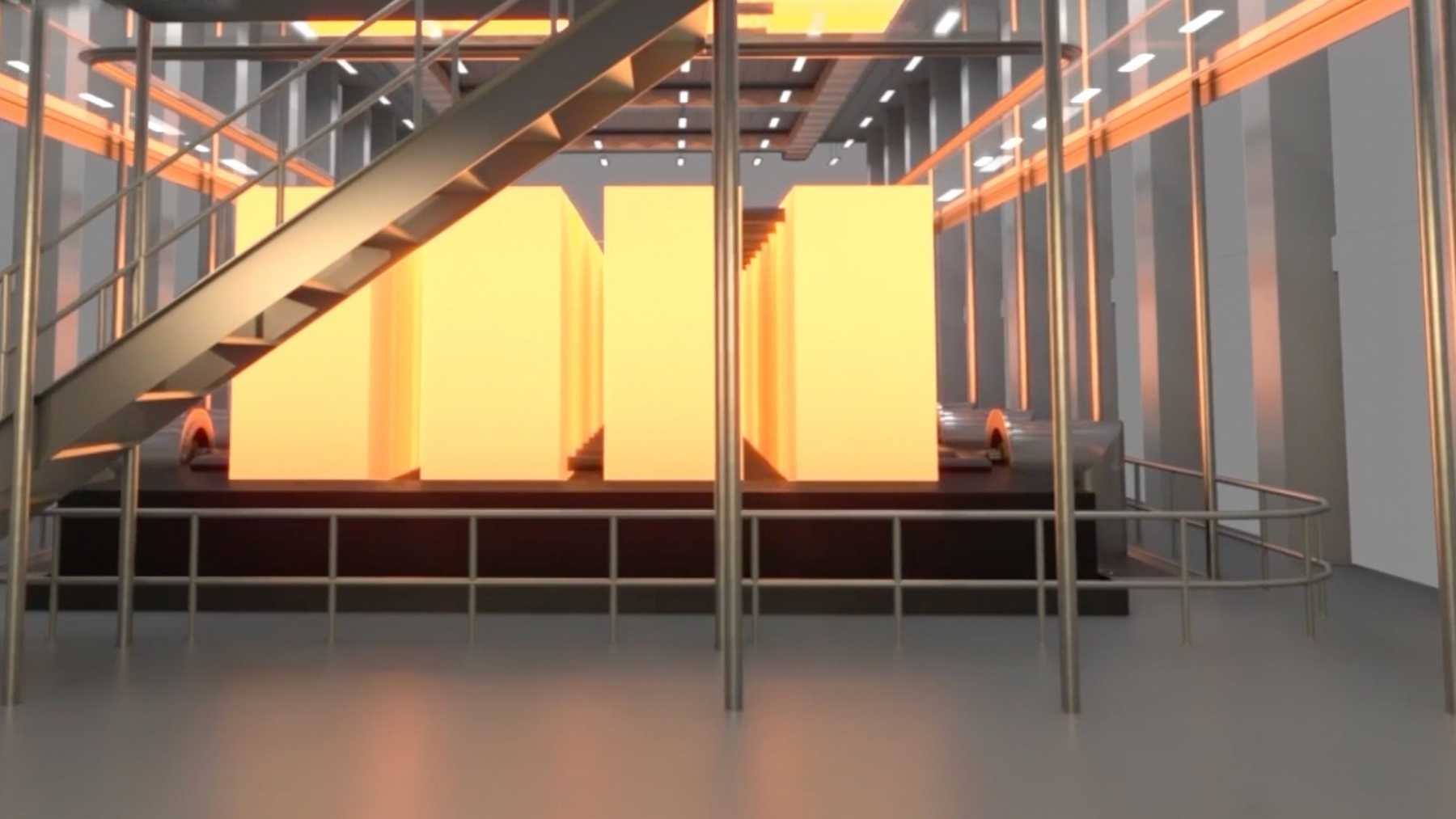
One of those plants just changed the recipe. In Big Stone City, South Dakota, biofuels giant POET and a California company called Antora Energy switched on a 5 gigawatt-hour thermal battery that stores energy not as electricity, but as heat, inside blocks of solid carbon cranked up to 2,400°C until they glow white-hot.
It went from an empty lot to delivering energy in under 12 months, and once it is fully running later this year it will rank among the largest energy storage projects of any kind on the planet, according to the two companies. No lithium, no moving parts, just a wall of incandescent carbon feeding an ethanol plant.
What is sitting next to the ethanol plant
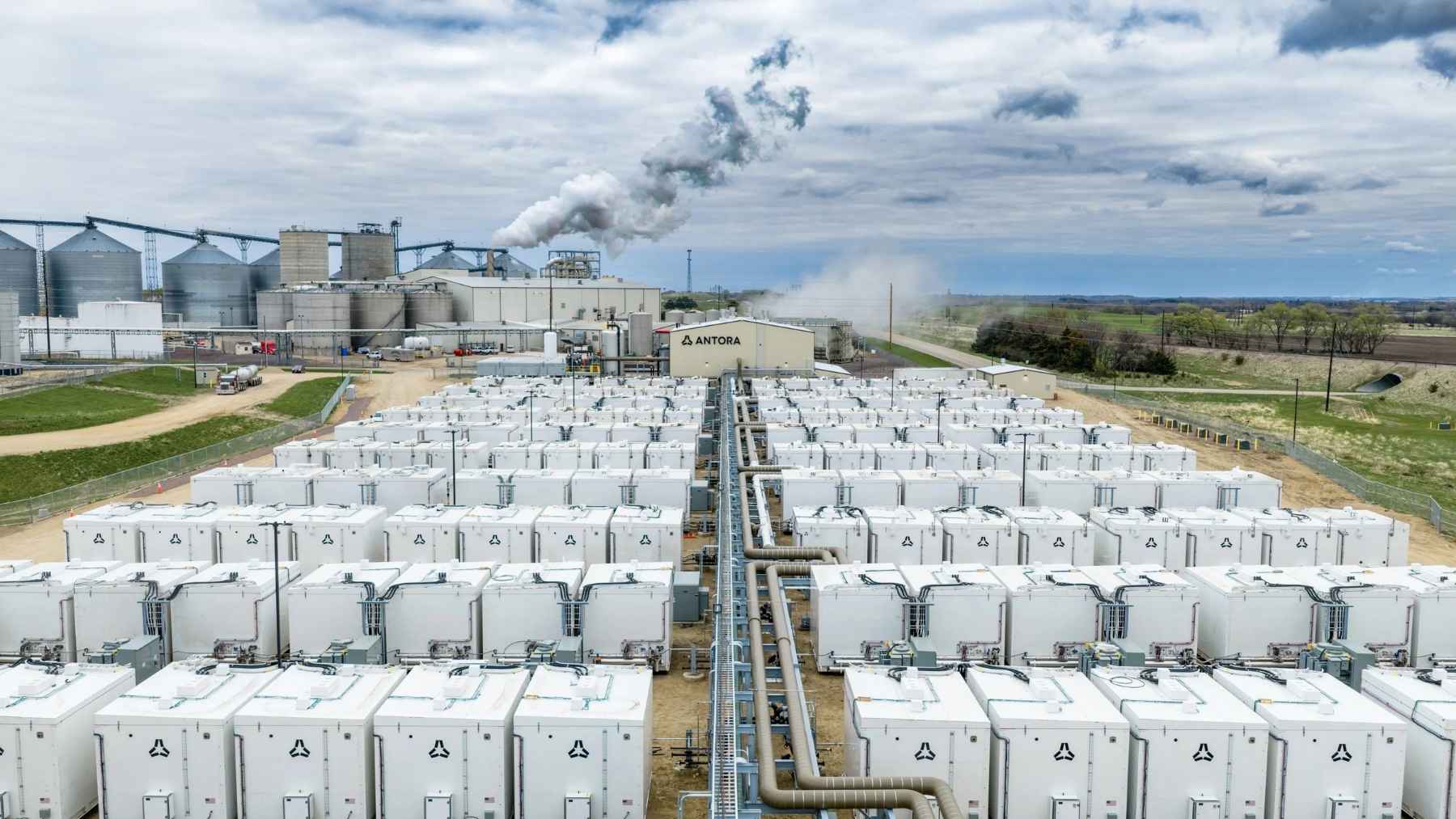
The setup is more than 200 of Antora’s thermal batteries lined up beside POET’s bioprocessing facility, close to the Minnesota border and about 180 miles west of Minneapolis. Each one is a modular, factory-built box, and the whole fleet was manufactured at Antora’s gigafactory in San Jose, California, where the company says every one of its batteries is made.
Inside each box are blocks of solid carbon. When local electricity is cheap and plentiful, the system runs current straight through the carbon to heat it resistively, the same basic idea as the element in a toaster, except this toaster hits up to 2,400°C.
Carbon takes the heat well. It conducts fast, so it charges quickly, and it stays solid all the way past 3,000°C, roughly twice the temperature at which steel melts. The blocks bank that heat for days, then hand it back around the clock as high-temperature process heat for the plant. Antora’s own people have described the batteries as toaster-like, which is both accurate and a little disarming for something glowing hotter than lava.
Why carbon and not lithium
The case for carbon is mostly a case about cost and supply. It is the fourth-most produced industrial material on Earth, it shows up as a byproduct of other industrial processes, and Antora puts the material cost at roughly one-tenth that of lithium-ion.
It does not catch fire the way a packed lithium cell can, there is no thermal runaway to design around, and the company says the same volume of carbon stores about four times the energy of an electrochemical battery. Antora also claims a 20-plus year lifespan with no cycling degradation, which matters a lot when the alternative is a chemistry that fades a little every time you charge it.
There is a supply-chain angle too, and it is the part getting attention in Washington. Antora’s batteries lean on abundant materials sourced from suppliers across a dozen US states instead of the critical minerals that tie lithium and other chemistries to overseas supply chains. For a project pitched around domestic manufacturing and energy security, that is not a small selling point.
Heat is the easy part
Here is where it is worth being straight about what this technology does well. The strong, obvious use is exactly what is happening at Big Stone City: store cheap energy as heat, deliver heat. Industrial heat is a genuinely big problem. By most estimates, somewhere around a fifth of global carbon emissions comes from the heat that runs furnaces, kilns and boilers, and almost all of it still comes from burning fossil fuels. A battery that turns surplus wind into 2,400°C heat is aimed right at that.
Antora can also run the system in reverse and make electricity, and the method is clever. At these temperatures the carbon radiates most of its energy as light, so the company shines that glow onto modified photovoltaic panels, a heat engine with no moving parts that the field calls thermophotovoltaics, as Antora’s technology overview lays out.
It works, and the company holds efficiency records for it. But converting heat back into electricity always costs you something in the exchange, so the cleanest economics are still in delivering heat directly. At an ethanol plant that needs steam, that is the whole point. The electricity trick is the upside, not the headline.
The deal that made it pencil out
The hardware only matters if someone will pay for it, and the part that actually unlocked this project was a rate, not a battery. Antora worked with Otter Tail Power, a utility serving some of the lowest-cost electricity in the country across the Dakotas and Minnesota, to design a special electric rate, approved by the South Dakota Public Utilities Commission last year, that lets the battery charge fast during the hours when local wind is producing more power than the grid can use.
That curtailed wind usually goes to waste. Here it gets soaked up and stored, and because the rate is structured around surplus, the system can run 24/7 without pushing up costs for everyone else on the grid.
That is the model Antora is really selling, and it is why this is more interesting than a one-off science project. If a rate like that can be copied at other plants near a lot of cheap, intermittent renewable power, the same hardware works anywhere the math lines up. It also helps explain the speed: from empty lot to delivering energy in under 12 months, with more than 300 manufacturing and construction jobs split between South Dakota and the San Jose factory.
Where this sits in a crowded field
Antora is not alone in the hot-rock business, and the competition is mostly a contest over temperature. Rondo Energy’s brick-based batteries top out around 1,500°C, MIT spinout Electrified Thermal Solutions runs its electrically conductive firebricks up to 1,800°C, and Antora’s carbon pushes to 2,400°C, which opens the door to the hottest industrial processes like cement and steel.
This is also a different animal from the giant sand battery in Finland that keeps drawing comparisons: that one stores heat at 500 to 600°C and pipes it into a town’s district heating system, which is a fine job for warm water but nowhere near what a steel furnace demands.
Then there is the money, which is its own story. Antora’s investor list reads like a clean-energy who’s who, including Bill Gates’ Breakthrough Energy Ventures, a NextEra Energy Resources subsidiary, mining giant BHP, and BlackRock and Temasek’s joint venture.
But the check that actually financed the South Dakota project came from Grok Ventures, the Australian fund founded by Atlassian co-founder Mike Cannon-Brookes, which structured the financing as the sole external investor and now jointly owns the system with Antora. The US Department of Energy also put in early research money years ago, the kind of seed funding that tends to get forgotten once the private capital shows up.
The part that still has to be proven
None of this means the gas boilers are going away tomorrow. The vast majority of US ethanol plants still run on natural gas, and most heavy industry still does too. What Big Stone City proves is narrower and more useful: that a battery storing energy in glowing carbon can be built fast, at real scale, and actually feed a working factory, the same way an off-grid gold mine in Australia recently ran for 155 straight hours on sun, wind and storage with its diesel engines switched off.
The open question is not whether the carbon glows hot enough. It is whether the next plant can get a utility rate this good and a financier this willing without a landmark project and an Australian billionaire to make it happen. Get that part repeatable, and the toaster the size of a building stops being a one-off.