
2026 Chevrolet Equinox EV
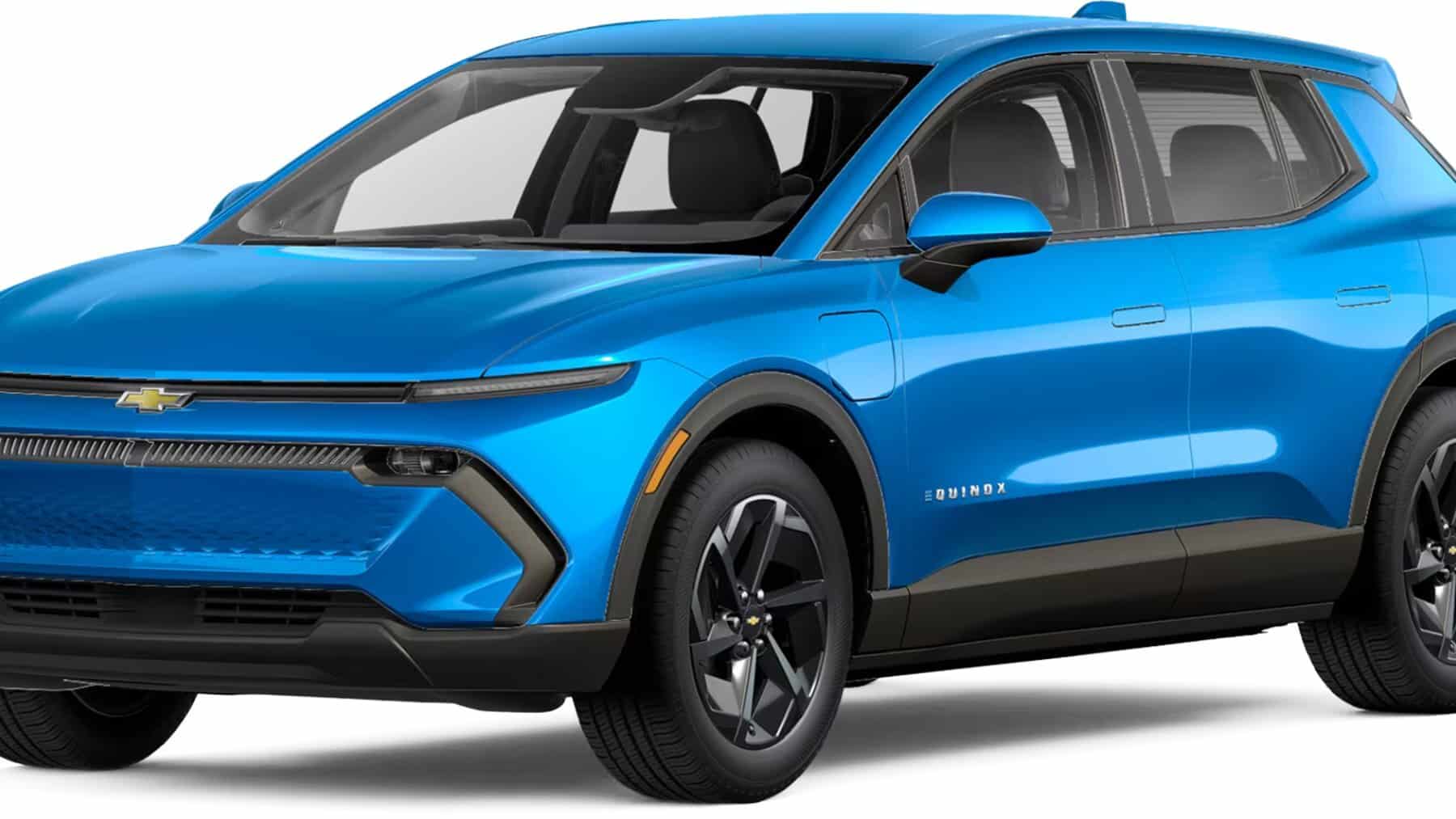
Overview
What's New for 2026
The 2026 Chevrolet Equinox EV carries forward GM's successful Ultium platform architecture with refined battery chemistry and improved thermal management delivering better cold-weather performance. Available in multiple battery configurations with front-wheel-drive or dual-motor all-wheel-drive propulsion, the Equinox EV addresses a critical market gap: credible electric family transportation at genuinely attainable pricing. The standard front-wheel-drive variant produces approximately 220 horsepower and delivers up to 319 miles of EPA-estimated range on a full charge—competitive with more expensive Tesla Model Y and Hyundai Ioniq 5 offerings despite substantially lower pricing.
For 2026, the Equinox EV standardizes on North American Battery Supply Chain (NABSC) and final assembly compliance, making it eligible for the full $7,500 federal Clean Vehicle Credit (though tax credit eligibility remains subject to income and vehicle price caps). The Ultium platform's tunnel-free architecture delivers genuinely spacious rear legroom without compromising cargo space—a technological advantage that results in 38 inches of rear legroom despite modest overall vehicle length. Every 2026 Equinox EV comes with a Level 2 home charging equipment installation credit and access to GM's proprietary fast-charging network, simplifying ownership logistics for first-time EV buyers.
Overview
The 2026 Chevrolet Equinox EV starts at $35,100 for the base 1LT FWD variant, positioning it as America's most affordable midsize electric crossover—nearly $15,000 below the Tesla Model Y ($50,000+) and roughly $10,000 less than comparably-equipped Hyundai Ioniq 5 ($45,000+). This aggressive pricing represents a calculated strategy: Chevrolet recognizes that many EV buyers are motivated by total-cost-of-ownership considerations and government incentive accessibility rather than brand prestige. The Equinox EV delivers satisfying performance, adequate range for most daily driving, and compelling economics without the premium pricing that Tesla and Hyundai command.
Dimensionally, the Equinox EV spans 183.1 inches in length and weighs approximately 4,200 pounds for FWD models—substantially heavier than the turbocharged gasoline Equinox (3,600 lbs) due to battery weight, but not atypical for EV platforms. The Ultium architecture places the battery pack low in the vehicle chassis, establishing a low center of gravity that improves handling balance compared to traditional front-engine designs. The front-wheel-drive motor produces 220 horsepower and approximately 250 pound-feet of torque, delivering genuinely responsive acceleration from standstill: 0-60 mph in roughly 7.0 seconds, quick enough for spirited urban driving and confident highway merging.
All-wheel-drive variants employ dual motors (one front, one rear) producing a combined 300 horsepower and 355 pound-feet of torque—genuinely quick performance that brings 0-60 mph acceleration to approximately 5.5 seconds, competitive with much more expensive combustion-engined performance vehicles. This AWD capability transforms the Equinox EV from economical commuter to genuinely athletic family transportation, justifying the substantial premium for buyers valuing performance and winter traction. EPA range for FWD models reaches 319 miles; AWD variants achieve approximately 285-300 miles depending on battery size and driving conditions.
Driving Experience
The Equinox EV's driving character differs fundamentally from combustion-engined crossovers. Throttle response is instantaneous; there is no turbo lag, no transmission delay—just immediate, linear power delivery from zero RPM upward. This characteristic makes urban driving viscerally satisfying: the moment you apply throttle pressure, the vehicle accelerates without hesitation. Electric motors deliver maximum torque instantly, creating a driving sensation more akin to high-performance gasoline cars than typical crossovers. Regenerative braking captures energy during deceleration, extending range while providing a unique one-pedal-driving capability (with practice) that reduces conventional brake wear.
The Equinox EV's suspension uses a multilink rear design and double-wishbone front architecture tuned for comfort with adequate body control. The low center of gravity from floor-mounted battery packs improves handling balance compared to traditional SUVs; body roll is minimized, and cornering stability remains excellent even during spirited driving. The steering is properly weighted, providing genuine feedback while maintaining easy parking maneuverability. Highway speeds inspire confidence; the quiet cabin environment (no engine noise, minimal tire roar) and smooth power delivery create a relaxing driving environment superior to combustion-engined competitors. Acoustic insulation is comprehensive, making the cabin a sanctuary from road noise and traffic.
The most significant difference from combustion SUVs is range anxiety—a genuine consideration for first-time EV buyers. The 319-mile range on FWD models covers typical weekly commuting with substantial margin; for a 40-mile daily commute, the Equinox EV can operate four days on residential charging before requiring public fast-charging. Highway road trips require strategic planning, leveraging GM's expanding fast-charging network and third-party networks like Electrify America. Real-world range varies with weather, terrain, and driving style: cold-weather operation reduces range 15-20%, highway driving at 70+ mph reduces it 10-15%, and aggressive acceleration reduces it by similar margins. Conservative drivers in moderate climates achieve 320+ miles; aggressive drivers in winter conditions might see 250 miles. This requires mindset adjustment compared to gasoline vehicles with 400+ mile range.
Interior, Comfort & Technology
The Equinox EV's interior reflects its electric-first design philosophy. The dashboard emphasizes a horizontal layout de-emphasizing conventional drivetrain components, with the large touchscreen taking design prominence. Materials lean toward soft-touch plastics with real-stitched accents on upper surfaces; lower dashboard sections employ harder plastics appropriate for durability. The color palette trends toward light grays and blues with subtle accent stitching, creating a clean, contemporary aesthetic. Build quality is solid; panel gaps are consistent, and assembly tolerances suggest careful manufacturing oversight. The absence of a transmission tunnel—a unique Ultium advantage—provides genuinely usable floor space in the rear cargo area and between rear passengers.
Infotainment centers on a large touchscreen interface (size varies by trim) with wireless Apple CarPlay and Android Auto standard. The system emphasizes EV-specific functionality: range mapping showing available charging locations, real-time energy consumption displays, and charging schedule optimization. Response times are quick, and menu organization remains intuitive. A digital instrument cluster displays vehicle speed, available range, and energy consumption metrics in an easily digestible format. Climate control is dual-zone automatic, with heated seats and a heated steering wheel standard on higher trims. A heat pump—a efficiency feature that captures waste heat to warm the cabin rather than using resistive elements—improves cold-weather efficiency by approximately 10% compared to conventional electric heating.
Seating is comfortable and spacious. Front seat passengers enjoy 41.9 inches of legroom with supportive bolstering suitable for extended highway driving. Rear seat passengers benefit from a remarkable 38 inches of legroom—more than the gasoline Equinox (38.4 inches)—achieved through the clever tunnel-free architecture. The 60/40 split rear bench folds fully flat to reveal 64.9 cubic feet of maximum cargo space, approaching the gasoline variant and exceeding many competitors. Behind the rear seats, 29.7 cubic feet accommodates substantial weekly shopping, outdoor gear, or weekend luggage. Cargo flexibility is excellent; the flat floor maximizes usable volume, and tie-down points are well-positioned.
Trim Levels & Pricing
The 2026 Chevrolet Equinox EV lineup consists of four trims across FWD and AWD powertrains. The 1LT serves first-time EV buyers prioritizing value, the 2LT adds comfort features, the 2RS emphasizes styling, and the 3RS represents the range-topping performance option. Battery size varies by trim level, affecting range and pricing meaningfully. Buyers should carefully evaluate range requirements before committing to specific configurations.
| Trim | Starting MSRP | Key Additions |
|---|---|---|
| 1LT FWD | $35,100 | 220 hp FWD motor, ~319-mile range, touchscreen infotainment, wireless smartphone integration, Chevy Safety Assist |
| 2LT FWD | $41,900 | Enhanced battery option, upgraded interior materials, heated seats/steering wheel, blind-spot monitoring |
| 2RS FWD | $41,900 | Distinct RS styling, alloy wheels, heated seats/steering wheel, RS-specific exterior appearance |
| 2RS AWD | $44,200 | Dual-motor all-wheel drive, 300 hp combined, ~285-300 mile range, superior winter traction |
| 3RS FWD | Unknown | Top-tier trim with premium features and maximum technology integration |
| 3RS AWD | $44,200 | Dual-motor AWD, premium technology, maximum range capability, full feature set |
Safety
The 2026 Equinox EV comes standard with Chevy Safety Assist, the comprehensive active safety suite including forward collision alert, automatic emergency braking, lane keep assist with departure warning, front pedestrian braking, and IntelliBeam automatic high-beam management. These systems have demonstrated real-world effectiveness in preventing or mitigating common accident scenarios across insurance industry data. The larger Equinox EV battery pack (positioned low in the vehicle) actually improves passive safety by lowering center of gravity and distributing mass more favorably during crash events compared to traditionally-engineered SUVs.
The unibody structure incorporates high-strength steel in critical load paths, optimizing crash energy absorption. Eight airbags positioned throughout the cabin provide comprehensive occupant protection across varied collision angles. The elevated driving position provides superior visibility compared to sedans, reducing blind-spot accidents and enabling earlier detection of pedestrians and cyclists in urban environments. The electric platform's inherent structural rigidity—no engine compartment compromising the front structure—actually provides better crash protection than comparable combustion-engined vehicles.
However, the Equinox EV lacks some safety features becoming standard in premium competitors: there is no surround-view camera system on base trims, and blind-spot monitoring requires stepping up to LT and higher trims. Buyers should prioritize LT and higher to gain these valuable safety technologies. The low-mounted battery pack eliminates undercarriage vulnerability to rocks and obstacles that plague lower-slung cars, a passive safety advantage for off-road driving on moderate terrain. For comprehensive crash test ratings, visit nhtsa.gov and iihs.org.
Warranty & Ownership Costs
Chevrolet's EV warranty structure is more generous than traditional combustion vehicles, reflecting greater consumer concern about battery longevity. Battery coverage extends eight years and 100,000 miles—substantially longer than basic vehicle coverage—addressing the single most expensive component in EV ownership.
| Coverage | Duration |
|---|---|
| Basic Warranty | 3 years / 36,000 miles |
| Powertrain/Battery | 8 years / 100,000 miles |
| Corrosion Perforation | 6 years / 100,000 miles |
| Roadside Assistance | 5 years / 60,000 miles |
Ownership economics of the Equinox EV are compelling when federal tax credit eligibility is factored in. At current electricity rates, charging overnight costs roughly $3-$4 to add 100 miles of range—dramatically less expensive than gasoline. For a driver consuming 3.5 miles per kilowatt-hour (reasonable efficiency assumption), annual electricity costs approximate $300-$400 assuming 12,000 miles driven and 12 cents per kilowatt-hour average rates. Even in high-cost electricity regions (20+ cents per kilowatt-hour), annual energy costs stay under $600. This represents 70-80% savings versus gasoline equivalents ($1,100-$1,200 annually). Maintenance costs are substantially lower: no oil changes, no transmission fluid service, no spark plugs. Brake wear is minimized through regenerative braking. Tire wear may increase marginally due to heavier vehicle weight, but overall maintenance requirements are minimal. The eight-year/100,000-mile battery warranty provides substantial protection against expensive battery failure. Total ownership costs over six years—including energy, minimal maintenance, and insurance—should approximate $24,000-$26,000 after factoring the $7,500 federal credit, making the Equinox EV genuinely affordable electric transportation despite its $35,000+ starting price.
The Bottom Line
The Verdict: The 2026 Chevrolet Equinox EV is a genuinely practical electric SUV that delivers impressive range, responsive performance, and compelling economics without requiring six-figure investment. It won't match Tesla's Supercharging network ubiquity or Porsche's performance credentials, but it offers authentic family-friendly electric transportation at pricing that makes EVs accessible to mainstream buyers rather than wealthy early adopters.
Who Should Buy: First-time EV buyers prioritizing affordability and practicality, families with predictable commutes under 200 miles daily, buyers in regions with developed charging infrastructure and reasonable electricity rates, those benefiting from federal tax credit eligibility, and environmentally-conscious buyers willing to accept range limitations for dramatically lower energy costs. The Equinox EV particularly appeals to two-vehicle households where it can serve as the daily commuter while a gasoline vehicle handles road trips.
Who Should Look Elsewhere: Buyers requiring 400+ mile range between charges should prioritize longer-range Tesla Model Y or Mercedes-Benz EQE SUV. Those living in rural areas without charging infrastructure should stick with combustion engines. Buyers frequently taking road trips over 500 miles should evaluate plug-in hybrid alternatives or stick with gasoline. Those prioritizing performance should investigate Tesla Model Y Performance or Hyundai Ioniq 5 N. Wealthy buyers unconcerned about cost should consider Porsche Macan Electric or BMW iX M50 for premium refinement.
Frequently Asked Questions
What is the real-world range of the 2026 Equinox EV?
EPA estimates 319 miles for FWD and 285-300 miles for AWD, but real-world range varies substantially with driving style and weather. Highway driving at 70+ mph reduces range 10-15%. Cold-weather operation (below 40°F) reduces range 15-20%. Aggressive acceleration and spirited driving reduce range 10-15%. Conservative drivers in temperate climates achieve 320+ miles; aggressive drivers in winter conditions might see 250 miles. Plan accordingly, especially for winter driving or frequent cold-starts. Most daily commuters will find 319-mile range adequate with abundant margin for several days of driving between charging sessions.
Is the $7,500 federal tax credit definitely available?
The 2026 Equinox EV qualifies for the full $7,500 Clean Vehicle Credit based on North American Battery Supply Chain and final assembly requirements. However, federal EV tax credit policy is in flux; General Motors exceeded the 200,000-vehicle sales cap in previous years, and recent policy changes have eliminated credits for most automakers starting in 2026. Buyers should verify current eligibility requirements with dealers, as credits may be limited or phased out. Additionally, income caps (single filers up to $300,000, joint filers up to $600,000) and vehicle price caps apply. Consult fueleconomy.gov and current IRS guidance before committing to purchase.
How long does charging take?
Level 2 home charging (240V) adds roughly 25-30 miles per hour of charging, making a full overnight charge realistic. DC fast charging at public networks adds 150+ miles in 25-30 minutes, though charging speed slows markedly above 80% battery capacity. Real-world charging times are 8-12 hours for full overnight home charging and 30-45 minutes for highway fast-charging sessions (targeting 80% charge). Most owners find home charging sufficient for daily commuting; public fast-charging is employed primarily for road trips. The included Level 2 home charging installation credit ($500-$1,000) simplifies home infrastructure installation.
Is all-wheel drive worth the premium?
The $3,000-$3,300 premium for AWD delivers dual motors producing 300 horsepower (vs. 210 for FWD) and genuinely quick 0-60 acceleration (5.5 seconds vs. 7.0 seconds). More meaningfully, AWD provides winter traction confidence, reduced range loss in cold weather (heat pump helps but AWD traction management reduces sliding energy waste), and superior snow/ice capability. For buyers in winter climates, AWD justifies the premium; for temperate-climate drivers, FWD suffices with pleasant performance and better efficiency. Range reduction is notable (approximately 15-20 miles), a meaningful consideration for long-distance highway driving. Choose AWD for winter capability; choose FWD for efficiency and range.
How does charging cost compare to gasoline?
At 3.5 miles per kilowatt-hour efficiency and $0.12 per kilowatt-hour average US electricity rates, charging costs roughly $0.03 per mile. Gasoline at $3.50 per gallon for vehicles achieving 25 mpg costs approximately $0.14 per mile—over four times more expensive. Even in high-cost electricity regions (20+ cents per kilowatt-hour), EV charging remains substantially cheaper than gasoline. Annual electricity costs for 12,000 miles approximate $300-$400 (low cost regions) to $600 (high cost regions) versus $1,100-$1,200 for gasoline equivalents. This 70-80% savings in energy costs represents the primary financial argument for EV adoption, making the Equinox EV economically compelling despite higher initial purchase price.
Is charging infrastructure adequate for road trips?
Fast-charging infrastructure has improved dramatically, with networks like Tesla Supercharger, Electrify America, ChargePoint, and EVgo providing coast-to-coast coverage along major highway corridors. However, rural areas and secondary highways remain underserved. Road trips require planning: identify charging locations en route, expect 30-45 minute charging stops, and factor travel time accordingly. Highway range reduction (due to 70+ mph speeds) requires more frequent charging stops compared to urban driving. The Equinox EV's 319-mile range covers meaningful highway distances between charging sessions; most cross-country trips are feasible but require more time and planning than gasoline vehicles. Buyers undertaking frequent long-distance road trips should seriously evaluate gasoline or plug-in hybrid alternatives.
Key Highlights
- Ultium platform delivers up to 319 miles EPA range (FWD)nStarting at $34,995 before destination makes it most affordable mainstream EV SUVnAvailable dual-motor AWD with approximately 290 hpn17.7-inch diagonal infotainment touchscreennUp to $7,500 federal tax credit eligiblenDC fast charging capability up to 150 kWn8-year/100,000-mile battery warranty
Powertrain Options
| Engine | Horsepower | Torque | Fuel | MPG |
|---|---|---|---|---|
| Single Motor FWD | 220 hp | 243 lb-ft | Electric | 319 mi range (EPA est.) |
| Dual Motor AWD | 300 hp | 355 lb-ft | Electric | 307 mi range (EPA est.) |
Transmission: Single-speed
0-60 mph: 5.8 seconds
Specifications
Pros & Cons
✓ Pros
- $34,995 base price before destination is segment-leading for an EV SUVn319-mile FWD range exceeds most competitors at this pricenSpacious interior with modern technology suiten$7,500 federal tax credit dramatically reduces effective costnDC fast charging adds approximately 70 miles in 10 minutesnGM Ultium platform is proven and well-engineered
✗ Cons
- AWD variants sacrifice range to approximately 285-300 milesnDC fast charging limited to 150 kW vs 350 kW competitorsnRear cargo space modest compared to gas EquinoxnNo performance-oriented variant availablenCharging infrastructure still developing in rural areas