
When a ship at sea needs a part it does not have on board, the options have always been bad ones. Wait for a port. Wait for a supply ship to steam alongside and pass it over on a wire. Or improvise something in the machine shop and hope it holds until somebody with a real spare shows up.
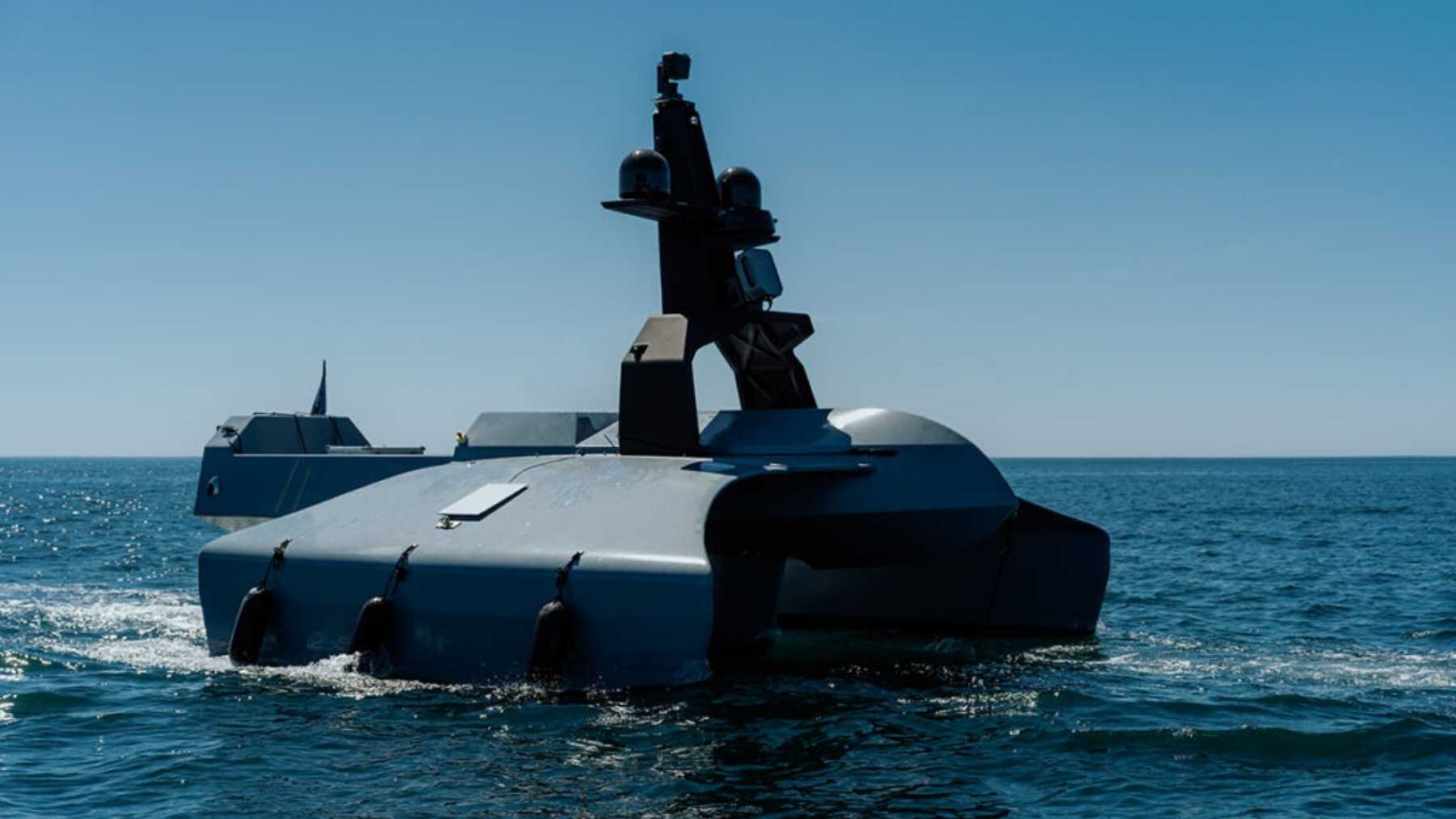
At RIMPAC this summer, one of those deliveries turned up with nobody aboard. Havoc, the Rhode Island outfit behind the little Rampage drone boats the U.S. Army has been running around the Philippines, says one of its 42-foot Kaikoa vessels carried a 3D-printed replacement part almost 40 nautical miles across Hawaiian water and delivered it to MV Asterix, the Royal Canadian Navy’s fleet oiler. The part had been printed ashore that same exercise. The boat drove itself out and back.
That is a small errand by naval standards. It is also the first time most people outside the trade will have heard of the company doing it, which is a bit odd given that Havoc did not exist at the start of 2024 and now has more than 100 autonomous boats in the water on three continents.
The boat that ran the errand is not the boat that built the company
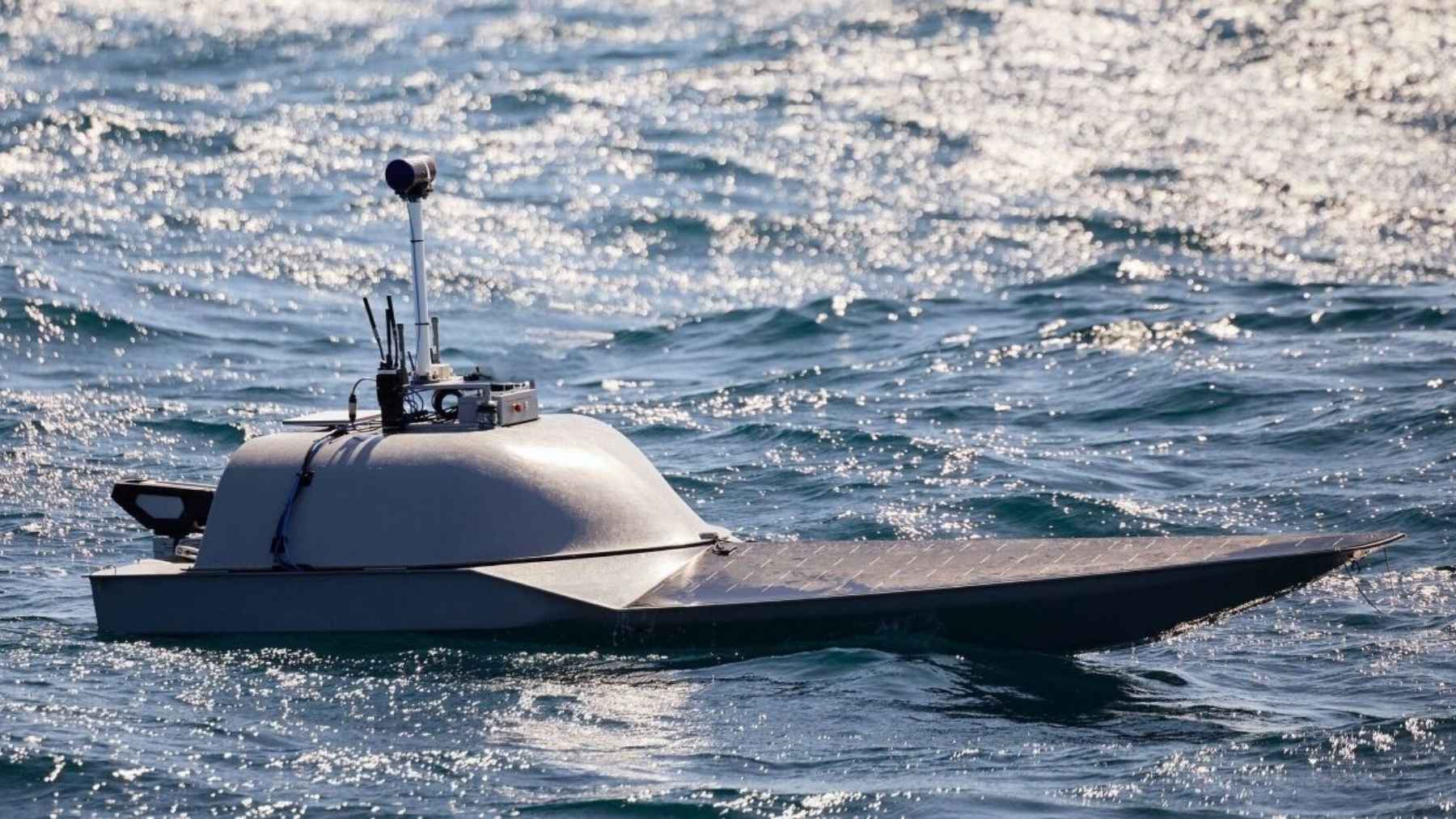
Havoc’s calling card is the Rampage, a 14-foot electric hull with solar panels on top, about 300 pounds of payload capacity and a top speed somewhere around 15 knots. It launches off a beach, rights itself if it flips, and needs no dock, no crane and no crew. The U.S. Army sent a group of them out to screen a 260-mile logistics run up the Philippine coast, which is still the best public example of what the thing is actually for.
The Kaikoa is the grown-up version. Havoc’s published specs put the 42-foot hull at 40 knots flat out with 3,640 pounds of cargo capacity, and the company sells it as a support hub rather than a sensor buoy. Underneath, both boats run the same software, which is the entire point of the company and the reason a 40-nautical-mile parts run matters more than the mileage suggests.
Havoc had told everyone what it planned to do there. Its June 23 announcement promised that its boats would autonomously resupply American and allied ships in what it billed as a first-of-its-kind multinational autonomous logistics operation, working through the Naval Postgraduate School’s advanced manufacturing consortium. Whether it was a first depends on how you slice the category. The event the Navy itself called historic was a different one, when a Typhoon uncrewed vessel drove into the well deck of the amphibious assault ship USS Essex on its own.
Havoc prices boats the way the Pentagon prices bullets
The Navy paid roughly $100,000 apiece for the first Rampages it bought. Co-founder and CEO Paul Lwin later told Forbes that a Rampage goes for $200,000 with the software included, and was blunt about which half of that he considers the actual product. “The boat doesn’t matter,” he said, putting the sophistication squarely in the software rather than the hull.
Either number is small change next to a warship, and that is the pitch. If a boat costs about what a decent missile costs, losing one stops being a disaster and starts being a line item. Lwin has made the comparison to munitions himself, repeatedly, in the way founders do when they have found a line that lands in a Pentagon briefing room.
The scale numbers behind it are real enough. Havoc says it has built and deployed more than 100 autonomous surface vessels across the U.S., Europe and the Indo-Pacific, with more than 30 delivered to the Defense Department, and has racked up over 25,000 hours of autonomous operation. In May the company closed a $100 million Series A, bringing total funding to roughly $200 million since it was founded in 2024, and said it had 40-plus boats mission-ready and expected to be producing thousands this year.
The Navy has started shopping the same way
In late May the Navy named seven companies to take drone ships into at-sea testing under its Medium Unmanned Surface Vessel marketplace, picked out of more than two dozen entrants. Havoc is in that group through PacMar Technologies, the Hawaii firm whose 100-foot boat runs Havoc’s autonomy software and has already been doing sea trials in the Pacific.
The terms are refreshingly blunt for a defense program. Finish the at-sea testing, which started in June and wraps by October, and you collect $15 million and become eligible for follow-on production. The March solicitation asks for a boat that can cover 2,500 nautical miles at 25 knots with 25 tons on the payload deck and survive through sea state 7, which starts around 20-foot waves and is the point at which most people would rather be indoors.
This marketplace only exists because the Navy scrapped the program before it. The Modular Attack Surface Craft effort was replaced in March, which annoyed a fair number of companies that had spent a year building toward it. The service has said it wants to go from four drone ships in the Indo-Pacific to 30 by 2030, and it has clearly decided that buying what already floats beats designing something new.
Havoc is not alone in reading the room. Saronic put its Marauder into sea trials around the same time, Leidos is in the same group with a hull of its own, and there is a whole tier of smaller boats below all of this, from the 305-pound Lightfish that shadowed a Chinese destroyer to a Mach 5 missile bolted onto a 180-foot robot ship.
A 200-foot version is a completely different business
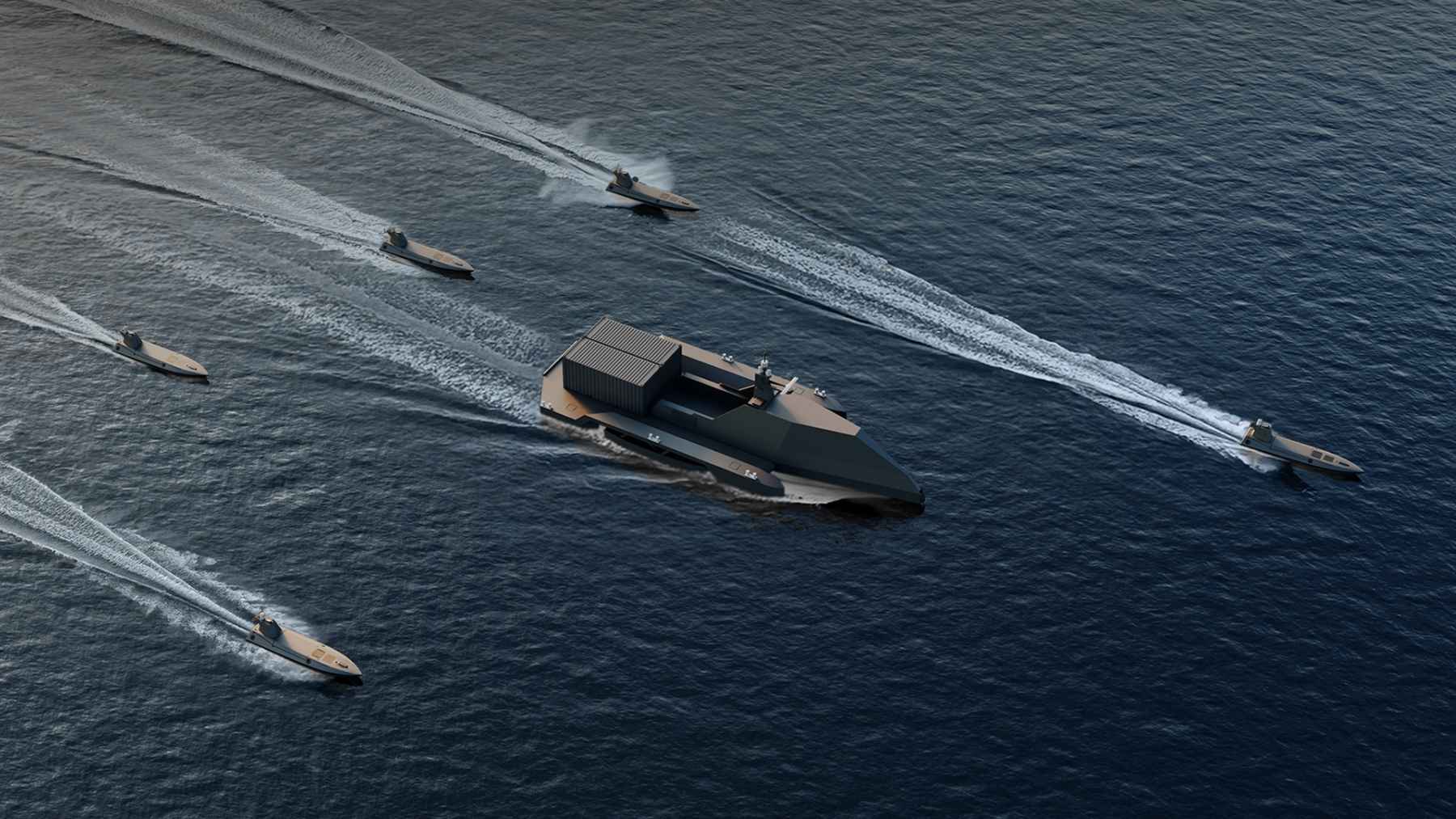
The part of Havoc’s plan that does not follow from any of this is the big one. On January 8, Hanwha Defense USA, Hanwha Systems and Havoc signed a memorandum of understanding to jointly develop 200-foot autonomous surface vessels, covering mass production planning, autonomy installation and proposal work. Hanwha Philly Shipyard is under consideration as the production site, and the companies were careful to say it is still under evaluation.
An MOU is not a contract, and a shipyard under consideration is not a shipyard building anything. It is worth being precise about that, because the deal was originally aimed at the Modular Attack Surface Craft solicitation, and that program no longer exists in the form it was written for.
The relationship behind it is more interesting than the paperwork. Back in October 2025 the two companies ran a joint demonstration in which a Havoc boat carried out an autonomous force protection mission off Hawaii while being commanded from Hanwha Ocean’s Geoje shipyard in South Korea, most of the Pacific away. Whatever else you think of the business model, driving a boat in Hawaiian water from a desk in Korea is a decent proof that the software travels.
Jumping from a 14-foot beach-launched hull to a 200-footer built in Philadelphia is not a scaling exercise, though. It is a different industry, with different welders, different regulators and a different failure mode when something goes wrong. Havoc has spread its bets accordingly, adding a Rhode Island manufacturing partnership with Senesco Marine in May and integration deals with Metal Shark, Leidos, Lockheed Martin and SAIC.
Nobody was shooting at any of this
RIMPAC 2026 ran from June 24 to July 31 around Hawaii, and it was not small. Thirty nations took part with 30,000 personnel, 31 surface ships, five submarines and more than 190 aircraft, and more than 35 separate experiments were run on unmanned systems and emerging tech.
It was also a permissive environment. Nobody was jamming the boats, nobody was spoofing their navigation and nobody was shooting at them. A parts run in Hawaiian water with allied ships all around is a genuine demonstration of the logistics idea and a very weak test of the contested part of contested logistics, which is the phrase every one of these companies uses in its marketing.
The Kaikoa also carried a spare part, not a weapon. Havoc’s account of the exercise has its people supporting safety boat operations, running security escorts around Hickam Marina and helping Marines assemble a 3D-printed Rampage at the joint manufacturing center ashore. That is a sensible list of chores. It is not the swarm of a thousand boats holding a strait that the company’s investor pitch is built around.
What the delivery does show is that the awkward middle of the plan is starting to work. Printing a part on shore and having a robot boat carry it 40 nautical miles out to a Canadian oiler is exactly the sort of unglamorous job that decides whether any of the rest of it is worth funding. The 200-footer will get the headlines if it ever gets built. The spare part is the thing the Navy will actually miss if it goes away.