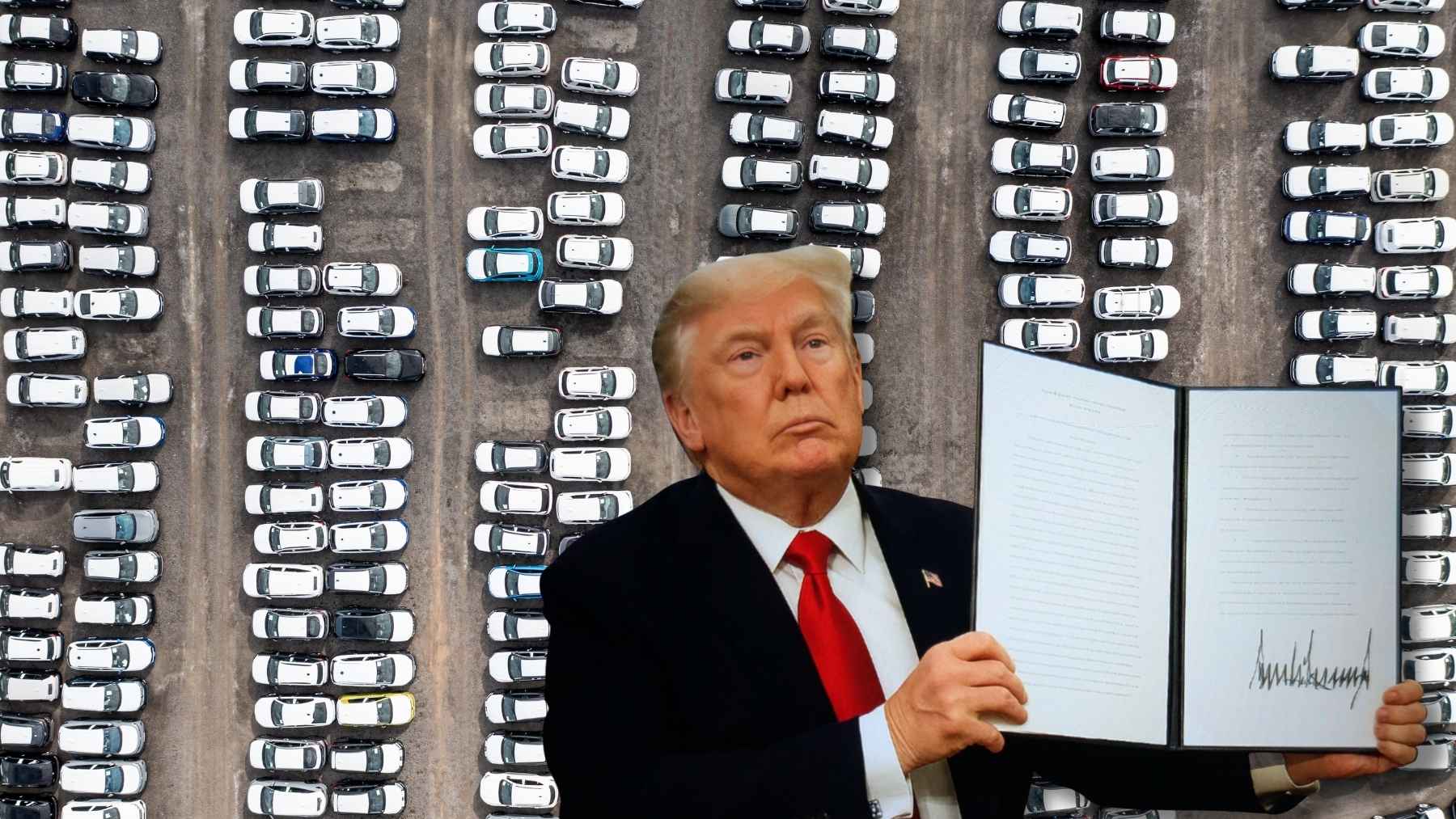

Breaking news: The Trump Administration is changing its mind about tariffs once again. This time, the administration proposed in June that vehicles and auto parts already subject to tariffs would be exempt from the new duties it wants to place on 60 U.S. trading partners.
Now, the administration wants to place tariffs ranging from 10 to 12.5 percent on Canada, Mexico, Japan, South Korea, China, the United Kingdom, and the European Union. These tariffs stem from an investigation under the Trade Act of 1974, with the administration claiming these countries are still trading goods made with forced labor. U.S. trading partners have denied this.
The split between those two rates isn’t arbitrary. Countries that at least have forced-labor import bans on the books but don’t really enforce them — Canada, Mexico, and the European Union among them — would get the lower 10% rate. Everyone else, China, Japan, South Korea, and the UK included, lands at 12.5%.
If this goes into effect in July, as the administration plans, vehicles and auto parts, such as steel, aluminum, and copper, wouldn’t be subject to the new tariffs. This includes products that comply with the United States-Mexico-Canada Agreement. However, electronics, materials, and other auto parts not covered by the auto parts tariff would be subject to duties.
And here’s the part that’s easy to miss: cars and metals aren’t getting carved out because someone in Washington felt generous. They’re left off the list because they’re already taxed under a separate national-security measure — the Section 232 duties covering autos, steel, aluminum, and copper. So it isn’t relief. It’s the government deciding not to tax the same bumper twice.
None of this is locked in, either. The proposal landed on June 2, the public comment window runs through July 6, and there’s a hearing scheduled for July 7. The timing is the whole point: the administration wants these new duties ready to drop the moment its current temporary tariff runs out this summer, so importers never catch a break in between.
This is all an attempt to rebuild the global tariff structure after President Donald Trump’s previous tariffs were called unconstitutional by the U.S. Supreme Court. At the time, the administration pledged to continue finding ways to place tariffs on basically everything. For those of us who are not political, however, it can really get confusing with Trump changing his opinion on tariffs and China every week.
More tariffs, more questions
After the Supreme Court ruled that the previous tariffs were unconstitutional, the Trump Administration imposed a 10% tariff on global imports under a different law (except on autos and metal imports). But this is temporary, expiring July 24th.
Even this got challenged in court, and in May the U.S. Court of International Trade ruled that the temporary global tariffs are unlawful too. Shocker. The government is appealing, so that 10% is still being collected for now. According to Automotive News, the forced labor tariffs will also be challenged in court.
“This was a Section 301 investigation of unprecedented scope,” Jennifer Smith-Veluz, an international trade attorney at law firm Butzel, told them. “There are real questions about whether a Section 301 can cover multiple countries in this way. However, the chance of success is unclear because the statute allows for imposition of tariffs.”
Automotive News also believes more tariffs could be on the way. Blah. At the end of the day, how does all this apply to us, car enthusiasts who aren’t political? Well, car prices will remain high, and automakers will continue to find ways to navigate the new tariffs and regulations.
The U.S.’s obsession with China has even led automakers like Mercedes-Benz and Lotus to plan for a possible ban from the country due to their Chinese investors. It’s a really difficult political landscape to navigate right now. And if the automakers don’t even know what’s happening next, neither do we.
As the grandfather and granddaughter in Holes would say:
“I’m tired of this, grandpa.”
“Well, that’s too damn bad!”