
2026 BMW X5
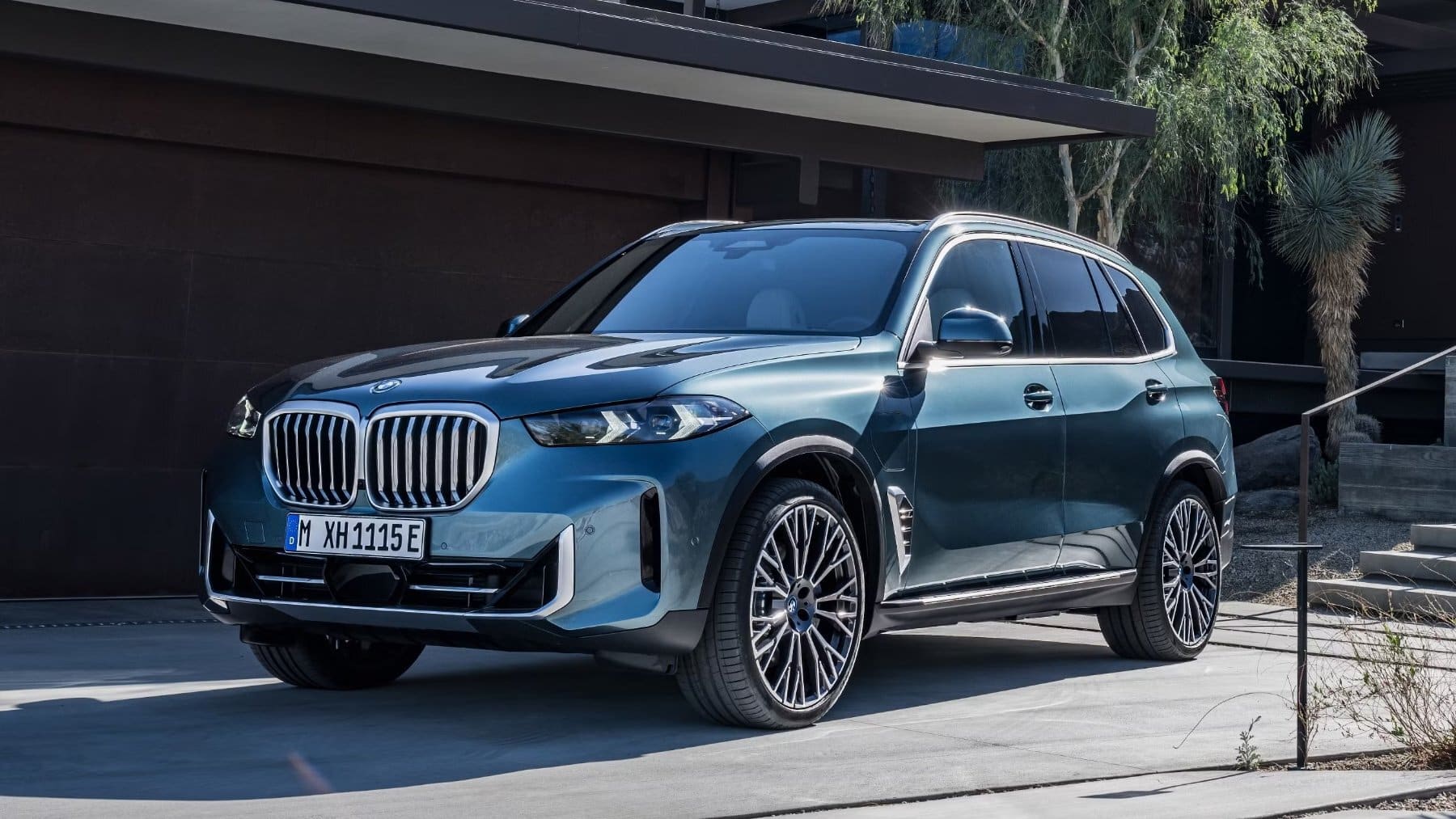
Overview
What's New for 2026
The 2026 BMW X5 arrives with meaningful technology and comfort enhancements that sharpen its competitive edge. The redesigned curved display pairs a 12.3-inch digital instrument cluster with a 14.9-inch central touchscreen running iDrive 8.5, creating a driver-focused command center. BMW's gesture controls, enhanced voice recognition, and haptic feedback on the touchscreen add layers of usability. The available Bowers & Wilkins premium audio system now features 32 speakers and 1,815 watts. Adaptive matrix LED headlights with improved night visibility are available across the range. All powertrains carry forward, but the integration of the new technology suite positions the X5 as one of the most connected luxury SUVs in its class.
Overview
The BMW X5 is a mid-size luxury SUV that has defined the premium segment since its debut in 1999. Now in its fifth generation, the 2026 X5 continues to set the tone for what a modern luxury SUV should be—a vehicle that balances dynamic driving engagement with genuine practicality. Three distinct powertrains offer buyers a clear progression from efficient luxury cruiser to unapologetic performance machine, while the optional third row adds family flexibility that many competitors in this class can't match.
With a starting MSRP of $71,075, the X5 commands a premium over some competitors but justifies it through superior driving dynamics, comprehensive technology, and the kind of engineering precision that has earned BMW its reputation. The X5 competes directly against the Audi Q7, Mercedes-Benz GLE, Volvo XC90, Acura MDX, and Cadillac XT6—all worthy adversaries, none quite matching the X5's combination of sportiness and refinement.
Driving Experience
BMW offers three compelling powertrains for the 2026 X5, each targeting different buyer priorities. The xDrive40i pairs a 3.0-liter turbocharged inline-six with 48-volt mild-hybrid assistance, producing 375 horsepower and 398 lb-ft of torque. This powertrain delivers the kind of effortless acceleration that luxury buyers expect, with EPA ratings of 23 city / 27 highway / 25 combined mpg that are respectable for a vehicle of this size. The 48V system smooths start-stop operation and provides a subtle boost during acceleration.
The xDrive50e plug-in hybrid combines the same turbocharged inline-six with electric motor assistance, producing 483 horsepower and 516 lb-ft of torque. The real appeal is approximately 40 miles of all-electric range, perfect for daily commutes without gasoline consumption. The transition between electric and gasoline power is nearly imperceptible, and total range exceeds 500 miles in hybrid mode.
The M60i is BMW's answer to power enthusiasts. Its 4.4-liter twin-turbocharged V8 produces 523 horsepower and 553 lb-ft of torque, launching the X5 from 0-60 mph in approximately 4.2 seconds. Fuel economy of 17 city / 22 highway mpg is the trade-off, but the visceral experience and 7,200-lb towing capacity justify the thirst for buyers who prioritize performance.
Across all variants, the X5's adaptive suspension delivers remarkable composure. Highway cruising is serene, with excellent isolation from road noise and imperfections. Push the X5 into corners, and it responds with surprising agility for its size—body roll is well-controlled, steering is precise, and the xDrive system distributes power intelligently between front and rear axles.
Interior, Comfort & Technology
The X5's interior has been refined to justify its premium positioning. The redesigned dashboard centers on the 14.9-inch curved touchscreen running iDrive 8.5, which has matured into one of the industry's most intuitive systems. Gesture controls, responsive voice recognition, and wireless Apple CarPlay and Android Auto ensure seamless connectivity. The optional head-up display projects critical information onto the windshield without requiring the driver's eyes to leave the road.
Material quality is impressive throughout. Soft-touch leather, genuine wood or aluminum trim, and metal accent pieces create an environment that feels worthy of the asking price. Front seats offer exceptional support with power adjustment, memory settings, and available massage functions. The second row provides generous legroom and comfort for adults, while the optional third row seats two additional passengers—best suited for children or short-trip adults.
Cargo capacity is practical: approximately 33.9 cubic feet behind the second row expands significantly with seats folded. The power-operated liftgate and flat load floor simplify loading. Climate control is standard three-zone with available four-zone for rear passengers. The available Bowers & Wilkins audio system is among the finest in any vehicle, delivering concert-quality sound through 32 speakers.
Trim Levels & Pricing
| Variant | Engine | Horsepower | Starting MSRP |
|---|---|---|---|
| xDrive40i | 3.0L Turbo I6 48V | 375 hp / 398 lb-ft | $71,075 |
| xDrive50e PHEV | 3.0L Turbo I6 + Electric | 483 hp / 516 lb-ft | ~$83,000 |
| M60i | 4.4L Twin-Turbo V8 | 523 hp / 553 lb-ft | ~$97,000 |
All prices are manufacturer's suggested retail prices as of March 2026 and exclude destination charges and applicable taxes. Popular options including Bowers & Wilkins audio, M Sports Package, and Premium Package can push well-equipped models above $100,000. The M60i fully loaded approaches $132,450.
Safety
The 2026 X5 features comprehensive safety engineering with superior structural design and extensive active safety technology. The previous-generation X5 earned top safety ratings from both IIHS and NHTSA; buyers should verify that current-year ratings are available at iihs.org and nhtsa.gov. Standard safety equipment includes automatic emergency braking with pedestrian detection, lane departure warning, lane keeping assist, and automatic high beams. The optional Driving Assistant Package adds adaptive cruise control with stop-and-go functionality, active blind spot detection, and rear cross-traffic alert.
The X5's robust structural design, multiple airbags, and advanced stability control systems provide excellent passive protection for all occupants. The optional 360-degree camera system makes parking and maneuvering in tight spaces significantly easier, while parking assistance can steer the vehicle into spots autonomously.
Warranty & Ownership Costs
| Coverage | Duration |
|---|---|
| Basic New Vehicle Warranty | 4 years / 50,000 miles |
| Powertrain Warranty | 4 years / 50,000 miles |
| Rust Perforation Warranty | 12 years / Unlimited miles |
| BMW Ultimate Care (Maintenance) | 3 years / 36,000 miles |
| Roadside Assistance | 4 years / Unlimited miles |
BMW's warranty is competitive with the segment, and the included Ultimate Care maintenance program covers scheduled service for the first three years. Post-warranty ownership costs are higher than average—annual maintenance runs approximately $1,500-$2,000 for the xDrive40i, with M60i models commanding higher costs. Extended warranty options are available and recommended for long-term ownership. Resale values remain strong, with three-year depreciation typically around 45-50%.
The Bottom Line
Who should buy: The 2026 BMW X5 is ideal for buyers who want a mid-size luxury SUV that doesn't compromise on driving engagement. The xDrive40i delivers practical luxury with respectable efficiency. The xDrive50e bridges the gap for EV-curious buyers who still want gasoline range. The M60i satisfies those who refuse to compromise on performance. If you prioritize driving dynamics and technology sophistication in your SUV, the X5 remains the benchmark.
Who should look elsewhere: Buyers prioritizing maximum third-row space should consider the Volvo XC90 or Lexus TX—the X5's optional third row is genuinely limited. Those seeking Scandinavian minimalism or maximum reliability should explore the XC90 or Lexus alternatives. Budget-conscious shoppers uncomfortable with premium maintenance costs should consider the Acura MDX, which offers strong value at a lower price point.
Our take: The 2026 X5 represents the mature evolution of one of automotive history's most influential luxury SUVs. It doesn't revolutionize the segment—it systematically perfects it. The diverse powertrain lineup ensures there's a version for every priority, comprehensive safety engineering validates BMW's commitment to occupant protection, and the refined interior with iDrive 8.5 delivers technology that actually enhances the driving experience. For balanced excellence across every dimension—comfort, performance, technology, safety—the 2026 X5 deserves serious consideration.
Frequently Asked Questions
What's the real-world fuel economy of the xDrive40i?
EPA ratings of 23/27/25 mpg are conservative; highway driving regularly achieves 28-29 mpg, while city driving typically lands near 21-22 mpg. The 48V mild-hybrid system genuinely improves efficiency during city driving and coasting.
Is the xDrive50e plug-in hybrid worth the premium?
If you commute under 40 miles daily, yes—you'll drive most days on pure electricity. For longer commutes or frequent road trips, the economics become less compelling. The 40-mile electric range handles most daily driving without gasoline, and home charging overnight is straightforward with a Level 2 charger.
Does the third row actually fit adults?
Not comfortably for long trips. The optional third row is genuinely useful for occasional child passengers or short trips for smaller adults. It prioritizes cargo flexibility over genuine three-row seating. For regular adult third-row use, consider the Mercedes-Benz GLS or BMW X7.
How does the X5 compare to the Mercedes-Benz GLE?
The X5 drives with more engagement and feels lighter on its feet, while the GLE offers slightly more interior space and a newer design. Both offer similar technology and pricing. Choose the X5 for driving dynamics; choose the GLE for maximum comfort and rear-seat space.
What towing capacity does the X5 offer?
All X5 variants are rated for 7,200 pounds of towing capacity, which is competitive in the mid-size luxury SUV segment. The M60i's V8 power makes towing feel particularly effortless, while the xDrive40i handles most trailers and boats without strain.
Is the Bowers & Wilkins audio system worth the cost?
At approximately $2,300, the 32-speaker, 1,815-watt system is one of the finest audio experiences available in any vehicle. If you value music quality during your daily commute, it's a worthwhile investment. The standard audio system is adequate but doesn't approach the same level of immersion.
Key Highlights
- Redesigned curved display with 12.3-inch + 14.9-inch screens
- Standard AEB with pedestrian detection and blind-spot monitoring
- Optional third-row seating for seven passengers
- Three powertrains: xDrive40i (375 hp), xDrive50e PHEV (483 hp), M60i (523 hp)
- M60i 0-60 in 4.2 seconds
- 7,200 lbs towing capacity across all models
- iDrive 8.5 with wireless smartphone integration
Powertrain Options
| Engine | Horsepower | Torque | Fuel | MPG |
|---|---|---|---|---|
| 3.0L Turbo I6 48V (xDrive40i) | 375 hp | 398 lb-ft | Premium Gasoline | 23 city / 27 hwy / 25 combined |
| 3.0L Turbo I6 + Electric (xDrive50e) | 483 hp | 516 lb-ft | PHEV | ~40 mi EV range |
| 4.4L Twin-Turbo V8 (M60i) | 523 hp | 553 lb-ft | Premium Gasoline | 17 city / 22 hwy |
Transmission: 8-speed Automatic
0-60 mph: 5.2 sec (40i) / 4.6 sec (50e PHEV) / 3.8 sec (M60i) seconds
Specifications
Pros & Cons
✓ Pros
- Exceptional driving dynamics and handling for its size
- Advanced iDrive 8.5 technology standard across lineup
- Diverse powertrain options for efficiency or performance
- Comprehensive standard safety features across all trims
- Optional third row for family flexibility
- 7,200 lb towing capacity is genuinely useful
✗ Cons
- Starting price premium over direct competitors at $71,075
- Higher-than-average maintenance costs post-warranty
- Expensive extended warranty recommended
- Limited cargo space with third row option
- Base model lacks some comfort features found on rivals