2026 Audi Q7
Overview
What's New for 2026
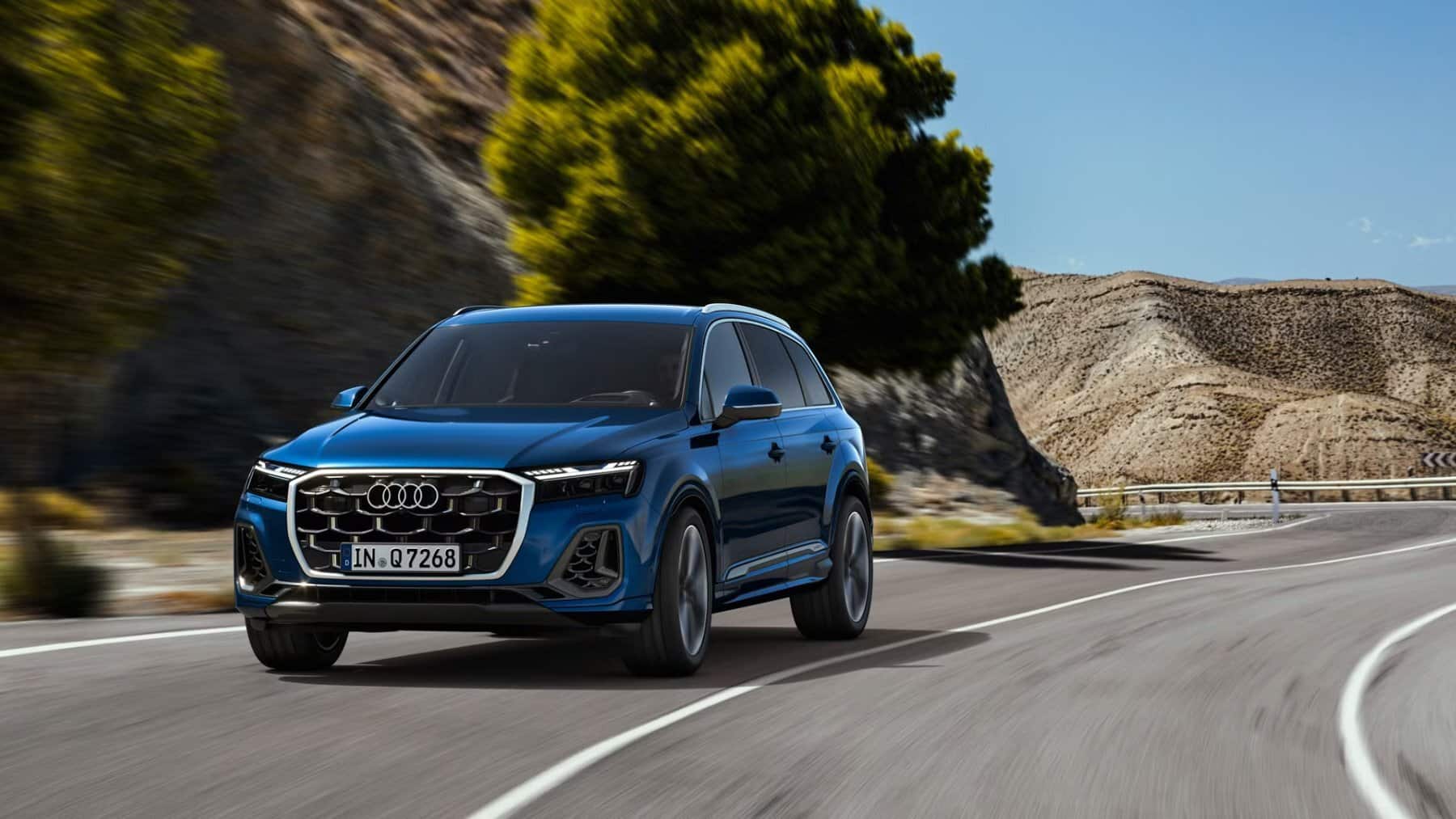
The 2026 Audi Q7 arrives with meaningful mid-cycle enhancements that sharpen its competitive edge in the luxury SUV segment. The refreshed exterior features a more commanding front-end design with a redesigned octagonal grille and more aggressive proportions, while every 2026 model now rolls on stylish 20-inch wheels as standard—an upgrade from the previous generation's 19-inch base setup. Inside, the cabin receives a more intuitive MMI interface with a centralized touchscreen approach, an enhanced Bang & Olufsen audio system for richer sound quality, and newly standard traffic sign recognition that displays road information directly on your digital instrument cluster.
Perhaps the most customer-friendly change: every new 2026 Audi Q7 comes with 3 years/30,000 miles of prepaid maintenance through Audi Signature Care, covering scheduled service and brake fluid changes at no extra cost. The Premium Plus trim level gains newly standard adaptive air suspension, automatically adjusting to road conditions for optimized ride quality and handling.
Overview
The 2026 Audi Q7 is a genuine mid-size luxury three-row SUV designed to compete directly with the BMW X5, Mercedes-Benz GLE, Volvo XC90, and Lexus TX. It's a vehicle for buyers who refuse to compromise on German engineering, premium materials, or the ability to transport up to seven passengers in composed comfort. Audi's dual-powertrain strategy ensures broad appeal: the Q7 45 with its efficient 2.0L turbocharged four-cylinder serves cost-conscious luxury shoppers, while the Q7 55 with its powerful 3.0L turbocharged V6 targets those who prioritize performance and towing capability.
Standard on all variants is Audi's legendary quattro all-wheel-drive system, which has become so refined that it's practically invisible to the driver—until you need it. The Q7 strikes a difficult balance: it feels appropriately upscale without the theatrical extravagance of some German competitors, and it's surprisingly nimble for a three-row SUV thanks to a responsive electric steering setup and well-tuned suspension geometry. Whether you're hauling a boat, ferrying a soccer team, or simply enjoying a highway cruise, the Q7 delivers the quiet confidence that buyers associate with the Audi brand.
Driving Experience
The Q7 45 delivers an engaging driving experience that belies its modest 261 horsepower output. The 2.0-liter turbo feels punchy off the line thanks to its generous 273 lb-ft of torque, and the eight-speed automatic transmission shifts with precision. Don't expect fireworks—0-60 mph takes approximately 6.7 seconds—but highway passing maneuvers feel composed and the engine's responsiveness will surprise those assuming turbocharged fours are inherently buzzy. Fuel economy comes in at 22/28/22 mpg (city/highway/combined), making it a reasonable choice for high-mileage owners.
The Q7 55 raises the ante significantly with a 3.0-liter twin-turbo V6 producing 335 horsepower and 369 lb-ft of torque. This pairing transforms the Q7 into a legitimately quick SUV, hitting 60 mph in around 5.5 seconds while delivering the smooth, linear power delivery only a proper six-cylinder can provide. The V6 feels particularly adept at highway cruising, where its refinement and mid-range thrust shine. Fuel economy sits at 19/25/20 mpg, a reasonable trade-off for the performance gains. The Q7 55's 7,700-lb towing capacity comfortably handles most trailers, while the Q7 45 manages 4,400 lbs—adequate for smaller boats or enclosed trailers.
Compared to the BMW X5, the Q7 feels slightly more planted; versus the Mercedes GLE, it offers marginally better steering feedback. Newly standard adaptive air suspension on the Premium Plus elevates the driving experience further, automatically softening the ride on rough pavement while stiffening during spirited driving. Body control is excellent, and the Q7's generous wheelbase contributes to impressive highway stability.
Interior, Comfort & Technology
The Q7's cabin exudes understated luxury. Materials throughout are premium—soft leather, solid plastics, precisely fitted panels—without the overwrought complexity of some rivals. The redesigned MMI touch system represents a genuine usability improvement, with responsive haptic feedback and handwriting recognition. The cabin accommodates three rows of seating, with a second row offering abundant legroom and the power-folding third row comfortably seating children and handling short-trip adult passengers.
Cargo flexibility is impressive: 14.2 cubic feet behind the third row expands to 69.6 cubic feet with all seats folded—enough for a substantial shopping haul or weekend trip. Standard equipment includes a 12.3-inch digital instrument cluster, touchscreen infotainment, wireless Apple CarPlay and Android Auto, a 10-speaker sound system, and a panoramic sunroof. The optional passenger-side touchscreen enables rear-seat entertainment, including video streaming and navigation assistance.
One note: the third row is genuinely better suited for children or occasional adult passengers than the extended trips some families expect. That said, Audi's thoughtful door design and low load floor make accessing the back rows easier than in many competitors.
Trim Levels & Pricing
The 2026 Audi Q7 offers three distinct trim levels across two powertrain options:
| Configuration | Starting MSRP | Key Additions |
|---|---|---|
| Q7 45 Premium | $62,000 | Standard quattro, MMI, 20" wheels, Audi Signature Care (3yr/30K mi) |
| Q7 45 Premium Plus | $65,800 | Adaptive air suspension, Bang & Olufsen audio, power tailgate |
| Q7 45 Prestige | $70,500 | Contoured massage seats, head-up display, panoramic sunroof, S Line exterior |
| Q7 55 Premium | $71,500 | V6 engine, enhanced performance tuning, sport suspension |
| Q7 55 Premium Plus | $73,200 | Adaptive air suspension, Bang & Olufsen audio, increased towing (7,700 lbs) |
| Q7 55 Prestige | $76,900 | Full luxury package: massage seats, head-up display, S Line sport package, adaptive suspension |
Manufacturer's Suggested Retail Prices (MSRP) are accurate as of March 2026 and do not include destination charges, taxes, or dealer-specific fees. Actual prices vary by location and dealer.
Safety
The 2026 Audi Q7 brings strong safety engineering to the mid-size luxury SUV segment. The vehicle features comprehensive structural design and a robust architecture engineered for occupant protection. Standard on all models is a comprehensive suite of driver-assistance technologies including forward collision warning, automatic emergency braking, blind spot monitoring, lane departure warning, and adaptive cruise control. The Q7 has historically earned strong IIHS ratings, and buyers should verify current-year testing results at iihs.org.
Audi's approach to active safety balances intervention with driver control—features alert without nagging, and the systems integrate transparently into the driving experience. The Q7's strong structural design and abundance of airbags provide solid passive protection for all occupants, including those in the third row.
Warranty & Ownership Costs
| Coverage | Duration |
|---|---|
| Basic Limited Warranty | 4 years / 50,000 miles |
| Prepaid Scheduled Maintenance (Audi Signature Care) | 3 years / 30,000 miles |
| Powertrain Warranty | 4 years / 50,000 miles |
| Roadside Assistance | 4 years / Unlimited miles |
Audi's inclusion of three years of complimentary maintenance represents genuine customer value—routine service, oil changes, and filter replacements are covered. Beyond the included period, luxury SUV ownership costs escalate predictably: independent estimates suggest average annual maintenance of approximately $1,185 once the Audi Care program expires. Extended warranty options through Audi Pure Protection plans are available for those seeking additional peace of mind.
The Bottom Line
Who should buy: The 2026 Q7 is ideal for executives and families seeking a three-row luxury SUV that balances performance with understated elegance. The Q7 45 appeals to efficiency-conscious buyers and daily commuters; the Q7 55 attracts performance enthusiasts and those regularly towing. If you value German engineering, generous cargo space, and a cabin that feels genuinely premium without ostentation, the Q7 deserves serious consideration.
Who should look elsewhere: Buyers prioritizing maximum third-row comfort for regular long-distance adult passengers should consider the Lexus TX, which offers more back-row space. Those who prefer Japanese reliability over European sportiness might find better peace of mind in the Lexus. Budget-conscious shoppers uncomfortable with luxury maintenance costs should consider certified pre-owned alternatives.
Our take: The 2026 Audi Q7 represents the best expression of its generation. The dual-powertrain strategy ensures there's a version for every wallet, the standard quattro AWD provides legitimate capability, and the newly included maintenance coverage sweetens an already compelling value proposition. The new adaptive air suspension transforms Premium Plus and Prestige models into genuinely refined highway cruisers, and the refreshed interior design feels modern without the button-overload complexity of some competitors. While the third row remains best suited for children, the Q7's breadth of capability—merging towing prowess, passenger accommodation, premium interior materials, and spirited driving dynamics—is simply difficult to fault. This is what a luxury three-row SUV should be.
Frequently Asked Questions
Is the 2026 Q7 truly a three-row SUV, or is the third row cramped?
The third row is genuine but honest about its limitations. It comfortably seats children and teenagers, with usable legroom for shorter adults. Extended journeys are better suited to the spacious second row. If three-row comfort for adults is paramount, the Lexus TX offers more rear-seat space, though it sacrifices some of the Q7's driving engagement.
Should I choose the Q7 45 or Q7 55?
For daily driving, fuel economy, and lower maintenance costs, the Q7 45 is sufficient and genuinely enjoyable. Its turbo four delivers surprising responsiveness, and 22 combined mpg is respectable for the segment. Choose the Q7 55 if you tow regularly (7,700 lbs versus 4,400 lbs), prefer six-cylinder smoothness, or value the additional 74 horsepower for highway passing and spirited driving. The price premium is offset by stronger resale value and genuine performance gains.
What does Audi Signature Care cover?
This prepaid maintenance program covers all scheduled services for the first three years or 30,000 miles—whichever comes first. This includes oil changes, filter replacements, inspections, and one brake fluid service. It's excellent coverage that eliminates surprise maintenance costs during the critical early ownership window. After 30,000 miles or three years, standard dealer maintenance applies.
How does the Q7 compare to the BMW X5?
Both are exceptional vehicles with different strengths. The Q7 emphasizes balanced driving dynamics and interior refinement without excess complication, and offers genuine three-row seating that the X5 makes available only as an option. The BMW X5 feels sportier and slightly more nimble, though its iDrive system has a steeper learning curve. For pure value and three-row practicality, the Q7 holds its own—and its standard maintenance coverage provides tangible cost advantages early in ownership.
Is adaptive air suspension worth the upgrade?
Yes, particularly for Premium Plus and above trims where it arrives as standard. The system automatically softens rides on rough pavement and stiffens during spirited cornering, meaningfully improving both comfort and handling. For those who spend significant time on varied road surfaces, it's one of the most tangible upgrades available.
What is the Q7's cargo capacity?
The Q7 offers 14.2 cubic feet behind the third row, 35.7 cubic feet behind the second row, and 69.6 cubic feet with all seats folded. The power-folding third row and flat load floor make transitions between passenger and cargo configurations quick and easy. For context, the BMW X5 offers slightly less total cargo volume, while the Volvo XC90 is competitive in this dimension.
Key Highlights
- Two engines: Q7 45 (261 hp I4) and Q7 55 (335 hp V6)
- Genuine seven-seat capacity with practical third row
- Towing: 4,400 lbs (Q7 45) to 7,700 lbs (Q7 55)
- 69.6 cu ft max cargo with all seats folded
- 3-year/30,000-mile prepaid maintenance included
- Standard AEB with pedestrian detection and blind-spot monitoring
- Quattro AWD standard on all trims
Powertrain Options
| Engine | Horsepower | Torque | Fuel | MPG |
|---|---|---|---|---|
| 2.0L Turbo I4 (Q7 45) | 261 hp | 273 lb-ft | Premium Unleaded | 22 city / 28 hwy / 22 combined |
| 3.0L Turbo V6 (Q7 55) | 335 hp | 369 lb-ft | Premium Unleaded | 19 city / 25 hwy / 20 combined |
Transmission: 8-Speed Tiptronic
0-60 mph: 5.4 sec (Q7), 3.9 sec (SQ7) seconds
Specifications
Pros & Cons
✓ Pros
- Q7 45 starts at $62,000 offering strong value vs BMW X5
- Genuine third-row seating for families
- 7,700-lb towing on Q7 55 handles boats and trailers
- Flexible cargo from 14.2 to 69.6 cu ft
- 3-year prepaid maintenance reduces ownership costs
- Composed highway ride with excellent isolation
✗ Cons
- Q7 45 four-cylinder feels modest for 4,900-lb SUV
- Third row tight for adult long-haul use
- MMI interface occasionally slower than Mercedes MBUX
- Fuel economy of 20-22 mpg combined is moderate
- Nearly 5,000 lb curb weight makes parking challenging