
2026 Chevrolet Tahoe
Overview
What's New for 2026
The 2026 Chevrolet Tahoe carries forward from the complete architectural redesign introduced in 2021, which modernized this full-size body-on-frame SUV while preserving the utilitarian DNA that defines the segment. For 2026, refinements target real-world ownership priorities: improved powertrain efficiency, updated infotainment software with faster processing, and expanded availability of advanced safety systems across all trim levels. The most significant development involves the continued availability of the 3.0-liter Duramax turbo-diesel engine, providing genuine efficiency advantages for buyers prioritizing fuel economy over outright power. This three-engine lineup—5.3-liter V8, 6.2-liter V8, and diesel turbo—gives buyers unprecedented flexibility within a single model line.
The Tahoe's positioning in 2026 remains strategically important for Chevrolet as a full-size SUV that competes directly against the Ford Expedition, GMC Yukon, Toyota Sequoia, Nissan Armada, and Jeep Wagoneer. Each engine option targets distinct customer segments: the 5.3-liter represents the balanced choice, the 6.2-liter serves performance-minded buyers, and the diesel caters to those prioritizing towing capacity and highway efficiency. The lineup reflects GM's recognition that full-size SUV buyers have disparate priorities, and one-size-fits-all powertrain strategy no longer works in this segment.
Trim level expansion for 2026 provides clearer delineation between value-oriented and luxury variants. The base LS remains the volume purchase point, while the RST, LT, and Z71 address mainstream truck buyers. The Premier and High Country represent the luxury upper tier, targeting buyers willing to invest significantly more for advanced technology, premium materials, and concierge service benefits. This structured approach helps differentiate the Tahoe from competitors offering confusing trim hierarchies.
Overview
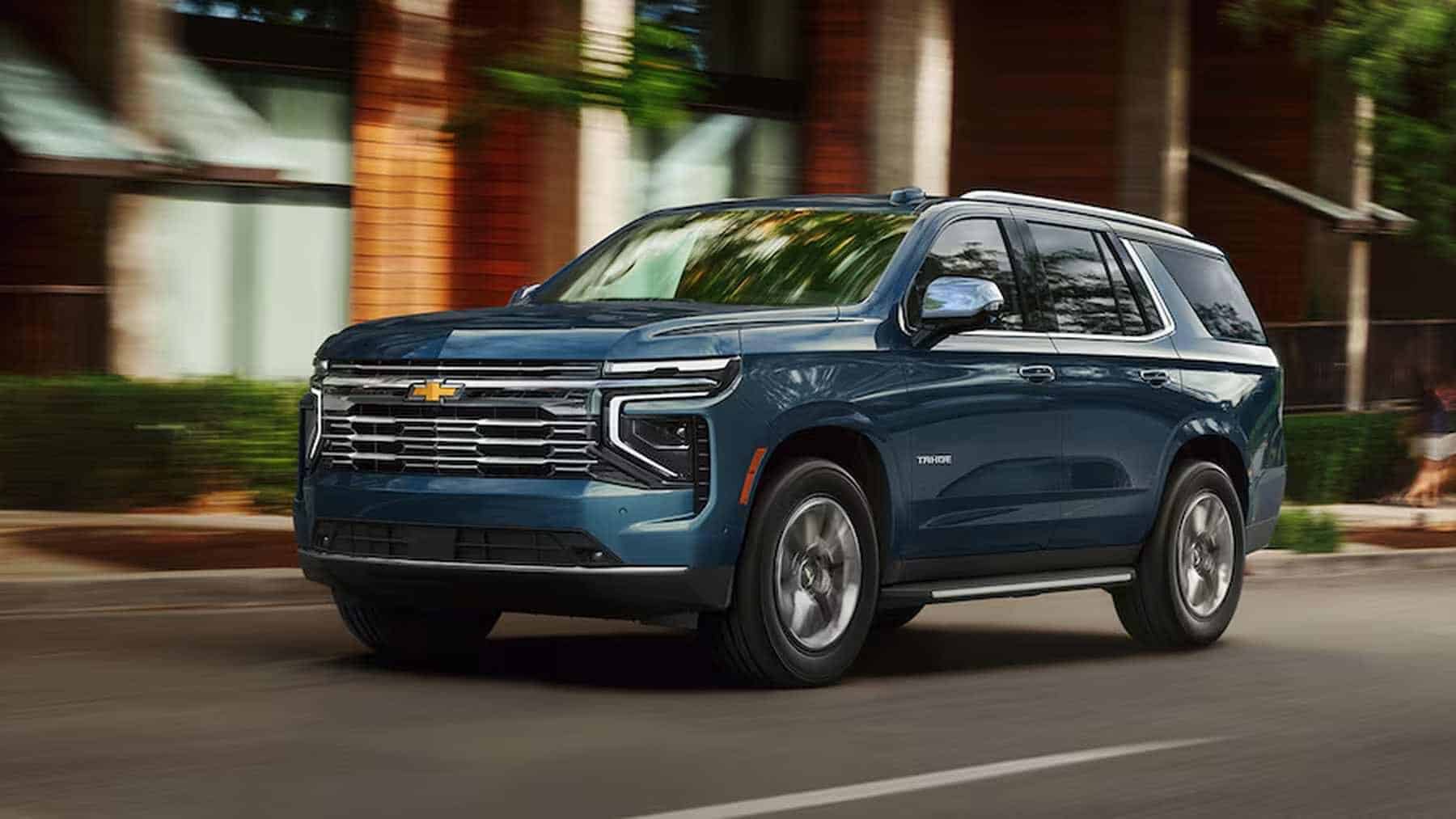
The 2026 Chevrolet Tahoe is a full-size, three-row SUV that seats up to nine passengers (depending on configuration) across a 116.0-inch wheelbase, making it 14 inches longer than the Traverse yet roughly equivalent in maximum seating. The complete MSRP range stretches from approximately $60,400 (LS 2WD) to $83,400 (High Country 4WD), positioning the Tahoe as the premium-priced entry point in GM's full-size SUV family compared to the lower-cost GMC Yukon. This pricing reflects the Tahoe's slightly more upscale initial content assumptions, though both vehicles share fundamental architecture and manufacturing philosophies.
The three available engines provide distinct operational profiles. The standard 5.3-liter EcoTec3 V8 delivers 355 horsepower and 383 pound-feet of torque, providing adequate power for the Tahoe's 5,500-pound curb weight while maintaining reasonable fuel economy (18 city/24 highway for 2WD models). The available 6.2-liter EcoTec3 V8 generates 420 horsepower and 460 pound-feet of torque, enabling superior acceleration and towing power (8,300 pounds maximum). The 3.0-liter Duramax turbo-diesel I6, with 305 horsepower and an impressive 495 pound-feet of torque, delivers highway fuel economy up to 28 MPG and supports towing up to 8,200 pounds. Each engine pairs with a 10-speed automatic transmission featuring optimized shift patterns for the powerplant's characteristics.
Drivetrain availability includes RWD and 4WD configurations across all engines, with Real-Time AWD as an option on select trims. The available electronic locking rear differential on 4WD models provides genuine off-road capability enhancement, engaging automatically or manually to maximize traction across both axles in low-speed technical terrain. Maximum payload capacity reaches 1,500 pounds, while towing capacity varies from 8,200 pounds (diesel) to 8,400 pounds (5.3L V8) depending on configuration and equipment level.
Driving Experience
The 2026 Tahoe drives with surprising composure for a vehicle approaching 200 inches in length. The independent double-wishbone front suspension and multi-link independent rear suspension deliver genuine isolation from road texture, with excellent bump absorption that speaks to the vehicle's utilitarian engineering. Steering feel is appropriately heavy at highway speeds, giving confidence during lane changes and expressway negotiation, while remaining acceptably light for parking maneuvers. The standard electronic stability control and optional traction management systems provide genuine handling security without intruding excessively on driver feel.
Engine selection dramatically impacts driving character. The 5.3-liter V8 provides sufficient power for highway cruising and acceleration, with smooth, linear power delivery that proves adequate rather than exciting. The 6.2-liter V8 transforms the Tahoe into a legitimate performance vehicle, delivering noticeable acceleration and responsive power that justifies the performance package premium. The diesel engine emphasizes low-end torque and highway efficiency, providing genuine advantages for buyers covering substantial annual mileage—25,000 miles annually becomes the break-even point against the 5.3L despite the diesel's premium pricing, depending on fuel cost assumptions.
Transmission calibration deserves specific mention: the 10-speed automatic shifts seamlessly during gentle cruising, almost imperceptibly downshifting for highway acceleration. Sport mode provides perceptibly quicker shift response, though the full-size SUV never feels genuinely sport-tuned. The diesel variant's transmission emphasizes fuel economy, holding longer gear selections even during moderate acceleration. Fuel consumption data varies substantially by engine choice: the diesel delivers up to 28 MPG highway, the 5.3L achieves 24 MPG highway, and the 6.2L manages approximately 21 MPG highway, a 33-percent difference that substantially impacts ownership costs across high-mileage scenarios.
Interior, Comfort & Technology
The Tahoe's interior accommodates up to nine passengers across three rows, with considerable flexibility in second-row seating configuration. The standard bench seat provides jump seating for three, while optional captain's chairs create genuinely comfortable perches for the middle row. Third-row entry and exit is straightforward thanks to second-row seats with power recline and forward-slide mechanisms. Legroom in the third row exceeds many competitors, with clear overhead visibility and good headroom for children or smaller adults. Climate zone control on higher trims maintains distinct temperatures across all three rows, a critical feature when accommodating diverse passenger loads.
The dashboard architecture reflects Chevrolet's latest design language, with a horizontal orientation that emphasizes width and openness. The standard 11.6-inch touchscreen infotainment system runs Chevrolet's latest MyLink operating system with wireless Apple CarPlay/Android Auto on most trims. Premium trims add a larger 13.4-inch display with additional configurability and available navigation integration. High Country models include a fully configurable digital gauge cluster, allowing drivers to prioritize information based on individual preference. The premium Bose audio system available on higher trims provides notably superior acoustic clarity compared to standard units.
Material quality progresses logically through the trim hierarchy. Base LS models utilize durable, practical synthetic leather and textured plastics that prioritize longevity over perceived luxury. RST and LT trims introduce genuine leather seating, higher-quality trim materials, and improved dash pad texturing. Premier and High Country represent the luxury ceiling, with premium aniline leather, authentic wood accents, and soft-touch plastics throughout the cabin. The heated and cooled seat functionality on higher trims provides genuine comfort advantages in extreme climates, particularly valuable when occupying the front row for extended highway drives.
Trim Levels & Pricing
The 2026 Chevrolet Tahoe offers seven distinct trim levels, with pricing varying by powertrain selection and drivetrain configuration:
| Trim | Starting MSRP (5.3L) | Key Features |
|---|---|---|
| LS 2WD | $60,400 | Base automatic emergency braking, forward collision warning, standard 11.6" MyLink touchscreen, 8-passenger seating, power windows/locks/mirrors |
| LS 4WD | $63,300 | LS features plus four-wheel drive with 4L/4H/2H electronic shift, locking differential (available) |
| RST | $64,800 | Leather-trimmed seating, power front seats, remote start, power liftgate, upgraded trim materials, sport appearance package |
| LT | $67,500 | Surround-view camera, blind-spot monitoring with rear cross-traffic alert, navigation, heated front seats, dual-zone climate control |
| Z71 4WD | $68,200 | Skid plates, all-terrain tires, terrain response system, electronic locking rear differential, Rancho shocks, off-road-focused styling |
| Premier | $72,100 | Premium leather, power rear liftgate, hands-free tailgate, heated second-row seats, power sunroof, Bose premium audio system |
| High Country | $78,500 | Fully configurable digital gauge cluster, premium aniline leather, ambient interior lighting, panoramic sunroof, advanced driver assistance systems |
The LS 2WD base model at $60,400 represents exceptional value for a full-size three-row SUV with modern safety technology and comprehensive standard content. The 4WD upgrade at $63,300 remains reasonable for those requiring all-weather or light off-road capability. The RST at $64,800 introduces genuine luxury content including leather seating and power features, representing the sweet spot for buyers wanting comfort without premium pricing. Z71 at $68,200 targets off-road-oriented buyers with specialized suspension, protective gear, and terrain management systems. Premier and High Country represent significant investments ($72,100+) reflecting genuine luxury positioning with premium materials and advanced technology.
Safety
The 2026 Tahoe incorporates comprehensive safety technology across all trim levels, beginning with standard features on the base LS: automatic emergency braking, forward-collision warning, lane-departure warning, and lane-keeping assist. These foundational systems provide protection against common accident scenarios. Higher trims progressively add blind-spot monitoring with rear cross-traffic alert, surround-view camera systems, adaptive cruise control with forward-collision mitigation, and parking assist with automatic braking. The High Country adds a fully configurable digital gauge cluster that can prioritize safety information display, allowing drivers to customize critical warning presentation.
The Tahoe's structural design emphasizes occupant protection through multiple integrated systems. The rigid steel frame provides excellent rollover and side-impact protection, with crumple zones strategically positioned to absorb frontal impact energy away from the passenger compartment. Multiple airbags throughout the cabin—including roof-rail side curtain airbags—provide protection across all seating positions. The available surround-view camera system eliminates traditional blind spots during parking, preventing the low-speed collisions common with large vehicles. Electronic stability control and available electronic locking differentials provide traction management for both highway and off-road scenarios.
Practical safety features extend beyond formal crash protection. The power liftgate with optional hands-free opening reduces fumbling with keys or door handles when loading cargo with full hands. Heated mirrors prevent frost accumulation in cold climates, maintaining critical visibility. The available blind-spot monitoring provides audio and visual warnings during lane changes, catching situations that driver mirrors might miss. For comprehensive crash test ratings and safety performance evaluation, consult nhtsa.gov and iihs.org for official assessments.
Warranty & Ownership Costs
Chevrolet's warranty coverage for the 2026 Tahoe provides standard protection through the critical early ownership period:
| Coverage | Duration |
|---|---|
| Basic Warranty | 3 years / 36,000 miles |
| Powertrain Warranty | 5 years / 60,000 miles |
| Corrosion Perforation | 6 years / 100,000 miles |
| Roadside Assistance | 5 years / 60,000 miles |
Ownership costs for the Tahoe require careful analysis given the substantial price range and engine options. The 5.3-liter V8 provides reasonable fuel economy for the size class at approximately 18-24 MPG depending on driving conditions, translating to roughly $2,000-$2,400 annual fuel costs assuming 12,000 annual miles at $3.50/gallon. The diesel variant delivers 26-28 MPG highway, potentially reducing fuel costs to $1,600-$2,000 annually—a meaningful savings given the diesel's $4,000-$5,000 premium. Insurance rates for full-size SUVs run 15-20 percent higher than midsize counterparts despite similar mechanicals, reflecting the increased claim severity from accidents involving larger vehicles. Maintenance costs are competitive, with routine service ($80-$120 for oil changes) following straightforward Chevrolet schedules. The EcoTec3 V8 family has proven exceptionally reliable, with many examples exceeding 200,000 miles without major issues.
The Bottom Line
The Verdict: The 2026 Chevrolet Tahoe represents the full-size SUV segment's strongest value proposition, offering three distinct engine options, genuine three-row practicality, and competitive pricing against the Expedition and Sequoia while undercutting the Wagoneer on comparable equipped bases.
Who Should Buy: Large families requiring genuine three-row seating will appreciate the Tahoe's practical architecture and spacious interior. Buyers prioritizing towing capability should consider the 6.2-liter V8 or diesel variants, capable of hauling substantial trailers safely. Fleet operators appreciate the Tahoe's straightforward design and proven reliability. High-mileage drivers should specifically evaluate the diesel variant, which provides meaningful fuel economy advantages that justify the premium on 25,000+ annual mile usage patterns.
Who Should Look Elsewhere: Luxury-focused buyers might prefer the Cadillac Escalade despite its significant price premium. Those seeking maximum off-road capability should evaluate the purpose-built 4Runner or the Wrangler Unlimited. Buyers prioritizing sedan-like handling and refinement should explore the Palisade or Grand Highlander instead. Drivers unable to justify the premium pricing for three-row seating should consider the Tahoe's midsize Traverse sibling, which delivers impressive practicality at substantially lower cost.
Frequently Asked Questions
What is the towing capacity of the 2026 Tahoe and which engine is best for towing?
The 2026 Tahoe offers impressive towing capacity across its engine lineup. The 5.3-liter V8 supports up to 8,400 pounds, the 6.2-liter V8 reaches 8,300 pounds, and the diesel manages 8,200 pounds maximum. The 6.2-liter V8 provides the best real-world towing experience due to its superior torque (460 lb-ft), delivering stronger mid-range pulling power essential for mountain passes and heavy trailer negotiation. The diesel excels at highway cruising with substantial trailers, though the V8 options provide superior acceleration when merging with loaded trailers. Max Trailering Package availability ensures proper cooling, transmission tuning, and braking integration.
Should I choose the diesel engine for the 2026 Tahoe?
The 3.0-liter Duramax diesel makes financial sense if you drive 25,000+ miles annually, where the superior highway fuel economy (28 MPG) provides meaningful fuel cost savings despite the engine's $4,000-$5,000 premium. The diesel excels at steady-state highway cruising and delivers impressive low-end torque, making it ideal for towing scenarios. However, diesel fuel costs must be factored into calculations, and not all regions offer convenient diesel refueling. The 5.3-liter V8 represents the optimal choice for most buyers balancing cost, performance, and real-world ownership simplicity.
How many passengers can the 2026 Tahoe seat and is the third row usable?
The 2026 Tahoe seats up to nine passengers in three rows, with the second row as a bench or optional captain's chairs, and the third row as a bench. The third row provides legitimate seating for children or smaller adults, with better headroom and legroom than many competitors. Entry and exit to the third row is straightforward thanks to power-recline second-row seats. Most families appreciate the genuine three-row usability rather than treating the third row as emergency seating.
How does the 2026 Tahoe compare to the Ford Expedition and Toyota Sequoia?
The Tahoe undercuts the Expedition on base pricing by approximately $3,000 while providing equivalent capability and features. The Sequoia commands a significant price premium despite offering similar architecture, reflecting Toyota's brand prestige and hybrid powertrain option. The Tahoe's strength lies in accessible pricing combined with three distinct engine options, providing flexibility that the Expedition's turbo-gasoline lineup and Sequoia's hybrid-only strategy cannot match. The diesel option specifically gives the Tahoe an advantage for high-mileage buyers where no competitor offers equivalent capability.
What is the fuel economy of the 2026 Tahoe?
EPA fuel economy varies substantially by engine and drivetrain selection. The 5.3-liter V8 2WD achieves approximately 18 city/24 highway/20 combined MPG. 4WD models show slight reductions to approximately 17 city/22 highway/19 combined. The 6.2-liter V8 delivers roughly 16 city/21 highway/18 combined MPG. The diesel excels with up to 26 city/28 highway/26 combined MPG, a significant advantage for highway-focused driving. Real-world results typically trend 1-2 MPG lower than EPA estimates, especially in stop-and-go urban driving or when towing.
Is the Z71 trim worth the premium for light off-road driving?
The Z71 adds genuine off-road capability through skid plates, all-terrain tires, terrain response system, electronic locking rear differential, and Rancho shocks at approximately $3,400-$4,000 premium. For buyers engaging in moderate off-road exploration or bad-weather highway driving, these features provide meaningful capability enhancement. For primarily on-road usage with occasional unpaved road driving, standard trim suspension with optional all-terrain tires provides adequate performance at lower cost. The locking differential specifically justifies the Z71 investment for buyers regularly encountering low-traction terrain.
Key Highlights
- Three engine options: 5.3L V8, 6.2L V8, 3.0L Duramax DieselnFull-size body-on-frame SUV with genuine three-row spacenUp to 122.9 cu ft maximum cargo volumenUp to 8,200 lbs towing capacity (5.3L V8)nAvailable Magnetic Ride Control adaptive suspensionnIndependent rear suspension for improved ride and cargo
Powertrain Options
| Engine | Horsepower | Torque | Fuel | MPG |
|---|---|---|---|---|
| 5.3L V8 | 355 hp | 383 lb-ft | Gasoline | 16 city / 20 hwy / 17 combined |
| 6.2L V8 | 420 hp | 460 lb-ft | Gasoline | 14 city / 18 hwy / 16 combined |
| 3.0L Duramax Turbo Diesel I6 | 305 hp | 495 lb-ft | Diesel | 21 city / 28 hwy / 24 combined |
Transmission: 10-speed automatic
0-60 mph: 6.0 seconds
Specifications
Pros & Cons
✓ Pros
- Massive interior space with genuine third-row comfort for adultsnThree engine options cover efficiency to performancen8,200+ lb towing handles boats and heavy trailersnIndependent rear suspension dramatically improves ride qualitynAvailable Duramax diesel delivers 700+ mile highway rangenStrong resale value among full-size SUVs
✗ Cons
- Starting above $60,000 represents significant investmentnFuel economy of 15-16 mpg city with V8 enginesnSheer size makes urban parking and maneuvering difficultnBase LS trim feels sparsely equipped for the pricenHigher-than-average maintenance costs post-warranty