
2026 Ford Ranger
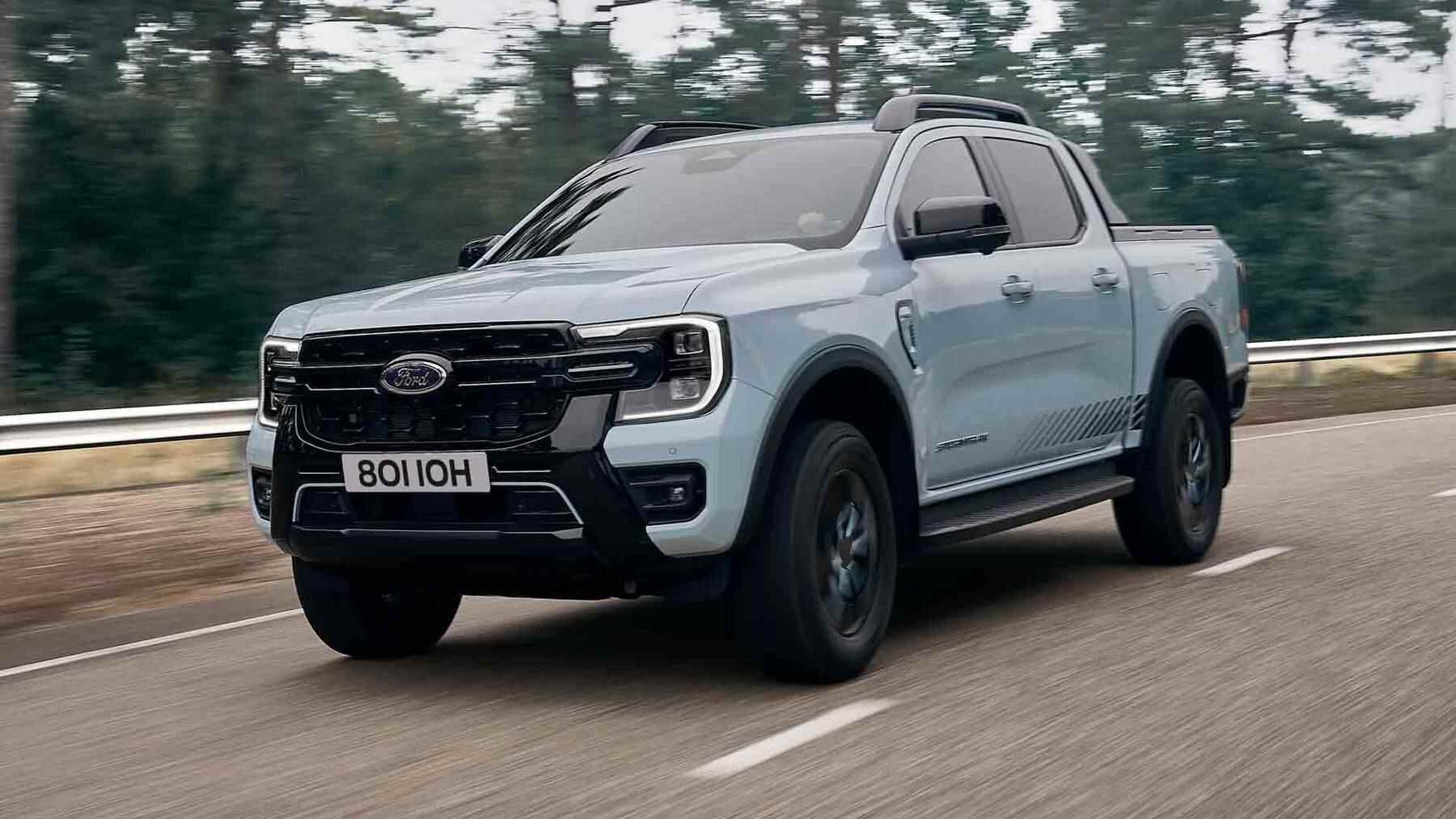
Overview
What's New for 2026
Ford's midsize Ranger enters 2026 with meaningful mechanical refinement and expanded powertrain access. The most significant change: the 2.7L EcoBoost V6 (315 hp/400 lb-ft) becomes available across all trim levels, not just Lariat and above, democratizing genuine towing muscle throughout the lineup. Previously, buyers stepping into a Ranger faced a difficult choice—accept the 2.3L EcoBoost's modest 270 horsepower or jump to premium trim pricing for V6 access. This restructuring recognizes that many Ranger buyers prioritize capability over trim content, eliminating the forced upsell dynamic.
The 10-speed automatic transmission receives calibration updates that sharpen downshift responsiveness during highway merging and towing, addressing one of the few criticisms leveled at the previous generation. The transmission now holds gears longer during aggressive throttle input, reducing the lag between acceleration demand and response—particularly noticeable when merging into traffic with a loaded bed or trailer behind. Ford also refined the transfer case shift quality on 4WD models, making the shift from 2WD to 4WD feel less notchy and more refined.
Interior refinement for 2026 includes a redesigned steering wheel with improved ergonomic grip, updated soft-touch dashboard materials on higher trims that reduce glare and fingerprints, and expanded wireless device integration across the SYNC 4 infotainment system. The Ranger's proven body-on-frame architecture remains unchanged, a deliberate choice by Ford engineers who view the current platform as mechanically optimized. Cosmetic updates include new grille treatment on XLT and above models and optional new wheel designs that improve both aesthetic appeal and off-road wheel clearance.
Overview
The 2026 Ford Ranger positions itself at the intersection of daily drivability and legitimate truck capability. At $35,245 for a base XL model with the 2.3L EcoBoost (270 hp/310 lb-ft), the Ranger undercuts the Toyota Tacoma ($32,000 base, though that model features a more dated platform) while delivering superior interior refinement and modern connectivity. The Ranger's body-on-frame construction—critical for trucks intended to experience heavy use—provides structural rigidity that the Maverick's unibody simply cannot match. Where the Maverick excels at efficiency, the Ranger dominates in durability and payload integrity.
Engine choice defines the Ranger experience. The 2.3L EcoBoost turbo generates predictable, adequate power for light towing (5,000 lbs) and moderate hauling work, achieving approximately 23-24 mpg highway in real-world testing. The 2.7L EcoBoost V6 (315 hp/400 lb-ft) transforms the truck into a genuine workhorse, towing up to 7,500 lbs and operating with noticeable authority that makes highway merging effortless and trailer acceleration progressive rather than strained. Real-world fuel economy drops to 20-22 mpg highway, a meaningful 2-3 mpg sacrifice that costs approximately $400 annually versus the turbo four-cylinder, but the capability uplift justifies this for heavy-duty users. The high-output 3.0L EcoBoost V6 Raptor (405 hp/430 lb-ft) remains reserved for Raptor trim at approximately $51,945, delivering supercar-level acceleration (0-60 in approximately 5.5 seconds) that serves no practical truck purpose but appeals to enthusiasts who view the Ranger as a performance toy rather than pure utility.
Payload capacity maxes at 1,860 lbs across all powertrains—respectable for compact pickups but notably less than full-size F-150 variants (3,000+ lbs). Towing capacity ranges from 5,000 lbs (base 2.3L turbo) to 7,500 lbs (2.7L V6 with integrated trailer brake). These numbers position the Ranger perfectly for contractors hauling light equipment, boat owners towing modest watercraft, and weekend warriors moving construction materials or landscaping supplies. For anyone regularly towing trailers exceeding 8,000 lbs, the full-size F-150 becomes the logical choice.
Driving Experience
The 2026 Ranger's body-on-frame construction delivers a distinctly different driving character than unibody competitors. The frame's flex allows controlled compliance over rough terrain while maintaining body stiffness—you feel the truck's mechanical presence beneath you in a way the Maverick's integrated structure cannot replicate. This is simultaneously a strength and weakness: excellent for off-road durability and payload stability, but occasionally intrusive on smooth pavement where the frame's articulation telegraphs road imperfections through the steering and seat.
The 2.3L EcoBoost turbo feels adequate rather than inspiring. Zero-to-60 acceleration takes approximately 8.1 seconds in real-world testing, respectable for a 4,500-lb truck but leisurely compared to modern crossovers. Turbo spooling is well-managed by the 10-speed automatic, which downshifts proactively during acceleration demands. Highway cruising at 70 mph requires approximately 2,200 rpm, enabling relaxed long-distance driving without excessive engine noise. Notably, the turbo's 310 lb-ft torque peak arrives at 2,700 rpm, making initial acceleration feel slightly disconnected from the driver's throttle input until turbo boost arrives—this is a characteristic of all turbocharged gasoline engines, not a Ranger deficiency.
The 2.7L V6 elevates the experience substantially. With 400 lb-ft torque available at 2,500 rpm, the V6 feels immediately responsive to throttle input, delivering linear acceleration without turbo lag. Zero-to-60 time drops to approximately 6.8 seconds, and highway merging requires no planning or early acceleration inputs. Towing with the V6 transforms the Ranger from competent to commanding: 7,500 lbs feels controlled and progressive, with the truck maintaining composure on grades and in crosswinds. Fuel economy sacrifice (20-22 mpg highway) represents the cost of this capability—a worthwhile trade-off for buyers who tow regularly or live in mountainous terrain.
The Raptor's 3.0L supercharged V6 (405 hp/430 lb-ft) borders on absurd in a midsize truck context. Zero-to-60 acceleration drops below 5.5 seconds, making the Ranger faster than a Corvette in a straight line—useful for zero occasions in actual truck ownership. The powertrain adds $15,000+ to the purchase price for performance capability that has no legitimate truck application. This engine makes sense in theory (performance bragging rights), but ownership data suggests Raptor buyers quickly recognize the value of a more sensible platform for their actual usage patterns.
Ride quality strikes a mature balance between on-road comfort and off-road capability. The independent front suspension with coil springs absorbs highway imperfections smoothly, while the leaf-spring rear maintains payload capacity without sacrificing compliance. Ground clearance of 8.6 inches (standard) or 9.7 inches (with Terrain Response package) proves adequate for moderate trails and rocky terrain, though serious off-road enthusiasts sometimes add aftermarket lift kits. Steering feel is communicative without being twitchy—the truck responds to input with appropriate quickness, and the hydraulic assist provides good feedback about road surface conditions. Braking performance impresses: standard ventilated front disc/drum rear brakes deliver short stopping distances and excellent modulation, with the available integrated trailer brake adding confidence when decelerating large trailers on steep grades.
Interior, Comfort & Technology
The Ranger's cabin represents genuine improvement over previous generations, moving from pure utilitarian design toward livable daily driver. The standard 8-inch touchscreen with SYNC 4 operates responsively, and the interface logic feels intuitive—essential when operating a truck in dusty jobsites where gloved hands require larger button targets and simplified menu hierarchies. Wireless CarPlay and Android Auto integration comes standard on XLT and above trims, though base XL models require USB connection for smartphone integration.
Seat comfort deserves praise. The driver's seat features power adjustments on all models above base XL (6-way power on XLT, 10-way on Lariat), with supportive bolstering that reduces fatigue during 8-hour workdays. The cloth upholstery on base and XLT models resists staining from typical jobsite dust and dirt, while Lariat leather offers premium feel with easier cleaning. Rear passenger space measures 36.4 inches legroom—adequate for two adults for moderate distances, though a third passenger feels constrained. The rear doors open to 72 degrees, an unusually generous angle that facilitates climbing in with muddy boots.
Storage functionality proves excellent. A 1.5-cubic-foot center storage bin accommodates small tools, the dashboard yields additional storage behind the upper trim panel, and door pockets comfortably fit 1-liter water bottles or tool belts. The bed design remains unchanged from previous generations: a full 5-foot bed on SuperCrew cab (most common), with integrated bed steps that reduce step height to ground compared to full-size trucks—important for workers who repeatedly access the bed throughout the day. Cabin noise isolation improved for 2026 with better door seals and dashboard soundproofing, reducing wind and tire noise to acceptable levels for highway commuting.
Climate control comes with dual-zone automatic temperature adjustment on Lariat trim, though XLT models receive manual climate with outstanding consistency. Heated front seats arrive on XLT and above, with heated rear seats exclusive to Lariat—a thoughtful addition for workers who spend time inside the cabin during winter months. The panoramic moonroof option on Lariat adds brightness and perceived spaciousness, though the weight and complexity add minimal functional benefit for typical truck usage.
Trim Levels & Pricing
Ford's 2026 Ranger lineup progresses logically from basic utility through premium comfort, with each tier offering justified incremental value. The XL starting at $35,245 (2.3L EcoBoost SuperCrew, 2WD) delivers core truck functionality: body-on-frame durability, 5,000 lb towing, and Ford's modern SYNC 4 infotainment. XLT ($39,445) adds power windows, 6-way power driver seat, upgraded cloth upholstery, and wireless smartphone integration—genuine comfort improvements worth the investment for daily drivers. Lariat ($43,945) introduces leather seats, 10-way power driver seat, panoramic moonroof, and premium sound system. Raptor ($51,945), positioned as the performance variant, delivers the 3.0L supercharged V6 and aggressive styling with upgraded suspension and all-terrain tires.
The critical purchasing decision centers on powertrain. Buyers should seriously consider stepping from the base 2.3L to the 2.7L V6, which is now available on all trims (previously an Lariat-and-above exclusive). The V6's additional 45 horsepower and 90 lb-ft torque cost approximately $2,500 in MSRP but justify through substantially improved towing comfort and genuine capability uplift. For contractors or boat owners towing regularly, this upgrade transforms the ownership experience from competent to commanding. For buyers who tow occasionally and prioritize fuel economy, the 2.3L turbo remains defensible at the expense of long-term ownership satisfaction.
| Trim | Starting MSRP | Key Additions vs. Previous Tier |
|---|---|---|
| XL (2.3L EcoBoost, SuperCrew, 2WD) | $35,245 | Body-on-frame construction, 5,000 lb towing, SYNC 4 infotainment |
| XLT (2.3L EcoBoost, SuperCrew, 2WD) | $39,445 | Power windows, 6-way power driver seat, wireless CarPlay/Android Auto |
| Lariat (2.7L V6 standard, SuperCrew, 4WD) | $43,945 | Leather seats, 10-way power driver seat, panoramic moonroof, 7,500 lb towing |
| Raptor (3.0L Supercharged V6, SuperCrew, 4WD) | $51,945 | 405 hp supercharged V6, performance styling, upgraded suspension, all-terrain tires |
The Ranger occupies a unique market position between affordable compact trucks (Maverick) and full-size workhorses (F-150). Compared to the Toyota Tacoma starting at $32,000, the Ranger's $35,245 entry price costs more, but Ford's V6 availability across all trims (versus Toyota's complicated engine lineup) simplifies decision-making. The Ranger's interior refinement and technology integration exceed the Tacoma's, making the Ranger a compelling choice for buyers who value daily comfort alongside weekend capability. Against the Chevrolet Colorado (starting $34,000), the Ranger's more modern infotainment system and superior ride quality justify the modest price premium.
Safety
The 2026 Ranger incorporates comprehensive active safety features across all trims. Standard equipment includes forward collision warning with automatic emergency braking, lane-keeping assist, blind-spot monitoring, and cross-traffic alert—competent systems that reduce accident risk during distracted driving moments. Adaptive cruise control with lane-centering arrives on XLT and above, allowing hands-free highway driving during monotonous stretches. The truck's roof-mounted panoramic camera provides superior visibility in urban parking situations, though the system requires intentional engagement rather than automatic activation.
Passive safety benefits from the Ranger's rigid body-on-frame architecture. The frame design distributes frontal impact forces through reinforced channels, and the truck's substantial curb weight (4,500+ lbs) provides mass advantage in multi-vehicle collisions. However, modern NHTSA and IIHS crash ratings remain the definitive safety evaluation standard. Interested buyers should consult nhtsa.gov and iihs.org for the latest 2026 Ranger test results and detailed ratings before purchase, as these standards continue evolving with new crash scenarios.
Practical safety consideration: the Ranger's height and hood design impose significant front blind spots compared to crossovers. The truck's forward visibility extends to approximately 12 feet ahead, requiring habituation by drivers transitioning from vehicles with smaller hoods. The available surround-view camera system substantially mitigates this limitation, and the truck's substantial grip on corners means emergency maneuver capability exceeds what the visual limitations suggest.
Warranty & Ownership Costs
Ford's coverage structure for the Ranger aligns with industry standards, providing meaningful protection during the ownership period when mechanical failures prove most costly.
| Coverage Type | Duration |
|---|---|
| Basic (Bumper-to-Bumper) | 3 years / 36,000 miles |
| Powertrain | 5 years / 60,000 miles |
| Corrosion (Rust-Through) | 5 years / Unlimited mileage |
| Roadside Assistance | 3 years / 36,000 miles |
Ownership costs vary significantly by powertrain. The 2.3L EcoBoost turbo, averaging 22-24 mpg combined in real-world testing, costs approximately $1,750 annually in fuel at $3.50/gallon and 15,000 miles/year. The 2.7L V6, returning 20-22 mpg, costs approximately $1,950 annually—only $200 more than the turbo despite its additional power. Insurance premiums remain stable across powertrains at approximately $1,400-1,600 annually for full coverage. Maintenance schedules follow Ford's standard intervals: synthetic oil changes every 10,000 miles ($75-85), transmission fluid service at 100,000 miles ($200-250), and differential service every 50,000 miles ($100-150). The body-on-frame construction means regular undercarriage washing during winter months becomes important to prevent rust formation, though the 5-year corrosion warranty provides coverage against defective rust-through.
Resale value remains strong for the Ranger due to the truck's genuine capability and proven reliability. Three-year-old Ranger models typically retain 60-65% of original MSRP, competitive with full-size trucks and superior to comparable Tacoma or Colorado inventory. The V6 powertrain, now available across all trims, should improve used-market values as buyers recognize the capability advantages over turbo four-cylinder alternatives.
The Bottom Line
The Verdict: The 2026 Ford Ranger represents the sweet spot in midsize truck design: legitimate body-on-frame durability combined with modern interior comfort and technology integration. The newly available 2.7L V6 across all trims eliminates forced upsells, allowing buyers to find their ideal capability level without premium trim pricing. The Ranger excels for contractors, boat owners, and workers who demand genuine truck capability combined with daily usability. The interior refinement exceeds Tacoma and Colorado alternatives, and the powertrain flexibility ensures buyers can match capability to actual needs rather than theoretical performance.
Who Should Buy: Contractors requiring 5,000-7,500 lb towing capacity; boat owners hauling modest watercraft; buyers valuing body-on-frame durability for heavy worksite use; daily commuters who occasionally haul equipment or materials; first-time truck buyers who reject full-size complexity but desire genuine capability.
Who Should Look Elsewhere: Buyers seeking maximum fuel economy (Maverick hybrid exceeds Ranger by 15+ mpg); those requiring towing capacity exceeding 8,000 lbs (F-150 offers genuine 10,000+ lb capability); off-road enthusiasts demanding extreme articulation (Bronco Badlands exceeds Ranger terrain capability); performance-focused buyers uninterested in actual truck applications (Raptor remains overpriced for its modest performance gains).
Frequently Asked Questions
Should I choose the 2.3L turbo or 2.7L V6 for my 2026 Ranger?
This decision hinges on your towing habits and budget. The 2.3L turbo ($35,245 base) delivers 270 horsepower and 310 lb-ft torque, suitable for towing 5,000 lbs with composure. Real-world fuel economy averages 23-24 mpg highway. The 2.7L V6 ($37,745 additional investment) provides 315 horsepower and 400 lb-ft torque, enabling 7,500 lb towing with genuine authority and delivering only 2-3 mpg lower fuel economy. For buyers towing regularly or living in mountainous terrain, the V6's capability advantage justifies its modest cost increment. For primarily highway commuters who tow occasionally, the turbo's efficiency advantage and lower complexity merit consideration.
How does the Ranger's body-on-frame construction affect ride quality compared to unibody trucks?
Body-on-frame construction provides frame flex that allows controlled compliance over rough terrain while maintaining body stiffness—beneficial for durability and payload stability but occasionally intrusive on smooth pavement. The Ranger's frame telegraphs road imperfections through the steering and seat more than unibody competitors like the Maverick. On highways, this translates to slightly more noticeable road feel compared to car-like unibody designs. However, for off-road durability and long-term payload integrity, body-on-frame construction remains superior—the frame's articulation distributes stress without concentrating loads on integrated body welds.
Can the Ranger handle serious off-roading, or should I step up to a full-size Bronco?
The Ranger accommodates moderate trail driving with reasonable competence. Its 8.6-inch ground clearance and available locking rear differential handle rocky terrain, sandy trails, and stream crossings, making it suitable for weekend off-road adventures. However, the Ranger's truck-length proportions and modest approach angle (approximately 30 degrees) limit extreme obstacle capability. For serious rock crawling, steep incline climbing, or extended backcountry expeditions, the Bronco's shorter wheelbase, removable doors/roof, and available 35-inch tires provide superior capability. The Ranger excels as a truck that happens to venture off-road occasionally; the Bronco is designed for off-road-first capability with truck functionality.
How does the Ranger's warranty compare to Toyota Tacoma and other midsize competitors?
Ford's Ranger warranty matches Toyota's Tacoma: 3-year/36,000-mile basic coverage and 5-year/60,000-mile powertrain protection. Both manufacturers provide identical corrosion coverage. The warranty structures are equivalent, and both require routine maintenance to maintain coverage validity. Real-world reliability data suggests both trucks remain mechanically sound beyond warranty expiration, with typical major repairs occurring after 100,000 miles rather than during warranty periods. Extended service plans are available from both manufacturers, useful for buyers planning to keep their trucks beyond seven years.
Is the Raptor's 3.0L supercharged V6 worth the premium, or is it unnecessary performance?
The Raptor's 3.0L supercharged V6 (405 hp/430 lb-ft) adds approximately $8,000 to the purchase price for acceleration that has no legitimate truck application. Zero-to-60 times below 5.5 seconds are entertaining but serve no practical purpose in actual truck ownership. The engine sacrifices real-world fuel economy (18-20 mpg) for performance bragging rights. If you plan to use your Ranger as a serious truck—towing, hauling, or worksite use—the 2.7L V6 delivers all necessary capability at lower cost. The Raptor appeals to enthusiasts who view trucks as performance platforms rather than utilitarian vehicles, and that's a valid choice, but it's not optimized for actual truck work.
How does the 2026 Ranger compare to the GMC Canyon for buyers prioritizing capability?
The Ranger and Canyon occupy nearly identical market positions with subtle differences. The Canyon starts at $36,000 (similar to Ranger's $35,245) and offers comparable powertrain options: 2.4L turbo and 3.0L turbo V6. The Canyon's advantage centers on interior design and technology—the cabin feels more premium, and the Denali trim offers genuine luxury features. The Ranger counters with better real-world towing capability (2.7L V6 delivers 7,500 lbs versus Canyon's 6,500 lbs) and stronger warranty coverage on powertrain (5-year/60,000 miles versus Canyon's 3-year/36,000 miles basic). For buyers prioritizing maximum capability at reasonable cost, the Ranger V6 edges the Canyon. For those valuing cabin sophistication, the Denali trim offers compelling appeal.
Key Highlights
- Three engine options from 270 to 405 hpnRaptor with 3.0L EcoBoost V6 producing 405 hpn10-speed automatic transmission across all trimsnUp to 7,500 lbs towing capacitynAvailable Fox 2.5-inch Live Valve shocks on RaptornStandard crew cab with 5-foot or 6-foot bed
Powertrain Options
| Engine | Horsepower | Torque | Fuel | MPG |
|---|---|---|---|---|
| 2.3L EcoBoost Turbo I4 | 270 hp | 310 lb-ft | Gasoline | 21 city / 25 hwy / 23 combined |
| 2.7L EcoBoost Turbo V6 | 315 hp | 400 lb-ft | Gasoline | 18 city / 23 hwy / 20 combined |
| 3.0L EcoBoost Turbo V6 (Raptor) | 405 hp | 430 lb-ft | Gasoline | 16 city / 18 hwy / 17 combined |
Transmission: 10-speed automatic
0-60 mph: 6.8 seconds
Specifications
Pros & Cons
✓ Pros
- Three engine options cover daily driving to extreme off-roadnRaptor is a genuine high-performance off-road truckn7,500 lb towing handles most recreational trailersn10-speed automatic delivers smooth and efficient shiftsnCrew cab offers spacious interior for five passengersnStrong value versus comparably equipped Tacoma
✗ Cons
- Base 2.3L engine adequate but not excitingnRaptor pricing over $50,000 approaches full-size territorynFuel economy modest at 17-23 mpg depending on enginenInterior materials on lower trims feel basicnNo diesel option available for US marketnRide can feel stiff without payload