
2026 Chevrolet Trailblazer
Overview
What's New for 2026
The 2026 Chevrolet Trailblazer carries over the successful architecture established in 2021 with evolutionary refinement rather than revolutionary change. The most significant distinction between 2026 and previous model years is the expanded powertrain lineup and improved AWD availability. Base LS and LT FWD models continue with the 1.2-liter turbocharged three-cylinder (137 horsepower, 162 pound-feet), while the 1.3-liter turbo variant (155 horsepower, 174 pound-feet) becomes standard on RS and Activ trims and is available on LS/LT models paired with all-wheel drive. This strategic engine segmentation allows Chevrolet to address multiple buyer personas without bloating the parts bin.
For 2026, all Trailblazer models standardize on the superior 11-inch touchscreen display and digital instrument cluster—a meaningful upgrade from smaller displays in the Trax. Wireless smartphone integration, a nine-speed automatic transmission on AWD models, and comprehensive Chevy Safety Assist systems round out the technological package. While not revolutionary, these updates reflect a matured platform hitting its stride in the fiercely competitive compact crossover segment.
Overview
The 2026 Trailblazer stands at a critical inflection point in the compact SUV market. It bridges the value-focused Trax below and the more spacious Equinox above, offering a sweet spot of affordability, capability, and driving dynamics that appeals to outdoorsy buyers, young professionals, and families reluctant to spend $40,000 on their first new vehicle. Starting at $24,395 for the LS FWD, the Trailblazer undercuts the Honda HR-V by approximately $6,600, the Hyundai Kona by roughly $2,000, and the Mazda CX-30 by nearly $3,000, while offering comparable interior space and superior cargo volume when rear seats fold.
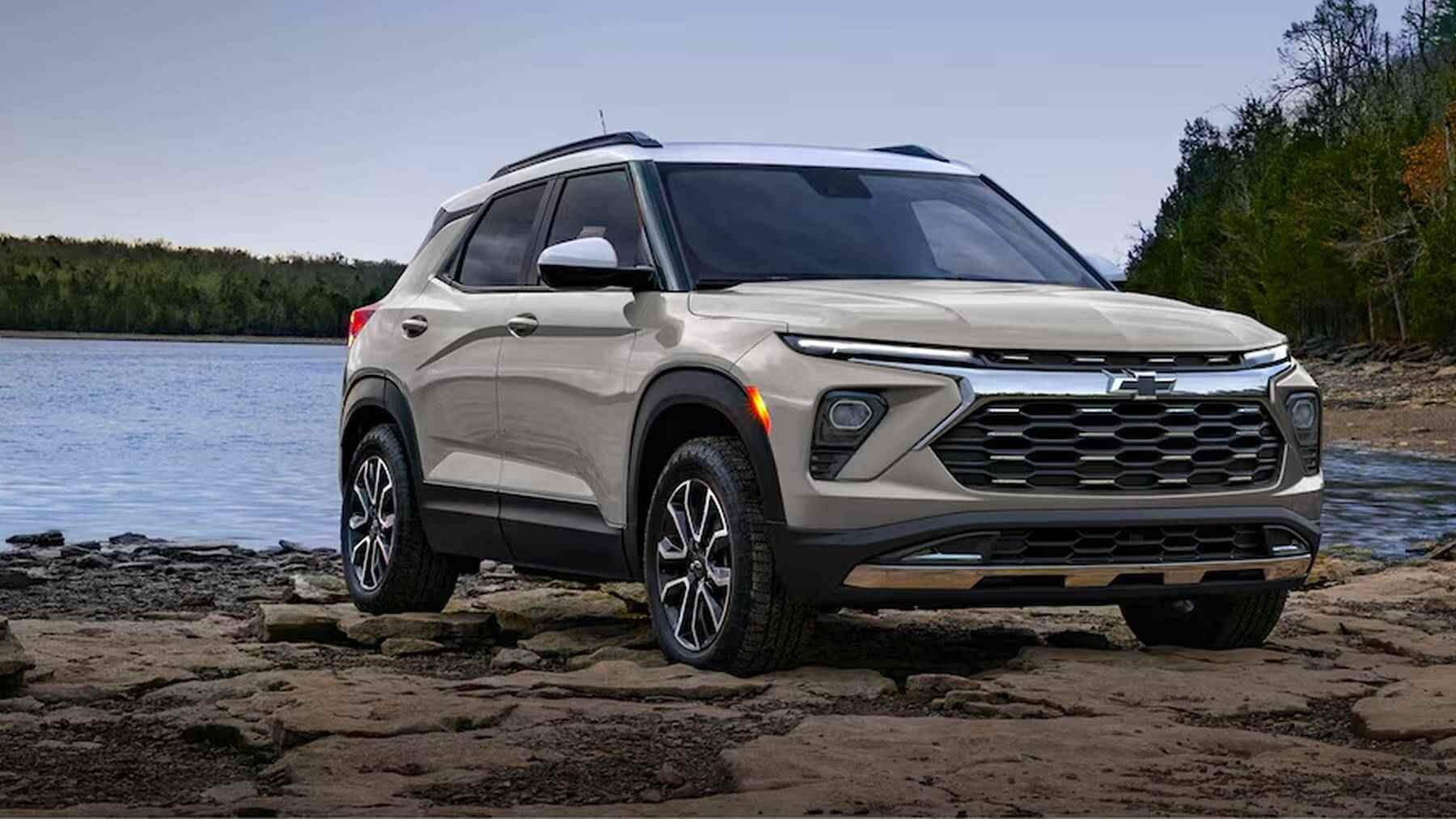
Dimensionally, the Trailblazer stretches 181.4 inches long on a 108.3-inch wheelbase—just 2.8 inches longer than the Trax but with noticeably more interior space thanks to superior packaging. The sport-influenced exterior styling is arguably more cohesive than competitors, with a pronounced shoulder line and trapezoidal grille that commands attention in parking lots. Curb weight of 3,500 pounds for FWD models and roughly 3,650 for AWD variants makes the Trailblazer nimble compared to heavier Honda HR-V (3,597 lbs) or Mazda CX-30 (3,456 lbs).
The 1.2-liter base engine feels underpowered during initial acceleration, requiring patience at traffic lights and highway on-ramps. With 137 horsepower and 162 pound-feet, 0-to-60 mph takes approximately 9.8 seconds—adequate for commuting but underwhelming for those seeking responsive driving dynamics. The 1.3-liter turbo transforms the driving experience entirely. With 155 horsepower and 174 pound-feet, acceleration feels noticeably more eager, bringing 0-to-60 mph to around 8.5 seconds—genuinely quick for the segment. Fuel economy differences between engines are modest: the 1.2L FWD achieves 29 city/31 highway/30 combined, while the 1.3L manages 29/33/31 with FWD and 26/29/27 with AWD.
Driving Experience
The Trailblazer is the unexpected dynamic performer of Chevrolet's crossover lineup. The steering is weighted more purposefully than the Trax, with genuine feedback through the wheel at highway speeds and a tighter on-center position that reduces constant micro-corrections. The suspension—independent double-wishbone front, torsion beam rear—absorbs road imperfections competently while maintaining body control through corners. Body roll is well-managed even when pushing harder on back roads; the Trailblazer never threatens to tip or feel unsafe regardless of cornering aggression. This represents meaningful progress over previous-generation compact SUVs that prioritized compliance over control.
The AWD system (available on the 1.3L engine) employs a multi-plate clutch that seamlessly transfers torque between axles as needed. In practice, AWD Trailblazers exhibit confident traction on loose surfaces and moderate snow without the fuel-economy penalty of permanent all-wheel drive. Most buyers will find front-wheel drive sufficient for typical driving conditions, particularly those in moderate climates, but the AWD option justifies its $2,000-$2,500 premium in precipitation-prone regions. The 26 mpg combined rating for AWD models is respectable for all-season traction.
The most striking aspect of Trailblazer driving dynamics is the responsive steering and composed suspension behavior at highway speeds. Wind and road noise are marginally more noticeable than in pricier competitors, a consequence of basic door sealing and modest acoustic insulation, but not distracting enough to undermine long-distance comfort. The elevated seating position provides excellent forward visibility and confidence in congested urban environments. Ground clearance of 8.2 inches is adequate for light trails and unpaved roads but insufficient for serious off-roading—a limitation the Activ trim's marketing imagery sometimes obscures.
Interior, Comfort & Technology
Trailblazer interiors reflect competent execution within budget constraints. Hard plastics dominate the dashboard and door panels, but texturing and matte finishes prevent a cheap aesthetic. The color palette leans toward graphite and charcoal tones with occasional fabric or leatherette accents on higher trims. Build quality is solid; panel gaps are consistent, and assembly tolerances suggest careful manufacturing. Front seats provide robust support for all-day driving, with adequate bolstering for highway cruising and sufficient padding for comfort during stop-and-go city driving.
The 11-inch touchscreen (standard across all 2026 trims) features Chevy's MyLink interface, which remains intuitive and responsive. Wireless Apple CarPlay and Android Auto come standard, delivering smartphone integration without requiring USB cables. The system responds quickly to finger input and menu navigation feels logical. A seven-inch digital instrument cluster provides customizable information displays, though the resolution is lower than pricier competitors. Dual-zone automatic climate control is standard on LT and higher, while LS models receive single-zone units. Heated front seats and a heated steering wheel are available, valuable upgrades for cold climates.
Storage is thoughtfully organized. The 40/60 split rear seats fold to reveal 54.4 cubic feet of cargo space—more than the Trax despite comparable vehicle length. Behind the rear seats, 25.3 cubic feet of accessible storage accommodates weekly groceries, camping gear, and small appliances with room to spare. Front door bins are deep and accommodate large water bottles; the center console has a proper phone holder and USB charging ports. Rear seat passengers benefit from climate vents and seatback storage pockets, though legroom (38.4 inches) is tighter than in the larger Equinox.
Trim Levels & Pricing
The 2026 Trailblazer lineup consists of four primary trims (LS, LT, RS, Activ) across three engine/drivetrain combinations (1.2L FWD, 1.3L FWD, 1.3L AWD). This matrix of options provides flexibility but also complexity; buyers must carefully evaluate which combination serves their needs. The LS serves budget-conscious buyers accepting basic conveniences, while LT adds comfort features. RS emphasizes capability and styling, and Activ blends outdoor-focused imagery with performance hardware.
| Trim | Starting MSRP | Key Additions |
|---|---|---|
| LS FWD (1.2L) | $24,395 | 11-inch touchscreen, Chevy Safety Assist, single-zone climate, power windows/locks/mirrors, 16-inch wheels |
| LS AWD (1.3L) | $26,495 | All-wheel drive, 1.3L turbo (155 hp), 9-speed automatic, increased torque, winter traction |
| LT FWD (1.2L) | $25,195 | Blind-spot monitoring, rear cross-traffic alert, roof rails, dual-zone climate, rear camera |
| LT AWD (1.3L) | $27,295 | Combination of LT features with all-wheel drive and 1.3L engine benefits |
| RS FWD (1.3L) | $27,595 | Distinct RS styling, alloy wheels, heated seats/steering wheel, 1.3L turbo standard |
| RS AWD (1.3L) | $29,595 | RS package plus all-wheel drive and autumn ground clearance |
| Activ FWD (1.3L) | $27,595 | Terrain Select modes, all-terrain tires, skid plates, Activ badging and styling |
| Activ AWD (1.3L) | $29,595 | Activ package with all-wheel drive and enhanced traction management |
Safety
All 2026 Trailblazers come equipped with Chevy Safety Assist, a comprehensive suite of active safety technologies that function automatically to prevent or mitigate common accident scenarios. Forward collision alert warns of imminent rear-end collisions, automatic emergency braking applies brakes without driver input in emergency situations, and lane keep assist nudges the vehicle back toward lane center if drift is detected. Front pedestrian braking specifically targets urban accident prevention, while IntelliBeam high-beam assist automatically dims lights when oncoming traffic is detected. These systems have demonstrated real-world effectiveness in reducing accidents across multiple insurance and safety studies.
The Trailblazer's compact dimensions and light weight contribute to strong passive safety characteristics. The structure employs high-strength steel in critical load paths, and airbag placement has been optimized for varied passenger sizes. The elevated seating position provides superior visibility compared to sedans, reducing blind-spot accidents and enabling earlier detection of pedestrians, cyclists, and smaller vehicles. The short overhangs and narrow track width reduce rollover tendency compared to body-on-frame SUVs, though the low center of gravity of unibody construction naturally resists tipping.
However, the Trailblazer lacks some safety technologies becoming standard in premium competitors: there is no surround-view camera system, no adaptive cruise control with lane centering, and no blind-spot monitoring on base LS trims. Buyers should prioritize LT and higher to gain blind-spot monitoring and rear cross-traffic alert—genuinely valuable safety additions for urban driving and highway merging scenarios. For comprehensive crash test data and safety ratings, visit nhtsa.gov and iihs.org.
Warranty & Ownership Costs
Chevrolet's warranty coverage is industry-standard for mainstream brands. Basic warranty extends three years and 36,000 miles, powertrain coverage five years and 60,000 miles, and corrosion protection six years and 100,000 miles. This aligns with competitor offerings and provides reasonable confidence in early-years reliability.
| Coverage | Duration |
|---|---|
| Basic Warranty | 3 years / 36,000 miles |
| Powertrain Warranty | 5 years / 60,000 miles |
| Corrosion Perforation | 6 years / 100,000 miles |
| Roadside Assistance | 5 years / 60,000 miles |
Ownership economics are favorable given the Trailblazer's pricing and efficiency. FWD models with the 1.2L engine achieving 30 mpg combined equate to approximately $900 annually in fuel costs assuming 12,000 miles of mixed driving at current prices. The 1.3L FWD consumes slightly more, bringing annual fuel costs to roughly $950, while the 1.3L AWD increases to approximately $1,050 due to the four-wheel-drive mechanical losses. Insurance premiums run marginally higher than the Trax (reflecting higher collision replacement costs) but substantially lower than the Equinox or Blazer. Maintenance requirements include synthetic oil service every 10,000 miles, transmission fluid service at 100,000 miles, and standard brake/battery maintenance. Over a six-year ownership cycle, total ownership costs including fuel, insurance, and maintenance should approximate $27,000-$28,000 for an LS FWD model, making the Trailblazer compelling value for budget-minded families valuing driving dynamics alongside affordability.
The Bottom Line
The Verdict: The 2026 Chevrolet Trailblazer delivers surprising driving engagement for a budget-conscious compact SUV. It doesn't match the premium refinement of more expensive competitors, but it offers markedly more compelling dynamics than similarly-priced rivals. For buyers prioritizing value, driving response, and utility, the Trailblazer represents a genuinely excellent choice.
Who Should Buy: Young professionals and active families valuing responsive steering and composed handling alongside affordability. Buyers in moderate climates preferring FWD, buyers willing to invest in the 1.3L turbo for meaningful performance improvement, and those appreciating the elevated seating position and cargo flexibility. The Trailblazer particularly appeals to buyers seeking driving engagement without premium pricing.
Who Should Look Elsewhere: Buyers in harsh winter climates may prefer Honda CR-V (more refined AWD) or Toyota Corolla Cross (more refinement, less sportiness). Those seeking interior luxury should consider stepping up to the Equinox or waiting for Mazda CX-50 pricing. Buyers needing third-row seating should evaluate the Equinox or Outback. Those demanding cutting-edge technology should test-drive the Kia Seltos EV or Hyundai Ioniq 5.
Frequently Asked Questions
Should I choose the 1.2L or 1.3L turbocharged engine?
The 1.3L is worthwhile if you plan to keep the vehicle beyond four years or drive 15,000+ annual miles. The 18-horsepower and 12 pound-feet torque advantage translates to noticeably quicker acceleration (roughly 1.3 seconds faster 0-60) and better driveability when fully loaded. Real-world fuel economy differences are minimal (1-2 mpg). The 1.2L suffices for urban commuting and light highway use, but highway merging and mountain driving feel more effortless with the 1.3L. Given the modest $2,200 premium for 1.3L FWD over 1.2L LS, many buyers find the upgrade justified.
Is all-wheel drive necessary for the Trailblazer?
For buyers in moderate climates experiencing occasional snow and rain, front-wheel drive is sufficient and saves $2,000-$2,500 plus slightly better fuel economy. However, for regions receiving regular heavy snow, frequent mountain driving, or those regularly venturing on unimproved roads, AWD justifies its premium. The AWD system is competently tuned, providing seamless torque distribution without the penalty of permanent all-wheel drive. Consider AWD non-negotiable for Pacific Northwest, Northeast, or Mountain West buyers experiencing multiple snow events annually.
How does Trailblazer cargo capacity compare to Honda HR-V and Mazda CX-30?
The Trailblazer offers 54.4 cubic feet of maximum cargo space with rear seats folded, exceeding the Honda HR-V's 46.5 cubic feet and nearly matching the Mazda CX-30's 52.4 cubic feet. Behind the rear seats, the Trailblazer provides 25.3 cubic feet, slightly less than the HR-V's 28.3 cubic feet but surpassing the CX-30's modest 21.7 cubic feet. The Trailblazer's superior cargo volume, combined with lower pricing, makes it the logical choice for buyers prioritizing practicality and value over premium refinement.
What is the difference between RS and Activ trims?
Both RS and Activ start at identical prices ($27,595 FWD/$29,595 AWD) and both require the 1.3L turbo engine. The RS emphasizes styling—distinctive body cladding, alloy wheels, interior trim upgrades, heated seats/steering wheel. The Activ prioritizes utility imagery: Terrain Select drive modes, all-terrain tires, skid plate protection, and Activ badging suggesting off-road readiness. In reality, neither transforms the Trailblazer into a legitimate off-roader (8.2 inches ground clearance limits serious trail capability), but Activ's terrain modes and all-terrain tires provide measurable traction improvements on loose surfaces and snow. Choose RS for style preference; choose Activ for genuine capability upgrading.
How does the Trailblazer's handling compare to the Mazda CX-30?
The Mazda CX-30 offers marginally more refined steering feel and a lower-slung driving position, but the Trailblazer's handling is surprisingly competent for its $3,000 lower pricing. The Trailblazer's elevated seating position and slightly looser steering may feel more commanding than the CX-30's sportier setup, but body control is nearly equivalent. The Trailblazer rides more smoothly over rough pavement, while the CX-30 provides crisper on-center steering response. If driving dynamics are paramount, the CX-30 justifies its premium; if value and comfort matter more, the Trailblazer delivers adequate performance without the extra expense.
What real-world fuel economy should I expect?
EPA estimates of 30 mpg combined (1.2L FWD) and 31 mpg combined (1.3L FWD) tend to be optimistic for real-world driving. Expect 27-29 mpg in typical mixed city-highway driving, with highway-dominant routes sometimes exceeding EPA estimates and city-heavy driving falling short. Cold-weather operation reduces efficiency 2-3 mpg. AWD models achieving 27 mpg combined EPA estimates likely deliver 25-26 mpg in actual driving. These figures remain competitive for the segment and translate to annual fuel costs under $1,100 for most owners.
Key Highlights
- Available AWD with 1.3L turbo three-cylinder on select trimsnStandard 1.2L turbo I3 with 137 hp on FWD modelsn8-inch touchscreen with wireless Apple CarPlay and Android AutonUp to 54.4 cu ft maximum cargo volumenAWD models get 1.3L turbo producing 155 hpnAvailable Activ trim with off-road-inspired styling
Powertrain Options
| Engine | Horsepower | Torque | Fuel | MPG |
|---|---|---|---|---|
| 1.2L Turbo I3 (FWD) | 137 hp | 162 lb-ft | Gasoline | 29 city / 32 hwy / 31 combined |
| 1.3L Turbo I3 (AWD) | 155 hp | 174 lb-ft | Gasoline | 26 city / 30 hwy / 28 combined |
Transmission: CVT / 9-speed auto
0-60 mph: 7.5 seconds
Specifications
Pros & Cons
✓ Pros
- AWD availability distinguishes it from FWD-only TraxnNimble handling suits urban driving perfectlynGood fuel economy across all configurationsnCompetitive pricing undercuts Honda HR-V and Hyundai KonanModern interior with quality above price expectationsnComprehensive safety features standard on all trims
✗ Cons
- Both engine options lack passing power on highwaysnCVT transmission can feel sluggish under accelerationnRear seat space tight for tall adult passengersnAWD only available with specific engine/trim combosnRoad noise intrudes at highway speeds