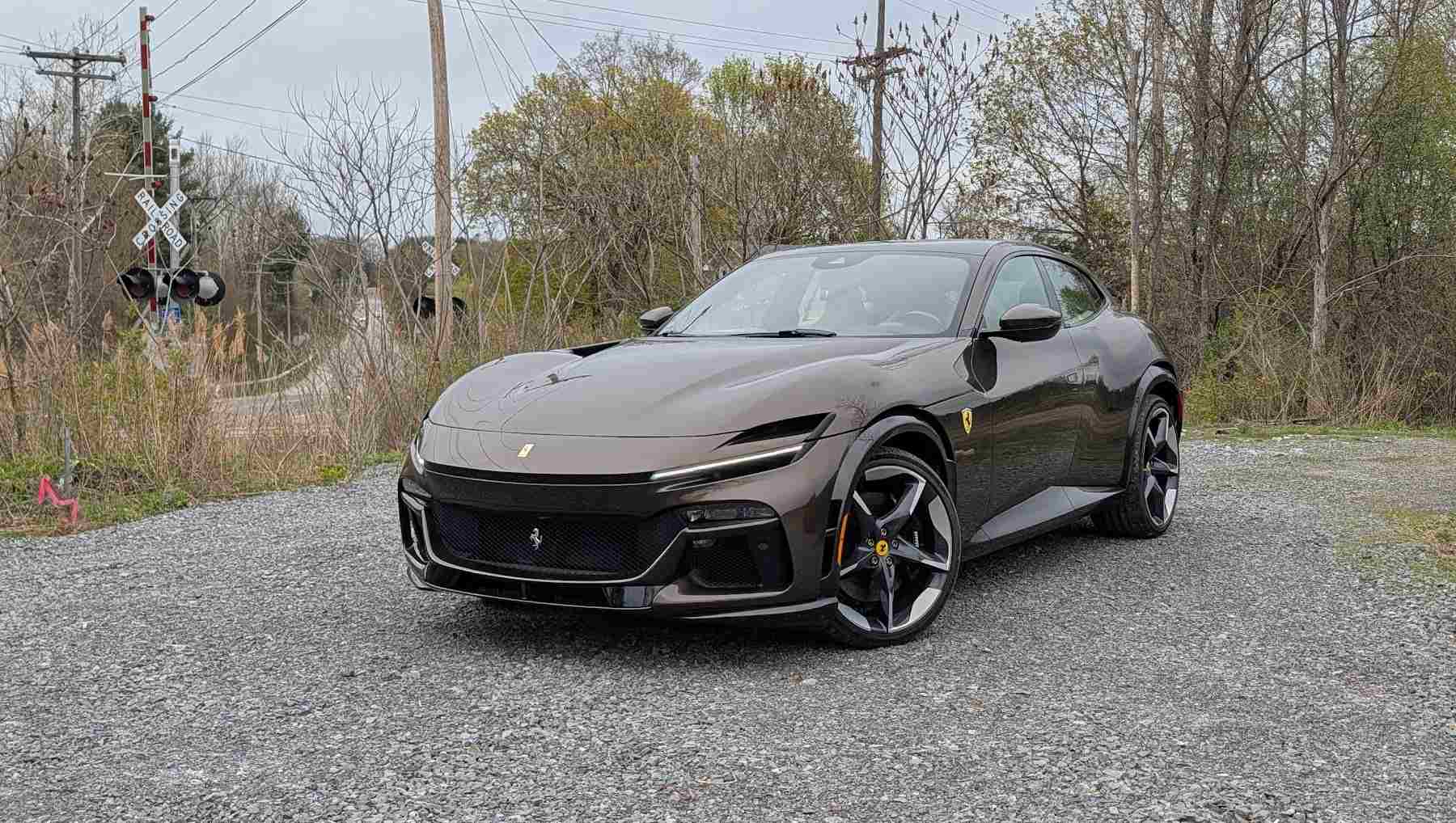

Ferrari went a little outside the box with the Purosangue. Stepping away from their usual output — which is two-door performance cars — the legendary Italian automaker decided to build a four-door SUV. However, they don’t see it as an SUV, they consider it a “Ferrari Utility Vehicle” instead.
After spending a few days behind the wheel of one, I can confirm that isn’t just branding. Up front, it looks and feels like a slightly lifted roadster. But you do have two extra seats in the back, and actual practical trunk space.
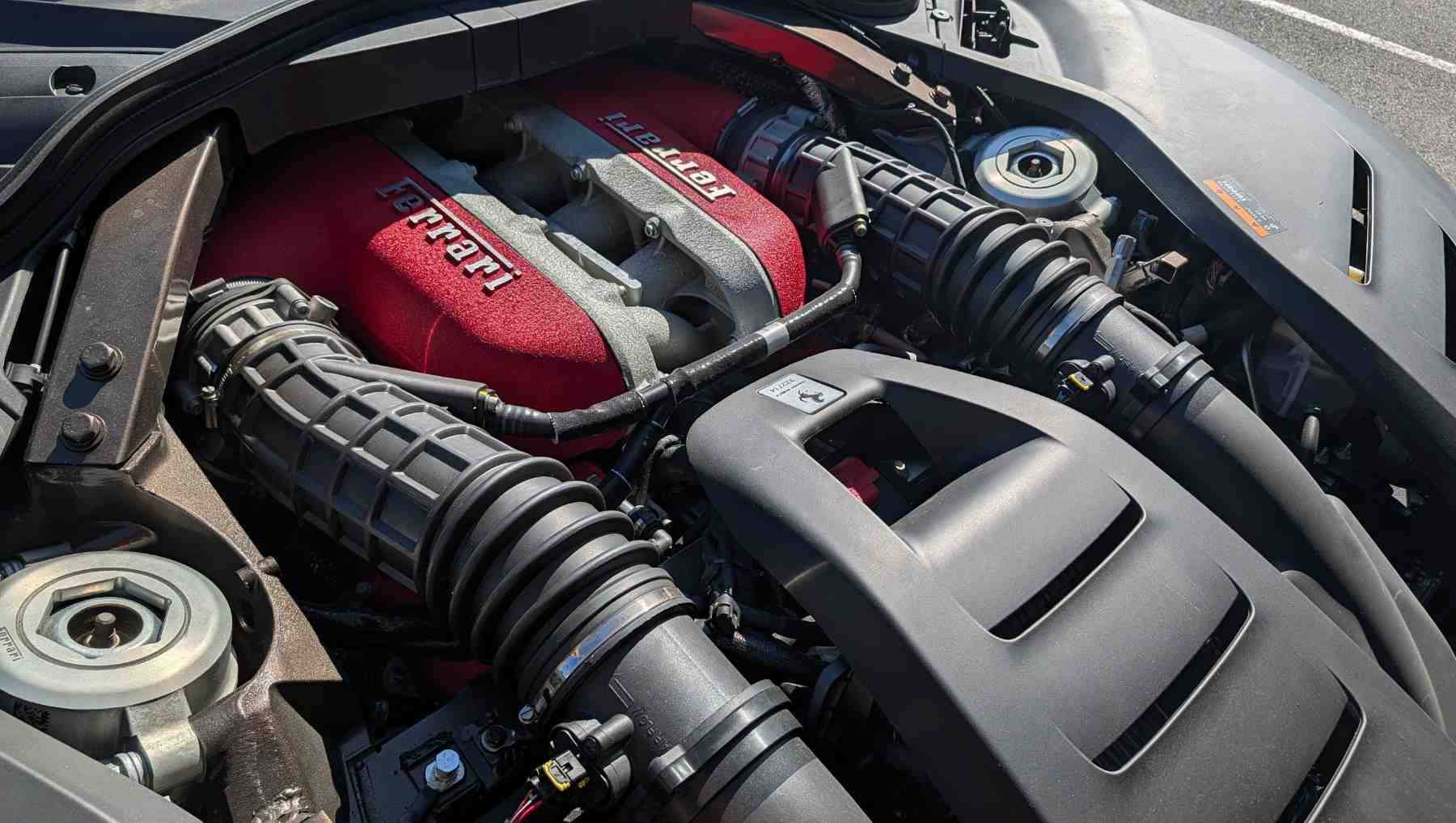
Then, under the hood, you have a 6.5-liter, naturally aspirated, V12 capable of cranking out 715 horsepower and redlining at 8,000 rpm. All of the power flows through an 8-speed oil-bath dual-clutch that shifts between automatic and “manual” modes more smoothly than anything I’ve ever encountered. You can go from 0-60 in 3.3 seconds, and over 190, should you find somewhere that allows you to do that.
To counteract the power, you have a hefty braking system featuring 398×38 mm front discs and 380×34 mm rear discs. Six calipers are also present to clamp down on those disks, bringing you to a halt quicker than your internal organs are likely to be comfortable with.
Here’s what my jaunt with a Purosangue taught me about what may be the most unique vehicle Ferrari has ever produced.
The Purosangue looks incredible, despite its larger size
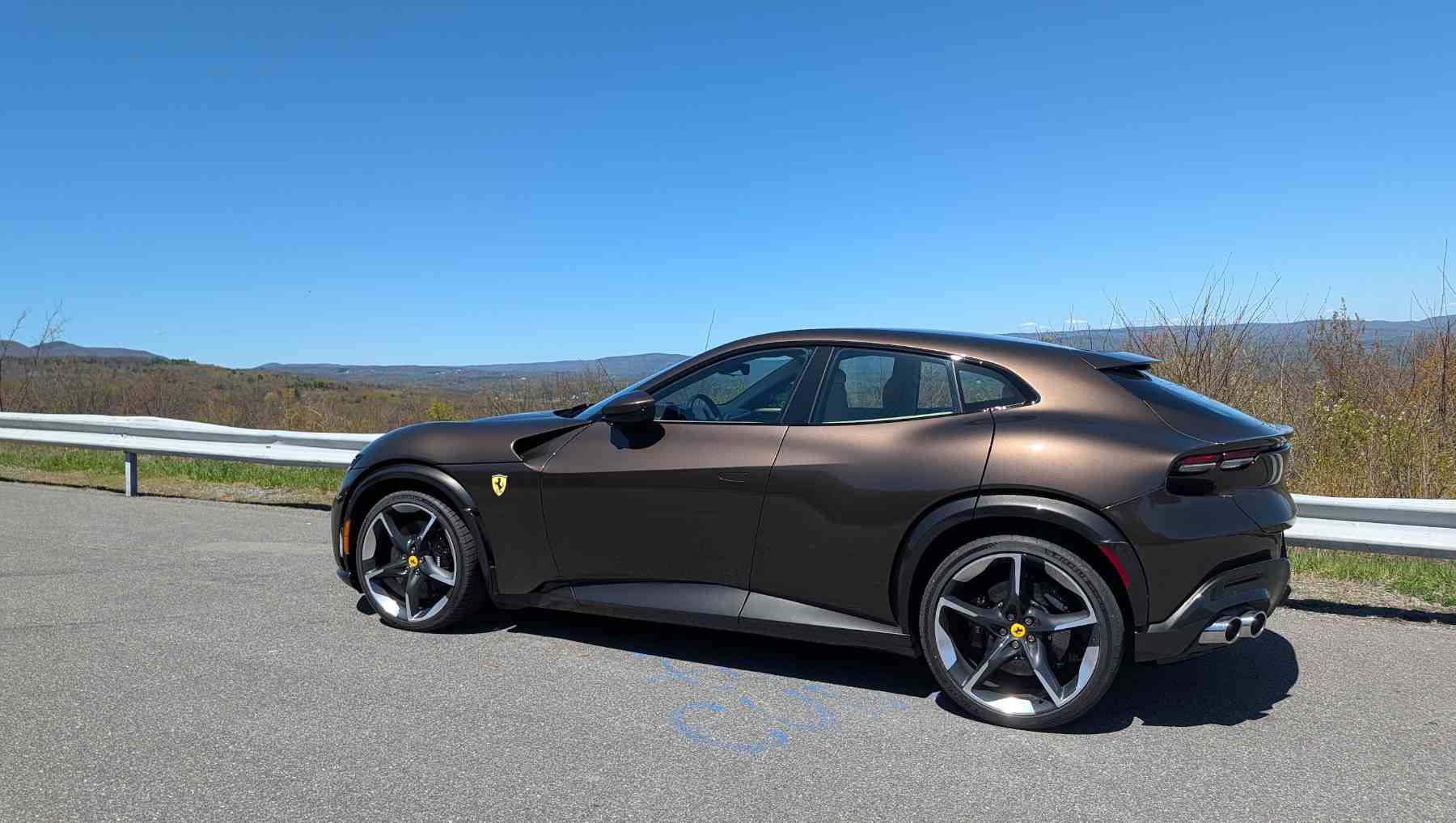
It’s easy to get the looks side of things wrong with an SUV. A common criticism is that the vehicles all look the same. There’s the odd distinct one, like the Jeep and the G-Wagen, but for the most part, you’ll struggle to pick out your SUV amongst the hundreds of others clogging up every parking lot.
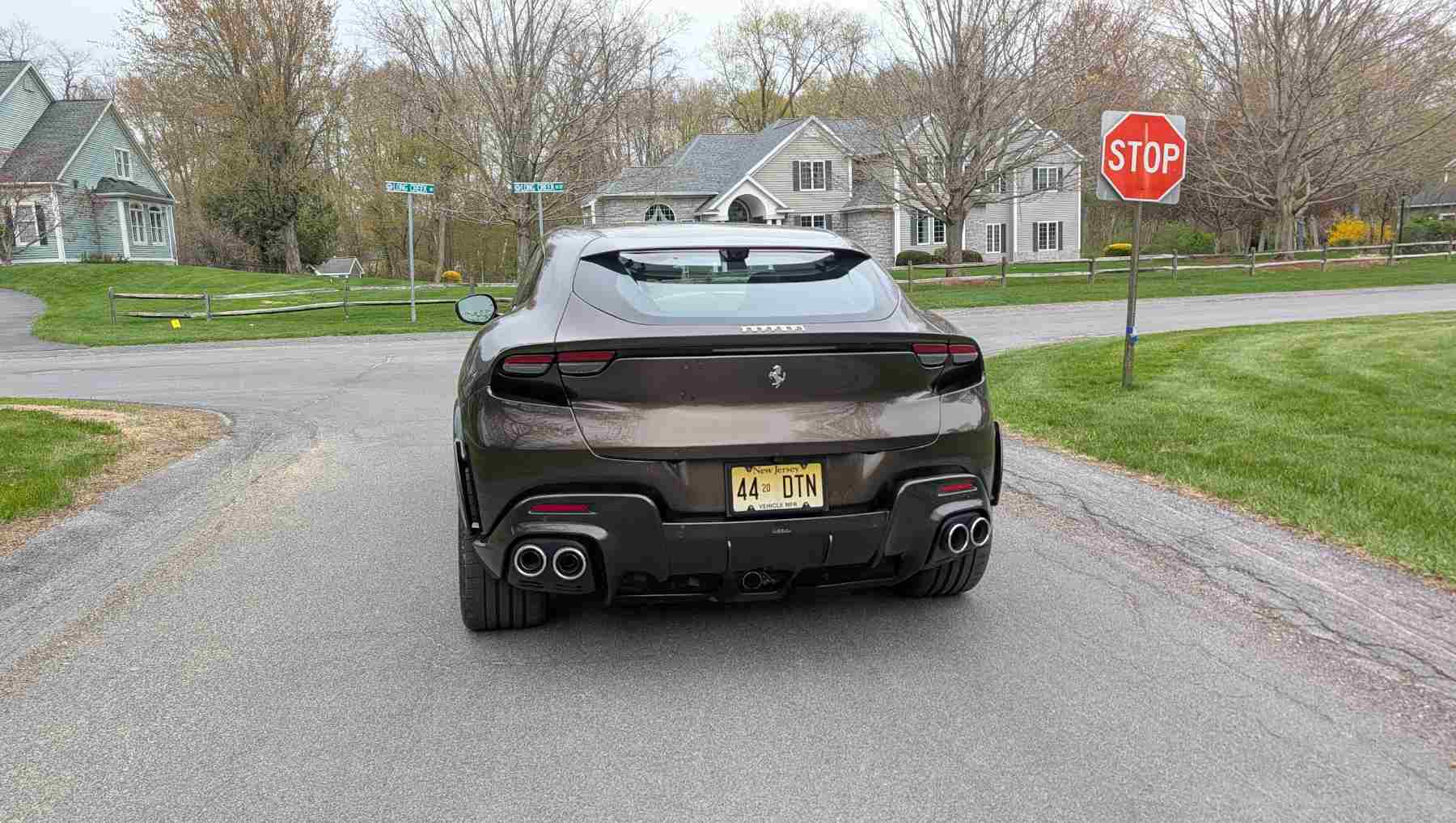
Unless you’re in a Purosangue. Its lines are sleek, its front end is incredibly sporty, and its roof is lower than you’ll find on most sedans. The back doors are even a little easier to spot, from the side, it just looks like a slightly beefy sports coupe.
To say it’s the most eye-catching Ferrari would be a ridiculous lie, but it is great to look at and very distinct. I had someone sideline me in a gas station to talk about the Purosangue and how amazing it was to see in the wild. Obviously, it stands out more in Upstate New York than it would on Ocean Drive, but it’s a talking point wherever you take it.
There is a degree of practicality to the Purosangue
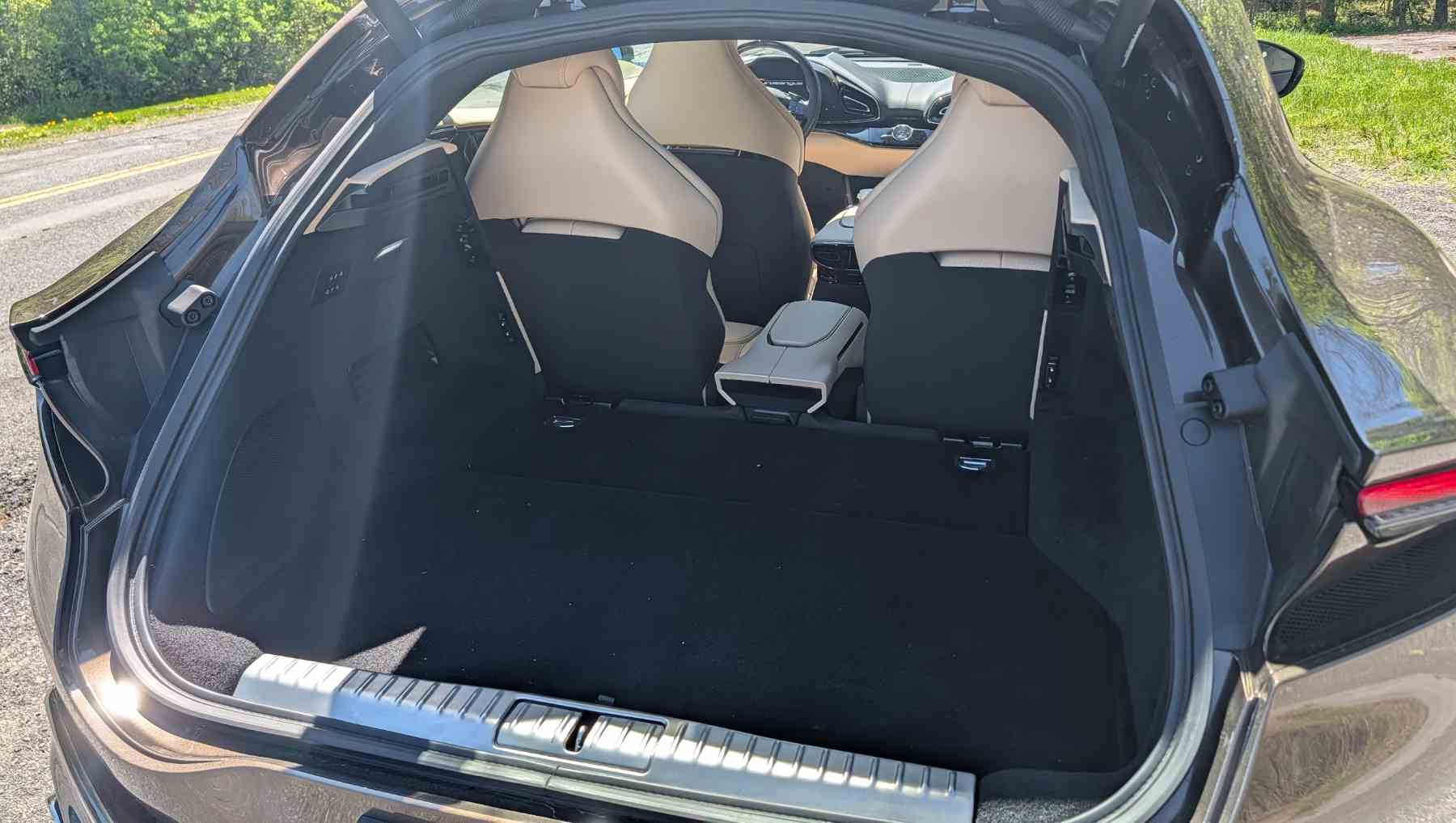
The Purosangue comes with a 16.7-cubic foot trunk, which is pretty good in general and definitely a lot more than a Ferrari usually gets you. For reference, Ferraris tend to come with a frunk you can fit about two hotdogs in, or a small ladies’ purse, or some kind of abstract idea that doesn’t actually take up physical space.
But 16.7 cubic feet is very generous; you can get more than you’d reasonably fit in a large sedan into the back of a Purosangue. So, the weekly shop, the family dog, and small items of furniture are easy to cart around, should you feel the need to actually use this as a car. The “utility” part of the Purosangue is justified.
There are also two back seats. Ferrari has produced vehicles with more than two seats and even four-door vehicles before. But again, they’re pretty rare. The back is comfortable and easy to get into thanks to the rear coach doors. Those doors are automatic, but actually using them is very Ferrari. It’s almost like a secret handshake, and something the bozos that usually play passenger in my press cars would likely forget within two seconds of being shown it.
If I can’t drill the way you trigger the automatic doors on a Cadillac Escalade into them, or even get certain people to sit still for two seconds while I press the door open button on that SUV’s center console, I wasn’t risking the Ferrari.
When it gets its legs, the Purosangue finally comes into its own
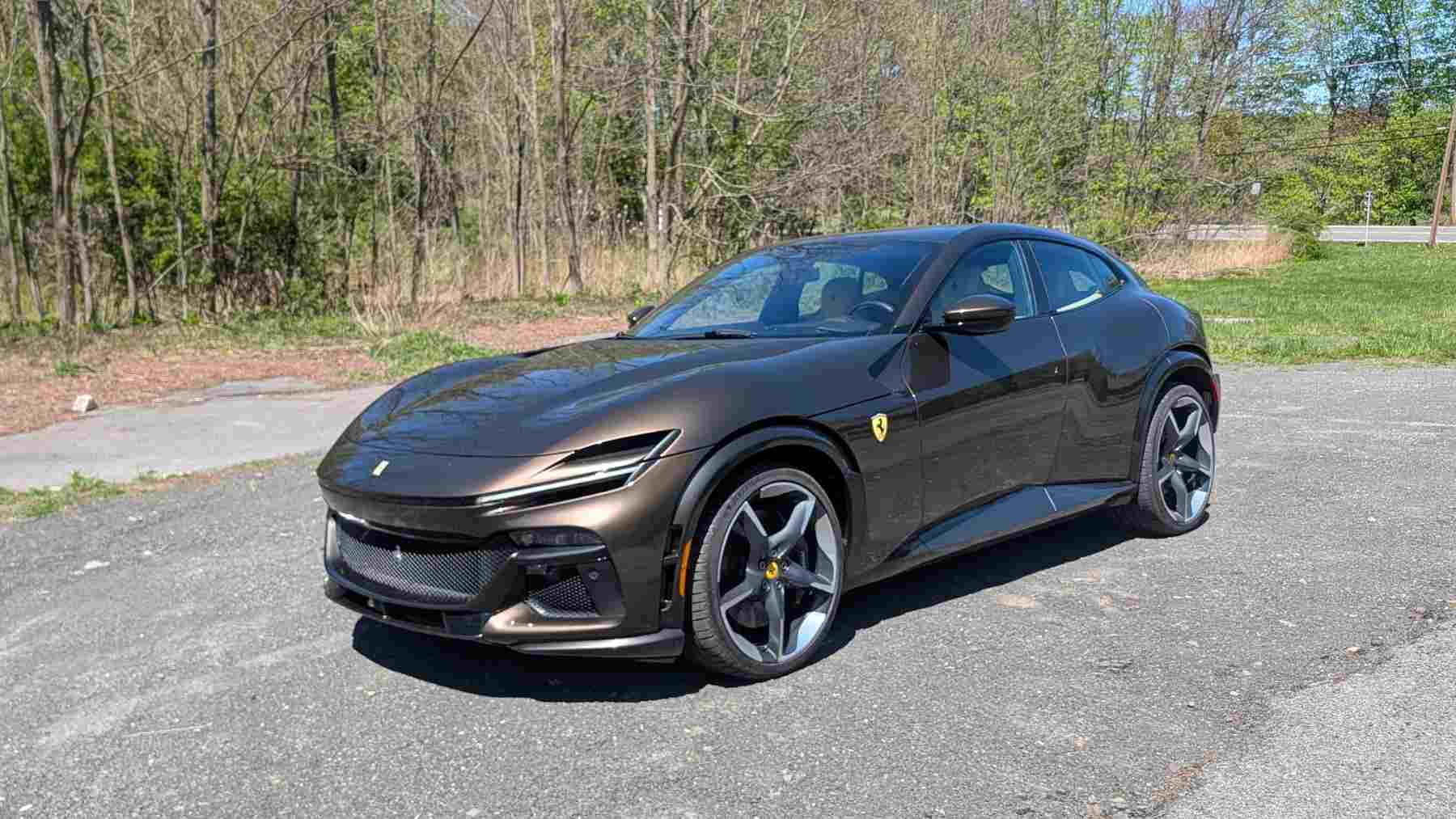
The argument against using a Purosangue as a daily driver is pretty obvious, and goes beyond the fact that you’ll be getting about 12 MPG from a tank full of premium driving through town on a good day.
In reality, you feel a little guilty driving a Purosangue on 99% of roads. This isn’t a stupid environmental argument about how the 0.0001% of vehicles rocking a V12 are somehow ruining the rainforests. It’s more from the Purosangue’s point of view.
If you come anywhere close to obeying posted speed limits, driving the Ferrari is going to feel like walking a tiger on a leash. It wants to pull away and have a good roar. It can totally overpower you. But it’s going to just sit there and growl a little instead.
You can get to 35 mph while barely slipping into second. Your only hope of coming close to redlining the Purosangue is on a highway, and even then, it can comfortably maintain 70 mph while sitting in eighth gear with the engine casually knocking out 1,000 RPM or so.
I don’t know where the line is on a Purosangue, because that’s impossible to gauge on public roads. On the limited occasions when I could safely get my foot down, though, the experience was something else. The combination of sounds made by that V12, the vibrations and feedback rippling through the cabin, and just the raw power available is something else entirely.
Ferrari has been making high-performance vehicles that capture that kind of experience and passion since 1939. Most of its vehicles don’t go to normal people; they end up in the hands of ex-racing drivers, ultra-wealthy enthusiasts, and other people who won’t entertain anything less than perfect. And that perfect driving experience is there in the Purosangue, as you would expect it to be.
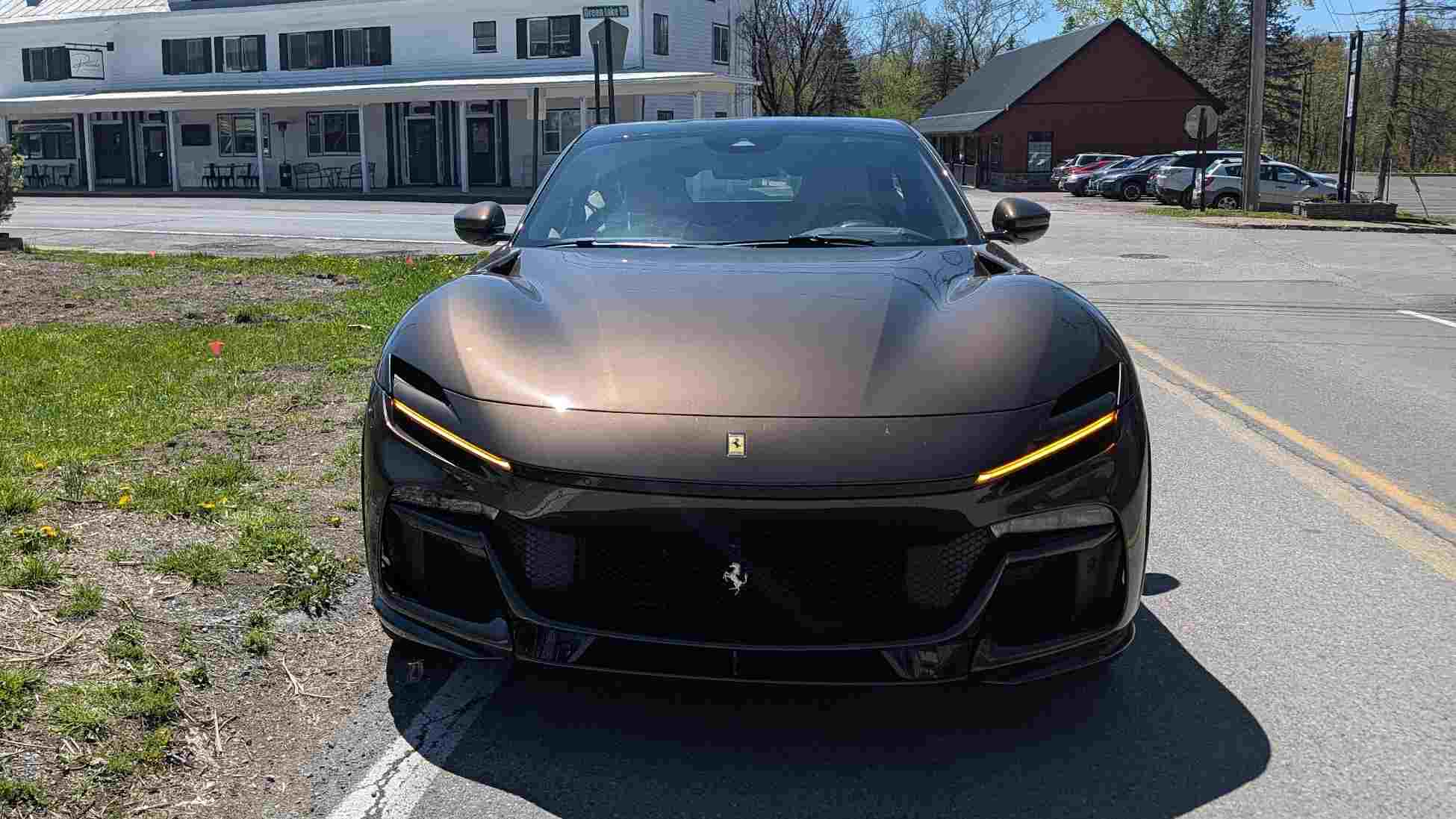
When you’re behind the wheel on a nice stretch of road, you forget it’s an SUV. Sorry, an FUV. Instead, everything from how it shifts to the acceleration to the handling screams supercar. To elaborate on that handling, at normal road speeds, this thing is pinned to the roads. It’s on rails. It’s agile without ever losing control. Again, it’s a complete freak.
We’ve made the argument that EVs have made 0-60 times irrelevant, and Ferrari both proves and disproves that point. A 3.3-second 0-60 time isn’t special these days; there are electric family cars capable of hitting that number. But that feels flat, soulless, and dead. You get the G-force, and none of your other senses are invigorated.
The 3.3 seconds in the Ferrari Purosangue feel as quick and violent as you imagine that kind of acceleration to feel. Put someone in a Purosangue and a 3.3-second EV with no other context, and they’ll say the Ferrari is faster and more fun. Because it is more fun, and actually feels fast.
I’m going to point out that a few elements of the Purosangue aren’t up to modern standards. But when it comes to the core driving experience, it’s absolutely unmatched.
The infotainment system in the Purosangue is a little out of date
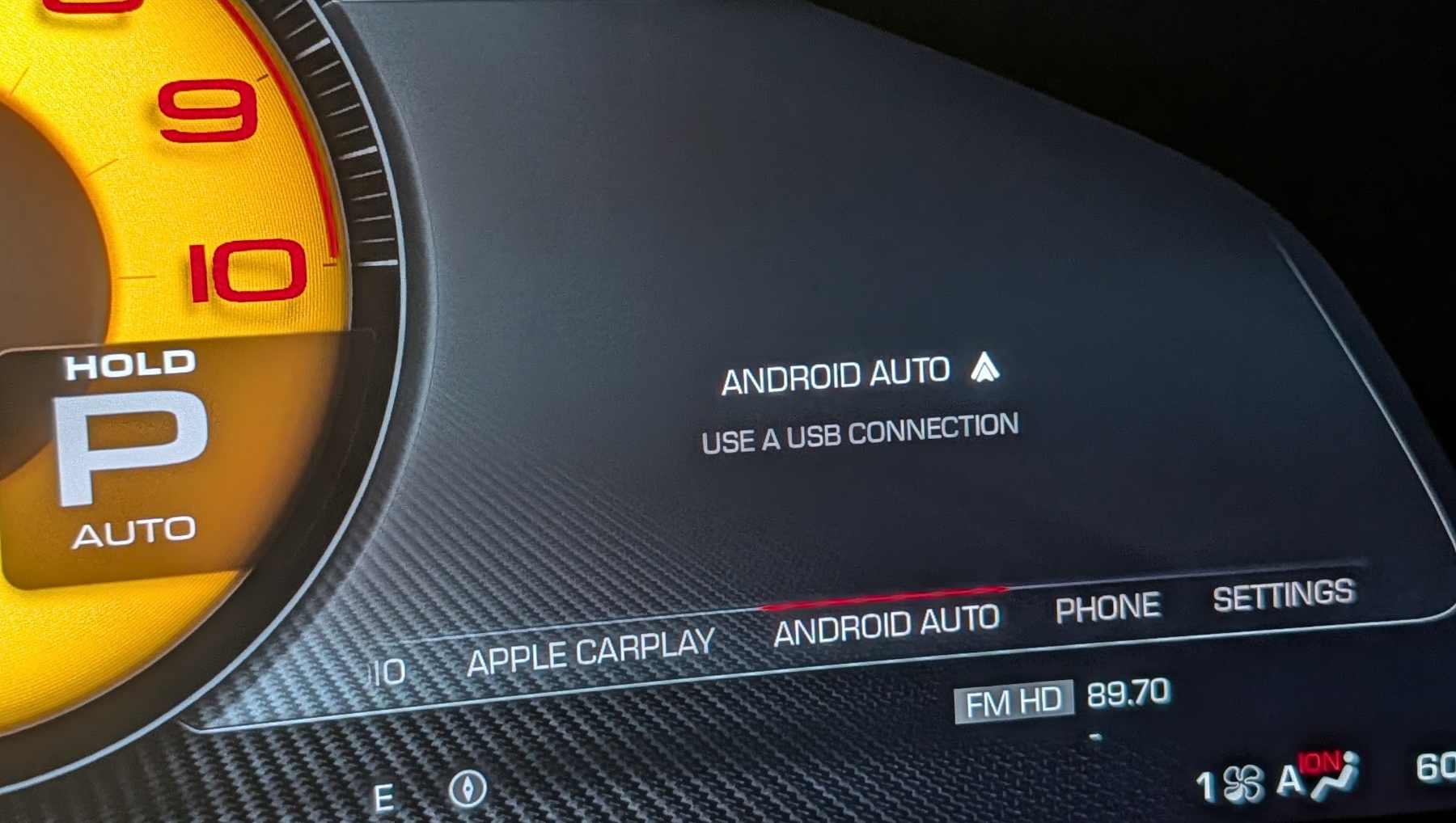
The infotainment system in the Purosangue mirrors what you’ll get in an SF90. Basically, a lot of things are controlled through the driver’s display, and what would be a central touchscreen in most vehicles is actually a passenger display in the Ferrari.
That passenger screen is dimmed from the driver’s point of view, which is odd, as many of its menu options relate to vehicle comfort and controls. It creates an odd situation where you either need to use a slightly awkward central dial for the seats and HVAC, while using steering wheel controls for things like music and maps. Alternatively, you can bring a co-pilot along, but giving a passenger total control over music selection is not something everyone wants to do.
It has Android Auto and Apple CarPlay built in. I was forced to connect to Android Auto via a USB-C cable, though a Ferrari engineer has assured me that it can be connected via Bluetooth. Either way, the infotainment experience is a bit Mazda-level, which would be a problem in anything else. Except I didn’t listen to much music in this. Instead, I was listening to that V12. As much as I enjoy The Arctic Monkeys, Ferrari’s naturally aspirated, 6.5-liter beast has better pipes than Alex Turner.
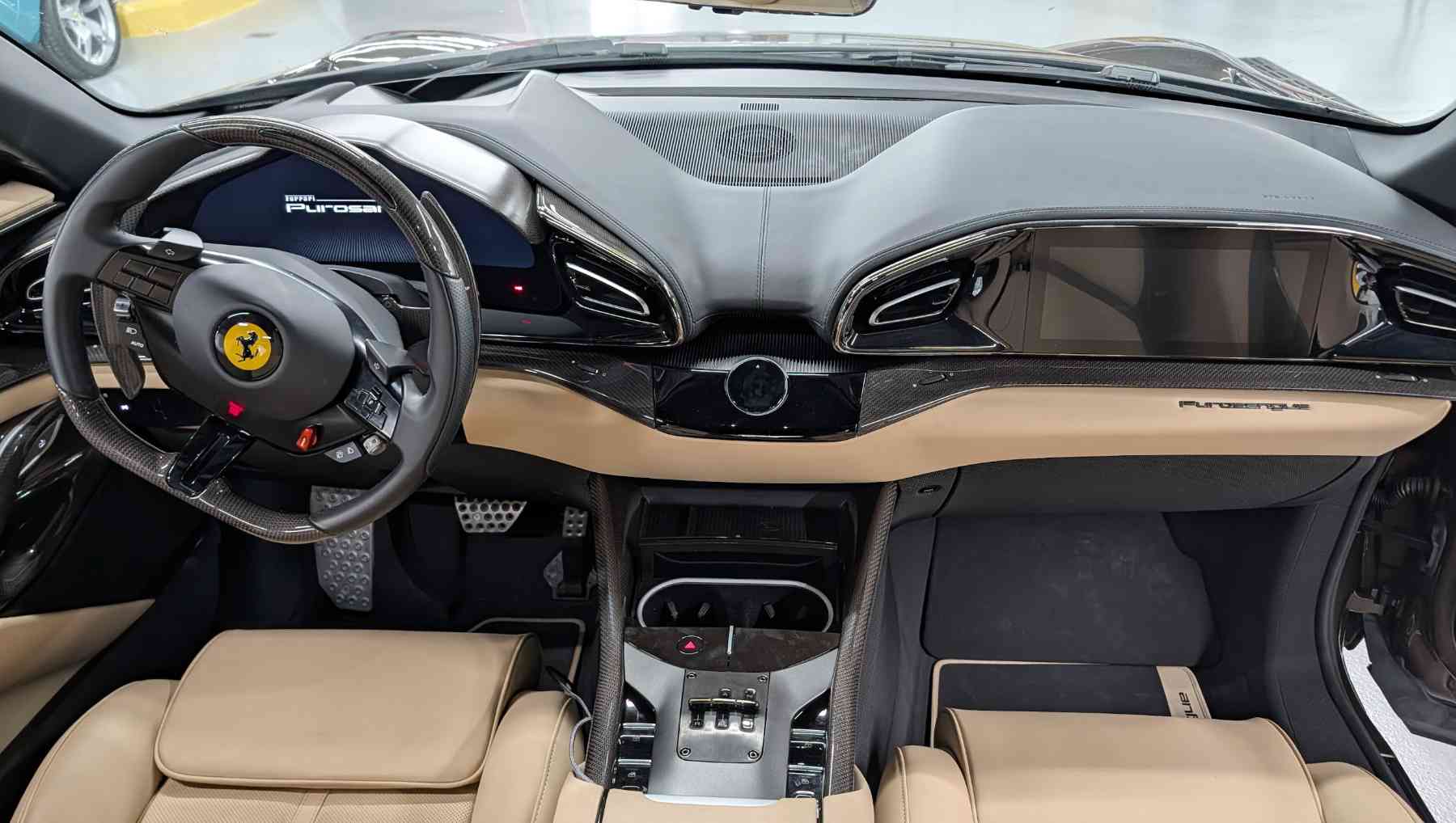
I did eventually bother to pop some music on, and the Ferrari’s sound system is very good. It’s a 1,400-watt Burmester 3D Surround Sound System that uses 24 speakers expertly placed throughout the cabin.
It’s also worth noting that Ferrari is working on improving its infotainment options. It’s also avoiding the whole tablet stapled to the dashboard approach many automakers, even luxury ones, tend to do.
There are other bits of tech in the Ferrari, including a decent ADAS suite. The forward parking sensors are very sensitive and won’t shut up if there’s something within range. This, admittedly, may be better than accidentally scratching the bumper. There is an advanced cruise control system too, but I had four days and a 500-mile cap on this, so I’ll be damned if I’m handing a single second of driving time to a robot.
If you could somehow get one of these, you wouldn’t be disappointed
There’s absolutely nothing on earth like a Ferrari. I understand that now, and it’s something you have to experience to understand as well. It’s easy to lump the brand in as “just another sports car,” but when you get to enjoy one in its element, everything changes.
It’s different from a Porsche, a Lambo, or a McLaren. They’re all fantastic manufacturers, with great performance vehicles, and two of them have elite-level performance SUVs. But they’re not the same. Sort of like how Joseph Parker is an elite-level boxer in every sense of the word, and a world champion, but he’s never going to be Muhammad Ali, is he?
Now for the bad news: in addition to costing somewhere in the region of half a million dollars, depending on how you spec it out, the Purosangue is also sold out in the US. Which means you can’t have one as things stand, and getting one may involve having a very good relationship with your local Ferrari dealer.
The good news is, if you do somehow snag one you are getting a real Ferrari. Something that’s far too good for the daily commute, but will take you to another level when it gets the chance to be itself.
It’s all a little bittersweet for me. I am lucky enough to test performance cars quite often. But there are rare occasions where I’ll get to spend a brief period with something as exceptional as this and then go on living with the knowledge I’ll never own one. If you’re more affluent than an automotive journalist and can actually get a Purosangue on the drive, you totally should.
 @chrismckown ROOKIE5 months ago