
2026 Chevrolet Trax
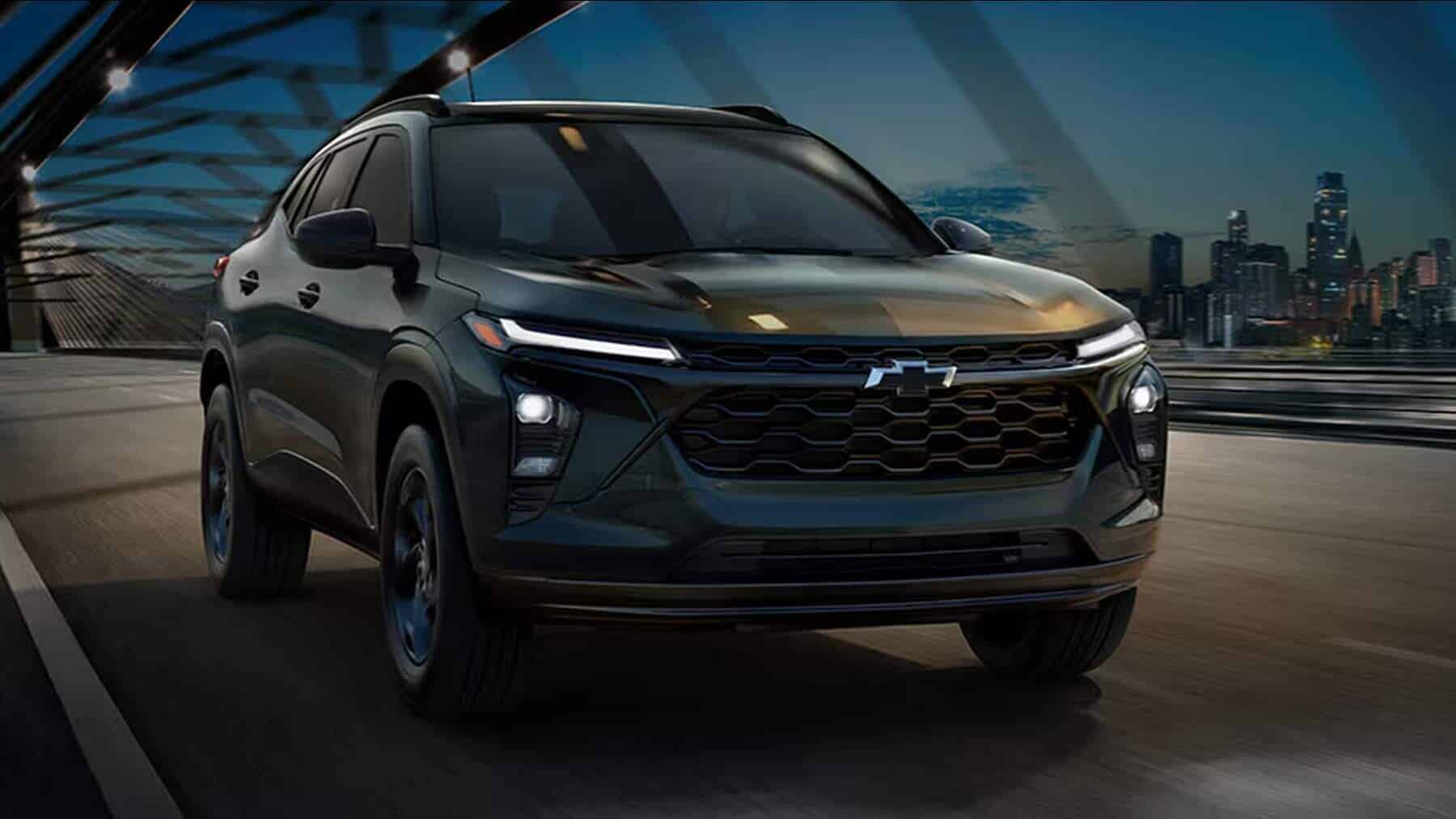
Overview
What's New for 2026
The 2026 Chevrolet Trax carries forward the heavily refreshed design introduced in 2024, with only modest updates this model year. The powertrain remains unchanged—a 1.2-liter turbocharged three-cylinder engine producing 137 horsepower and 162 pound-feet of torque, paired with a six-speed automatic transmission driving the front wheels. Chevrolet has tweaked the destination freight charge to $1,395, but the overall formula remains focused on delivering maximum value in a segment where budget matters most.
For 2026, Trax buyers continue to benefit from Chevrolet's expanded touchscreen lineup, with the base LS and 1RS receiving an 8-inch display while upper trims (LT, 2RS, Activ) gain an 11-inch touchscreen. Wireless Apple CarPlay and Android Auto integration is standard across all trims, a feature that justifies much of the Trax's appeal to younger buyers and first-time SUV purchasers.
Overview
The 2026 Trax positions itself as America's most affordable gateway to SUV ownership, undercutting virtually every competitor in its class. Starting at $21,600 for the base LS trim, the Trax undercuts the Nissan Kicks by several hundred dollars and offers substantially more cargo space (54.1 cubic feet maximum) than the Hyundai Venue, while remaining thousands cheaper than the Honda HR-V's $31,000 starting price. This pricing strategy is deliberate: Chevrolet recognizes that many buyers enter the SUV market simply because they need the practicality and elevated seating position, not because they require genuine off-road capability or premium appointments. The Trax serves that audience efficiently.
Dimensionally, the Trax spans 177.3 inches in length and rides on a 105.2-inch wheelbase, making it roughly the size of the Honda HR-V but more aggressively styled. The platform underpinnings are shared with the Spark sedan, which explains the modest structural refinement, but the crossover proportions and turbocharged engine provide better visual presence than the hatchback ancestor. Five passengers fit comfortably within the 5,063-pound curb weight, though front seat legroom (41.9 inches) substantially outpaces rear legroom (38.7 inches)—a common compromise in this segment.
The 1.2-liter turbo engine delivers adequate power for daily commuting. In real-world testing, acceleration from rest feels leisurely but not embarrassing, with 0-to-60 mph likely taking around 8.8 seconds—acceptable for an efficient family hauler but not thrilling. EPA fuel economy estimates of 28 city/32 highway/30 combined translate to roughly $850 per year in fuel costs at current prices, assuming 12,000 miles of mixed driving. The six-speed automatic handles the modest power delivery without complaint, though the CVT-equipped Trailblazer offers marginally better real-world economy.
Driving Experience
The Trax does not pretend to be a driver's car, and this honest positioning is refreshing. The steering is light and vague at center, requiring constant small corrections on the highway but providing welcome park-and-play convenience in tight urban spaces where the Trax truly excels. The suspension—a MacPherson strut front and rear torsion beam design—prioritizes ride comfort over handling crispness. Potholes and road imperfections are absorbed with grace, making daily commutes over deteriorating infrastructure more pleasant than they would be in a sportier compact crossover like the Mazda CX-30.
Body roll exists and is noticeable in hard cornering, but the Trax weighs less than 5,100 pounds, so lateral acceleration never feels unsafe or threatening. Wind and road noise intrude at highway speeds more prominently than in pricier competitors, a consequence of basic door sealing and smaller air gaps in the design. The front-wheel-drive architecture provides predictable understeer characteristics and adequate winter traction for most climates, though a lack of ground clearance (7.3 inches) means severe snow depth poses challenges that an AWD-equipped competitor would handle more confidently.
The 1.2-liter turbo engine is frugal but strained when fully loaded with five adults plus luggage. Turbo lag is negligible, but the power delivery feels narrow in its powerband, forcing frequent downshifts during acceleration. On mountain highways, traffic merging, or towing scenarios (the Trax lacks any towing capacity), you'll notice the limitation acutely. This is precisely why Chevrolet positioned the 1.3-liter variant in the Trailblazer—that extra 18 horses and 12 pound-feet make a meaningful difference in everyday driveability, justifying the $2,200 price premium for many buyers.
Interior, Comfort & Technology
Step inside and the Trax's value proposition becomes apparent. Hard plastics dominate—including the dashboard, door panels, and center console—but the texturing and assembly quality prevent the cabin from feeling cheap. The color palette trends toward gray and charcoal tones, creating a neutral, functional environment rather than an aspirational one. Front seats are acceptably supportive for eight-hour road trips, with adequate bolstering and integrated lumbar support on higher trims. Rear seat passengers sit lower than in some competitors, and the flat rear floor maximizes usable width for three-abreast seating, a feature parents appreciate on road trips.
The infotainment system centers on an 8-inch touchscreen (base/LT) or 11-inch display (higher trims) with Chevy's intuitive MyLink interface. Wireless Apple CarPlay and Android Auto come standard, eliminating the need for USB cable fumbling. The system responds quickly to input and features straightforward menu organization, though Apple CarPlay reliability has been spotty in recent GM products and is worth testing at your local dealership before purchase. Climate control is single-zone automatic on most trims, with heated front seats and a heated steering wheel available as upgrades. Storage abounds: the front door bins are commodious, there's a proper center console with cupholders, and the rear seat passengers have seatback pockets.
Safety equipment standards are competitive. All Trax models include Chevy Safety Assist, which bundles forward collision alert, automatic emergency braking, front pedestrian braking, lane keep assist with departure warning, and IntelliBeam high-beam assist. An HD rearview camera is standard, with available rear park assist and blind-spot monitoring available on upper trims. The cabin width and elevated seating position provide genuinely good visibility compared to sedans, reducing parking and congestion anxiety. Cargo flexibility is excellent: the 25.6 cubic feet behind the rear seat accommodates weekly grocery shopping and small road trips, while folding the 40/60 split rear bench unlocks 54.1 cubic feet—enough for a moderately sized appliance or several weeks of luggage with judicious packing.
Trim Levels & Pricing
The 2026 Chevrolet Trax lineup consists of five trim levels, each targeting specific buyer personas. The LS serves first-time SUV buyers and daily commuters, the 1RS adds modest convenience features, the LT bridges the gap between value and comfort, and the higher-end 2RS and Activ appeal to buyers wanting personalization and capability imagery. Pricing is aggressive across the board, with meaningful feature additions at each step justifying the incremental increases.
| Trim | Starting MSRP | Key Additions |
|---|---|---|
| LS | $21,600 | 8-inch touchscreen, wireless Apple CarPlay/Android Auto, Chevy Safety Assist, power windows/locks/mirrors, air conditioning |
| 1RS | $23,100 | Roof rails, all-weather floor mats, remote keyless entry, 16-inch wheels (vs. 16-inch base wheels) |
| LT | $23,100 | 11-inch touchscreen, blind-spot monitoring, rear cross-traffic alert, rear camera display in gauge cluster |
| 2RS | $25,300 | Distinct exterior styling, heated seats, heated steering wheel, alloy wheels, roof rails |
| Activ | $25,300 | Terrain modes for traction optimization, all-terrain tires, distinctive Activ badging and colors, raised ground clearance appearance |
Safety
The 2026 Trax approaches safety from a practical, feature-focused perspective rather than attempting to compete with luxury crossovers in crash performance. The standard Chevy Safety Assist suite delivers real-world accident prevention through forward collision alert, automatic emergency braking, lane keep assist, and automatic high-beam management. These active safety systems have documented effectiveness in preventing or mitigating common accident scenarios: rear-end collisions in stop-and-go traffic, lane departure accidents on highway driving, and pedestrian strikes in urban environments.
The body structure incorporates high-strength steel in critical load paths, and Chevy has engineered the platform for effective side-impact protection through reinforced door beams and optimized airbag placement. The compact footprint and light weight reduce stopping distances compared to heavier competitors, a passive safety advantage often overlooked by consumers focused on tonnage and metal. The elevated seating position provides superior visibility compared to sedans, enabling drivers to better see pedestrians, cyclists, and small vehicles in adjacent lanes—a practical safety advantage for congestion scenarios.
However, the Trax is not equipped with some features becoming standard in pricier competitors: there is no blind-spot monitoring on base trims, no rear cross-traffic alert on LS models, and no surround-view camera system that would provide a comprehensive view of the immediate surroundings. Buyers should opt for the LT trim or higher to gain these valuable safety technologies. For the latest crash test ratings from government and independent testing, visit nhtsa.gov and iihs.org.
Warranty & Ownership Costs
Chevrolet's warranty structure is straightforward and competitive within the mainstream market. Basic coverage extends three years and 36,000 miles, powertrain coverage five years and 60,000 miles, and corrosion protection six years and 100,000 miles. This standard coverage matches or exceeds most competitors in the compact crossover segment, providing reasonable peace of mind for early ownership issues.
| Coverage | Duration |
|---|---|
| Basic Warranty | 3 years / 36,000 miles |
| Powertrain Warranty | 5 years / 60,000 miles |
| Corrosion Perforation | 6 years / 100,000 miles |
| Roadside Assistance | 5 years / 60,000 miles |
Ownership economics heavily favor the Trax. At current fuel prices, annual fuel costs approximate $850 for mixed-driving owners achieving the EPA combined estimate of 30 mpg. Insurance costs run 10-15% lower than comparable Honda HR-V or Toyota Corolla Cross, reflecting both the lower replacement cost and modest performance capabilities. Maintenance is straightforward: synthetic oil changes every 10,000 miles, transmission fluid service at 100,000 miles, and brake fluid every two years. Parts availability is excellent given Chevrolet's dealer network, and labor rates remain reasonable across the country. Over a six-year ownership cycle assuming 72,000 miles of driving, total ownership costs—including fuel, maintenance, and insurance—should stay below $24,000, a compelling proposition for budget-conscious buyers.
The Bottom Line
The Verdict: The 2026 Chevrolet Trax is honest, unpretentious transportation that delivers genuine value and sufficient capability for the majority of American drivers. It won't excite enthusiasts and doesn't pretend to offer class-leading performance or luxury appointments, but it accomplishes its mission—affordable family crossover transportation—more effectively than any competitor at comparable pricing.
Who Should Buy: First-time SUV purchasers prioritizing affordability, city dwellers needing elevated seating position without expensive monthly payments, retirees downsizing from larger SUVs, and budget-conscious families undertaking occasional weekend trips. The Trax excels for commuters in moderate climates where all-wheel drive is unnecessary.
Who Should Look Elsewhere: Buyers in harsh winter climates requiring all-wheel drive (a Trax limitation), drivers valuing responsive handling and driving engagement (the Mazda CX-30 offers superior dynamics), families needing third-row seating for frequent five-passenger trips, and those willing to invest more for premium interiors and advanced technology. The Honda HR-V offers more space; the Toyota Corolla Cross provides more refinement.
Frequently Asked Questions
Does the 2026 Chevrolet Trax offer all-wheel drive?
No. The 2026 Chevrolet Trax is available exclusively with front-wheel drive. This is a fundamental limitation compared to competitors like the Honda HR-V, Hyundai Venue, and Kia Soul, all offering optional all-wheel drive. Buyers in snow-prone regions should carefully evaluate this limitation or consider stepping up to the Trailblazer, which offers AWD on higher trims.
How does the 2026 Trax compare to the Honda HR-V?
The Honda HR-V starts at $31,000 compared to the Trax at $21,600, a substantial $9,400 premium. In return, the HR-V offers all-wheel drive availability, superior interior materials, better infotainment integration, and more cargo space when rear seats are folded. The Trax wins decisively on price and acceptable fuel economy. The choice depends on priorities: if budget is paramount, choose the Trax; if you value refinement and capability, the HR-V justifies its premium.
Is the 1.2-liter turbo engine adequate for highway driving?
The 137-horsepower turbo suffices for highway cruising, merging, and passing on open roads at normal speeds. However, acceleration to highway speeds from a standstill is leisurely (approximately 8.8 seconds 0-60), and fully loaded vehicles (five adults plus luggage) will feel underpowered on mountain grades. If you frequently drive mountain roads or require more responsive acceleration, stepping up to the Trailblazer's 1.3-liter turbo (155 hp) is worthwhile.
What is included in the Chevy Safety Assist bundle?
Chevy Safety Assist, standard on all 2026 Trax models, includes forward collision alert, automatic emergency braking, front pedestrian braking, lane keep assist with lane departure warning, IntelliBeam high-beam assist, and a following distance indicator. These active safety systems function automatically to prevent or mitigate common accidents. However, this suite does not include blind-spot monitoring or rear cross-traffic alert—both valuable additions available on LT and higher trims.
Should I choose the 2RS or Activ trim?
Both start at $25,300. The 2RS offers style-focused upgrades (distinctive exterior appearance, heated seats/steering wheel, alloy wheels), appealing to buyers wanting visual distinction in parking lots. The Activ emphasizes capability imagery, adding terrain modes, all-terrain tires, and distinctive Activ badging that suggests off-road readiness despite the FWD-only layout. Choose 2RS if you prioritize comfort features; choose Activ if you value the sporty appearance and additional traction assistance in difficult conditions, though neither transforms the Trax into a serious off-roader.
What is real-world fuel economy for the 2026 Trax?
The EPA estimates 28 city/32 highway/30 combined mpg. Real-world testing by owners reports slightly lower results: 27-29 mpg combined in mixed driving, with highway-dominant driving sometimes exceeding EPA estimates and city-heavy driving falling short. Cold-weather operation and aggressive acceleration reduce efficiency by 2-3 mpg compared to temperate highway cruising. Most owners report annual fuel costs in the $800-$950 range assuming 12,000 miles of mixed driving at current fuel prices.
Key Highlights
- Most affordable crossover in America starting at $21,600n1.2L turbocharged three-cylinder with 137 hp and 162 lb-ft torquenStandard 8-inch touchscreen with wireless Apple CarPlay and Android Auton11-inch digital instrument cluster standard across all trimsnUp to 50.2 cu ft cargo with rear seats foldednAvailable Activ trim with unique rugged styling
Powertrain Options
| Engine | Horsepower | Torque | Fuel | MPG |
|---|---|---|---|---|
| 1.2L Turbo I3 | 137 hp | 162 lb-ft | Gasoline | 28 city / 32 hwy / 30 combined |
Transmission: 6-speed automatic
0-60 mph: 8.5 seconds
Specifications
Pros & Cons
✓ Pros
- Unbeatable value at $21,600 starting MSRPnSurprisingly spacious interior for its compact footprintnStandard wireless Apple CarPlay and Android AutonModern interior design punches above its price classnStrong fuel economy at 28 city / 32 highway mpgnComprehensive standard safety features including AEB
✗ Cons
- No all-wheel drive available on any trimn137 hp three-cylinder feels strained on highway mergesnCVT can drone under hard accelerationnTowing capacity essentially nonexistentnRoad noise noticeable at highway speeds