
2026 Ford Maverick
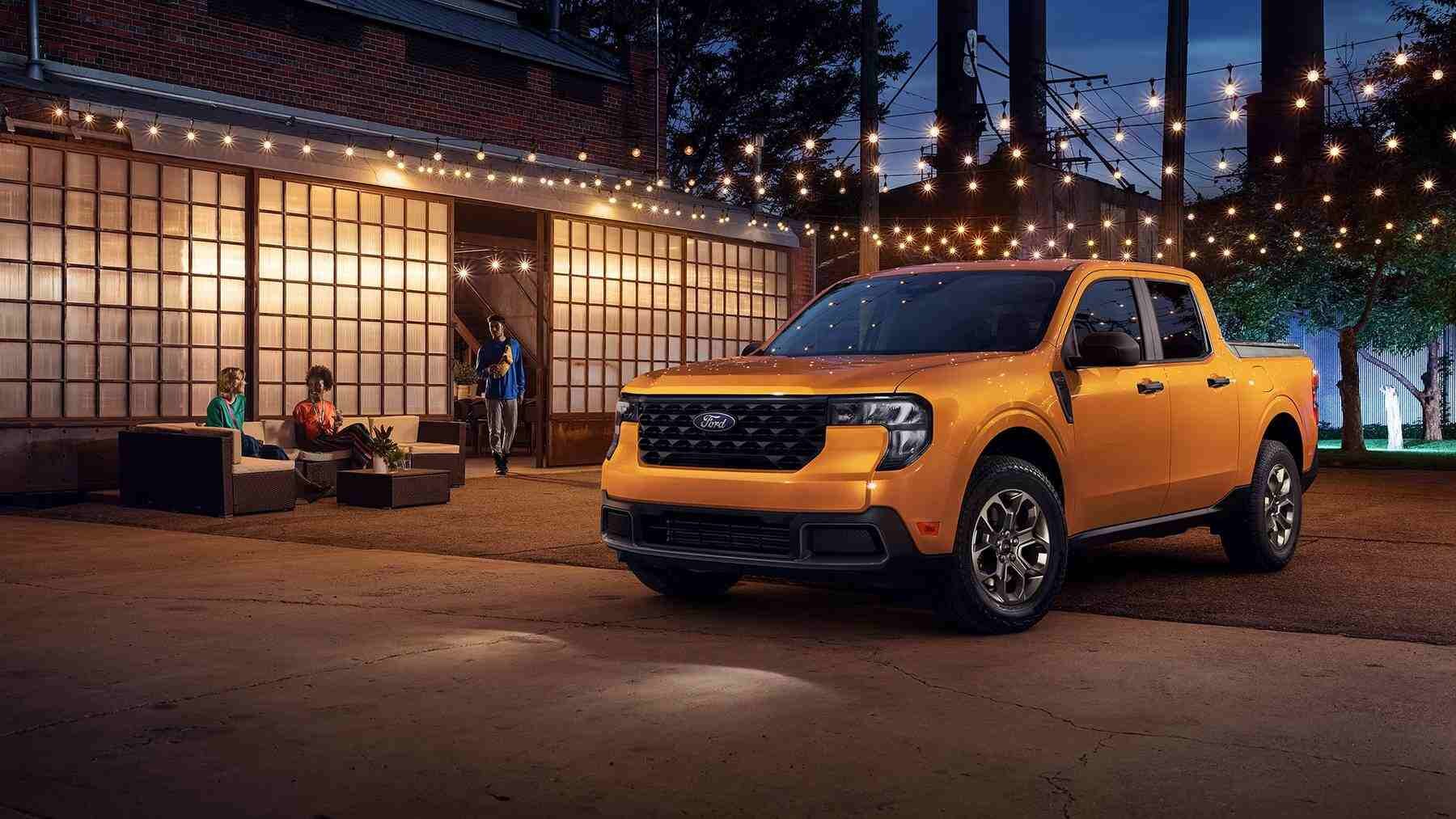
Overview
What's New for 2026
Ford's compact Maverick lineup enters its third model year with a sharper focus on electrification and capability. The 2026 model year brings refinements to the hybrid powertrain—now the standard engine across most trims—with improved turbo response on EcoBoost models and updated Ford Intelligent Backup Power functionality that allows the truck to power your home or jobsite during outages. The infotainment system receives additional over-the-air update capability, meaning your 2026 Maverick will gain new features throughout its ownership cycle without requiring a dealership visit. Structurally, the Maverick's proven unibody platform remains unchanged, but Ford has extended the hybrid's real-world efficiency margin through transmission recalibration that prioritizes electric-motor assistance during highway cruising.
For customers who rejected the hybrid's standard adoption, the 2.0L EcoBoost turbocharged four-cylinder returns with 250 horsepower and 280 pound-feet of torque, making it the more aggressive alternative for those who tow regularly or live in steep terrain. Ford also expanded the Lobo and Lariat trim availability nationwide—previously regional exclusives—recognizing that Maverick buyers want the connectivity and comfort of higher trims without jumping to a full-size Ranger.
A subtle but important detail for 2026: Ford recalibrated the rear leaf springs on all models to reduce the "bouncy" sensation reported by early owners on unloaded highway drives. The truck still feels like a truck, but the compliance has improved noticeably, making the Maverick a more comfortable daily driver whether you're hauling a full payload or commuting solo.
Overview
The 2026 Ford Maverick occupies an increasingly vital market segment: the affordable compact pickup. At a starting price of $28,145 for the XL Hybrid (with rear-wheel drive), the Maverick undercuts the Hyundai Santa Cruz by roughly $3,000 while offering more traditional truck architecture, greater payload capacity (2,000 lbs), and a more substantial towing limit (4,000 lbs with the available 4K Tow Package). The Tacoma-sized competitor Toyota Tacoma starts around $32,000 and lacks the hybrid efficiency—a critical advantage when fuel prices remain volatile. Chevrolet's Colorado, the traditional compact truck benchmark, commands $34,000-plus and comes only with gas engines, making the Maverick's default hybrid powertrain a legitimate efficiency edge.
The Maverick's unibody construction deserves explanation for buyers conditioned by decades of body-on-frame trucks. Unlike the Ranger and F-150, the Maverick shares its platform with the Escape and Bronco Sport, meaning the frame and body are welded as one unit. This reduces weight, improves fuel economy, and enhances on-road refinement—but it also means the Maverick handles bumps with car-like compliance rather than truck-like isolation. For someone who primarily uses a pickup for light hauling and weekend trips, this is a strength. For contractors or rural owners who regularly navigate washboard roads with a full payload, the Ranger's body-on-frame rigidity might feel more durable over 200,000 miles.
Base MSRP climbs to $42,340 for the Tremor trim with electronic locking differentials, all-terrain tires, and skid plates—a remarkable value proposition that positions the Maverick as genuinely capable off-road without requiring a $60,000-plus truck purchase. The truck's 10.4-inch ground clearance (with FWD) and 8.6-foot turning radius make it genuinely maneuverable in urban environments where a full-size F-150's 67-foot turning radius becomes a liability.
Driving Experience
The 2.5L hybrid powertrain (191 horsepower, 155 pound-feet of torque) feels adequate rather than quick, and that's by design. The hybrid's 10-speed automatic transmission masks the electric motor's intervention so seamlessly that most drivers won't perceive the transition between gas and electric propulsion. Acceleration from 0-60 mph takes approximately 8.8 seconds with the standard FWD configuration—respectable for a truck carrying a 2,000-lb payload capacity. The real advantage emerges in real-world fuel economy: EPA estimates of 42 city/35 highway/38 combined (FWD) routinely translate to actual 39-41 mpg in mixed driving, crushing the EcoBoost turbo's 23/30/26 estimate. For owners who drive 15,000 miles annually, that's a potential fuel savings of $1,800 per year versus the turbo—money that justifies the hybrid's modest $2,500 premium over entry-level EcoBoost models.
The EcoBoost 2.0L turbo (250 hp/280 lb-ft) injects genuine personality into the Maverick, cutting 0-60 time to approximately 7.2 seconds and providing the kind of on-demand punch that makes merging on crowded highways feel less calculated. Towing capacity jumps from 2,000 lbs (hybrid) to 4,000 lbs with the 4K Tow Package, making the turbo the logical choice for boat owners, utility trailer haulers, or anyone regularly moving small construction equipment. However, real-world highway fuel economy drops significantly to 24-26 mpg, negating much of the cost advantage over a used Ranger. The turbo's strangled 4.5-foot bed also proves limiting compared to the Ranger's standard 5-foot bed.
Ride quality improved measurably for 2026 after complaints about excessive bounce on early models. The recalibrated rear leaf springs now absorb highway expansion joints with a more progressive feel—not as controlled as an independent-suspension competitor like the Ridgeline, but substantially improved over 2024-2025 models. Handling remains decidedly truck-like: moderate body roll in corners, predictable understeer at the limit, and a steering ratio that requires more input than a crossover but less than a full-size F-150. Braking feels robust, with short stopping distances and good modulation from the standard ventilated front disc/drum rear setup.
Interior, Comfort & Technology
The Maverick's cabin prioritizes function over premium materials—a refreshing approach in an era of obsessive touchscreen integration. The standard 8-inch touchscreen runs Ford's SYNC 4 system with Apple CarPlay and Android Auto (wireless on XLT and above), allowing seamless smartphone integration without paying for navigation packages. The interface responds snappily, and menu structures feel intuitive after a brief orientation. Physical controls for climate and audio remain standard, appreciated by anyone frustrated with competitor touchscreen-only interfaces. Upper trims receive an 12-inch digital instrument cluster that displays real-time fuel economy, battery state, and navigation data with useful clarity.
Seat comfort impresses given the price point: manually adjustable driver seat on base XL models (cloth fabric) progresses to 10-way power adjustment on Lariat trim, with supportive bolstering that accommodates long highway days without significant fatigue. Rear legroom (32.4 inches) suits two adult passengers comfortably for short trips, but a third rear passenger feels cramped—the Maverick is fundamentally a two-seater's truck. The front-hinged doors open generously, and the horizontal dash layout minimizes blind spots during tight parking maneuvers.
A notable omission: the Maverick lacks the wireless phone charging pad found on comparative Ranger trims, and USB-C integration comes only on 2026 XLT and above models (2024-2025 models had USB-A only). The cabin quietness trails competitors like the Ridgeline and Tacoma—wind and tire noise become noticeable above 70 mph—likely a consequence of the Maverick's cost-conscious construction. Storage compartments prove logical: a 1.4-cubic-foot center bin under the integrated armrest, door pockets that accommodate large water bottles, and a 12.3-cubic-foot dashboard bin above the steering column. Payload capacity of 2,000 lbs (hybrid) or 1,860 lbs (EcoBoost) represents genuine truck capability—enough for construction materials, landscaping supplies, or equipment transport.
Trim Levels & Pricing
Ford's 2026 Maverick lineup spans from pragmatic to outright capable, with pricing that justifies stepping up through trims. The XL Hybrid at $28,145 (FWD) or $29,745 (AWD) establishes the baseline: manual windows, cloth seats, 8-inch touchscreen, and 42 mpg highway efficiency. XLT Hybrid ($30,645 FWD / $32,245 AWD) adds power windows, 10-way power driver seat, wireless CarPlay/Android Auto, and satellite radio. The non-hybrid jump—Lobo at $36,340 (EcoBoost 4WD)—introduces electronic locking rear differential, skid plates, all-terrain tires, and electronic shift-on-fly four-wheel drive. Lariat ($37,840) layers on leather seats, heated steering wheel, and panoramic moonroof. Tremor ($42,340), positioned as the off-road variant, adds adaptive suspension, terrain management modes, and functional underbody protection. This trim structure rewards buyers who plan to explore beyond pavement.
| Trim | Starting MSRP | Key Additions vs. Previous Tier |
|---|---|---|
| XL Hybrid (FWD) | $28,145 | 2.5L Hybrid, 42 MPG combined, manual windows, cloth seats |
| XLT Hybrid (FWD) | $30,645 | Power windows, 10-way power driver seat, wireless CarPlay/Android Auto |
| Lobo (EcoBoost 4WD) | $36,340 | 2.0L EcoBoost turbo, electronic locking rear diff, all-terrain tires, shift-on-fly 4WD |
| Lariat (EcoBoost 4WD) | $37,840 | Leather seats, heated steering wheel, panoramic moonroof |
| Tremor (EcoBoost 4WD) | $42,340 | Adaptive suspension, terrain management (7 modes), skid plates, underbody protection |
The XLT Hybrid represents the value inflection point: for a $2,500 increment over XL, you gain significant convenience features and wireless connectivity that justify the cost. Buyers reluctant to embrace hybrid technology should compare the Lobo's $36,340 price against used Ranger inventory in the mid-$30,000 range—new-truck warranty and modern safety features may offset the used truck's potentially lower cost. The Tremor, while seemingly expensive at $42,340, undercuts a comparably equipped Tacoma TRD Off-Road ($51,000-plus) while offering notably greater payload capacity.
Safety
The 2026 Maverick demonstrates Ford's commitment to active safety, with standard features including automatic emergency braking, lane-keeping assist, blind-spot monitoring, and rearview camera across all trims. Advanced trims receive adaptive cruise control, evasive steering assist, and a surround-view camera system that proves invaluable when navigating tight parking situations with a truck bed hanging off the rear. Ford's Co-Pilot360 suite of driver-assist technologies is standard, though the system's occasional overzealousness in lane-centering can be distracting on rural roads without clear lane markings.
Structural safety benefits from the unibody design: the welded frame distributes crash forces more consistently than body-on-frame competitors, potentially offering better frontal impact protection. The Maverick's lightweight construction (approximately 4,200 lbs) also reduces collision severity compared to heavier pickups. However, independent crash-test ratings from NHTSA and IIHS remain critical evaluation tools. Readers should consult nhtsa.gov and iihs.org for the latest 2026 model-year ratings and detailed test results, as these metrics evolve throughout the model year as more vehicles are tested.
One practical safety consideration often overlooked: the Maverick's compact dimensions make it significantly easier to control during emergency maneuvers compared to full-size trucks. The 8.6-foot turning radius and narrow body width mean the Maverick can execute evasive actions that an F-150 simply cannot. For daily commuting, this agility translates to improved safety when avoiding obstacles or making last-second lane changes.
Warranty & Ownership Costs
Ford's warranty structure remains conservative but industry-standard, protecting the Maverick's mechanical systems across three critical coverage types.
| Coverage Type | Duration |
|---|---|
| Basic (Bumper-to-Bumper) | 3 years / 36,000 miles |
| Powertrain | 5 years / 60,000 miles |
| Corrosion (Rust-Through) | 5 years / Unlimited mileage |
| Hybrid Battery | 8 years / 100,000 miles |
Ownership costs lean favorably toward the hybrid variant. Insurance premiums are comparable to the EcoBoost, running approximately $1,200-1,400 annually for full coverage (varies by driver age/location). Maintenance costs remain predictable: synthetic oil changes every 10,000 miles ($60-75), tire rotations annually ($80-100), and cabin air filter replacements every 20,000 miles ($40-60). Brake wear extends dramatically on hybrids due to regenerative braking—real-world brake service intervals often stretch to 100,000+ miles compared to 60,000-70,000 on comparable EcoBoost trucks. The 12V battery requires replacement every 4-5 years ($150-200), though this is a routine maintenance item, not a defect.
Fuel costs present the decisive ownership metric. At 38 mpg combined (hybrid) versus 26 mpg (EcoBoost), assuming $3.50/gallon and 15,000 annual miles, the hybrid owner spends approximately $1,842 annually while the EcoBoost owner spends $2,692—a $850 annual advantage that compounds to $8,500 across a 10-year ownership cycle. Resale value for hybrids has improved markedly as used-car data matures; 2024-2025 Maverick hybrids are retaining 65-70% of original value at three years versus 60-65% for EcoBoost models, suggesting the hybrid premium erodes over time.
The Bottom Line
The Verdict: The 2026 Ford Maverick remains the class leader for affordable, efficient pickup trucks. Its hybrid powertrain default, reasonable pricing, and legitimate truck capability create a compelling proposition for buyers who rejected traditional truck complexity. The refined ride quality for 2026 addresses early-model criticisms, and the expanded trim availability means more personalization options. This is not a truck for buyers who demand raw power or towing capacity exceeding 4,000 lbs—but for the majority of American pickup owners who need light-duty capability, daily commuting efficiency, and an easy ownership experience, the Maverick is difficult to dismiss.
Who Should Buy: Daily commuters who need occasional hauling capability; first-time truck buyers intimidated by full-size complexity; fuel-conscious buyers willing to embrace hybrid technology; anyone who tows less than 3,000 lbs regularly; urban dwellers who appreciate compact dimensions and easy parking.
Who Should Look Elsewhere: Heavy-duty contractors requiring payloads exceeding 2,000 lbs consistently; buyers who demand more than 4,000 lbs towing capacity; those who prioritize premium interior materials or extensive technology integration; off-road enthusiasts seeking extreme capability (step up to Tremor or beyond); buyers who philosophically reject hybrid powertrains.
Frequently Asked Questions
How does the 2026 Maverick hybrid's fuel economy compare to older Tacoma or Colorado models?
The Maverick hybrid achieves 38-42 mpg combined depending on drivetrain (FWD vs. AWD), while 2024-2025 Tacoma models average 20-22 mpg and Colorado models achieve 22-24 mpg across comparable mixed driving. The Maverick's efficiency advantage stems from its lighter curb weight (4,200 lbs versus 4,700+ lbs for full-frame competitors) and hybrid-electric power management. Real-world testing confirms these advantages persist through varied driving conditions, making the Maverick the efficiency leader in its segment.
Does the Maverick's unibody construction limit towing compared to body-on-frame trucks?
Ford engineered the Maverick for legitimate towing within its 4,000 lb maximum capacity (with 4K Tow Package). The unibody architecture actually distributes towing loads more evenly than body-on-frame competitors, reducing frame twisting. However, if you consistently tow loads exceeding 4,000 lbs or regularly work from unimproved jobsites, the Ranger or F-150's body-on-frame construction offers superior durability and load-carrying flexibility. The Maverick's design philosophy prioritizes owner satisfaction within its stated capabilities rather than extreme-duty performance.
Is the 2026 Maverick's electronic rear locking differential (Lobo/Tremor) effective for off-roading?
Yes, the electronic locking differential on Lobo and above models is functional and improved for 2026 with faster engagement response. However, the Maverick's unibody design and modest ground clearance (10.4 inches) mean it plays in a different off-road league than traditional body-on-frame trucks. The Tremor trim with terrain management modes and all-terrain tires handles moderate trails, sandy terrain, and light rock crawling—sufficient for weekend exploration but not expedition-grade challenges. Buyers planning serious off-roading should test-drive a Badlands-trim Bronco for superior capability.
How does the 2026 Maverick's warranty compare to competitors like Tacoma or Santa Cruz?
Ford's warranty aligns with industry standards: 3-year/36,000-mile basic coverage and 5-year/60,000-mile powertrain protection. Toyota extends its Tacoma warranty to 3-year/36,000-mile basic and 5-year/60,000-mile powertrain (identical to Ford). The critical differentiator is the 8-year/100,000-mile hybrid battery warranty on the Maverick—superior to Hyundai's Santa Cruz hybrid guarantee. Extended service plans are available on all models, but the Maverick's standard powertrain protection provides peace of mind through a typical ownership cycle.
Does the Maverick's hybrid powertrain require specialized maintenance I should understand before purchasing?
No; the 2026 Maverick hybrid requires no specialized maintenance beyond standard truck service intervals. The electric motor and battery pack are sealed units without user-serviceable components. Regenerative braking means pads last longer (often 100,000+ miles), reducing brake service costs. The 12V auxiliary battery requires replacement every 4-5 years ($150-200), but this is routine maintenance, not a hybrid-specific defect. Ford's 100,000-mile battery warranty coverage provides additional peace of mind.
Can I tow safely with the 2026 Maverick hybrid, or should I choose the EcoBoost turbo?
The hybrid's 2,000 lb towing capacity (2,500 lbs with added equipment) suits small utility trailers, jet skis, and light boat hauling. The EcoBoost's 4,000 lb capacity accommodates larger boats, enclosed trailers, and equipment haulers. Hybrid towing feels competent but not effortless—the 155 lb-ft torque provides adequate grunt, but performance feels deliberate rather than quick on upgrades. If you regularly exceed 3,000 lbs, the EcoBoost's extra power and standard heavier-duty cooling justify the fuel economy trade-off. If you tow occasionally below 2,500 lbs, the hybrid's efficiency advantage and lower operating costs outweigh the EcoBoost's power.
Key Highlights
- Standard hybrid powertrain delivers 42 city / 33 hwy mpg (FWD)nUnibody construction unique among pickup trucksnStarting at $28,145 is most affordable US pickupn2.0L EcoBoost turbo available with 250 hpn4.5-foot bed with versatile FITS (Ford Integrated Tether System)nAvailable AWD on hybrid and EcoBoost models
Powertrain Options
| Engine | Horsepower | Torque | Fuel | MPG |
|---|---|---|---|---|
| 2.5L Hybrid I4 | 191 hp | 155 lb-ft | Gasoline/Electric Hybrid | 42 city / 33 hwy / 37 combined (FWD) |
| 2.0L EcoBoost Turbo I4 | 250 hp | 280 lb-ft | Gasoline | 23 city / 30 hwy / 26 combined |
Transmission: CVT / 8-speed automatic
0-60 mph: 7.6 seconds
Specifications
Pros & Cons
✓ Pros
- 42 mpg city on hybrid is unprecedented for a pickupn$28,145 starting price makes truck ownership accessiblenUnibody construction provides car-like ride qualitynHybrid standard eliminates efficiency compromisenVersatile FITS cargo system encourages customizationnPractical 4.5-foot bed handles most homeowner tasks
✗ Cons
- 2,000 lb towing on hybrid limits recreational usen4.5-foot bed too short for full sheets of plywoodnNo crew cab long-bed configuration availablenHybrid lacks passing power on steep highway gradesnInterior materials reflect budget-conscious positioningnLimited off-road capability versus body-on-frame trucks