
People often think of flying cars when they think of the future. And some companies are already working on making that a reality. And I don’t mean Elon Musk’s claim that the second-generation Tesla Roadster will “fly.” I mean, actual flying cars.
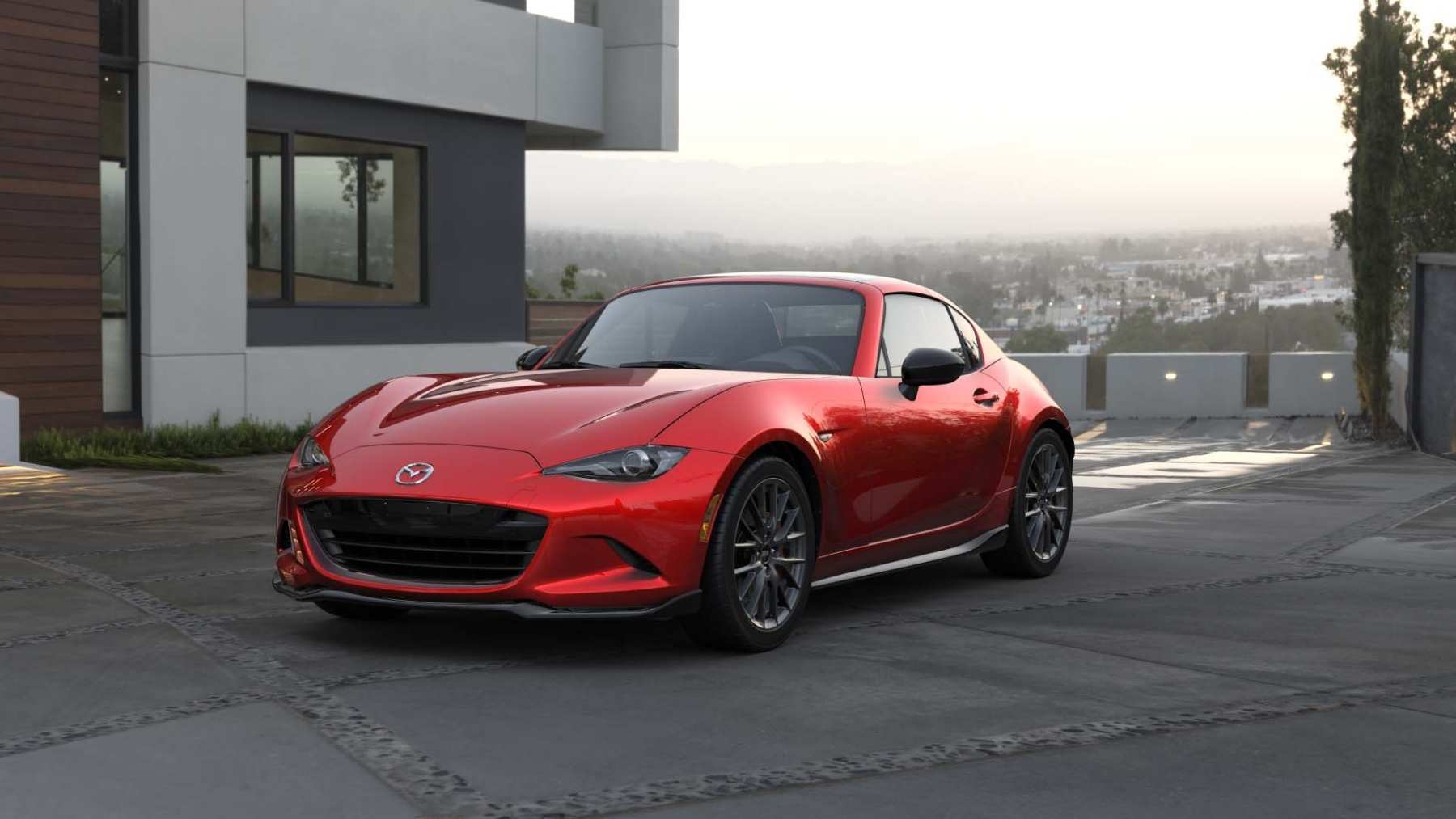
But even when flying cars become the norm, Mazda plans to keep the MX-5 Miata as close to its original DNA as possible.
In an interview with the Managing Director of Mazda Italia, Roberto Pietrantonio, Motor1 Italy found out that the next-generation Miata may be even better than we expected.
The hybrid Miata is not a thing, don’t be afraid
There has really been nothing like the Miata ever since it debuted in the 1990s. No other automaker can really seem to recreate that formula: a cheap, convertible sports car with perfect balance and incredible handling. There’s a reason that, decades later, the Miata is the automobile of choice, whether you’re tracking, cruising, commuting, drifting, or just want something cute. There’s a reason it’s the best-selling sports car.
The Miata has changed since the pop-ups of the 90s. For one, the Miata has surpassed the $30,000 price point. And for a while, we thought the Miata would see further changes. For a bit there, Mazda was flirting with the idea of a hybrid Miata. And by flirting, we mean torturing us. This was luckily shot down pretty quickly. A heavy, silent, unbalanced Miata defeats the entire purpose: it’s supposed to be a fun, carefree car. It’s supposed to make you smile.
Now, it seems the Miata won’t really change much as we head into the future. Maybe not at all. This is because Mazda has been very focused on the Miata community throughout the car’s development.
According to Pietrantonio, Japanese engineers visited MX-5 community groups in Italy (and around the world) to hear directly from enthusiasts. This makes the Miata more than just the numbers — it’s about that human connection. Feedback directly impacts design changes. He said: “We’re fortunate to have extremely engaged customer groups that provided valuable feedback to our engineers, who are already working on the future of our icon.”
There isn’t really any other car that brings so many people together. Whether you have an NA or an ND, you’ll always have enthusiast groups all over Facebook and Reddit, as well as car meets, shows, and drives to go to. You really can’t hate the Miata, unless you just hate being happy. Mazda has a huge number of communities to work with, from track enthusiasts to those who use the Miata to get to work, so they will have a lot of insight from all angles to keep the Miata true to itself and its drivers.
The goal for Mazda is to preserve the Miata’s DNA.
“I often say, even when cars can fly, the MX-5 will still put a smile on the driver’s face,” he said.
It’s a relief to hear. It’s not the biggest news out there, I’ll admit, but it’s an interview that stood out to me. Moving into 2027, many automakers are struggling with tariffs, regulatory uncertainty, and shifting buyer sentiment. This has led some brands to make pretty drastic pivots — Volkswagen is considering a truck for us Americans — while others have just been taking things to the extreme — BMW’s 7 Series is just the start of a massive overhaul that is turning its cars into even more luxurious living rooms. But Mazda wants the Miata to remain true to what has made it popular all these decades.
We may not be allowed to have pop-ups, but we’re allowed to have fun. And not many cars are offering that anymore. At least not at an affordable price. It’s comforting to know we’ll have a simple, fun sports car over the next few years as we continue to be suffocated by oversized, feature-heavy SUVs and cheap electric trucks to compete with China. It’s an escape from all these politics. All of the screens and software-as-a-service debates.
The Miata lives on.