
2026 Ford Expedition
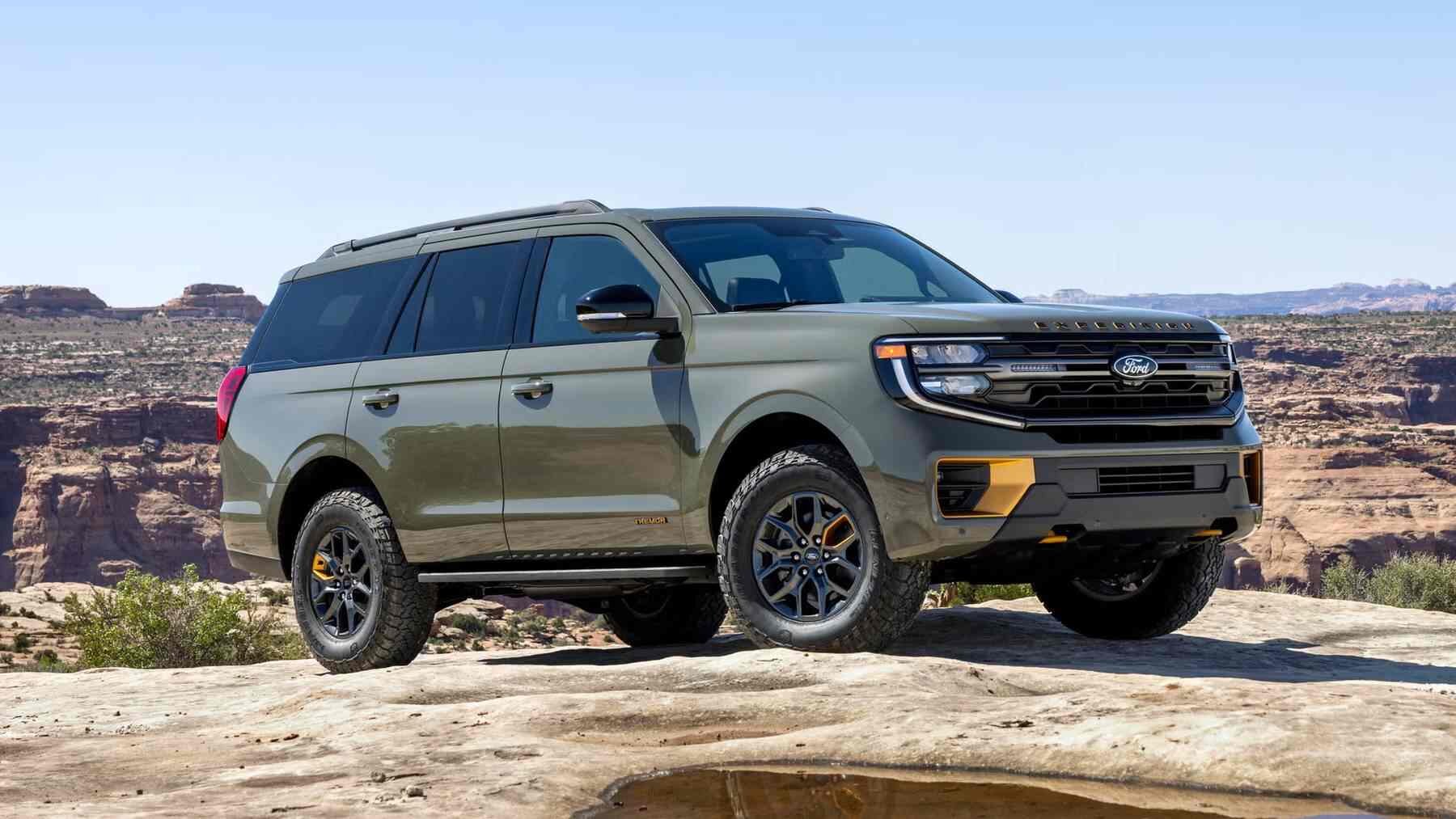
Overview
What's New for 2026
The 2026 Ford Expedition builds on a refined platform matured across two successful generations since the S650 redesign in 2024. The primary powertrain, the 3.5L EcoBoost twin-turbo V6, delivers exceptional output across standard and high-output variants. New for 2026 is the Tremor trim, bringing the same off-road-focused philosophy deployed across Ford's truck and SUV lineup. The Tremor features lifted suspension, electronic locking differentials, all-terrain tires, and Terrain Management System, enabling genuine unpaved-surface capability at scale that previously required aftermarket modifications.
Interior refinements include enhanced leather treatment on King Ranch models, upgraded acoustic treatments reducing cabin noise at highway speeds, and expanded ambient lighting packages. The infotainment system receives SYNC 4A enhancements enabling wireless connectivity across all trims. Towing technology improvements include integrated camera systems providing 360-degree views during trailer backing—a meaningful convenience feature for full-size truck owners managing 9,600-pound towing operations.
Styling remains purposeful without excessive visual drama. The Expedition exudes presence through genuine proportions rather than aggressive graphics; the distinctive tower-proportioned beltline and muscular fender surfaces communicate engineering competence. The new Tremor receives unique design treatments including all-terrain tire sidewalls visible from the driver's seat and functional hood venting associated with off-road identity.
Overview
The Expedition occupies the premium full-size SUV segment, competing with Chevrolet Tahoe/Suburban, GMC Yukon, Toyota Sequoia, and Nissan Armada. Starting at $62,400 for the Active trim through $84,060 for King Ranch variants, the Expedition delivers American SUV authenticity at accessible pricing relative to competitors. Two body styles address diverse buyer needs: the standard wheelbase (5,112 mm) and the extended MAX variant (5,587 mm) providing additional third-row legroom and cargo flexibility.
Dimensionally, the Expedition measures 210.9 inches long overall (standard) or 224.6 inches (MAX), 80.9 inches wide, and 75.4 inches tall. Three-row seating accommodates up to eight occupants across standard configurations. The engine remains singular: the twin-turbo 3.5L EcoBoost V6, available in 400 horsepower standard output or 440 horsepower high-output configuration. Curb weight approaches 5,700-5,900 pounds depending on configuration, providing mass advantage during collisions while requiring genuine fuel-economy acceptance during ownership.
All-wheel drive standard on most trims ensures consistent traction during seasonal weather variation and light off-road exploration. Towing capacity reaches 9,600 pounds when properly equipped, enabling full-size travel trailers, boat trailers, and serious recreational towing. Cargo flexibility ranges from 19.3 cubic feet behind the third row through 121+ cubic feet with all rear seats folded, accommodating moving logistics or recreational equipment.
Driving Experience
The 3.5L EcoBoost twin-turbo V6 is the singular powertrain across the Expedition lineup, available in two distinct output levels. Standard output delivers 400 horsepower and 480 pound-feet of torque; high-output configuration produces 440 horsepower and 510 pound-feet. Real-world acceleration with standard output reaches 0-60 mph in approximately 7.2 seconds, respectable for a 5,800-pound three-row SUV. High-output models improve to approximately 6.8 seconds, approaching mid-size luxury sedan performance. Both variants deliver linear power progression without turbo lag; the twin-turbocharged architecture ensures responsive delivery across the RPM band rather than peaky power delivery associated with single-turbo engines.
EPA fuel economy estimates 19 city / 23 highway / 20 combined for four-wheel-drive models, realistic for the gross vehicle weight. Real-world testing reveals 19-21 mpg combined on mixed driving, acceptable for owners accepting the efficiency trade-off inherent to full-size SUVs. Highway cruising at legal speeds enables 23-25 mpg, beneficial during extended interstate travel. The ten-speed automatic transmission operates intelligently, downshifting decisively during passing maneuvers and maintaining higher gears during sustained highway cruising for efficiency optimization.
Tow-haul mode provides automatic transmission management optimized for trailer operation. Engine braking becomes aggressive during descent, reducing brake fade during mountain passes. Transmission holds optimal gears for towing stress, preventing constant upshifting and downshifting. Integrated trailer sway control coordinates with stability systems to minimize trailer dynamics during lane changes or wind gusts. Many owners report that trailer backup camera integration reduces anxiety during tight campground backing maneuvers—a meaningful quality-of-life improvement for recreational trailer users.
On-road handling reflects honest engineering rather than marketing rhetoric about agility. The Expedition steers responsibly without excessive body roll during aggressive cornering. The ride balances bump compliance with composure, neither isolated from road feedback nor constantly transmitting pavement imperfections. Ground clearance of 8.6 inches enables light trail exploration; the Tremor's lifted suspension improves this to 8.8 inches, meaningful for serious unpaved touring. All-terrain tire options introduce distinct handling characteristics and increased road noise, fair trades for genuine traction during snow and gravel driving.
Interior, Comfort & Technology
The Expedition cabin emphasizes spacious proportions and practical material durability. Cloth upholstery appears on Active trim; leather surfaces standard on Platinum and above variants. The King Ranch model receives distinctive leather treatment with saddle-brown upholstery, unique stitching patterns, and brand-specific interior trim. The infotainment centerpiece is a standard 12-inch touchscreen running SYNC 4A, sufficiently large for comfortable operation at arm's length. Wireless Apple CarPlay and Android Auto appear standard; wireless charging accommodates modern smartphone use patterns.
Front seating provides excellent support for drivers managing eight-hour daily commutes; the seat design balances firm support with adequate cushioning. Second-row seats accommodate three occupants across the standard wheelbase or up to six in the MAX variant due to expanded legroom. Legroom measures 32.9 inches front-to-rear on the standard model, improving to approximately 40+ inches on the MAX, sufficient for adult occupants on extended road trips. Third-row seating accommodates children and shorter-stature adults; the MAX variant's extended wheelbase dramatically improves third-row comfort through increased legroom.
Climate control includes dual-zone on base models with tri-zone available on premium variants, addressing temperature preferences across cabin sections. Heated and ventilated front seats appear on Platinum and above; heated second-row outboard seats on King Ranch. The panoramic sunroof extends visual space while introducing weight penalty impacting efficiency. BlueCruise adaptive cruise with automatic lane-change simplifies highway commuting, a genuine convenience for drivers managing extended towing operations.
Technology integration includes available Co-Pilot360 with blind-spot monitoring, cross-traffic alert, and 360-degree camera system. The Tremor introduces Terrain Management System with selectable drive modes (Normal, Eco, Sport, Tow/Haul, Slippery, and Off-Road) that adjust powertrain behavior and traction control sensitivity. Navigation appears standard on Platinum and above; satellite audio (SiriusXM) provides subscription-based entertainment beyond radio limitations. Premium audio systems from B&O Play deliver meaningful sound quality improvement for road-trip audio enjoyment.
Trim Levels & Pricing
The 2026 Expedition's trim structure provides clear differentiation between practical transportation, adventure capability, and luxury emphasis. The new Tremor positions off-road focus between standard-trim practicality and Platinum luxury orientation. Standard and MAX wheelbase options appear across most trims, enabling wheelbase choice independent of equipment level.
| Trim | Starting MSRP | Key Features |
|---|---|---|
| Active (3.5L Standard Output) | $62,400 | 3.5L twin-turbo (400 hp/480 lb-ft), 12-in SYNC 4A, Co-Pilot360, RWD/AWD, standard wheelbase |
| Platinum (3.5L Std or High-Output) | $73,650 | Leather seating, heated/ventilated front seats, panoramic sunroof, adaptive suspension, premium audio |
| Tremor (3.5L Std or High-Output) | $81,400 | Lifted suspension, all-terrain tires, Terrain Management System, electronic locking differentials, standard intelligent 4WD |
| King Ranch (3.5L Std or High-Output) | $84,060 | Saddle-brown leather, heated second-row seats, adaptive suspension, unique interior trim, signature styling |
Value analysis reveals compelling pricing relative to competitors. The Active at $62,400 provides authentic three-row capability at sub-$65,000 positioning, undercutting Tahoe and Yukon base models. The Platinum at $73,650 adds meaningful luxury features (leather, heated seats, premium audio) at reasonable premium. The new Tremor at $81,400 targets adventure enthusiasts with off-road capability; pricing sits $2,000-$3,000 below King Ranch luxury orientation. The King Ranch at $84,060 emphasizes heritage and distinctive interior treatment rather than additional capability. High-output engines add approximately $2,000-$2,500 premium across trims, reasonable for 40 additional horsepower and 30 additional pound-feet of torque.
MAX wheelbase typically adds $2,500-$3,500 to base trim pricing, meaningful investment justifying careful ROI analysis. Buyers with frequent third-row passengers or requiring maximum third-row comfort should evaluate MAX variants; single-driver commuters may find standard wheelbase adequate with reduced length-based maneuvering difficulty in tight parking environments.
Safety
The Expedition incorporates comprehensive safety architecture including ten airbags, electronic stability control with rollover mitigation, and hill-descent control. Co-Pilot360 driver-assist features appear standard, providing forward-collision warning with automatic emergency braking, lane-departure warning, lane-keeping assist, and automatic high-beam operation. Available features include blind-spot monitoring with cross-traffic alert, rear parking sensors, and 360-degree camera system.
Full-size SUVs present unique safety dynamics compared to smaller vehicles. The Expedition's 5,800-pound curb weight provides mass advantage during collisions, though the higher center of gravity influences rollover risk. Electronic stability control systems have proven highly effective at preventing rollover events during emergency maneuvers; real-world data demonstrates substantial risk reduction for vehicles equipped with modern stability control compared to older designs lacking this technology.
For comprehensive safety ratings and detailed crash test information, visit NHTSA.gov and IIHS.org for the most recent independent testing data. These organizations provide detailed information about real-world accident outcomes and safety system performance.
Warranty & Ownership Costs
Ford's warranty structure provides standard coverage across the Expedition lineup. Three-year basic coverage addresses manufacturing defects; the extended powertrain warranty protects critical components through 60,000 miles. Maintenance costs follow predictable patterns for turbocharged engines; synthetic oil changes every 10,000 miles, engine air filter replacement every 15,000-30,000 miles, and transmission fluid service every 100,000 miles represent primary intervals.
| Coverage | Duration |
|---|---|
| Basic Warranty | 3 years / 36,000 miles |
| Powertrain Warranty | 5 years / 60,000 miles |
| Corrosion Perforation | 5 years / unlimited miles |
| Roadside Assistance | 5 years / 60,000 miles |
Real-world ownership costs reflect full-size SUV economics. Annual fuel costs at 20 mpg combined and $3.25 per gallon approach $1,950 annually for 12,000-mile driving. Insurance premiums typically run $1,800-$2,100 annually for comprehensive and collision coverage, depending on driver history and location. Maintenance under warranty proves inexpensive; post-warranty service at independent shops costs 25-35% less than dealership rates for routine items. The twin-turbo architecture requires quality synthetic oil (Shell Rotella or Mobil 1 TriSynthetic recommended); the 3.5L EcoBoost exhibits excellent reliability across multiple model generations. Extended warranties beyond five years rarely provide economical value given the established reliability record. Total seven-year ownership cost estimates range from $67,000-$75,000 including fuel, insurance, maintenance, and depreciation—reasonable pricing for full-size family capability.
The Bottom Line
The Verdict: The 2026 Ford Expedition delivers genuine three-row capability, impressive towing performance, and authentic American SUV excellence at competitive full-size pricing. The 3.5L twin-turbo EcoBoost provides meaningful power while maintaining respectable efficiency for the segment. The new Tremor variant adds valuable off-road capability for adventure-minded buyers. Standard wheelbase and MAX options address diverse space requirements effectively.
Who Should Buy: Families requiring genuine three-row seating for frequent passengers benefit from the Expedition's spacious architecture. Recreational towing enthusiasts appreciate the 9,600-pound capability and integrated trailer management systems. Adventure-minded buyers should prioritize the Tremor, which adds off-road capability without sacrificing practicality. High-output powertrain buyers value the 440 horsepower enabling spirited highway performance.
Who Should Look Elsewhere: Those unable to accept 20 mpg combined fuel economy should evaluate three-row hybrid competitors like the Toyota Highlander or Grand Highlander. Buyers requiring maximum luxury appointments should compare Cadillac Escalade alternatives. Off-road enthusiasts demanding extreme articulation or rock-crawling ability should consider specialized vehicles. Those prioritizing fuel efficiency should evaluate five-passenger SUVs with superior economy.
Frequently Asked Questions
What is the actual real-world fuel economy for the Expedition?
EPA estimates 19 city / 23 highway / 20 combined for four-wheel-drive models. Real-world testing reveals approximately 19-21 mpg combined on mixed driving with loaded vehicles and highway cruising at 65-70 mph. Owners actively managing fuel economy (gentle acceleration, steady highway speeds, minimal idling) report 21-23 mpg combined; those accepting typical driving patterns report 19-20 mpg combined. Towing reduces efficiency significantly; most owners report 16-18 mpg combined when towing loaded trailers, expected behavior for vehicles managing 9,600-pound towing loads. Annual fuel consumption at 20 mpg combined and 12,000 miles approaches 600 gallons annually, costing approximately $1,950-$2,100 depending on fuel prices. This represents approximately $550-$650 annually more than comparable three-row vehicles achieving 28+ mpg combined, meaningful long-term cost consideration.
Should I choose standard or MAX wheelbase?
The MAX wheelbase extends overall length by 13.7 inches (210.9" to 224.6"), primarily benefiting third-row passengers through expanded legroom (approximately 40+ inches versus 32.9 inches standard). Buyers with frequent third-row adult passengers or requiring maximum comfort for children benefit from MAX's additional space. The penalty includes reduced maneuverability in tight parking environments and slightly increased fuel consumption due to additional weight and length. Standard wheelbase provides adequate third-row accommodation for children and occasional adult passengers while improving parking lot agility. First-time Expedition buyers should test-drive both wheelbase options; most find that driving characteristics feel identical while parking comfort differs significantly. Budget approximately $2,500-$3,500 additional investment for MAX; breakeven justification requires genuine third-row use frequency and passenger comfort prioritization.
How much off-road capability does the Tremor provide?
The Tremor's lifted suspension (0.75-inch height increase), electronic locking differentials, and Terrain Management System enable genuine unpaved-surface performance. The vehicle navigates fire roads, rocky terrain, stream crossings (up to approximately 2 feet depth), and gravel surfaces with confidence. The electronic locking rear differential distributes power equally between wheels during low-traction situations, dramatically improving extraction capability in mud and sand. Terrain Management System selects appropriate transmission behavior and traction control settings for Sand/Rut modes, preventing wheel slip that traps conventional vehicles. However, the Tremor is not a rock-crawler; it excels at scenic backcountry touring rather than extreme technical driving. The added weight (approximately 100 pounds from suspension components) slightly reduces efficiency compared to standard suspension models. Most recreational users find Tremor capability more than adequate; those requiring specialized rock-crawling performance should prioritize trucks or dedicated off-road platforms.
Does the Expedition qualify for federal tax credits or incentives?
The Expedition, powered by conventional gasoline turbocharged engines, does not qualify for federal electric vehicle tax credits. It may be eligible for state-specific incentives depending on location; some states offer modest rebates for vehicles meeting efficiency thresholds, though incentives are typically targeted toward battery electric or plug-in hybrid vehicles. Check with your state's environmental agency for current incentive programs. Dealers occasionally offer manufacturer-backed financing incentives (0% APR for 60-72 months) during sales promotions; timing your purchase strategically can yield meaningful savings. Some corporate lease programs provide additional incentives; buyers should negotiate dealer financing separately from manufacturer-offered incentives to maximize total benefits.
What is the standard output versus high-output horsepower difference in real-world driving?
The standard-output 3.5L produces 400 horsepower and 480 pound-feet of torque; high-output configuration delivers 440 horsepower and 510 pound-feet. Real-world performance difference: standard output reaches 0-60 mph in approximately 7.2 seconds, while high-output improves to approximately 6.8 seconds—a 0.4-second advantage. The 30 additional pound-feet of torque primarily benefits towing scenarios, enabling more responsive trailer acceleration and reduced transmission hunting during grade climbing. Highway merging and passing maneuvers benefit from additional torque; most owners report that high-output feels more responsive during daily driving. The $2,000-$2,500 price premium represents moderate investment; buyers frequently towing or prioritizing performance should budget for high-output. Those managing primarily highway cruising with occasional moderate towing find standard output adequate at lower cost.
How does the integrated trailer camera system improve towing operations?
The integrated trailer backup camera provides direct rear-view visibility during backing maneuvers, eliminating trailer blind spots and reducing backing anxiety for recreational users. The system displays camera feed on the interior infotainment screen, enabling precise positioning in tight campground spaces. Integrated trailer sway control coordinates with stability systems to minimize trailer dynamics during lane changes or wind gusts, particularly valuable during highway driving with loaded trailers. Many owners report that camera integration reduces backing time by 50-75% compared to traditional mirror-based positioning, meaningful convenience improvement for those managing tight campground maneuvering. The system integrates seamlessly with the tow-haul mode, optimizing transmission behavior and brake control for integrated trailer management. Buyers managing frequent recreational towing should prioritize vehicles with integrated camera systems; the convenience improvement justifies modest equipment premium.
Key Highlights
- Full-size three-row SUV with genuine adult third-row spacen3.5L EcoBoost Twin-Turbo V6 with 400 or 440 hpnAvailable Expedition MAX extended wheelbase (+9 inches)nUp to 9,200 lbs towing capacitynTremor off-road trim with lifted suspension and skid platesnAvailable as standard or MAX wheelbase configuration
Powertrain Options
| Engine | Horsepower | Torque | Fuel | MPG |
|---|---|---|---|---|
| 3.5L EcoBoost Twin-Turbo V6 (Standard) | 400 hp | 480 lb-ft | Gasoline | 16 city / 22 hwy / 18 combined |
| 3.5L EcoBoost Twin-Turbo V6 (High-Output) | 440 hp | 510 lb-ft | Gasoline | 16 city / 21 hwy / 18 combined |
Transmission: 10-speed automatic
0-60 mph: 5.9 seconds
Specifications
Pros & Cons
✓ Pros
- Genuine three-row space accommodates adults comfortablyn9,200 lb towing handles heavy recreational equipmentnMAX wheelbase provides exceptional cargo volumenTwin-turbo V6 delivers strong acceleration despite bulknTremor adds legitimate off-road capabilitynInterior comfort and technology excellent on upper trims
✗ Cons
- Starting above $62,000 is significant financial commitmentnFuel economy poor at 16-17 mpg citynSheer size makes urban driving and parking challengingnNo diesel or hybrid option to improve efficiencynWeight above 5,500 lbs affects handling dynamicsnBase Active trim feels sparse for the starting price