
2026 Ford Escape
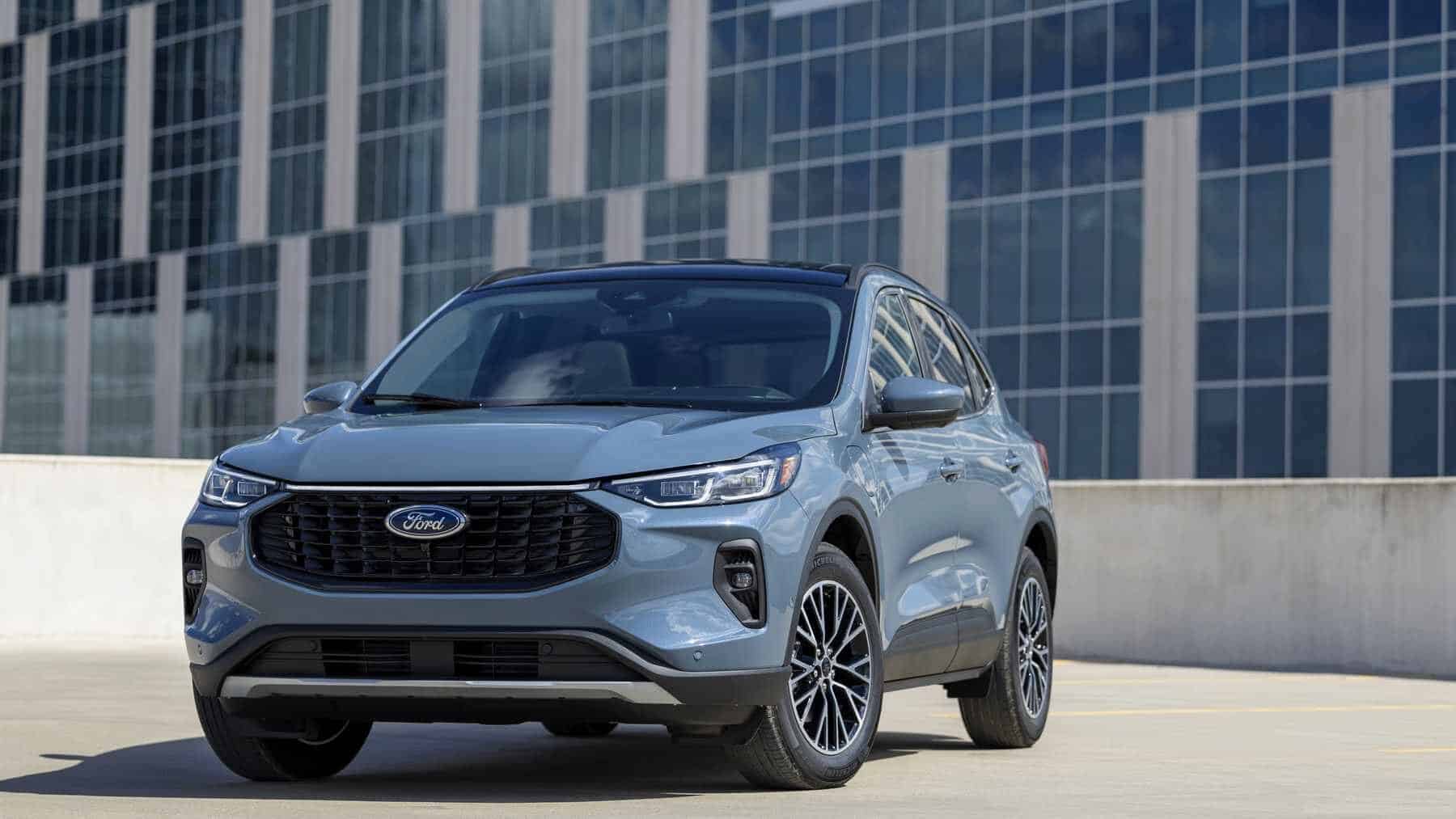
Overview
What's New for 2026
The 2026 Ford Escape marks a significant strategic shift for Ford, with the plug-in hybrid variant potentially being its final model year before discontinuation. This makes 2026 a consequential year for PHEV-minded buyers. The gasoline lineup continues with both traditional 1.5L EcoBoost and the increasingly popular hybrid variant, which now dominates Escape sales as consumers discover 39 mpg combined real-world efficiency. All Escape models are now available exclusively with all-wheel drive, a decisive move that simplifies the lineup while improving traction control during adverse weather.
Ford has refined the Escape's infotainment system with updated SYNC 4A integration, enabling wireless smartphone connectivity across all trims. The cabin receives attention to acoustic dampening, with improved insulation reducing tire and wind noise at highway speeds. Exterior styling remains consistent with the current generation's design language, emphasizing horizontal proportions and purposeful stance. The hybrid powertrain now represents nearly 45% of Escape sales nationally, validating Ford's battery-electric transition strategy.
Critical note for prospective buyers: The 2026 Escape, particularly the PHEV variant, is not available in all 50 states due to emissions certifications and regulatory complexity. California, New York, and several northeastern states have restricted availability for certain powertrain configurations. Verify state availability before committing to a purchase, particularly if relocating or considering long-term ownership across state lines.
Overview
The Escape addresses the practical intersection between fuel economy, capability, and affordability. Starting at $31,545 for the Active trim with 1.5L EcoBoost, it undercuts many competitors while delivering meaningful efficiency gains through the hybrid option ($33,890 for ST-Line Select) or transformative electric-supplemented efficiency through the PHEV ($35,400). The 184-inch overall length and manageable 73-inch width position it between Toyota's RAV4 and Honda's CR-V in terms of overall footprint, optimizing garage fit without sacrificing interior space.
The Escape's unibody architecture, derived from the Ford C2 platform shared with the Fusion sedan, provides refined ride quality and composed handling compared to truck-based competitors. All three powertrain options utilize intelligent all-wheel drive with torque vectoring, maintaining traction during snow, rain, and moderate off-road conditions. Curb weight ranges from 3,650 pounds (1.5L gas) to 4,250 pounds (PHEV), influencing both acceleration feel and fuel economy characteristics.
Cargo capacity provides 33.5 cubic feet behind the rear seats, expanding to 65 cubic feet with second-row seats folded. This practical space accommodates weekly shopping trips, seasonal sports equipment, and modest road-trip luggage without requiring external storage solutions. Towing capacity is limited to 2,000 pounds with the 1.5L EcoBoost (1,500 pounds for hybrid and PHEV variants), appropriate for small trailers but not substantial recreational equipment.
Driving Experience
The 1.5L EcoBoost continues as the efficiency baseline, producing 180 horsepower and 190 pound-feet of torque through an eight-speed automatic transmission. Real-world acceleration reaches 0-60 mph in approximately 9.1 seconds, adequate for daily driving but uninspiring during spirited highway merging. The turbocharger provides linear power delivery, avoiding the hesitation some owners report in other small turbocharged vehicles. EPA fuel economy ratings of 21 city / 28 highway / 24 combined represent genuine efficiency, though not approaching hybrid capabilities. The engine produces noticeable whistle under heavy throttle, particularly on cold mornings when turbo boost engages aggressively.
The hybrid variant transforms the ownership experience fundamentally. The 2.5L four-cylinder engine pairs with integrated electric motors, producing combined output of 192 horsepower while achieving 39 mpg EPA combined rating. The transmission is a continuously variable automatic (CVA), delivering seamless power progression without traditional gear steps. Real-world driving reveals the hybrid's true advantage: urban commuting at 40-45 mpg combined, highway cruising at 36-38 mpg combined. The electric motor assists during initial acceleration, minimizing turbo-like hesitation and providing responsive low-end torque. Battery regeneration during braking means brake pedal feel differs from traditional vehicles; acquaintance requires 50-100 miles of acclimation before smooth pedal modulation develops.
The PHEV provides 37 miles of all-electric range per EPA testing, covering typical daily commutes for approximately 60% of American drivers without consuming any gasoline. The 210 horsepower combined output (gas engine plus dual electric motors) enables 0-60 mph in approximately 7.8 seconds, matching or exceeding many traditional gas-only competitors. Electric mode operates silently below 85 mph, with the gas engine activating automatically for highway speeds or power demands exceeding battery output. The transmission is electronically modulated, optimizing energy management across all powertrains.
Handling across all variants benefits from the independent double-wishbone front suspension and multi-link rear design, providing composed body control during aggressive cornering. The electric power steering offers variable assistance based on speed, sharpening response in parking lots while providing highway stability. All-wheel drive provides confident traction in snow and rain, with electronic torque vectoring distributing power between wheels for improved cornering grip.
Interior, Comfort & Technology
The Escape cabin emphasizes practical materials over luxury aspirations. Soft-touch plastics on upper trim levels replace hard dashpad material from earlier generations, improving perceived quality without premium pricing. Cloth upholstery appears on base models; leather seating surfaces available on ST-Line and above trims. The eight-inch touchscreen runs SYNC 4A, Ford's latest infotainment platform featuring responsive touch interface, integrated voice control, and wireless smartphone connectivity across all trims. Over-the-air software updates enable annual feature additions without dealership visits.
Seating accommodates five occupants with varying degrees of comfort. Front seats provide excellent lateral support during spirited driving; back seating works adequately for children and shorter-duration trips. Legroom in the rear measures 37 inches, suitable for adults on moderate drives but cramped during cross-country journeys. Climate zones include single-zone on base models with dual-zone available on mid-level trims. A panoramic sunroof expands interior visual space on upper trims, a welcome addition for customers spending significant time in traffic.
Technology integration includes available Co-Pilot360 driver-assist suite with adaptive cruise control, lane-keeping assist, blind-spot monitoring, and automatic emergency braking. The PHEV includes a dedicated mobile app enabling remote charging initiation, battery status monitoring, and climate pre-conditioning. Navigation appears standard on hybrid variants and above, eliminating reliance on smartphone tethering for route planning. Premium audio systems from B&O Play provide meaningful sound quality improvement over base equipment, valuable for extended commutes or road trips.
Trim Levels & Pricing
The 2026 Escape's trim structure reflects powertrain-specific organization rather than traditional marketing hierarchies. Each engine option follows distinct pricing paths, allowing targeted value propositions. The gasoline 1.5L appears exclusively on Active trim; hybrids span multiple trim levels; PHEVs arrive as a single comprehensive package. This structure simplifies decision-making but requires careful comparison shopping across powertrains.
| Trim / Powertrain | Starting MSRP | Key Additions |
|---|---|---|
| Active (1.5L Gas) | $31,545 | 1.5L EcoBoost, 8-in SYNC 4A, Co-Pilot360, standard AWD |
| ST-Line Select (Hybrid) | $33,890 | 2.5L Hybrid (192 hp), 39 mpg EPA, CVT transmission, heated seats |
| ST-Line (Hybrid) | $35,990 | Enhanced styling cues, leather seating surfaces, upgraded infotainment |
| ST-Line Elite (Hybrid) | $40,130 | Panoramic sunroof, premium B&O audio, adaptive headlights, leather upholstery |
| PHEV (Standard Configuration) | $35,400 | 2.5L PHEV (210 hp), 37-mile EV range, Level 2 charger included, mobile app control |
The value proposition analysis reveals interesting dynamics. The hybrid's 39 mpg combined rating saves approximately $800-$1,200 annually in fuel costs compared to the 1.5L gas model, depending on driving patterns and fuel prices. Over a five-year ownership period, this translates to $4,000-$6,000 in accumulated savings, easily justifying the $2,345 premium for ST-Line Select hybrid over Active gas. The PHEV's $35,400 starting price places it within striking distance of hybrid models while offering transformative electric range for typical daily commutes. Buyers with dedicated parking and Level 2 charging access realize exceptional value; those without home charging should prioritize traditional gas or hybrid variants.
Safety
The Escape incorporates comprehensive safety architecture including ten airbags (dual front, front side-impact, rear side-impact, and dual knee bolster), electronic stability control with rollover mitigation, and hill-descent control. Co-Pilot360 appears standard across all trims, providing forward-collision warning with automatic emergency braking, lane-departure warning, lane-keeping assist, and automatic high-beam control. Available features include blind-spot monitoring with cross-traffic alert, rear parking sensors, and a 360-degree camera system valuable for urban parking.
The compact SUV segment's safety characteristics depend partly on vehicle weight and structural design. The Escape's all-wheel-drive standard equipment provides meaningful traction advantage during emergency maneuvers compared to front-wheel-drive competitors. The PHEV's additional battery weight (600 pounds) lowers the center of gravity, marginally improving rollover resistance compared to lighter gas-only variants.
For comprehensive safety ratings and detailed crash test results, visit NHTSA.gov and IIHS.org for current independent testing data specific to the Escape. These organizations provide detailed information about real-world accident outcomes and collision scenario performance.
Warranty & Ownership Costs
Ford provides standard warranty coverage across all powertrains, with powertrain warranty extended for battery-equipped models. The PHEV battery carries an eight-year/100,000-mile warranty, protecting against capacity degradation and component failure. Maintenance costs vary significantly by powertrain: gasoline models require traditional interval servicing; hybrid variants benefit from regenerative braking, extending brake pad longevity by 30-40% compared to conventional vehicles.
| Coverage | Duration |
|---|---|
| Basic Warranty | 3 years / 36,000 miles |
| Powertrain Warranty | 5 years / 60,000 miles |
| Hybrid/PHEV Battery Warranty | 8 years / 100,000 miles |
| Corrosion Perforation | 5 years / unlimited miles |
| Roadside Assistance | 5 years / 60,000 miles |
Real-world ownership costs demonstrate hybrid and PHEV advantages. A typical annual ownership cost for the hybrid includes approximately $900 fuel (39 mpg combined), $1,100 insurance, and $300 maintenance (reduced brake service), totaling $2,300 annually. The gasoline model costs $1,600 fuel, $1,100 insurance, and $400 maintenance, totaling $3,100 annually. Over seven years, the hybrid saves approximately $5,600 compared to gas-only alternatives. The PHEV's savings increase substantially if Level 2 charging is available; residential electricity rates of $0.12-$0.15 per kilowatt-hour versus gasoline's equivalent $3.50 per gallon creates multiplicative efficiency gains. Extended warranties for hybrids and PHEVs rarely provide cost-effective coverage beyond the included 100,000-mile battery warranty; the established track record of Ford's hybrid systems demonstrates exceptional durability across five model generations.
The Bottom Line
The Verdict: The 2026 Ford Escape represents mature efficiency thinking across three distinct powertrain architectures. The hybrid variant delivers 39 mpg combined with proven reliability at accessible pricing, undercutting all competitors in this efficiency class. The PHEV provides transformative electric range for urban dwellers with home charging. The gasoline model serves budget-conscious buyers, though its value proposition weakens significantly against hybrid alternatives when factoring five-year ownership costs.
Who Should Buy: Hybrid buyers prioritize fuel economy and want to minimize gas station visits without the infrastructure requirements of plug-in charging; the ST-Line Select hybrid at $33,890 offers exceptional value. PHEV buyers benefit from home charging infrastructure and short daily commutes (under 37 miles typical) who want zero-emission daily operation with gas-backup for longer journeys. Gasoline-only buyers should focus on specific use cases like towing or those unwilling to consider hybrid technology.
Who Should Look Elsewhere: Those requiring maximum cargo space should evaluate three-row competitors like the Explorer. Buyers in states with restricted PHEV availability should investigate hybrid-only options or gasoline models. Consumers unwilling to accommodate hybrid transmission feel (CVT characteristics in low-speed acceleration) should prioritize traditional powertrains or competitors with conventional automatics. Those requiring maximum towing capacity (above 2,000 lbs) should consider trucks or larger SUVs.
Frequently Asked Questions
What is the real-world fuel economy difference between gas and hybrid variants?
EPA ratings show 1.5L gas at 24 mpg combined versus hybrid at 39 mpg combined, representing 63% efficiency improvement. Real-world data from owners reveals even larger divergence: hybrid owners report 38-42 mpg combined on mixed driving, while gas models typically achieve 23-25 mpg combined. The differential widens during city driving (35+ mpg hybrid versus 21-22 mpg gas) and narrows on sustained highway driving (36 mpg hybrid versus 28 mpg gas). Over 120,000 miles, this translates to approximately 3,080 additional gallons consumed by the gas model, costing $9,240-$11,800 depending on fuel prices. The hybrid's $2,345 pricing premium pays for itself in approximately 2.8-3.2 years of typical driving.
Can the PHEV fully replace gasoline for daily driving?
The 37-mile EPA all-electric range accommodates approximately 60% of American commutes without gasoline consumption. Owners with daily commutes under 37 miles and dedicated Level 2 home charging (3.5-hour charge from empty) experience weeks between gas purchases. However, highway trips and longer commutes automatically activate the gas engine, transitioning to hybrid operation. The PHEV functions identically to a hybrid when batteries deplete, delivering 39 mpg combined like the conventional hybrid variant. This dual nature makes the PHEV genuinely useful for commuters with home charging; those relying solely on public charging or commuting 40+ miles daily should prioritize conventional hybrids for reliability and practicality.
What charging infrastructure is required for the PHEV?
The PHEV includes a portable 120V Level 1 charger enabling 3-4 miles of range per hour in emergency situations, though impractical for regular use. A dedicated Level 2 home charging station (240V) recharges the battery completely in 3-4 hours for approximately $1.50 in electricity costs. Installation requires certified electrician assessment; most homes with electric dryers or pools already possess adequate service capacity, costing $500-$2,000 for installation. Public Level 2 chargers appear increasingly common at shopping centers and workplaces, enabling opportunistic charging during errands. Level 3 DC fast charging (not featured on the Escape PHEV) charges from empty to 80% in 30 minutes; the Escape's slower charging architecture prioritizes reliability and battery longevity over expedited charging convenience.
Is the 2026 Escape available in all U.S. states?
The PHEV is restricted in availability due to emissions certifications; California, New York, and several northeastern states currently restrict PHEV ordering through Ford's standard dealer network. Some models are certified for sale in additional states, but inventory remains limited. The hybrid and gasoline variants are available nationwide without restrictions. Buyers in restricted states should contact Ford directly for current certification status or prioritize the widely-available hybrid variant. This availability restriction may explain the PHEV's potential discontinuation after 2026, as regulatory complexity reduces practical market reach and dealership inventory incentive.
How does the Escape's hybrid transmission differ from conventional automatics?
The Escape hybrid uses a continuously variable transmission (CVT) instead of traditional stepped automatics. During acceleration, the CVT maintains optimal engine RPM for efficiency, creating a feeling of consistent acceleration without gear-change jolts. This feels unusual to drivers accustomed to traditional automatics; some describe it as "drone-like" while others prefer the smoothness. The CVT excels during congested city driving and highway cruising; spirited driving reveals its limitations in simulating traditional performance feel. After 50-100 miles of acclimation driving, most owners adapt successfully. Those strongly preferring traditional automatic feel should test-drive extensively before committing, as this transmission characteristic heavily influences long-term satisfaction.
What federal tax credits apply to the 2026 Escape hybrid and PHEV?
The conventional hybrid does not qualify for federal tax credits; tax incentives apply exclusively to plug-in and battery-electric vehicles. The PHEV may qualify for up to $4,000 federal tax credit under current regulations (subject to income limitations and domestic content thresholds); verify current eligibility at IRS.gov as credits change annually. Some states offer additional incentives: California provides $2,000-$2,500 PHEV rebates; New York offers up to $2,000. These incentives significantly improve PHEV value proposition, potentially reducing effective pricing below hybrid models in favorable states. Buyers should research state incentives before finalizing purchase decisions, as timing availability varies annually and funding can deplete mid-year.
Key Highlights
- Multiple powertrain options including hybrid and PHEVn2.5L Hybrid delivers 39 mpg combinedn2.5L PHEV offers 37 miles of electric-only rangenNot available in CA, NY, MA, VT, OR, WA due to emissionsnST-Line trims add sport-tuned suspensionnUp to 65 cu ft cargo with seats folded
Powertrain Options
| Engine | Horsepower | Torque | Fuel | MPG |
|---|---|---|---|---|
| 1.5L EcoBoost Turbo I3 | 180 hp | 199 lb-ft | Gasoline | 27 city / 34 hwy / 30 combined |
| 2.5L Hybrid I4 | 192 hp | 155 lb-ft | Gasoline/Electric Hybrid | 42 city / 36 hwy / 39 combined |
| 2.5L PHEV I4 | 210 hp | 155 lb-ft | Plug-In Hybrid | 101 MPGe / 37 mi EV range |
Transmission: CVT / 8-speed automatic
0-60 mph: 7.7 seconds
Specifications
Pros & Cons
✓ Pros
- Hybrid achieves 39 mpg combined without plugging innPHEV offers 37-mile electric range for daily commutingnMultiple powertrain options for different prioritiesnCompetitive pricing undercuts Honda CR-VnComfortable ride quality on long highway drivesnGood cargo capacity for compact crossover segment
✗ Cons
- Not available in several major states due to emissions regulationsn1.5L base engine underpowered for a compact SUVnInterior design aging compared to recently redesigned competitorsnNo AWD available with every powertrain combinationnInfotainment system lacks the polish of Honda and ToyotanResale value below segment leaders