
2026 Honda HR-V
Overview
What's New for 2026
The 2026 Honda HR-V carries forward with minimal changes from the third-generation model that debuted in 2023. Honda has refined the infotainment software and added a couple of new exterior color options, but the mechanical package, trim structure, and pricing remain largely unchanged. The three-trim lineup—LX, Sport, and EX-L—continues with the same 2.0-liter naturally aspirated four-cylinder as the sole powertrain. Starting price holds at $26,500 for the LX, making the HR-V one of the more affordable entries in the subcompact SUV segment. No hybrid option is available, which is increasingly becoming a competitive disadvantage as rivals add electrified powertrains.
Overview
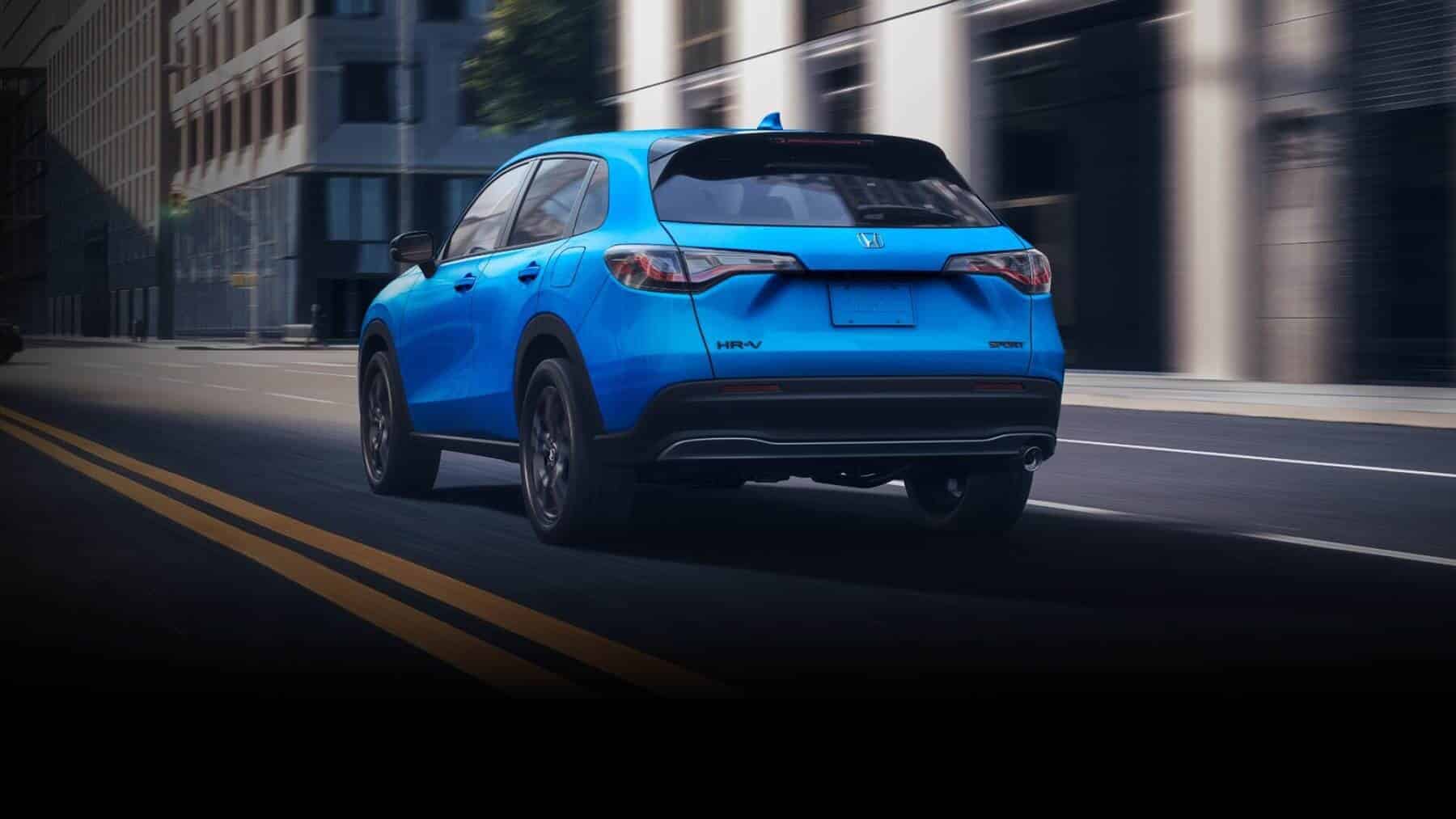
The 2026 Honda HR-V sits at the entry point of Honda's SUV lineup, slotting below the CR-V in both size and price. Starting at $26,500 for the base LX and topping out at $30,350 for the EX-L, the HR-V targets buyers who want SUV practicality without the footprint or price tag of a compact crossover. Three trims keep things simple, and all share the same 2.0-liter naturally aspirated four-cylinder producing 158 horsepower at 6,500 rpm and 138 lb-ft of torque at 4,200 rpm, paired with a continuously variable transmission.
Front-wheel drive is standard across the lineup, with Real-Time AWD available on all trims. At 179.8 inches long on a 104.5-inch wheelbase, the HR-V is notably larger than the previous generation and offers genuine usable interior space. Cargo volume measures 24.4 cubic feet behind the rear seats and 55.1 cubic feet with the seats folded—competitive figures for the subcompact class. Curb weight ranges from 3,159 pounds for the lightest FWD model to 3,336 pounds with AWD and the full equipment of the EX-L.
EPA fuel economy ratings come in at 26 city / 32 highway / 28 combined for FWD models and 25/30/27 for AWD, which is adequate but not class-leading. The 14.0-gallon fuel tank running on regular unleaded provides a real-world range of approximately 390 miles. Competitors include the Toyota Corolla Cross (from roughly $24,500), Hyundai Kona (from around $25,500), Mazda CX-30 (from approximately $24,800), and Subaru Crosstrek (from about $30,500). The HR-V's interior space advantage over most of these rivals is its strongest card.
Driving Experience
The 2.0-liter naturally aspirated engine is the HR-V's most obvious limitation. With 158 horsepower moving over 3,100 pounds, acceleration is leisurely—merging onto highways requires planning, and passing on two-lane roads demands patience. The CVT does what it can to keep the engine in its narrow power band, but sustained acceleration produces the characteristic droning that plagues most continuously variable transmissions. Honda's simulated gear steps help during spirited driving, but the engine simply runs out of breath at the top end.
Where the HR-V redeems itself is in its chassis behavior. The MacPherson strut front and multi-link rear suspension deliver a ride quality that's genuinely comfortable for a subcompact SUV, absorbing road imperfections with a suppleness you wouldn't expect at this price point. Body roll is well-managed, steering response through the dual-pinion electric power steering system is accurate if not particularly communicative, and the overall handling balance is neutral and predictable. Ground clearance measures 7.0 inches (7.3 for the Sport), which is sufficient for the occasional unpaved road but won't inspire any trail adventures.
The AWD system is a reactive type—it sends power to the rear wheels when the front tires slip, rather than proactively splitting torque. It's useful for rain and light snow but won't turn the HR-V into an off-road vehicle. Brake feel is good for the class, with progressive pedal action and adequate stopping power. Wind noise is well-controlled at highway speeds, though tire noise on coarser surfaces is more noticeable than in the larger CR-V.
Interior, Comfort & Technology
The HR-V's interior punches above its weight class. The cabin design borrows styling cues from the Civic, with a clean horizontal dashboard layout and a honeycomb mesh accent that adds visual interest. Material quality on upper surfaces is respectable for the price, though lower door panels and some console surfaces use harder plastics typical of the segment.
Front passengers get 39.4 inches of headroom (38.4 with a moonroof) and generous legroom, while rear-seat occupants enjoy 38.0 inches of headroom and enough legroom for average-sized adults to ride comfortably. The rear seat doesn't fold completely flat but creates a usable cargo floor when lowered. Total cargo volume of 55.1 cubic feet with the seats down is impressive for a subcompact SUV and rivals some compact crossovers.
The infotainment system uses a 7-inch touchscreen on the LX and a 9-inch unit on the Sport and EX-L, both running Honda's latest software with wireless Apple CarPlay and Android Auto. Physical climate controls are standard across the lineup—a practical touch that keeps routine adjustments from requiring screen interactions. The EX-L adds a 12-speaker Bose premium audio system, wireless phone charging, and a power moonroof. Honda Sensing driver-assist features are standard on every trim.
Passenger volume measures 98.7 cubic feet on most trims, which is generous for the subcompact segment. The driving position is comfortable and offers good outward visibility, with relatively thin A-pillars that minimize blind spots. Storage throughout the cabin includes a reasonable center console bin and door pockets, though the glovebox is on the small side.
Trim Levels & Pricing
| Trim | MSRP | Key Features |
|---|---|---|
| LX | $26,500 | 2.0L I4, CVT, FWD, Honda Sensing, 7" display, wireless CarPlay/Android Auto, LED headlights, 17" wheels, cloth seats |
| Sport | $28,300 | Adds: 9" display, sport styling, black-painted wheels, rear USB ports, 18" wheels, slightly higher ground clearance (7.3") |
| EX-L | $30,350 | Adds: leather seats, heated front seats, power driver's seat, Bose 12-speaker audio, wireless charging, power moonroof, 17" wheels |
All prices listed are MSRP before destination charges of approximately $1,295. Real-Time AWD is available on all trims and adds to the base price. The HR-V's simple three-trim structure means there are no confusing package options—each trim level is well-defined and adds meaningful equipment over the one below it.
Safety
Every 2026 HR-V comes standard with Honda Sensing, which includes collision mitigation braking, forward collision warning, lane keeping assist, road departure mitigation, adaptive cruise control with low-speed follow, and traffic sign recognition. The Sport and EX-L trims add blind-spot information system with cross-traffic monitor. The full Honda Sensing suite makes the HR-V one of the better-equipped subcompact SUVs for standard safety technology.
The Advanced Compatibility Engineering (ACE) body structure is standard, along with front, side, knee (driver and passenger), and side curtain airbags with rollover sensor. A multi-angle rearview camera is included on all trims, with the Sport and EX-L upgrading the display resolution. Hill start assist is also standard across the lineup.
For comprehensive crash test ratings, visit nhtsa.gov and iihs.org.
Warranty & Ownership Costs
| Coverage | Duration |
|---|---|
| Basic (Bumper-to-Bumper) | 3 years / 36,000 miles |
| Powertrain | 5 years / 60,000 miles |
| Corrosion Perforation | 5 years / unlimited miles |
| Roadside Assistance | 3 years / 36,000 miles |
Ownership costs are among the HR-V's strengths. Annual fuel costs run approximately $1,550 based on 12,000 miles at the 28 combined MPG FWD rating, and all trims use regular unleaded fuel. Insurance costs are moderate at $1,200-$1,800 annually, reflecting the HR-V's modest performance and strong safety equipment. Honda's maintenance schedule is straightforward with no unusual requirements, and the naturally aspirated engine avoids the potential turbo-related maintenance costs of some competitors. Tire replacement costs are low—budget $400-$600 for a full set of the 17- or 18-inch tires.
The Bottom Line
The 2026 Honda HR-V is a sensible choice for buyers who prioritize interior space, reliability, and low running costs in a subcompact SUV package. It offers notably more cargo room than most direct competitors, a comfortable ride, and Honda's comprehensive Sensing safety suite on every trim. The main weakness is the 158-hp engine, which feels underpowered for a vehicle in this weight class and puts the HR-V at a significant performance disadvantage against turbocharged rivals. The absence of a hybrid option also limits its appeal to efficiency-minded shoppers.
Who should buy it: Urban commuters who need more space than a sedan, first-time SUV buyers on a budget, and anyone who values Honda's reliability reputation and standard safety technology over outright performance.
Who should look elsewhere: Drivers who want more power and a more engaging driving experience (consider the Mazda CX-30), shoppers who prioritize fuel efficiency above all (look at the Toyota Corolla Cross Hybrid), or buyers who need AWD confidence in heavy snow (the Subaru Crosstrek's symmetrical AWD system is more capable).
Frequently Asked Questions
Is the 2026 Honda HR-V bigger than the previous generation?
Yes, significantly. The third-generation HR-V (2023-present) grew substantially over its predecessor, gaining several inches in length and wheelbase. At 179.8 inches long on a 104.5-inch wheelbase, it's now closer in size to some compact SUVs than to the subcompact it technically competes in. This size increase translates directly to improved passenger space and cargo volume, with 24.4 cubic feet behind the rear seats and 55.1 cubic feet with the seats folded.
Does the 2026 HR-V come with a turbo engine?
No. The 2026 HR-V uses a 2.0-liter naturally aspirated four-cylinder engine producing 158 horsepower and 138 lb-ft of torque across all three trims. There is no turbocharged or hybrid option available. This puts the HR-V at a power disadvantage against competitors like the Hyundai Kona (190 hp turbo available) and the Mazda CX-30 (227 hp turbo available), though the naturally aspirated engine is simpler and typically more reliable long-term.
How does the HR-V compare to the CR-V?
The CR-V is larger in every dimension, offers more powerful engines (including a hybrid option), and provides significantly more cargo space (39.3 vs. 24.4 cubic feet behind the second row). The HR-V starts about $4,400 less and is easier to maneuver in tight urban spaces. If your priorities are budget and city driving, the HR-V makes sense. If you need maximum versatility, more power, or hybrid efficiency, the CR-V is worth the premium.
What fuel does the 2026 HR-V require?
The HR-V runs on regular unleaded gasoline (87 octane) across all trims, keeping fuel costs low. The 14.0-gallon tank provides approximately 390 miles of range in FWD form at the 28 combined MPG rating. Annual fuel costs are roughly $1,550 based on 12,000 miles of driving at current gas prices, which is competitive for the subcompact SUV segment.
Is the HR-V good in snow?
The HR-V with available Real-Time AWD provides adequate traction for light to moderate snow conditions. The system automatically sends power to the rear wheels when the fronts lose grip, which helps with acceleration on slippery surfaces. However, ground clearance is limited at 7.0-7.3 inches, which means deeper snow can be problematic. For frequent winter driving, a set of dedicated snow tires will dramatically improve the HR-V's cold-weather capability regardless of whether you choose FWD or AWD.
Key Highlights
- Honda's smallest and most affordable SUV
- Updated for 2026 with larger display and wireless connectivity
- AWD available across all trims
Specifications
Pros & Cons
✓ Pros
- Honda interior design maximizes space in a small footprint
- AWD available without a massive price premium
- Honda reliability at an accessible price point
✗ Cons
- 158 horsepower is uninspiring — this is an appliance, not a driver's car
- No hybrid or turbo option limits appeal for efficiency or performance buyers
- Competitors like the Kona and Corolla Cross offer more powertrain variety