
2026 Chevrolet Blazer
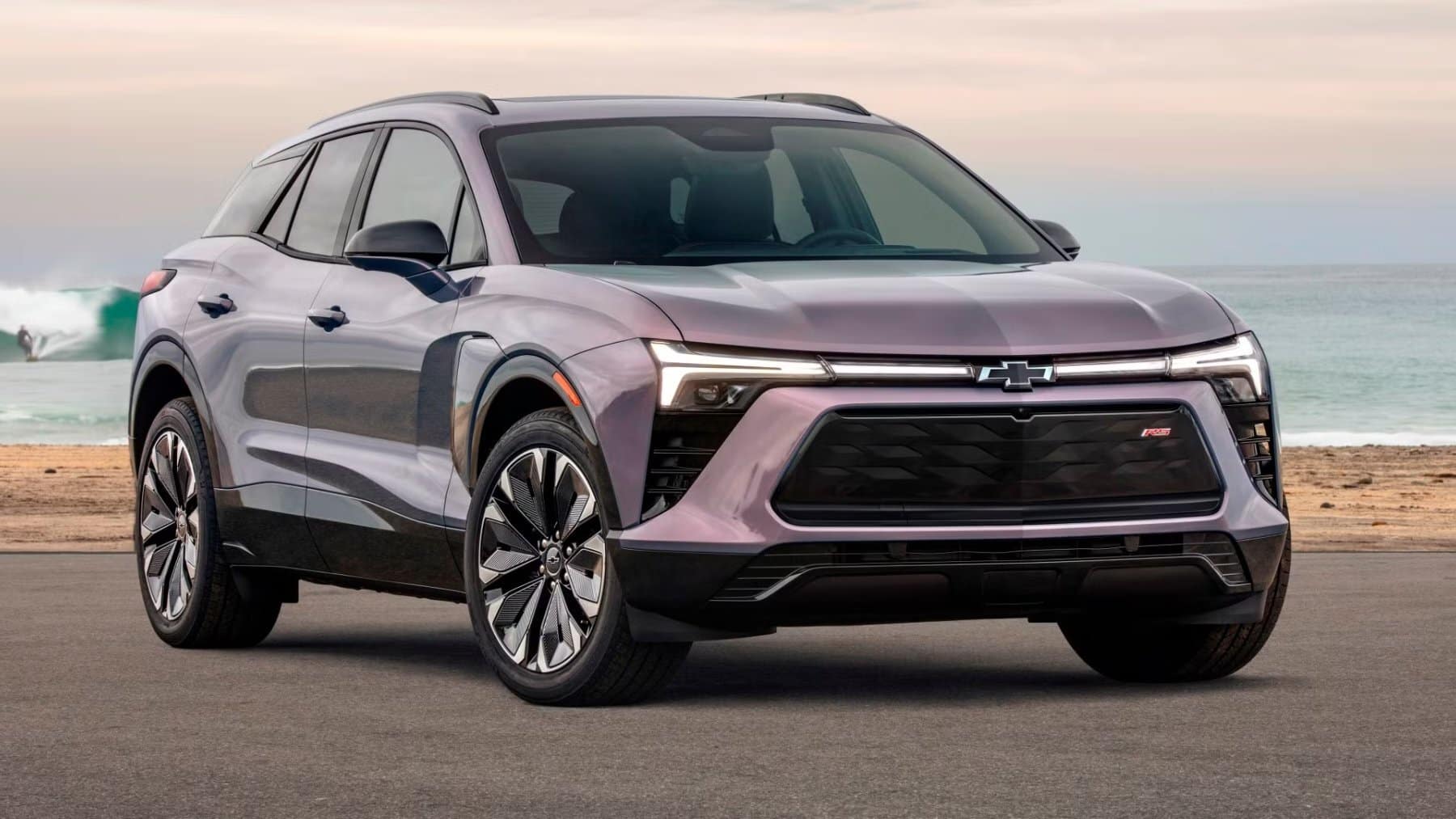
Overview
What's New for 2026
The 2026 Chevrolet Blazer carries forward the successful second-generation architecture with incremental refinement focusing on powertrain optimization and technological advancement. All models now standardize on the 2.0-liter turbocharged four-cylinder engine (228 horsepower, 258 pound-feet) paired with a robust nine-speed automatic transmission—a significant departure from previous model years when earlier Blazer models offered a 2.5-liter naturally-aspirated four-cylinder as the base engine. This standardization delivers meaningful performance improvement across the entire lineup: 0-to-60 mph in approximately 7.5 seconds for FWD models and 7.2 for AWD variants—genuinely quick performance that elevates the Blazer's driving character above pure family hauling.
For buyers seeking additional performance, the optional 3.6-liter naturally-aspirated V6 engine (308 horsepower, 270 pound-feet) is available exclusively on the RS trim (paired with the optional Trailering Equipment Package), delivering 0-60 mph in 6.1 seconds—genuinely quick acceleration that rivals some performance-oriented vehicles at comparable prices. In December 2025, General Motors implemented a modest $100 MSRP increase and maintained the $1,995 destination freight charge. The fundamental formula—American-market midsize SUV with genuine power and towing capacity—remains unchanged, positioning the Blazer as a pragmatic alternative to Japanese competitors and discontinued Ford Edge.
Overview
The 2026 Chevrolet Blazer starts at $36,295 (including $1,995 destination) for the 2LT FWD with the turbocharged four-cylinder, positioning it as competitive pricing against similarly-equipped Honda Passport ($42,500+), Jeep Grand Cherokee (starting below $40,000), and Toyota Venza ($38,000+). The Blazer's pricing advantage relative to Passport is substantial—over $6,000 less—while the Venza actually undercuts the Blazer, though Venza prioritizes refinement over performance. The Blazer carves its niche through performance: the 228-horsepower turbo and optional 308-horsepower V6 deliver driving excitement rare in this segment, appealing to buyers balancing family practicality with driving engagement.
Dimensionally, the Blazer spans 193.7 inches in length and weighs approximately 3,918 pounds for the lightest FWD configuration and up to 4,313 pounds for fully-equipped AWD models—heavier than the compact Equinox (3,600 lbs) but lighter than three-row Traverse (4,100 lbs). The muscular exterior styling with pronounced shoulder lines, trapezoidal grille, and athletic stance commands visual presence in parking lots. The elevated seating position provides commanding visibility and the psychological benefits of true sport-utility presence. Curb weight varies significantly by trim and equipment level, with a roughly 200-400 pound spread between base FWD and loaded AWD configurations.
The 2.0-liter turbo engine's 228 horsepower and 258 pound-feet torque deliver responsive acceleration in daily driving. Direct fuel injection and variable valve timing optimize efficiency, achieving 22 city/29 highway/25 combined mpg for FWD models and 21/28/24 for AWD. These figures are respectable for a turbocharged engine in a vehicle weighing nearly 4,000 pounds, though substantially less impressive than naturally-aspirated engines of similar displacement. Real-world fuel economy in mixed driving typically reaches 23-25 mpg, translating to roughly $1,100-$1,200 annually in fuel costs at current prices. The optional 3.6-liter V6, despite larger displacement and 80 additional horsepower, achieves 19 city/27 highway/22 combined—noticeably less efficient than the turbo four's 25 mpg combined, reflecting the larger displacement's higher fuel consumption.
Driving Experience
The Blazer's driving character is genuinely engaging for a family crossover. The 2.0-liter turbo engine delivers linear power delivery with minimal turbo lag; throttle response is immediate and satisfying. The nine-speed automatic transmission executes seamless gear changes, rarely hunting between ratios or hunting for torque multiplication. Sport mode sharpens throttle response and extends shift points, creating a sportier driving sensation at the cost of slightly reduced fuel economy. The steering is properly weighted with genuine road feedback, a marked improvement over light, vague steering in competitors like the Venza. The suspension—MacPherson strut front with multilink rear—balances comfort and control, absorbing road imperfections without excessive wallowing.
Body roll is moderate in hard cornering but never feels threatening or out-of-control. The Blazer displays genuine composure through twisting back roads; the driving position is commanding without being isolated, and the wide track width provides inherent stability. Wind and road noise are well-contained at highway speeds, a consequence of comprehensive acoustic insulation and aggressive door sealing. Towing capacity reaches 3,250 pounds with the 2.0-liter turbo and up to 4,500 pounds with the V6 equipped with the optional Trailering Package—sufficient for mid-size boat trailers, jet skis, and utility hauling that covers most recreational needs.
The optional 3.6-liter V6 transforms the driving experience entirely. With 308 horsepower and 270 pound-feet of peak torque, acceleration becomes genuinely exciting: 0-60 mph in 6.1 seconds positions the Blazer as quicker than many performance-oriented vehicles. The naturally-aspirated engine's linear power delivery across the RPM range feels refined compared to turbo engines' concentration of power in the mid-range. Throttle response is instantaneous without artificial turbo lag, creating an intuitive driving sensation that experienced drivers appreciate. The fuel economy trade-off is 19/27/22 versus the turbo's 22/29/25, a manageable 3-mpg combined reduction justifying the option cost for buyers valuing performance. Highway passing and merging feel effortless; the V6 transforms the Blazer from capable family hauler to genuinely quick crossover.
Interior, Comfort & Technology
The Blazer's cabin strikes a commendable balance between sportiness and family practicality. The dashboard emphasizes horizontal design with soft-touch materials on the upper pad and accent stitching on door panels creating a cohesive design language. The color palette leans toward charcoal and black with optional gray accents, creating an upscale ambiance without sacrificing durability. Build quality is solid; panel gaps are consistent, and assembly tolerances suggest careful manufacturing. Seating is generous: front passengers enjoy 41.8 inches of legroom with supportive bolstering suitable for all-day highway driving. Rear passengers benefit from 38.4 inches of legroom, adequate for most passengers though tight for tall adults on extended journeys.
Infotainment centers on a touchscreen interface (size varies by trim) with wireless Apple CarPlay and Android Auto standard, eliminating cable fumbling. The system is responsive and intuitive, with logical menu organization even for less tech-savvy users. A digital instrument cluster displays customizable vehicle information, engine performance data, and trip statistics. Dual-zone automatic climate control with heated seats and heated steering wheel comes standard on higher trims and is available on entry models. Premium audio systems with surround-view cameras are available on higher trims, adding genuine utility. Storage is thoughtfully organized: capacious front door bins, a proper center console with wireless charging pad, and rear seat pockets providing ample organizational options.
Cargo space is respectable: 30.5 cubic feet behind the rear seats and 64.2 cubic feet maximum with seats folded. The 60/40 split rear bench provides flexibility for various cargo configurations. Cargo access is straightforward through the wide rear liftgate, and tie-down points are well-positioned. The flat cargo floor maximizes usable volume for bulky items like luggage or camping equipment. Rear seat passengers enjoy climate vents, seatback storage pockets, and LATCH connection points for child safety seats. Overall, the interior reflects Chevrolet's matured SUV platform philosophy: no luxury pretension but thoughtful execution across functional categories.
Trim Levels & Pricing
The 2026 Chevrolet Blazer lineup consists of three main trim levels (2LT, 3LT, RS) across FWD and AWD powertrains. All models come standard with the 2.0-liter turbo engine; the optional 3.6-liter V6 is available exclusively on the RS trim when paired with the Trailering Equipment Package. This structure provides flexibility for diverse buyer profiles: budget-conscious buyers can find adequate value in 2LT, performance enthusiasts can select the V6 option, and feature-focused buyers can choose higher trims. The $100 MSRP increase effective December 2025 modestly impacts entry pricing but remains competitive against Honda Passport and Toyota Venza.
| Trim | Starting MSRP | Key Additions |
|---|---|---|
| 2LT FWD | $36,295 | 2.0L turbo (228 hp), 9-speed automatic, touchscreen infotainment, dual-zone climate, blind-spot monitoring |
| 2LT AWD | $38,795 | All-wheel drive, up to 3,250-lb towing capacity, improved winter traction, modest fuel economy reduction |
| 3LT FWD | $41,495 | Heated front seats, heated steering wheel, upgraded interior materials, enhanced safety features |
| 3LT AWD | $44,195 | All-wheel drive benefits with 3LT comfort features, enhanced convenience package |
| RS FWD | $45,395 | Distinct RS styling, premium wheels, aggressive exterior, 3.6L V6 optional with Trailering Package |
| RS AWD | $48,295 | RS package with all-wheel drive, optional 3.6L V6, range-topping performance and capability |
Safety
The 2026 Blazer comes standard with Chevy Safety Assist, a comprehensive active safety suite that includes forward collision alert, automatic emergency braking, lane keep assist with departure warning, front pedestrian braking, and IntelliBeam automatic high-beam management. These systems function autonomously to prevent or mitigate common accident scenarios: rear-end collisions in traffic, lane departure on highway driving, and pedestrian strikes in urban environments. Insurance industry data demonstrates real-world effectiveness of these systems in reducing accident frequency and severity across vehicle fleets.
The Blazer's body structure incorporates high-strength steel in critical load paths, optimizing crash energy absorption while maintaining passenger compartment integrity. The elevated seating position provides superior visibility compared to sedans, reducing blind-spot accidents and enabling earlier detection of pedestrians and cyclists. Eight airbags positioned throughout the cabin provide comprehensive occupant protection across varied collision angles and passenger sizes. The compact profile and light weight reduce stopping distances compared to heavier three-row SUVs, a passive safety advantage often overlooked in favor of tonnage considerations.
However, the Blazer lacks some safety features becoming standard in premium competitors: there is no surround-view camera system, and blind-spot monitoring requires stepping up to higher trims. Buyers should prioritize 3LT and above to gain these valuable safety technologies. The spacious cabin and excellent visibility design help compensate for missing electronic safety systems, though premium competitors offer more comprehensive technological protection. For comprehensive crash test ratings and safety data from government and independent testing, visit nhtsa.gov and iihs.org.
Warranty & Ownership Costs
Chevrolet's warranty structure is standard for mainstream brands. Basic warranty covers three years and 36,000 miles, powertrain coverage extends five years and 60,000 miles, and corrosion protection spans six years and 100,000 miles. This aligns with most competitors and provides reasonable confidence in early-ownership reliability.
| Coverage | Duration |
|---|---|
| Basic Warranty | 3 years / 36,000 miles |
| Powertrain Warranty | 5 years / 60,000 miles |
| Corrosion Perforation | 6 years / 100,000 miles |
| Roadside Assistance | 5 years / 60,000 miles |
Ownership economics for the Blazer are moderate given its performance characteristics and utility. FWD models achieving 25 mpg combined equate to approximately $1,100 annually in fuel costs assuming 12,000 miles of mixed driving at current prices. AWD models at 24 mpg combined bring annual fuel costs to roughly $1,150. The optional V6 at 22 mpg combined costs approximately $1,300 annually—roughly $200 more than the turbo four, a modest penalty for 80 additional horsepower. Insurance premiums run slightly higher than compact crossovers but lower than performance vehicles, reflecting the Blazer's modest horsepower and mainstream brand positioning. Maintenance requirements include synthetic oil service every 10,000 miles, transmission fluid service at 100,000 miles, and standard brake/battery maintenance. Over a six-year ownership cycle assuming 72,000 miles of driving, total ownership costs including fuel, insurance, and maintenance should approximate $34,000-$35,000 for a 2LT FWD model—substantial but justifiable given the performance and practicality delivered.
The Bottom Line
The Verdict: The 2026 Chevrolet Blazer occupies a unique market position: a midsize SUV delivering genuine performance and driving engagement without the premium pricing of sport-utility vehicles like Range Rover or BMW X5. It won't match luxury refinement, but it offers meaningful driving satisfaction and family practicality that genuinely distinguish it from mundane crossover competition.
Who Should Buy: Buyers prioritizing driving engagement and performance alongside family practicality, those appreciating American SUV tradition and two-row seating simplicity, buyers willing to invest in the optional V6 for meaningful performance improvement, and those seeking solid towing capability (up to 4,500 lbs with V6) without pickup truck compromises. The Blazer particularly appeals to experienced drivers valuing responsive steering and composed handling over luxury appointments.
Who Should Look Elsewhere: Buyers requiring three-row seating should evaluate Traverse or Highlander. Those prioritizing interior refinement and premium materials should consider Toyota Venza or Honda Passport despite higher pricing. Buyers seeking cutting-edge technology should test-drive Hyundai Santa Fe or Kia Sorento. Those needing the highest towing capacity should evaluate full-size pickup trucks or Ford Expedition. Performance enthusiasts should consider Jeep Grand Cherokee with turbocharged V6 option.
Frequently Asked Questions
Is the optional 3.6L V6 worth the $1,500-$2,000 premium?
Absolutely, for buyers valuing performance and driving engagement. The V6 delivers 80 additional horsepower (308 vs. 228) and brings 0-60 mph acceleration to 6.1 seconds—genuinely quick performance that transforms the driving character from competent to genuinely exciting. Fuel economy drops from 22/29/25 (turbo) to 19/27/22 (V6)—a 3-mpg combined reduction that adds roughly $150-$200 annually in fuel costs. For performance-oriented buyers, the V6 justifies investment; for budget-conscious families, the turbo provides adequate capability. The V6's linear power delivery across the RPM range feels more refined than turbo engines' concentrated power band, a preference-driven consideration that requires test-driving both engines to evaluate personal preference.
How does Blazer compare to Honda Passport and Toyota Venza?
Honda Passport starts at $42,500 compared to Blazer 2LT at $36,295—a $6,405 premium. In return, Passport offers more rugged off-road capability (unibody construction with available i-VTM4 AWD), higher towing capacity (5,000 vs. 3,250 lbs), and Honda's reliability reputation. Toyota Venza starts at $38,000, closer to Blazer pricing, but emphasizes refinement and hybrid efficiency (LE Hybrid achieves 38 mpg combined) over performance. Blazer wins on engaging driving dynamics and turbo performance; Passport wins on serious capability; Venza wins on efficiency and refinement. Choose Blazer for performance; choose Passport for capability; choose Venza for efficiency and luxury feel.
What real-world fuel economy should I expect?
EPA rates the 2.0-liter turbo FWD at 22 city/29 highway/25 combined. Real-world driving typically yields 23-25 mpg combined, with highway-dominant routes approaching EPA estimates and city-heavy aggressive driving falling to 20-22 mpg. AWD models rated at 21/28/24 typically deliver 22-24 mpg in actual driving. The optional 3.6L V6 rated at 19/27/22 combined typically delivers 20-22 mpg in mixed driving. Cold-weather operation reduces efficiency 1-2 mpg. These figures are respectable for turbocharged engines at this power level and translate to annual fuel costs under $1,500 for most owners.
Should I choose FWD or AWD?
FWD suffices for buyers in moderate climates experiencing occasional snow and rain, offering better fuel economy and $2,700-$2,900 savings. AWD justifies investment for harsh winter regions, providing confident traction on ice/snow, all-season capability for unpaved roads, and up to 3,250-pound towing capacity (4,500 with V6 and Trailering Package) for trailer duty. The AWD system is competently tuned, providing seamless torque distribution without drastic fuel economy penalty. Most buyers in snow-prone regions should prioritize AWD; temperate-climate drivers can save money with FWD and adequate winter tires.
Is the Blazer actually suitable for towing?
The Blazer tows up to 3,250 pounds with the standard 2.0-liter turbo and up to 4,500 pounds when equipped with the RS V6 and optional Trailering Package ($650). This covers mid-size boat trailers, jet skis, utility trailers, and small campers. For heavier loads like full-size travel trailers or horse trailers, buyers should evaluate full-size pickup trucks (F-150, Silverado, Ram 1500 offering 10,000-14,000 lbs) or Ford Expedition (up to 5,600 lbs). The Blazer offers competitive towing within the midsize SUV segment, exceeding many car-based crossovers.
How does driving dynamics compare to competitors?
The Blazer's responsive steering and composed suspension deliver genuine engagement that exceeds most family crossovers. Honda Passport offers a more rugged off-road feel thanks to its trail-oriented AWD tuning; Toyota Venza prioritizes comfort over sporting character. Jeep Grand Cherokee with turbocharged engines offers similar performance but with less refined driving manners. Mazda's vehicles offer slightly crisper handling but at significantly higher prices. For midsize SUV segment, the Blazer's driving dynamics rank among segment leaders—it won't match premium sport utilities in refinement, but it delivers authentic driving satisfaction rarely found at this price point.
Key Highlights
- 2.0L turbo four-cylinder producing 228 hp standardnAvailable 3.6L V6 with 308 hp exclusively on RS trimn9-speed automatic transmission across all trimsnStandard 17.7-inch diagonal infotainment displaynAWD available across all trim levelsnSporty design with coupe-like roofline
Powertrain Options
| Engine | Horsepower | Torque | Fuel | MPG |
|---|---|---|---|---|
| 2.0L Turbo I4 | 228 hp | 258 lb-ft | Gasoline | 22 city / 29 hwy / 25 combined |
| 3.6L V6 | 308 hp | 270 lb-ft | Gasoline | 19 city / 27 hwy / 22 combined |
Transmission: 9-speed automatic
0-60 mph: 6.1 seconds
Specifications
Pros & Cons
✓ Pros
- Engaging driving dynamics rare in midsize SUV segmentnV6 option delivers genuine power for passing and mergingnAttractive sporty exterior design stands out in classnLarge infotainment display with intuitive interfacenComfortable front seats with good bolsteringnAvailable AWD provides all-weather confidence
✗ Cons
- Rear visibility compromised by coupe-like stylingnCargo space below segment average at 30.5 cu ftnStarting price of $36,095 higher than some competitorsnNo hybrid or plug-in hybrid option availablenThird-row seating not available despite midsize dimensions