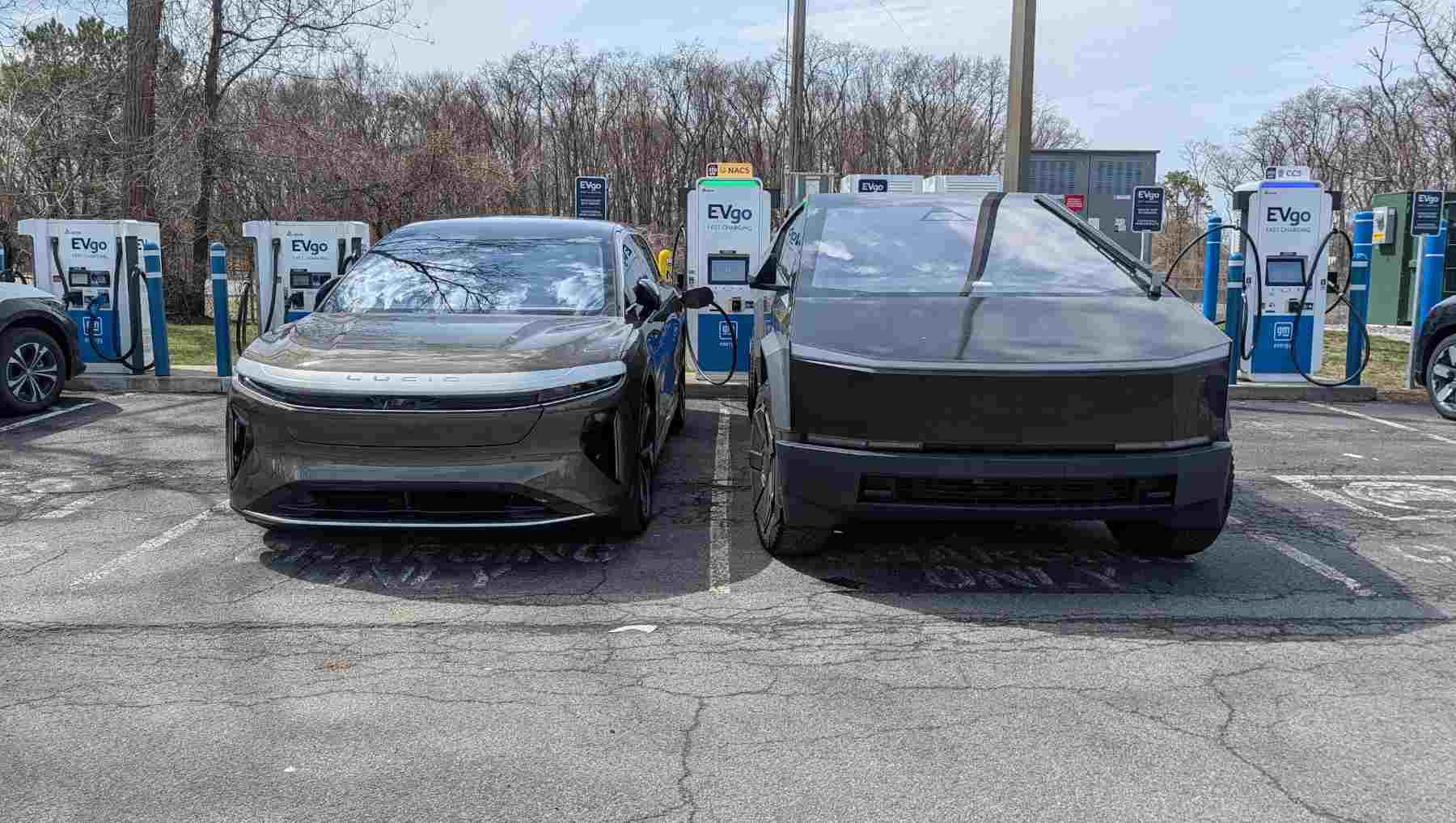

CBS Miami recently reported on the EV infrastructure problem in Southern Florida, and this could be an ongoing problem around the country.
Over the weekend, CBS Miami reported that Florida drivers are buying many EVs despite changing politics and reduced incentives. According to Stan Cross of the Southern Alliance for Clean Energy, EV sales in Florida are strong — it’s number one in the region and number two in the country. There are currently 335,000 electric vehicles registered in Florida.
Despite continued interest in EVs, the state lacks charging infrastructure. Most charging stations are in coastal or tourist areas, making the central areas of the state very troubling for EV owners. And a lot of the charging stations in Southern Florida are in private areas, like condos and hotels. There are very few public charging stations, causing massive lines. Many choose to charge their EVs overnight at home, but this doesn’t help for long road trips, weekend getaways, and emergency situations.
What’s most alarming is that Biden gave Florida $200 million years ago to build more EV charging stations — but Florida has allegedly spent zero dollars on them. The Miami Herald noted that the Trump administration halted a $4.7 million project that would have added electric charging stations to the Miami area.
“We want to see the state engage, and we hope that this won’t be a political football and that won’t be the determining factor in whether the state takes advantage of federal funds that will actually help their citizens,” said Stephen Smith of the Southern Alliance for Green Energy.
Does the United States have enough EV charging infrastructure?
The United States currently has around 242,000 public ports, offering improved reliability and pricing. As of 2026, most states are seeing charger reliability in the 90-95% range thanks to newer equipment, upgrades, and improved operations. Reports indicate that charging ports are generally being added in sufficient numbers to keep up with driver demand.
However, there are reports that feel the United States could improve the rate of NEVI charger installations. Most of the delays are due to a lack of funding or to states not taking the steps to secure the funds to which they are contractually obligated for infrastructure. States with climate goals in place have worked on getting those funds, while states with less interest have done nothing. States like Kentucky, Alabama, and Missouri are still very unfriendly for EV drivers.
The Department of Transportation has also been attempting to illegally pause this funding, although states have claimed that the DoT cannot interfere with the disbursement of these funds. The Trump administration has also gutted the Joint Office of Energy and Transportation, which was responsible for those funds.
Republican Governor Ron DeSantis is running Florida right now. He recently stated: “I’ve always opposed EV mandates, rejected the idea that EVs will save the world, and preferred traditional engines for vehicles like the F-150 I used to drive.”
American politics are playing a massive part in EV expansion. Or lack thereof. The pivot away from EVs, such as removing incentives for buying new EVs, has led the country to backpedal towards gas-powered vehicles. This has put the United States in a very tricky position as the rest of the world races towards all-electric futures and invites in cheap Chinese EVs. This isolation could put America quite behind in many industries.













According to the U.S. Department of Energy’s Alternative Fuels Data Center, Florida actually has the third-highest number of public EV charging stations in the entire country (trailing only California and New York), with over 3,000 public stations and nearly 9,000 individual ports available statewide.
While the debate over federal NEVI funding allocation is a legitimate political story, framing Florida as a barren wasteland for EV drivers ignores the massive footprint of private-sector network expansions. Major highways like I-4, I-75, and the Florida Turnpike are heavily populated with high-speed DC fast chargers from networks like Tesla, Electrify America, and EVgo—well outside of just "coastal tourist zones." Florida EV adoption is high precisely because the charging infrastructure has scaled aggressively to meet demand.