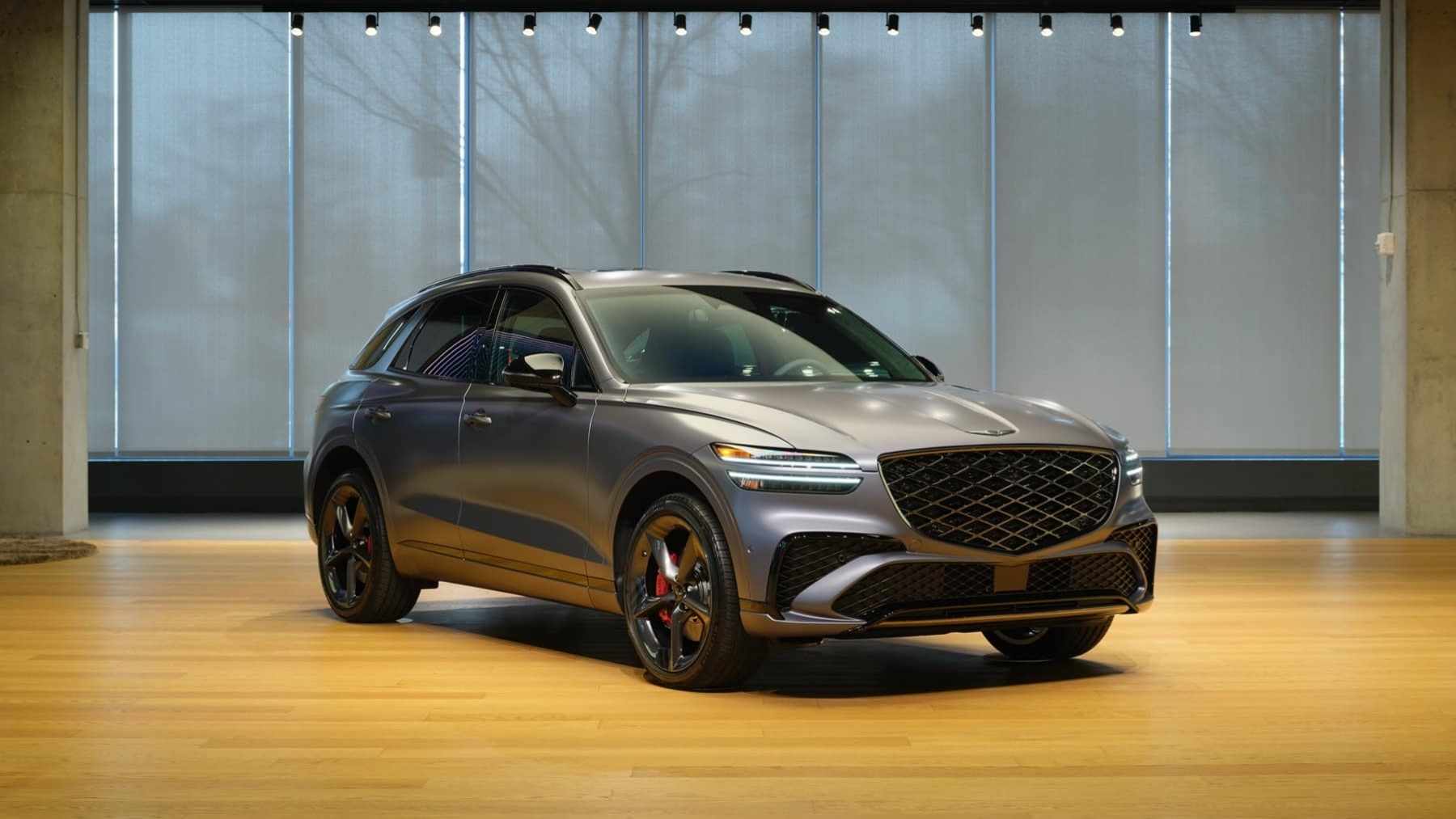

Two automakers filed separate yet related recalls on April 10th: Kia and Genesis are recalling 235,792 vehicles that may have a fuel leak.
According to the National Highway Traffic Safety Administration (NHTSA), the fuel leak is due to a production error that has left some vehicles with loosened retention fasteners on the fuel pipe connecting to the left and right fuel lines. If these fasteners became too loose, the connecting pipe would start to leak, possibly sparking a fire in the engine bay.
The recall includes:
- Kia Carnival
- Genesis GV70
- Genesis GV80
- Genesis G80
- Genesis G90
The Kia Carnival is from 2022 to 2026, while the Genesis models are from 2021 to 2025. The documents didn’t specify whether it was related to a specific engine, but all of these models use Hyundai Motor Group’s 3.5-liter V6 engine. The Carnival has a naturally aspirated version of this engine, while the Genesis models have a twin-turbocharged version.
The automakers will reach out to owners of affected models, alerting them to visit local dealerships for an inspection. If they find any leaks, you will have the connectors re-tightened or replaced. Kia’s letters will be sent on June 2nd while Genesis will follow soon after on June 8th. You can also go to the NHTSA website now to see if your vehicle is included in the recalls.
Should we be worried about all these cars having gas leaks?
While I would never be caught dead driving a Kia Carnival, it still raises an overall question: How does this happen during production and how is it caught?
Kia only became aware of the minivan’s issue in January 2025, when it received a report from an owner of a smell of fuel around the high-pressure crossover fuel pipe. Genesis was only found after two cases of that same fuel order were reported in July 2024 and October 2024. The second report started the investigation, but experts couldn’t replicate the issue.
If these people didn’t report that their fuel was leaking, would this problem have gone unnoticed until a car caught fire, causing an accident or worse? Are some of us driving around in other models with unsuspecting fuel leaks?
I wouldn’t go around claiming automakers are making unreliable and dangerous vehicles due to these small but alarming mistakes. But I’d also question if we are making too many cars too quickly. There’s a lot going on during production. Kia’s factory in Georgia is one mile long and has 2 million square feet of shop space. It makes 360,000 units a year, or about one car every minute. There are hundreds of robots welding body parts together and spray painting the car, there are production team members, supervisors, and safety specialists all around the assembly line, adding things like seats, taillights, and carpets. There is a huge chance of things going wrong with so many humans, robots, and parts involved.
But it does make a stronger case for that whole “gigacasting” trend. Popularized by Tesla, gigacasting is the use of large, single-piece structural components to form the car’s body. This means fewer body parts are needed. Ford is adopting this technique for its upcoming lineup of $40,000 EVs. Fewer body parts mean less welding. This reduces production time and saves Ford money on parts, which CEO Jim Farley is hoping will help the brand keep up with China’s insane production speeds. To make its upcoming EVs more “affordable,” Lucid has revealed a battery assembly strategy with 80% fewer components, and its software will have 40% fewer wires. By simplifying, Lucid hopes to achieve higher output and lower overhead costs.
All of these automakers moving to simpler production may also cut down on the kinds of issues that lead to recalls. Kia and Genesis are not alone: the Volkswagen Jetta was recently recalled due to a human error at its assembly plant, leading to the grounding cable on the hydraulic pump control unit on the transmission not being connected to the chassis. This became another fire hazard. It should be noted that VW claimed it was only 1% of Jetta impacted, but better to be safe than sorry. And the Kia and Genesis issue is similarly rare to come across. You just don’t want to be one of the unlucky ones.
I think most of these production facilities are relatively reliable, although the upcoming simplification will probably be more efficient and lead to fewer errors. Kia is ranked #10 in Consumer Reports’ reliability study, so its vehicles are relatively safe. But even the most reliable car brand in the study has experienced recalls. So, again, I wouldn’t go around claiming that certain automakers are completely dangerous or unreliable because of a recall. Most recalls are done as a safety precaution, more than a warning that your car is on borrowed time.