
2026 Ford Bronco Sport
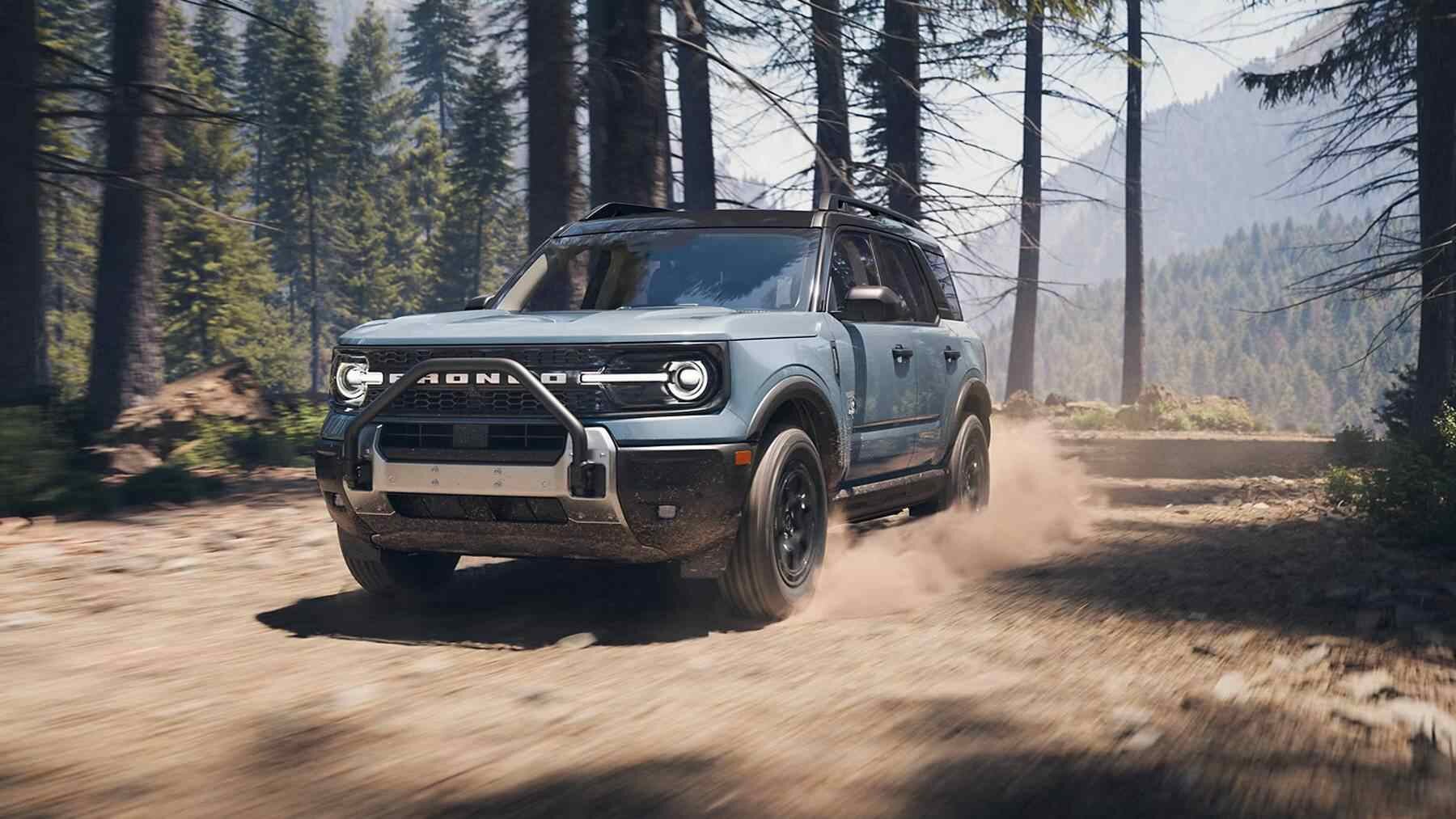
Overview
What's New for 2026
The 2026 Ford Bronco Sport enters its fourth model year with refinements rather than revolutionary changes. Ford has focused on color enhancements and subtle equipment adjustments to keep this turbocharged compact SUV fresh in a fiercely competitive segment. The model lineup remains straightforward, anchored by the efficient 1.5L EcoBoost on base and mid-level trims, while the powerful 2.0L EcoBoost powers the range-topping Badlands trim, which offers genuine off-road prowess with its standard intelligent all-wheel drive and available Sasquatch package featuring all-terrain tires and skid plates.
While the Bronco Sport doesn't receive a full redesign for 2026, Ford continues to refine the cabin materials and powertrain responsiveness based on owner feedback. The all-wheel-drive standard across all trims reinforces Ford's commitment to capability over mere passenger-car-based crossover economics. This is not a platform from a sedan; this is a true SUV architecture with a body-on-frame foundation rooted in the original Bronco philosophy.
Buyers should note that the Bronco Sport represents Ford's entry-level adventure vehicle, positioned below the three-row Explorer and mid-size Ranger Raptor. It competes directly with similarly sized off-road-ready competitors from Subaru (Crosstrek), Hyundai (Kona N), and Toyota (RAV4), though the Bronco Sport's turbocharged engines and genuine four-wheel-drive systems provide advantages in the value proposition conversation.
Overview
The 2026 Bronco Sport occupies a critical niche: buyers seeking compact SUV practicality with authentic off-road DNA without the five-passenger limitations of true subcompact models or the bloat of traditional compact crossovers. Starting at $31,845 for the Big Bend trim with the 1.5L EcoBoost, it undercuts many competitors while delivering all-wheel drive as standard. The Heritage trim introduces slightly elevated materials for $34,145, the Outer Banks ($36,945) adds ruggedness elements, and the Badlands ($40,265) is the serious off-road variant with the 2.0L EcoBoost and available off-road package.
Dimensionally, the Bronco Sport measures 180 inches long and 73 inches wide, making it significantly more manageable than the Explorer for urban environments while maintaining a 9.8-inch ground clearance that genuinely matters when encountering unpaved terrain. The unibody structure sits atop an independent double-wishbone front suspension and integral-link rear axle, tuned for compliance on rough roads without feeling wallowy on paved surfaces. Curb weight ranges from 3,800 to 4,100 pounds depending on drivetrain configuration and engine choice.
The cargo bay presents a realistic 29.4 cubic feet behind the rear seats, expanding to 65.3 cubic feet with second-row seats folded. While not class-leading in absolute volume, the cubic footage is honestly configured and reflects true floor space rather than marketing math. Towing capacity reaches 3,500 pounds when properly equipped, adequate for small trailers and off-road toys.
Driving Experience
The 1.5L EcoBoost three-cylinder engine produces 180 horsepower and 200 pound-feet of torque, delivered through an eight-speed automatic transmission. Real-world acceleration feels adequate rather than spirited; 0-60 mph takes approximately 9.2 seconds, and the three-cylinder nature becomes apparent under heavy throttle application with a turbo whistle that some find endearing and others perceive as economical compromise. The transmission behaves intelligently, holding gears during spirited canyon driving and downshifting decisively when overtaking on highways. Fuel economy ratings of 25 city / 30 highway / 27 combined reflect genuine efficiency for an all-wheel-drive vehicle, though real-world testing on diverse road conditions typically yields 26 mpg combined for typical drivers.
The Badlands' 2.0L EcoBoost represents a meaningful step forward, producing 250 horsepower and 280 pound-feet of torque. The 0-60 sprint improves to approximately 7.8 seconds, and the additional torque transforms the driving experience, particularly during towing or heavy loading. Highway merging feels secure and lane-change maneuvers happen with genuine authority. The trade-off appears on EPA estimates at 21 city / 27 highway / 23 combined. The larger displacement creates a more familiar four-cylinder character compared to the three-cylinder's efficiency-first personality.
On-road handling benefits from the double-wishbone independent front suspension, which provides composed body control during aggressive cornering without sacrificing ride quality over broken pavement. The brake-feel is direct but not excessively sharp; the standard electronic parking brake enables one-footed operation in traffic. All-terrain tire options on Outer Banks and Badlands models introduce slightly more road noise than highway-optimized rubber, a fair trade for genuine dirt-road traction. The transmission's tow-haul mode automatically selects lower gears during trailer descents, a feature often absent in compact SUVs at this price point.
Interior, Comfort & Technology
The Bronco Sport cabin reflects honest materials appropriate to the target market: cloth or available leather upholstery, hard-wearing plastics on high-contact surfaces, and sufficient soundproofing to isolate tire and wind noise without approaching premium-vehicle levels. The Big Bend trim features an 8-inch touchscreen with Ford's SYNC 4A infotainment system, responsive and intuitive with minimal learning curve for smartphone integration. Apple CarPlay and Android Auto are standard; wireless connectivity is included on mid-level and above trims. The eight-inch screen is adequate though not generous in today's market; heated seats appear on Heritage trim and above.
Front seating accommodates adults with reasonable comfort for daily commuting; the driving position sits higher than traditional cars without the knee-up posture of full-size trucks, a comfortable middle ground. Rear seat legroom measures 33 inches, satisfactory for children or adults on short journeys but genuinely cramped for 5+ hour road trips. Climate zones are single-zone on base models with dual-zone appearing on ST-Line and above. A panoramic sunroof appears on upper trims, genuinely expanding the sense of interior space without compromising structural rigidity.
Technology highlights include available Co-Pilot360, Ford's suite of driver-assist features with adaptive cruise control, lane-keeping assist, and automatic emergency braking that functions reliably during real-world highway driving. The Terrain Management System on Badlands models provides selectable drive modes (Normal, Eco, Sport, Slippery, and Sand/Rut modes) that genuinely alter transmission behavior and traction control settings. The optional panoramic sunroof adds genuine value if long-term ownership includes active outdoor use, given the visual connection to natural surroundings.
Trim Levels & Pricing
The 2026 Bronco Sport's trim structure emphasizes capability progression from efficient daily-driver to weekend-warrior adventure vehicle. All trims include all-wheel drive as standard, ensuring consistent traction during mild weather events and light off-road exploration. Pricing follows conventional progression with meaningful equipment additions at each step:
| Trim | Starting MSRP | Key Additions |
|---|---|---|
| Big Bend (1.5L) | $31,845 | 1.5L EcoBoost, 8-in touchscreen, standard AWD, Co-Pilot360 with pre-collision assist |
| Heritage (1.5L) | $34,145 | Heated front seats, rear privacy glass, roof rails, upgraded gauge cluster |
| Outer Banks (1.5L) | $36,945 | Roof-mounted rack, all-terrain tires, skid plates, unique exterior trim, blind-spot monitoring |
| Badlands (2.0L) | $40,265 | 2.0L EcoBoost, Terrain Management System, electronic locking rear differential, upgraded suspension, Sasquatch off-road package optional |
The jump from Outer Banks to Badlands primarily reflects the engine upgrade and off-road equipment rather than incremental material improvements. Buyers serious about recreational vehicle towing or regular unpaved-road exploration should budget for Badlands; the 2.0L's additional torque and Terrain Management System genuinely improve capability in sand, snow, and rut environments. The Sasquatch package adds 33-inch all-terrain tires, reinforced suspension, locking differential, and a $3,895 price premium that delivers proportional capability enhancement.
Safety
The 2026 Bronco Sport incorporates standard safety features including six airbags (dual front, front side-impact, and rear side-impact configurations), electronic stability control, rollover mitigation, and hill-descent control. Ford's Co-Pilot360 driver-assist suite appears standard on all trims and includes forward-collision warning with automatic emergency braking, lane-departure warning, lane-keeping assist, and automatic high-beam control. Available features include blind-spot monitoring with cross-traffic alert, rear parking sensors, and a 360-degree camera system that genuinely simplifies parking in tight urban situations.
The compact SUV segment's safety performance depends partly on real-world crash dynamics, and the Bronco Sport's relatively light curb weight and smaller footprint influence outcomes compared to heavier competitors. The standard stability control and Co-Pilot360 features provide meaningful assistance during emergency maneuvers on highways.
For the latest crash test ratings and detailed safety assessment, visit NHTSA.gov and IIHS.org to access current test results specific to the Bronco Sport. These organizations conduct independent testing and provide comprehensive data on real-world accident outcomes across various collision scenarios.
Warranty & Ownership Costs
Ford's warranty structure provides confidence during early ownership, covering manufacturing defects and mechanical failures across the initial 36-month period. The powertrain extension protects critical components through 60 months, addressing early bearing wear or internal engine damage. Maintenance costs follow predictable patterns for small turbocharged engines; regular oil changes every 5,000 miles (synthetic), air filter replacement every 15,000 miles, and coolant flushes every 100,000 miles represent the primary service intervals.
| Coverage | Duration |
|---|---|
| Basic Warranty | 3 years / 36,000 miles |
| Powertrain Warranty | 5 years / 60,000 miles |
| Corrosion Perforation | 5 years / unlimited miles |
| Roadside Assistance | 5 years / 60,000 miles |
Real-world ownership costs remain competitive. Insurance premiums for the Bronco Sport typically run $1,200-$1,500 annually for comprehensive and collision coverage, depending on driver history and regional factors. Fuel costs at current prices ($3.00-$3.50 per gallon depending on regional variations) translate to approximately $1,100-$1,400 annually for 12,000-mile driving patterns with the 1.5L engine. Maintenance under warranty proves inexpensive; post-warranty services at independent shops typically cost 20-30% less than dealership rates for routine items like oil changes and filter replacements. Turbocharger longevity on small-displacement engines requires quality synthetic oil and regular maintenance; extended warranties covering mechanical breakdown beyond five years rarely provide cost-effective coverage given the Bronco Sport's proven reliability record across three prior model years.
The Bottom Line
The Verdict: The 2026 Ford Bronco Sport delivers authentic off-road capability, efficient turbocharged engines, and genuine all-wheel-drive systems at competitive pricing. This is not a crossover masquerading as an SUV; it's a purpose-built adventure vehicle that honestly addresses weekend warrior and daily-commute needs simultaneously. The Badlands with 2.0L EcoBoost offers exceptional capability at $40,265, undercutting competitors offering equivalent equipment.
Who Should Buy: Buyers prioritizing all-wheel-drive standard equipment, authentic off-road potential, and turbocharged efficiency will find the Bronco Sport compelling. Young families, outdoor enthusiasts, and first-time SUV buyers benefit from its manageable size, confident handling, and genuine capability. The 1.5L Big Bend appeals to commuters prioritizing fuel economy; the Badlands targets adventurers demanding terrain mastery.
Who Should Look Elsewhere: Those requiring three-row seating should consider the Explorer. Buyers unwilling to accept three-cylinder engine character in the base model should prioritize Badlands or explore competitors with exclusively four-cylinder lineups. Drivers in extremely snowy climates might prefer dedicated winter-focused vehicles with advanced traction systems. Consumers seeking maximum cargo space relative to overall dimensions should evaluate traditional compact vans or five-passenger crossovers from Honda or Toyota.
Frequently Asked Questions
Is the 2026 Bronco Sport suitable for serious off-road exploration?
The Badlands trim with 2.0L EcoBoost and optional Sasquatch package provides genuine off-road capability appropriate for dirt trails, rocky terrain, and moderate technical sections. The Terrain Management System adapts powertrain behavior for sand, rut, slippery, and rock-crawl modes. However, it's not a purpose-built rock-crawler like larger Broncos; it excels on fire roads, stream crossings, and scenic backcountry routes rather than extreme boulder fields or vertical approaches. Most weekend adventurers find Badlands capability more than adequate; those requiring true high-articulation vehicles should consider the larger Bronco or specialized platforms from Jeep.
How does the 1.5L three-cylinder engine compare to competitors' powertrains?
The 1.5L EcoBoost matches Subaru Crosstrek's 2.0L four-cylinder in horsepower (180 hp) while delivering superior torque per displacement (200 lb-ft). Real-world performance feels adequate for daily driving; highway merging and moderate passing happen smoothly. The turbocharger provides responsiveness absent from naturally-aspirated competitors of similar displacement. Fuel economy leads most segment competitors, with EPA ratings of 27 mpg combined significantly better than base Toyota RAV4 (28 combined) and competitive with Subaru Crosstrek (28 combined). The primary limitation emerges during towing heavy trailers or driving with full passenger loads in mountainous terrain; the Badlands' 2.0L addresses these scenarios more effectively.
What maintenance intervals should I expect after the warranty expires?
After 36,000 miles, schedule oil changes every 5,000-7,500 miles depending on driving conditions (more frequent for towing or extreme temperatures). Engine air filters require replacement every 15,000-30,000 miles; cabin air filters typically need service every 12,000-15,000 miles. Transmission fluid flushes are recommended every 100,000 miles. Coolant flushes occur every 100,000 miles or per owner's manual guidance. All-wheel-drive differentials should be serviced every 50,000 miles with synthetic fluid, particularly if towing or driving off-road. Brake fluid replacement every two years prevents moisture accumulation regardless of mileage. These intervals align with Ford's published specifications and competitive benchmark data from independent maintenance studies.
Does the Bronco Sport qualify for any federal tax credits or incentives?
The Bronco Sport, powered by conventional gasoline turbocharged engines, does not qualify for federal electric vehicle tax credits. It may be eligible for state-specific incentives depending on your location; some states offer modest rebates for vehicles meeting efficiency thresholds, though credits are typically targeted toward battery electric or plug-in hybrid vehicles. Check with your state's environmental agency for current incentive programs. Dealers occasionally offer manufacturer-backed financing incentives (0% APR for 60-72 months) during sales promotions; timing your purchase strategically can yield meaningful savings beyond standard negotiation.
How does the Badlands' Terrain Management System improve off-road capability?
The Terrain Management System adjusts transmission shift schedules, engine torque delivery, and traction control sensitivity based on selected mode. Normal mode operates for pavement and light trail driving; Eco optimizes fuel efficiency and smooth acceleration. Sport sharpens throttle response and delays upshifts for spirited driving. Slippery mode reduces throttle sensitivity and activates traction intervention more aggressively, beneficial for snow, ice, and wet grass. Sand/Rut mode increases engine revs before shifting, maintaining momentum in low-traction environments while preventing deep axle articulation that risks high-centering. These adjustments meaningfully improve traction in challenging conditions; many owners report that selecting appropriate modes prevents getting stuck in scenarios that would trap vehicles with fixed transmission logic.
What is the real-world towing capacity with popular trailers?
The Bronco Sport's 3,500-pound towing capacity accommodates small utility trailers, jet ski trailers, and lightweight boat trailers. A loaded 2,400-pound ATV trailer and fuel combinations work comfortably within limits. Small camping trailers in the 2,500-pound range are feasible though leave limited safety margin. The 1.5L engine feels adequate for modest towing on flat terrain but exhibits noticeable transmission hunting and engine strain on steep grades with maximum-rated loads. Badlands' 2.0L addresses these scenarios more confidently; owners planning frequent towing should prioritize the larger engine for smoother operation and reduced cooling system stress during mountain passes.
Key Highlights
- AWD standard on all trimsn1.5L EcoBoost I3 standard or 2.0L EcoBoost I4 on BadlandsnTerrain Management System with up to 7 G.O.A.T. ModesnUp to 65 cu ft cargo with rear seats foldednSafari-style roof design with available roof railsnAvailable Trail Control for low-speed off-road crawling
Powertrain Options
| Engine | Horsepower | Torque | Fuel | MPG |
|---|---|---|---|---|
| 1.5L EcoBoost Turbo I3 | 180 hp | 200 lb-ft | Gasoline | 25 city / 30 hwy / 27 combined |
| 2.0L EcoBoost Turbo I4 (Badlands) | 250 hp | 280 lb-ft | Gasoline | 21 city / 27 hwy / 23 combined |
Transmission: 8-speed automatic
0-60 mph: 7.2 seconds
Specifications
Pros & Cons
✓ Pros
- AWD standard makes it capable in all weather conditionsnBadlands 2.0L engine provides genuine capabilitynTerrain Management System effective for light off-roadnPractical cargo volume at 65 cu ft maxnCompetitive pricing versus Subaru Crosstrek and Toyota RAV4nDistinctive Bronco-family styling stands out
✗ Cons
- 1.5L three-cylinder engine feels underpowered on highwaysnNot a true body-on-frame off-roader like the full BronconGround clearance limited versus dedicated off-road SUVsnInterior materials quality inconsistent across trimsnRear seat legroom tight for taller passengersnTowing limited to 2,200 lbs maximum