
2026 BMW M2
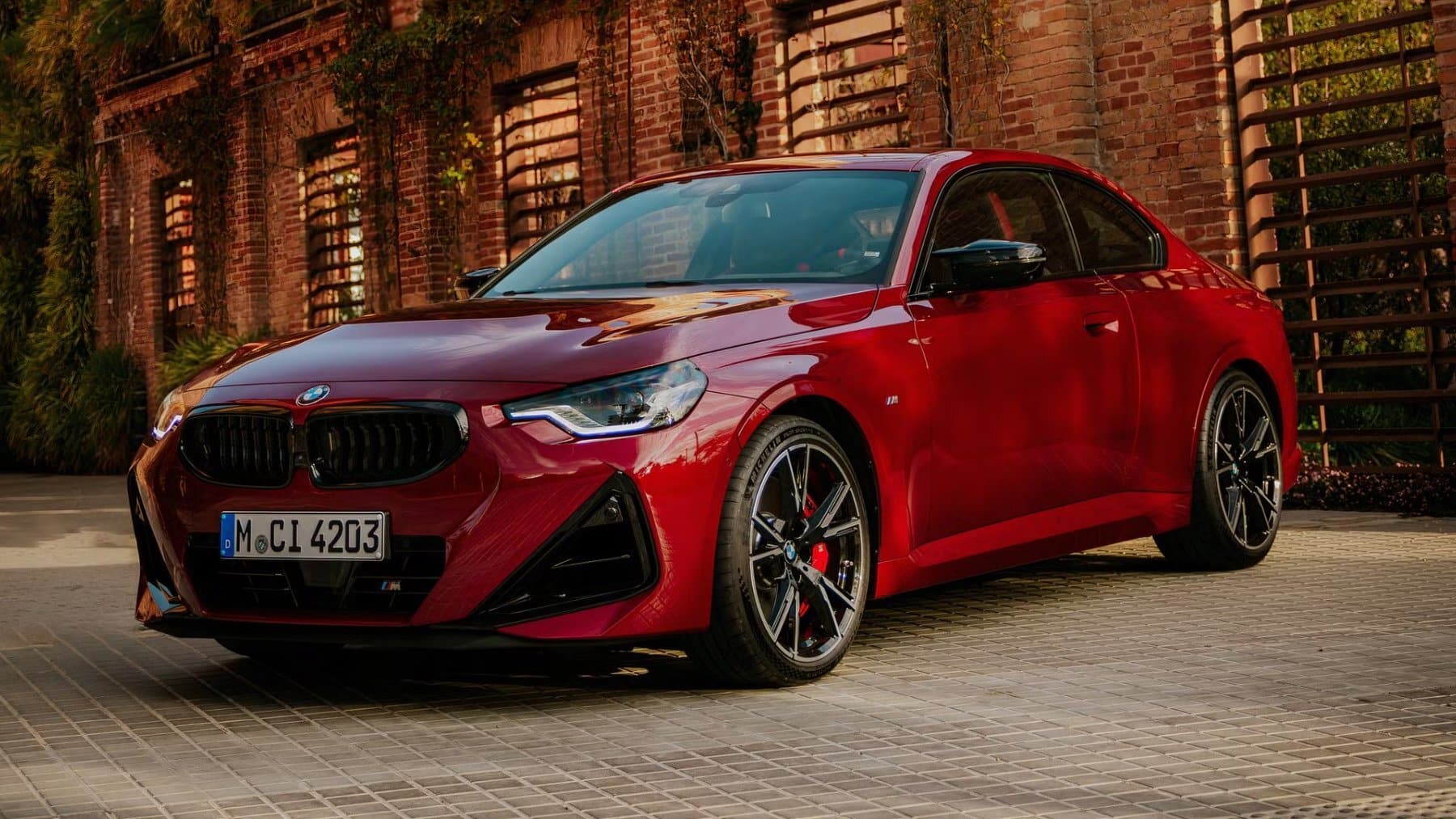
Overview
What's New for 2026
The 2026 BMW M2 returns as one of the last pure analog sports cars from Munich, and this year brings meaningful refinements to the already-formidable lineup. The standard M2 remains accessible to manual transmission devotees with its six-speed stick shift, a rarity in 2026 that BMW is wisely not taking for granted. The M2 CS, meanwhile, reaches a new power plateau at 523 horsepower and 479 lb-ft of torque, making it the most potent rear-wheel-drive M car you can buy without abandoning all hope of daily usability. This is a car that doesn't apologize for being a coupe with back seats—it's unapologetically committed to the modern sports car formula.
The 2026 model year solidifies the M2's position as the spiritual successor to the E30 M3 and E36 M3, eschewing the complexity of all-wheel-drive systems and turbo lag mitigation that plague so many competitors. What you get is a direct, engaging machine that rewards precision and commitment from behind the wheel.
Overview
The BMW M2 is not a car for the fence-sitters. This is a 2+2 coupe powered by a 3.0-liter twin-turbocharged inline-six engine available in two flavors: the base M2 with 473 hp and 443 lb-ft, and the track-focused M2 CS with 523 hp and 479 lb-ft. Both engines demand premium 91-octane fuel, and both deliver the kind of low-end response that makes a 3.7-second 0-60 time (M2 CS) feel entirely achievable in real-world driving. The M2 uses rear-wheel drive exclusively—no xDrive option, no controversy about traction control. This is the sports car formula distilled to its essence.
The M2 competes directly with the Porsche 718 Cayman, Chevrolet Corvette, Cadillac CT4-V Blackwing, and Toyota GR Supra. Against that lineup, the BMW's combination of raw power, a genuine 2+2 interior, and North American availability makes it a uniquely practical choice for drivers who refuse to compromise on performance. The standard M Sport Differential comes on all models, ensuring that the rear tires don't just spin freely when the turbos spool up.
At 13.8 cubic feet, the trunk space won't fit a weekend's worth of luggage for two adults plus winter gear, but it handles the essentials. The M2 is compact and purposeful—proportions that feel tight and driver-focused rather than cramped.
Driving Experience
Here's where the M2 stops playing politics and starts playing. The six-speed manual transmission in the base M2 is not a gesture toward nostalgia; it's a performance advantage. Manual drivers will feel the engine's full character come alive, with gear ratios tuned specifically to maximize turbo boost delivery and corner-exit acceleration. The optional eight-speed automatic in the M2 is excellent—it's quick and responsive—but the manual remains the connected choice. The M2 CS, meanwhile, gets an eight-speed automatic exclusively, and BMW's engineers capped the manual option out of the CS lineup because the 523-horsepower output demands the robustness and precision of the automatic gearbox for optimal performance and durability.
The driving experience is defined by communicative steering, an electronically controlled M suspension that rides with remarkable compliance for a car this focused, and a chassis that rewards trail-braking and apex hunting. The M Sport Differential is not aggressive enough to destroy real-world drivability, but it's intelligent enough to understand when the rear tires need a nudge of freedom. In anger—on a track, or on a technical back road—the M2 feels like a machine that's listening to what you're asking it to do. Downshifting with the manual transmission produces a satisfying engine blip; there's no nanny state interference here.
Fuel economy ranges from 16 city / 23 highway / 19 combined for the M2, to 16 city / 22 highway / 18 combined for the M2 CS. These numbers reflect a car with serious weight and serious power, and they're honest comparisons to the 718 Cayman and Corvette in this class. Real-world efficiency improves in mixed driving thanks to the turbocharged six's efficiency under steady-state cruising.
Interior, Comfort & Technology
BMW's interior philosophy for the M2 strikes the balance between track-ready and livable-daily. The cabin features a 12.3-inch digital instrument cluster and 14.9-inch touchscreen infotainment display, supporting wireless Apple CarPlay and Android Auto. The steering wheel wraps in M-specific leather, and the seats are firm enough to keep you anchored during aggressive driving while remaining comfortable enough for longer highway stints. The M2 CS upgrades to carbon-fiber trim accents and carbon fiber front bucket seats, emphasizing its more serious intentions.
Standard tech includes a Harman Kardon audio system, Bluetooth connectivity, satellite radio, voice command functionality, navigation, and multiple USB ports. Climate control is dual-zone automatic. The ambient lighting is configurable, and the overall interior is driver-focused without being spartan. The rear seats are genuinely usable for shorter journeys—they'll accommodate two passengers for around-town trips, but extended canyon runs will test their patience with the compact legroom.
There's an M Sport steering wheel with M-specific switchgear, an M-tuned exhaust system with variable bypass, and Adaptive M suspension with electronically controlled dampers. This isn't a stripped-out special edition; it's a fully-equipped modern sports car that happens to value performance over luxury.
Trim Levels & Pricing
The BMW M2 lineup consists of two distinct offerings. The standard M2 starts at $69,375 with the six-speed manual; choosing the eight-speed automatic adds approximately $2,000-$2,500 to the base price. The M2 CS arrives at $99,975 and comes exclusively with the eight-speed automatic, targeting drivers who want maximum power and are willing to trade manual engagement for absolute performance and track-focused engineering.
| Model | Engine | Power / Torque | Transmission | Starting MSRP |
|---|---|---|---|---|
| M2 (6-speed manual) | 3.0L Twin-Turbo I6 | 473 hp / 443 lb-ft | 6-speed manual | $69,375 |
| M2 (8-speed automatic) | 3.0L Twin-Turbo I6 | 473 hp / 443 lb-ft | 8-speed automatic | ~$71,500 |
| M2 CS | 3.0L Twin-Turbo I6 | 523 hp / 479 lb-ft | 8-speed automatic | $99,975 |
Pricing excludes destination charges, taxes, and regional incentives. MSRP figures are manufacturer-suggested and subject to dealer negotiation. Final pricing may vary.
Safety
The 2026 BMW M2 comes equipped with a comprehensive array of passive and active safety systems that reflect modern standards without intruding on the driving experience. Standard safety features include front and rear parking sensors, forward collision warning with automatic emergency braking, lane keeping assist, blind spot monitoring, adaptive cruise control, rear cross-traffic alert, and traffic sign recognition. The M2's rigid carbon-core structure and precisely tuned suspension geometry work together to provide excellent occupant protection in the event of a collision.
Active handling technologies are calibrated specifically for performance driving, meaning stability control and traction interventions are less intrusive than they might be on a crossover or sedan, allowing experienced drivers to modulate the car's behavior. The braking system uses M Compound brakes with high-friction pads designed to withstand repeated hard stops without fade. Safety here is engineered intelligently—not as a layer of electronic nannies, but as a foundation that supports confident, capable driving.
Warranty & Ownership Costs
| Coverage Type | Duration / Distance | Details |
|---|---|---|
| New Vehicle Limited Warranty | 4 years / 50,000 miles | Comprehensive coverage for defects in materials and workmanship |
| Powertrain Warranty | 4 years / 50,000 miles | Engine, transmission, drivetrain components |
| Roadside Assistance | 4 years / Unlimited | 24/7 support including towing, fuel delivery, lockout service |
| Corrosion Warranty | 12 years / Unlimited | Rust-through coverage on body panels |
Ownership costs for the M2 skew higher than mainstream sports cars, primarily due to insurance premiums, premium fuel requirements (91 octane minimum), and the aggressive wear characteristics of high-performance tires. The M2's twin-turbocharged inline-six is mechanically robust, but regular oil changes every 10,000 miles and brake service intervals of 24,000-48,000 miles should be factored into the ownership budget. Parts costs for M-specific items can exceed comparable components for the non-M 2 Series. However, the manual transmission in the base M2 has fewer mechanical systems to fail than the eight-speed automatic, potentially reducing long-term maintenance complexity for those who choose the six-speed.
The Bottom Line
Who should buy: The BMW M2 is engineered for enthusiasts who value engagement and feedback above all else. If you're willing to row your own gears, the six-speed manual M2 delivers a visceral, communicative driving experience that's increasingly rare in 2026. You want raw power without the comfort-focused dilution of all-wheel-drive systems. You're comfortable with premium fuel costs and higher insurance premiums. You prioritize corner-carving ability and responsive steering feel over rear-seat legroom and trunk space. The M2 CS is for those willing to spend another $30,000 for maximum power and a more track-optimized engineering philosophy, paired with automatic convenience.
Who should look elsewhere: If you need a practical four-door sedan that doubles as a performance car, look at the BMW M340i or M440i xDrive—they offer turbo power with better practicality. If you're shopping primarily on fuel economy and want a hybrid or electric sports car, the M2's premium-fuel requirement won't appeal. The Porsche 718 Cayman offers a mid-engine alternative with different handling characteristics and a more exotic pedigree. The Corvette is more affordable and delivers mid-engine credentials at a lower entry price. Families needing genuine rear-seat comfort will find the M2's 2+2 layout limiting beyond short hops.
Our take: The 2026 BMW M2 is one of the last pure sports cars BMW will build. The six-speed manual transmission is not a footnote—it's a statement of values. In a market increasingly obsessed with autonomous features and electronic mediation, BMW has chosen to offer a car that demands your attention and rewards your skill. The 523-horsepower M2 CS represents the outer limit of what a turbocharged inline-six can deliver in a package this small without compromising daily usability. This is a car built for the driver who remembers what it felt like to connect with a machine.
Frequently Asked Questions
Is the six-speed manual transmission really standard on the M2?
Yes. The 2026 BMW M2 comes standard with a six-speed manual transmission—a rarity in 2026 that emphasizes BMW's commitment to driver engagement. The eight-speed automatic is optional and adds approximately $2,000-$2,500 to the base price. The M2 CS is automatic-only, as BMW's engineers determined that the 523-horsepower output exceeds the manual gearbox's torque capacity for street-car durability.
What's the real-world 0-60 time for the M2 CS?
BMW rates the M2 CS at 3.7 seconds to 60 mph, assuming optimal launch conditions with the eight-speed automatic transmission. Real-world performance varies based on traction, driver technique, and environmental factors. The base M2 with manual transmission is rated at approximately 4.2-4.4 seconds, a meaningful but not dramatic difference. Both cars deliver impressive acceleration that punches well above their price point.
Can the M2 be daily-driven in winter conditions?
The M2 is rear-wheel drive only, which presents challenges in snow and ice without appropriate tires. Winter performance tires (not all-seasons) are essential for cold-weather driving. The M Sport Differential helps manage traction, but there's no xDrive all-wheel-drive option. If winter weather is common in your region, the M2 is a fair-weather car that will need careful driving or alternative transportation during heavy snow events.
How does the M2 compare to the Porsche 718 Cayman?
Both are compact, rear-wheel-drive sports cars with turbocharged engines, but the philosophies differ. The 718 Cayman is a mid-engine two-seater, offering different weight distribution and a more exotic driving character. The M2 offers more raw horsepower (473 hp base vs. the Cayman's 300 hp base), a more affordable entry price, the convenience of rear seats (however small), and BMW's extensive dealer network. The 718 Cayman counters with Porsche heritage, superior mid-engine balance, and a more focused two-seat sports car experience. This is a preference-based decision; the M2 emphasizes power and everyday versatility, the Cayman emphasizes balance and purity.
What's the trunk space like for road trips?
The M2's 13.8 cubic feet of trunk space is adequate for luggage, weekend gear, or track supplies, but it's not generous. A large suitcase, duffle bag, and small cooler fit comfortably; attempting to pack a week-long trip for two adults will require compromise. The rear seats can fold to expand cargo capacity in a pinch, but the priority here is clearly performance, not cargo hauling.
Is premium fuel required for the M2?
Yes. Both the base M2 and M2 CS engines require premium 91-octane fuel as a minimum specification. Using regular 87-octane fuel will trigger knock detection systems that reduce boost pressure and performance, defeating the purpose of the turbocharged inline-six. Budget approximately $0.30-$0.50 more per gallon than regular fuel; at roughly 19 mpg combined, the annual fuel cost difference is noticeable over extended ownership.
Key Highlights
- 3.0L twin-turbo I6: 473 hp standard, 523 hp in M2 CS
- 6-speed manual transmission is STANDARD; 8-speed auto optional
- Rear-wheel drive only—pure sports car layout
- M2 CS: 523 hp, 0-60 in 3.7 seconds, from $99,975
- 2+2 coupe with genuine rear seats
- 13.8 cu ft trunk space
- M Sport Differential standard
Powertrain Options
| Engine | Horsepower | Torque | Fuel | MPG |
|---|---|---|---|---|
| 3.0L Twin-Turbo I6 (M2) | 473 hp | 443 lb-ft | Premium 91 Octane | 16 city / 23 hwy / 19 combined |
| 3.0L Twin-Turbo I6 (M2 CS) | 523 hp | 479 lb-ft | Premium 91 Octane | 16 city / 22 hwy / 18 combined |
Transmission: 8-speed automatic
0-60 mph: 3.9 sec (M2) / ~3.6 sec (CS) seconds
Specifications
Pros & Cons
✓ Pros
- 6-speed manual available—rare and rewarding in this era
- Genuine sports car steering precision and feedback
- Compact size perfect for spirited driving
- 473 hp delivers accessible yet thrilling performance
- Strong resale value among enthusiasts
- Practical 2+2 layout versus pure two-seaters
✗ Cons
- Rear seats cramped—2+2 layout for short trips only
- Cargo space limited at 13.8 cu ft
- M2 CS at $99,975 approaches Porsche 718 territory
- Fuel economy modest at 19 mpg combined
- M2 CS is automatic-only, no manual option
- Firm ride on rough pavement