
2026 Audi e-tron GT
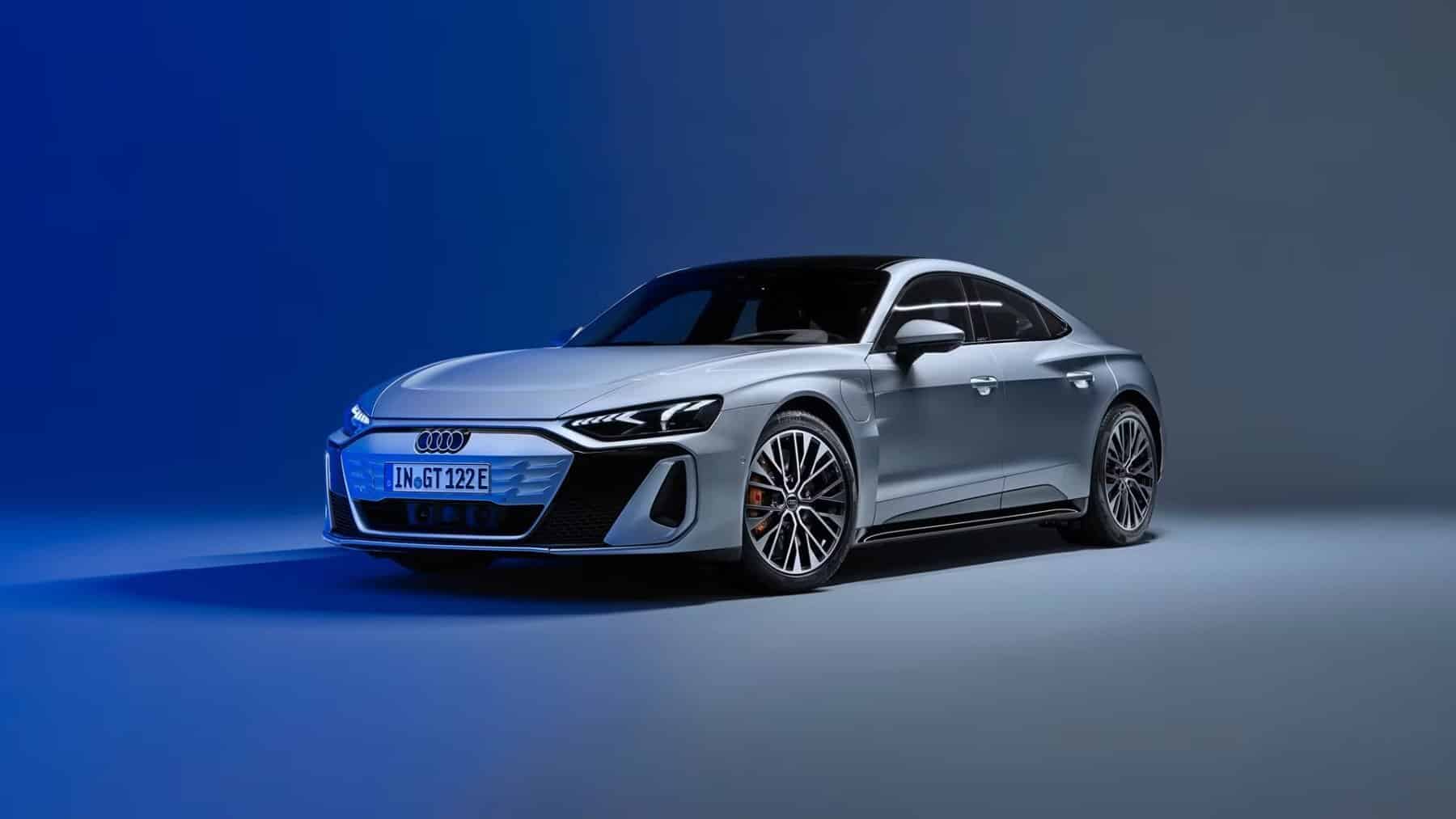
Overview
What's New for 2026
The 2026 Audi e-tron GT arrives as a significantly updated model that elevates this electric grand tourer to new heights of performance and capability. The most dramatic changes manifest in the powertrain lineup: the base S e-tron GT now produces 670 horsepower and 671 lb-ft of torque—a substantial jump from previous iterations—while the RS e-tron GT pushes output to 818 hp and 738 lb-ft. The crown jewel, the RS e-tron GT Performance, delivers an astonishing 912 hp and 919 lb-ft, making it Audi's most powerful production vehicle ever. This translates to a 2.4-second 0-60 mph sprint in the Performance variant, positioning it firmly in supercar acceleration territory.
Beyond sheer power, Audi's engineering team refined the 800-volt charging architecture, now capable of accepting up to 320 kW of DC fast charging power. Under optimal conditions, this allows the battery to reach 80% charge in approximately 18 minutes—a critical advantage for long-distance travel. All 2026 models now come equipped with a NACS DC charging adapter, unlocking access to Tesla's Supercharger network across North America and solving what has long been an EV fragmentation headache for premium buyers.
Range figures have also grown more impressive, with the S e-tron GT delivering approximately 300 miles of EPA-estimated range, while the RS variants approach 365 miles, making real-world road trips genuinely feasible without constant charging anxiety.
Overview
The Audi e-tron GT is a four-door electric grand tourer built on the proven J1 platform—a shared architecture with the Porsche Taycan—that emphasizes comfort, range, and daily usability over outright track dominance. Unlike some performance cars that demand sacrifice in practicality, the e-tron GT balances supercar acceleration with the refinement you'd expect from a $127,000 to $170,000+ luxury sedan.
Audi deliberately tuned the e-tron GT for a more comfort-oriented experience than its Porsche cousin. This philosophy extends from the suspension geometry to the cabin acoustics and includes standard features like adaptive air suspension that automatically adjusts for both sporty handling and smooth highway cruising. For buyers seeking the performance credentials of the Taycan without its single-minded focus on track dynamics, the e-tron GT offers a compelling alternative.
The 2026 lineup consists of three distinct variants: the S e-tron GT as the entry point, the RS e-tron GT for those seeking genuine performance, and the RS e-tron GT Performance for enthusiasts who want the fastest, most powerful iteration. All three share the same 97-kWh net battery capacity and benefit from Audi's relentless focus on efficiency. Compared to direct rivals like the Tesla Model S, Mercedes-AMG EQE, and BMW i7 M70, the Audi strikes a unique balance—it's faster than the Mercedes and BMW while offering better real-world charging infrastructure compatibility than Tesla through the NACS partnership.
Driving Experience
The driving experience across the e-tron GT lineup reflects a thoughtfully calibrated progression of power and capability rather than a cliff between civilized and wild.
The S e-tron GT, with its 670 hp and 671 lb-ft, provides genuinely thrilling acceleration that makes highway merging and passing feel effortless. Its 0-60 mph time sits in the high 4-second range, quicker than most sports cars from just a decade ago. On public roads and twisty canyon drives, the S variant proves entirely adequate and keeps costs below $130,000.
Step up to the RS e-tron GT, and the 818 hp and 738 lb-ft output sharpens the experience noticeably. The additional torque is felt immediately off the line, and the broader power band means the RS feels faster even at highway speeds. Zero-to-60 mph arrives in approximately 3 seconds—fast enough to provoke genuine surprise from passengers.
The RS e-tron GT Performance is where things become genuinely extraordinary: 912 hp, 919 lb-ft, and that 2.4-second 0-60 mph time put it in Lamborghini territory. Yet unlike a traditional supercar, it can repeat these launches indefinitely thanks to the 800-volt architecture's ability to deliver consistent power delivery. Audi's thermal management keeps battery temperatures stable even during repeated hard acceleration.
The 800-volt charging system impacts daily driving more than you might expect. Real-world testing shows that under ideal conditions—a well-functioning fast charger, optimal ambient temperature, and a preconditioned battery—the e-tron GT can add roughly 200 miles of range in the time it takes to grab coffee. This is roughly twice as fast as competitors relying on older 400-volt architecture.
The adaptive air suspension is one of the e-tron GT's hidden stars. It seamlessly transitions from absorbing highway ruts and potholes to firming up when you attack a canyon. All-wheel steering (standard on all variants) tightens the turning radius for parking while improving high-speed stability. The brake pedal feel is excellent—regenerative braking is seamlessly blended with friction brakes, and unlike some EV regenerative systems, it never feels grabby or artificial.
Interior, Comfort & Technology
The cabin rivals anything in its segment for material quality and design cohesion. The dashboard employs an intuitive layout with a 12-inch digital driver display and 10-inch infotainment touchscreen, but Audi wisely retained physical buttons for climate control rather than forcing every function into a touchscreen. Wireless Apple CarPlay and Android Auto are standard, and the MMI navigation plus suite integrates real-time traffic, mapping, and destination suggestions based on your previous driving patterns.
The front seats are supportive and available in Fine Nappa leather with 18-way power adjustment, ventilation, heating, and massage functions. The optional leather package extends to the dashboard, armrest, and center console for a fully wrapped luxury atmosphere. Dinamica steering wheel and carbon atlas matte inlays add sporty visual interest.
Rear passengers will find the experience acceptable for short trips but tight for long-term occupancy. Rear legroom measures just 32.2 inches—significantly less than traditional sedans due to the e-tron GT's sloping roofline. Adults over 6 feet tall may feel cramped on cross-country journeys. The rear bench is more about occasional use than extended family road trips.
Cargo capacity is a trade-off. The trunk holds 9.2 cubic feet, with an additional 1.8 cubic feet in the front trunk (frunk), totaling 11 cubic feet. This is modest compared to competitors—the Tesla Model S offers substantially more room. For daily commuting and weekend trips, it's adequate. For a cross-country move, it'll require supplemental storage.
Trim Levels & Pricing
| Variant | Horsepower | Torque (lb-ft) | 0-60 mph | Range (EPA est.) | Starting MSRP |
|---|---|---|---|---|---|
| S e-tron GT | 670 | 671 | ~4.5 sec | ~300 mi | $127,700 |
| RS e-tron GT | 818 | 738 | ~3.0 sec | ~365 mi | $154,900 |
| RS e-tron GT Performance | 912 | 919 | 2.4 sec | ~364 mi | $170,500 |
All prices are manufacturer's suggested retail prices (MSRP) as of March 2026 and exclude destination charges and applicable taxes. Option configurations can push total prices well beyond $180,000. Consult authorized Audi dealers for current pricing and incentives.
Safety
The Audi e-tron family has a strong safety heritage. While crash test ratings specifically for the e-tron GT sedan are less widely published, it shares the same underlying platform and inherits the same safety DNA as the broader e-tron lineup. The rigid battery pack structure provides excellent structural rigidity, and the weight distribution—with the battery pack mounted low in the floor—reduces the vehicle's center of gravity for more stable handling in emergency maneuvers.
All e-tron GTs come standard with comprehensive advanced driver assistance systems (ADAS), including adaptive cruise control, automatic emergency braking with pedestrian and cyclist detection, blind-spot monitoring, lane-keep assist, lane departure warning, and 360-degree parking cameras. Audi's traffic sign recognition, predictive speed limiting, and cross-traffic alert round out the suite. The system integrates with the navigation to understand road curvatures and automatically adjust cruise control speeds.
Warranty & Ownership Costs
| Coverage | Timeframe / Mileage |
|---|---|
| Basic Warranty | 4 years / 50,000 miles |
| High-Voltage Battery Warranty | 8 years / 100,000 miles |
| Powertrain Warranty | 4 years / 50,000 miles |
| Roadside Assistance | 4 years / Unlimited miles |
The 8-year/100,000-mile battery warranty is the standout. Audi covers defects in materials and workmanship, and importantly, guards against excessive degradation. Most owners report minimal battery capacity loss within five years, and Audi's generous warranty provides peace of mind for long-term ownership.
Operating costs are where EV ownership reveals its advantages. Electricity is dramatically cheaper than gasoline on a cost-per-mile basis—roughly one-third to one-half the cost depending on local electricity rates. Home charging with off-peak rates can cost as little as 3-4 cents per mile. Maintenance is minimal: no oil changes, spark plugs, transmission fluid, or timing belts. Brakes last significantly longer due to regenerative braking. Federal EV tax credits (up to $7,500 depending on eligibility) and various state incentives can substantially reduce effective purchase price.
The Bottom Line
Who Should Buy: The 2026 Audi e-tron GT is ideal for performance enthusiasts who want genuine supercar acceleration married to real-world usability, all-weather capability, and lower operating costs. The S e-tron GT appeals to buyers who want instant torque and EV charging convenience without the extreme pricing of the top variants. The RS Performance targets those who occasionally want 2.4-second 0-60 times but don't want the compromises of a track-focused supercar.
Who Should Look Elsewhere: If rear legroom and cargo space are deal-breakers, the e-tron GT isn't your answer—the Tesla Model S or Mercedes EQS offer more. Buyers in regions without robust fast-charging infrastructure should calculate whether 300-365-mile range fits their driving patterns. Those wanting the sharpest handling should compare the Porsche Taycan, which shares the platform but delivers more track-focused capability.
Our Take: The 2026 Audi e-tron GT is an exceptional electric grand tourer that finally delivers on the promise of premium EV motoring. The RS Performance's 2.4-second 0-60 time and 912 hp are legitimately jaw-dropping, yet the car remains sensible enough for daily driving. The 320 kW charging system and NACS adapter solve real pain points that plagued earlier EV generations. Interior quality and technology are appropriately luxurious, and the warranty is genuinely reassuring. The main compromises—tight rear quarters and modest trunk—are manageable trade-offs. It's a car that makes the case for electric luxury more convincingly than almost anything else on the market.
Frequently Asked Questions
What's the difference between the S, RS, and RS Performance variants?
The S e-tron GT produces 670 hp and starts at $127,700, making it the practical entry point with 300-mile range. The RS e-tron GT adds 148 hp (818 total), increases range to 365 miles, and costs $154,900. The RS e-tron GT Performance is the ultimate expression with 912 hp, 919 lb-ft torque, and that stunning 2.4-second 0-60 time at $170,500. All three share the same 97-kWh battery and 800-volt charging system.
How long does it take to charge the battery?
At home on a Level 2 (240-volt) charger, expect 10-14 hours for a full charge from empty. On a 320 kW DC fast charger—the e-tron GT's sweet spot—10-80% takes approximately 18 minutes under optimal conditions. Charging slows dramatically after 80% to protect battery longevity, so the final 20% can take another 15-20 minutes.
Can the e-tron GT use Tesla Superchargers?
Yes. The 2026 e-tron GT comes standard with a NACS DC charging adapter that enables access to Tesla's 23,500+ Supercharger stations across North America. You'll need the Tesla app to initiate and pay for charging sessions. The adapter handles the e-tron GT's 320 kW charging speed.
What's the real-world range I can expect?
EPA estimates are 300 miles for the S e-tron GT and 365 miles for the RS variants, but real-world experience varies by driving style, climate, and temperature. Aggressive drivers in cold weather might see 250-270 miles from an S variant; highway cruisers in mild climates could exceed EPA estimates slightly. Most owners can cover 200 miles between DC fast charging sessions, making it genuinely viable for road trips.
How does the rear legroom compare to competitors?
The e-tron GT's rear legroom (32.2 inches) is tight compared to traditional sedans. The Tesla Model S and Mercedes EQS sedan both provide more rear comfort. The Porsche Taycan—sharing the same platform—has similar rear legroom, so this is a platform trade-off, not an Audi deficiency. For occasional rear passengers or short trips, it's adequate.
Is the 8-year/100,000-mile battery warranty comprehensive?
Yes, Audi's battery warranty covers defects in materials and workmanship, and protects against excessive capacity degradation. In real-world testing, most e-tron GTs lose only 5-10% of original capacity over five years, so the 8-year, 100,000-mile window provides substantial peace of mind. The warranty is transferable if you sell the car, which adds resale value.
Key Highlights
- 800V architecture with 320 kW DC fast charging
- S e-tron GT: 670 hp dual-motor AWD from $127,700
- RS e-tron GT: 818 hp from $154,900
- RS e-tron GT Performance: 912 hp with 2.4-sec 0-60
- 10-80% charge in approximately 18 minutes
- 300-365 mile range depending on variant
- 8-year/100,000-mile battery warranty
Powertrain Options
| Engine | Horsepower | Torque | Fuel | MPG |
|---|---|---|---|---|
| Dual Motor Electric (S e-tron GT) | 670 hp | 671 lb-ft | Electric | 300 mi range (EPA est.) |
| Dual Motor Electric (RS e-tron GT) | 818 hp | 738 lb-ft | Electric | 365 mi range (EPA est.) |
| Dual Motor Electric (RS Performance) | 912 hp | 919 lb-ft | Electric | 364 mi range (EPA est.) |
Transmission: 2-Speed Automatic (rear)
0-60 mph: 3.2 sec (S), 2.5 sec (RS with launch control) seconds
Specifications
Pros & Cons
✓ Pros
- RS Performance 0-60 in 2.4 seconds is supercar territory
- 800V charging enables practical road trips with 18-min 10-80%
- Refined interior surpasses Porsche Taycan in comfort
- Instant torque is linear and predictable across all variants
- Tesla Supercharger network access via NACS connector
- Adaptive air suspension standard for 2026
✗ Cons
- $127,700 base limits buyer pool significantly
- DC fast charging infrastructure still inconsistent in rural areas
- Range reduced in cold weather and aggressive driving
- Rear-seat space adequate but not generous
- Cargo space limited versus traditional sedans