
2026 Alfa Romeo Giulia
Overview
What's New for 2026
The 2026 Alfa Romeo Giulia arrives as the final iteration of the current generation before Alfa Romeo's next-generation overhaul, and it celebrates with a meaningful refresh. The centerpiece of this update is a new 10.25-inch touchscreen infotainment system that finally brings the Giulia's interior technology into the modern era, paired with standard wireless Apple CarPlay and Android Auto connectivity. The system maintains Alfa Romeo's philosophy of blending digital sophistication with physical controls, keeping tactile HVAC and drive mode buttons within easy reach.
Beyond the cabin, the 2026 Giulia receives updated LED headlamp technology that improves night-time visibility while sharpening the sedan's already stunning Italian face. The Level 2 advanced driver-assistance suite expands to include adaptive cruise control with stop-and-go capability, lane-keeping assist, automatic emergency braking, and driver attention monitoring. These systems represent the most comprehensive safety package ever offered on the Giulia, though it's worth noting that the model still lacks NHTSA and IIHS crash test ratings, a quirk of Alfa Romeo's niche market position in the U.S.
Overview
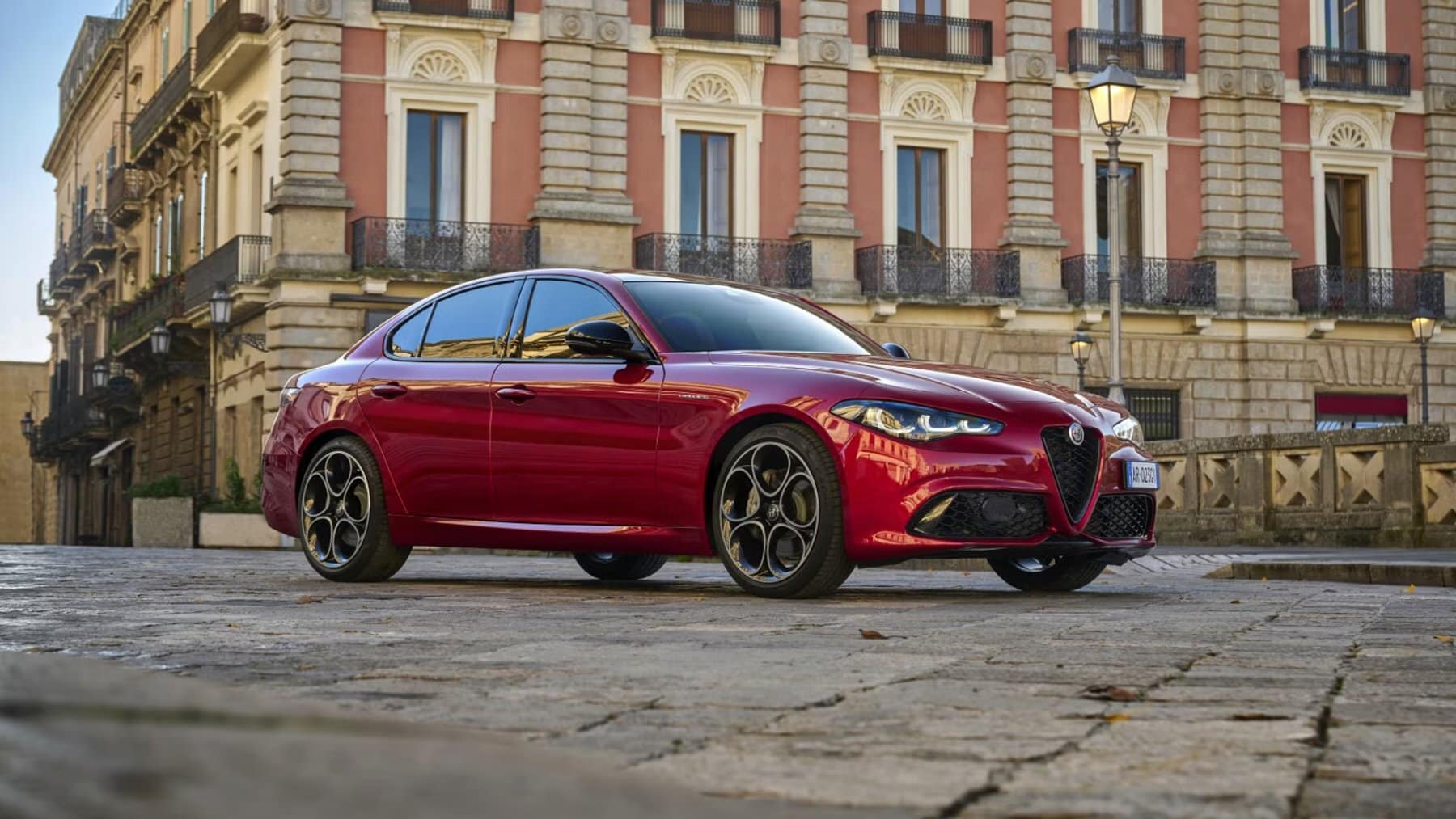
The Alfa Romeo Giulia is an Italian masterclass in what a sport sedan should be: compact, nimble, achingly beautiful, and genuinely thrilling to drive. Sitting atop the lightweight Giorgio platform—shared with the Stelvio SUV and designed specifically for rear-wheel-drive dynamics—the Giulia delivers a sense of purpose that its German competitors struggle to match. At $44,495 to $50,495, it undercuts the BMW 3 Series and Mercedes-Benz C-Class while offering comparable performance, sharper handling, and a visual presence that turns heads at every stoplight.
The Giulia's personality is distinctly different from its German counterparts. Where BMW and Mercedes-Benz prioritize technological integration and brand prestige, Alfa Romeo prioritizes the feel of driving. The steering is quicker, more responsive, and laden with feedback. The suspension is tuned for engagement rather than isolation. The engine—a 2.0-liter turbocharged four-cylinder producing 280 horsepower and 306 lb-ft of torque—punches above its displacement, delivering 0-60 mph in 5.5 seconds with rear-wheel drive (5.1 with all-wheel drive). Premium unleaded fuel keeps costs reasonable, and the 24 city / 33 highway EPA rating is respectable for a sport sedan.
This is a car engineered in Turin, styled in Milan, and built for drivers who view a sedan not as a status symbol or a mobile office, but as a connection between human and machine. The Giorgio platform's inherent light weight—combined with Alfa Romeo's decades of driving dynamics expertise—creates a sedan that feels substantially more agile than its dimensions suggest. Whether you're threading through canyon roads or circling a parking garage, the Giulia communicates intention with surgical precision.
Driving Experience
Step behind the wheel and you'll immediately sense why automotive journalists consistently praise the Giulia's driving dynamics. The steering ratio is quick—quicker than BMW's current setup—and the hydraulically-assisted system transmits road texture with remarkable clarity. Weight and resistance are perfectly balanced, never feeling artificially heavy nor electronically numb. The double-wishbone front suspension with semi-virtual steering axis is a signature engineering choice: paired with Alfa's patented dual-lower-link mechanism, it maintains linear steering feel across the entire cornering envelope while maximizing tire contact and grip. The rear employs Alfa's exclusive AlfaLink multi-link aluminum suspension, which provides excellent body control without sacrificing ride comfort on imperfect pavement.
The DNA Drive Mode Selector offers three distinct personalities. Dynamic mode sharpens throttle response, firms the suspension (when fitted with electronically controlled dampers), and maximizes traction intervention—perfect for spirited canyon work. Natural offers the baseline setup: linear engine response and moderate suspension compliance for daily driving. Advanced Efficiency softens throttle mapping and relaxes shift timing for maximum fuel economy on highway cruises. This tri-mode approach is less gimmicky than competitors' multi-zone setups; each mode feels genuinely different and purposeful.
There are trade-offs inherent to the Giulia's sport-first philosophy. The suspension—even in Natural mode—transmits more road noise and impact feedback than a comparable Mercedes or BMW, a signature of its racing-derived tuning. Rear legroom is tight for adults over six feet. The trunk, while cleverly designed with a 40/20/40 folding rear seat, offers just 13.4 cubic feet of cargo space, limiting weekend trip practicality. But these compromises are deliberate: the Giulia is unapologetically a driver's car, not a compromise machine.
Interior, Comfort & Technology
The 2026 Giulia's cabin strikes an impressive balance between Italian flair and modern functionality. Materials throughout lean upscale—leather or premium cloth upholstery depending on trim, aluminum trim accents, soft-touch plastics in the high-touch zones. The new 10.25-inch central touchscreen is a substantial upgrade, offering improved graphics, faster response times, and intuitive menu navigation. The system integrates wireless Apple CarPlay and Android Auto, eliminating the cable clutter and friction of previous model years. Voice control, digital services, and over-the-air software updates keep the infotainment feeling current as technology evolves.
Physical controls remain a priority where it counts: a traditional HVAC interface with rotating dials and push-buttons sits below the touchscreen, and the DNA mode selector remains a satisfying rotary dial on the console. A 12.3-inch digital instrument cluster with customizable displays puts vital information in the driver's sightline, and an available head-up display projects speed and navigation onto the windshield. The optional Harman Kardon premium audio system features 14 speakers delivering concert-quality sound that justifies its premium over the standard setup.
Rear-seat comfort is where compromises become apparent. Headroom and legroom are adequate but not generous—this is a four-seat car in spirit, with rear seating best suited for shorter passengers or brief journeys. Climate control is dual-zone and effective, running quietly even in extreme conditions. The 13.4 cubic feet trunk opens wide and swallows a surprising amount of luggage, though the overall cargo volume trails the segment average. For a vehicle priced under $50,000, the overall cabin ambiance and attention to detail feel authentically premium.
Trim Levels & Pricing
The 2026 Alfa Romeo Giulia offers straightforward trim structure with pricing that rewards the brand's enthusiast positioning. All models pair the 2.0L turbocharged engine with an 8-speed automatic transmission, with rear-wheel drive as standard and all-wheel drive available across the lineup.
| Configuration | Starting MSRP | Key Additions |
|---|---|---|
| Sprint (RWD) | $44,495 | Base model: 10.25" touchscreen, wireless CarPlay/AA, automatic emergency braking, lane-keeping assist, aluminum interior trim |
| Sprint (AWD) | $46,495 | All-wheel-drive system for enhanced traction and winter capability |
| Ti (RWD) | $47,245 | Leather upholstery, dual-zone climate, upgraded Harman Kardon audio, adaptive cruise control, additional drive modes |
| Ti (AWD) | $49,245 | All-wheel-drive with Ti content and features |
| Veloce (RWD) | $50,495 | Premium leather, head-up display, 360-degree camera system, driver attention alert, sport-tuned suspension, carbon fiber accents |
Pricing excludes destination charges (~$1,095) and optional equipment. AWD adds approximately $2,000. Actual dealer pricing may vary. Consult local Alfa Romeo dealerships for final pricing and current incentives.
Safety
The 2026 Giulia receives an expanded suite of advanced driver-assistance technologies that push toward Level 2 semi-autonomous capability. The standard safety package includes automatic emergency braking, which uses radar to detect imminent front-end collisions and applies brakes if the driver doesn't respond. Blind-spot monitoring with visual alerts runs across the cluster, and the system can intervene with gentle steering inputs if you drift toward a detected vehicle. Lane-keeping assist provides both visual/audible warnings and corrective steering input if the Giulia drifts over lane markings unintentionally.
Adaptive cruise control with stop-and-go maintains a driver-set following distance at speeds between 0 and 130 mph, automatically resuming speed when traffic moves. The system includes traffic sign recognition, which reads speed limits and posts them on the cluster for driver awareness. A driver attention alert system monitors steering inputs and vehicle behavior to detect signs of drowsiness or inattention, triggering audiovisual warnings during highway drives. Available options include a 360-degree camera system for parking and a head-up display that projects essential information onto the windshield.
It's important to note that the 2026 Giulia has not been crash-tested by NHTSA or IIHS, a limitation of Alfa Romeo's limited U.S. sales volume. Safety evaluations remain unavailable, so buyers cannot directly compare crash test results to the BMW 3 Series or Mercedes-Benz C-Class. However, the proactive ADAS suite represents Alfa Romeo's commitment to accident avoidance through technology.
Warranty & Ownership Costs
Alfa Romeo's warranty coverage is competitive with mainstream luxury brands, and routine maintenance remains affordable compared to Mercedes-Benz and BMW.
| Coverage | Duration |
|---|---|
| Bumper-to-Bumper (Basic Warranty) | 4 years / 50,000 miles |
| Powertrain Warranty | 4 years / 50,000 miles |
| 24/7 Roadside Assistance | 4 years (unlimited miles) |
| Extended Warranty (Optional) | Up to 7 years / 100,000 miles (Mopar coverage) |
In context: the Giulia's warranty matches BMW's 4-year/50,000-mile basic coverage but trails Mercedes-Benz's powertrain warranty extension. Genesis, a primary competitor, offers 10-year/100,000-mile powertrain coverage, a significant advantage for long-term owners. Service costs for routine maintenance—oil changes, filter replacements, brake fluid flushes—run $150 to $400 per visit at independent shops, with Alfa Romeo dealerships charging 15-25% premiums. Parts availability is good given Stellantis's global supply network.
The Bottom Line
Who Should Buy: The Giulia speaks directly to enthusiasts who view driving as the primary measure of a car's worth. If you prioritize handling, steering feedback, and visual impact over technological bells and whistles, the 2026 Giulia delivers measurably sharper dynamics than the BMW 3 Series or Mercedes-Benz C-Class at a meaningful price discount. Budget-conscious buyers seeking sub-$50,000 access to sport sedan character will find the Veloce trim compelling, particularly in RWD form for snow-free climates.
Who Should Look Elsewhere: If rear-seat comfort is non-negotiable—say, frequent long-distance trips with adult passengers—the Giulia's compact rear quarters become an issue. Buyers prioritizing technology and digital ambiance should consider the BMW iDrive or Mercedes-Benz MBUX systems, which offer deeper feature depth despite less engaging steering feel. Those counting on crash test data to inform purchase confidence will find the lack of NHTSA/IIHS ratings frustrating. And buyers who value long-term warranty coverage should explore Genesis's 10-year/100,000-mile powertrain warranty.
Our Take: The 2026 Alfa Romeo Giulia is a civilized sport sedan with the soul of a racer. It doesn't try to out-feature BMW or out-luxury Mercedes; it simply drives better, looks better, and costs less. The new touchscreen and wireless Apple CarPlay bring the cabin into 2026 without sacrificing the physical controls that make driving purposeful. For drivers who learned to love cars in an era before autonomous features and tablet-style touchscreens, the Giulia feels like a gift from Turin—a reminder that sport sedans can prioritize the person behind the wheel. Yes, the rear seat is snug. Yes, there's no crash test data. But you'll feel every degree of steering angle, hear the turbocharged engine breathe with clarity, and smile every time you catch its reflection in a storefront window. That's what the 2026 Giulia offers, and for a certain driver, it's worth every penny.
Frequently Asked Questions
How does the 2026 Giulia compare to the BMW 3 Series in terms of handling?
The Giulia's double-wishbone front suspension and patented rear geometry produce quicker, more responsive steering and superior feedback compared to BMW's current design. The Giulia's steering ratio is faster, body roll is better controlled, and the overall sensation is more intimate and engaging. The BMW 3 Series offers marginally more technological integration and rear-seat comfort, but the Giulia wins on pure driving dynamics and visceral connection.
Is the 2026 Giulia practical for daily driving?
Yes, with caveats. The sedan accommodates five passengers, though rear legroom is tight for tall adults. The 13.4 cubic-foot trunk handles weekly groceries and luggage for weekend trips, but is tight compared to larger competitors. The 10.25-inch touchscreen and wireless Apple CarPlay/Android Auto integrate well with smartphones. The 24/33 MPG EPA rating is respectable. Where practicality fades is in long-term comfort for rear passengers and the tighter ride quality compared to Mercedes or Lexus models.
Should I choose rear-wheel drive or all-wheel drive?
RWD models cost $2,000 less and deliver the authentic Alfa Romeo driving experience the platform was designed to deliver—perfect for warm climates and drivers who prioritize handling above winter capability. AWD adds traction and winter confidence, making sense for regions with snow and ice. The RWD Veloce is the ultimate expression of the Giulia's character, while AWD Ti or Veloce models make sense for year-round driving in challenging climates.
What safety features come standard on the 2026 Giulia?
Automatic emergency braking, lane-keeping assist, blind-spot monitoring with intervention, adaptive cruise control with stop-and-go, traffic sign recognition, and driver attention monitoring are all included. These systems represent a comprehensive Level 2 advanced driver-assistance suite. Notable omission: the Giulia has not been rated by NHTSA or IIHS, so crash test results are unavailable for comparison shopping.
How does the new 10.25-inch touchscreen compare to previous model years?
The 2026 system is a substantial upgrade over prior generations, with faster processing, improved graphics clarity, and wireless smartphone integration (Apple CarPlay and Android Auto). The infotainment maintains Alfa Romeo's philosophy of preserving physical HVAC controls and a rotary DNA mode selector—avoiding the all-screen approach of some competitors. Voice control, digital services, and over-the-air updates keep the system current.
What is the real-world fuel economy of a 2026 Giulia?
EPA estimates of 24 city / 33 highway apply to RWD models with the 2.0L turbocharged engine. Real-world results typically cluster 1-2 MPG below EPA estimates under normal driving, so expect 22-24 MPG city and 31-33 MPG highway depending on driving habits. AWD models incur approximately 1 MPG penalty across the cycle. Premium unleaded fuel is required due to the high-compression turbo engine.
Key Highlights
- 280 hp 2.0L turbo with 306 lb-ft torque and 5.5-sec 0-60 (RWD)
- New 10.25-inch touchscreen with wireless CarPlay and Android Auto
- Final model year before next-generation fastback redesign in 2027
- Level 2 semi-autonomous highway driving capability
- Double-wishbone front suspension unique in compact luxury segment
- Starting MSRP of $44,495 undercuts BMW 3 Series and Mercedes C-Class
Powertrain Options
| Engine | Horsepower | Torque | Fuel | MPG |
|---|---|---|---|---|
| 2.0L Turbocharged I4 | 280 hp | 306 lb-ft | Premium Unleaded | 24 city / 33 hwy (RWD) |
Transmission: 8-Speed Automatic
0-60 mph: 5.1 sec (AWD) seconds
Specifications
Pros & Cons
✓ Pros
- Best-in-class steering feel and chassis dynamics in segment
- Lighter than German rivals at approximately 3,520 lbs (RWD)
- Strong value at $44,495 vs BMW 330i ($48,675) and Mercedes C 300 ($50,900)
- Wireless CarPlay and Android Auto now standard for 2026
- Authentic Italian design stands out in homogenized segment
- Responsive 280 hp turbo with linear power delivery
✗ Cons
- No Quadrifoglio performance variant for US in 2026
- Rear legroom genuinely tight for adults over 5-foot-10
- 13.4 cubic-foot trunk is modest versus German rivals
- NHTSA has not crash-tested recent Giulia models