
American lawmakers spent the last week begging the U.S. government to keep Chinese EVs out of the country. Meanwhile, Toyota has been quietly partnering with BYD to build one of the most aggressively priced electric vehicles on the global market — and Americans aren’t allowed to buy it.
Toyota and BYD Just Built a Cut-Price EV Together
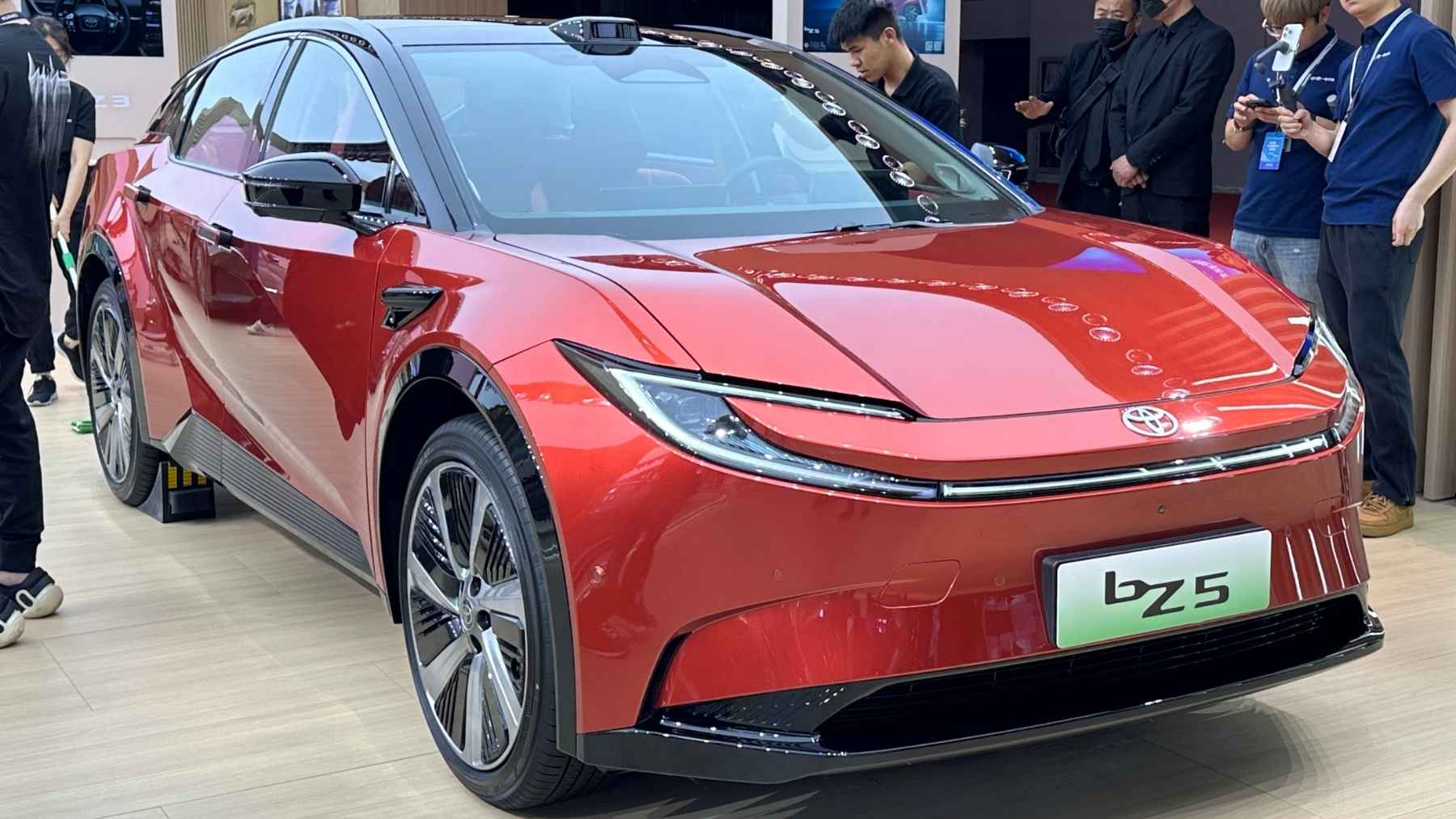
Toyota and BYD are producing an EV with 268 horsepower and up to 391 miles of range for less than $18,000. The problem is, it’s not for sale in the United States.
The cut-price Toyota bZ5 was built for the Chinese market. It’s built on the e-TNGA platform, a joint venture between Toyota and fellow Japanese manufacturer Subaru. Which means you may see shades of it in the upcoming electric Highlander and the Subaru Getaway.
BYD is supplying the battery, which may be a contributing factor when it comes to the competitive range and low cost. That battery will allegedly charge from 30% to 80% in under half an hour.
Despite the low price, the vehicle comes with a good amount of tech. Apparently Toyota’s Pilot L2+ semi-autonomous driving is included, along with a LiDAR sensor. Which not every manufacturer installs on their semi-autonomous vehicles. Infotainment centers around a 15.6 inch touchscreen.
Why Americans Can’t Buy the bZ5
The bZ5 falls under the same restrictions blocking every other Chinese-built EV from reaching American driveways. The Biden-era 100% tariff on vehicles imported from China remains in place, and the bZ5 is manufactured at FAW-Toyota’s facilities in China through the joint venture with BYD established in 2020.
Even if the tariff disappeared overnight, the bZ5 wouldn’t suddenly appear at U.S. dealerships. Vehicles sold here must pass NHTSA crash testing, EPA emissions certification, and FMVSS compliance — a process that typically takes Chinese-built vehicles between 18 and 24 months to navigate, when manufacturers bother attempting it at all. Toyota has shown no public interest in doing so for the bZ5.
The vehicle was also designed specifically around Chinese driving habits, infrastructure, and consumer expectations. The China Light-Duty Vehicle Test Cycle (CLTC) that produces the 391-mile range figure is significantly more optimistic than the EPA cycle used in the United States — so even if the bZ5 did reach American shores, that range figure would shrink considerably on a U.S. window sticker.
What Americans Get From Toyota Instead
The closest equivalent on American Toyota dealer lots is the 2026 Toyota bZ (the renamed bZ4X), which starts at $36,350. The base XLE trim produces 168 horsepower and offers 236 miles of range. The XLE Plus, which gets the larger 74.7 kWh battery pack, reaches 314 miles of range and costs $39,350.
That’s roughly double the price of the bZ5 for less range and less power. Toyota’s most powerful 2026 bZ variant (the AWD configuration with 338 HP) still tops out at 278 miles — over 100 miles short of what the bZ5 delivers in China.
Looking outside Toyota’s lineup doesn’t help much. The Subaru Solterra (the bZ4X’s twin) starts at $44,995. The Hyundai IONIQ 5 lists at $43,975. The Tesla Model Y sits at $44,990. Even the most affordable EVs on the American market — the 2025 Nissan Leaf at $29,280 and the Chevrolet Equinox EV at $34,995 — cost considerably more than the bZ5 while offering less of pretty much everything.
The Wider Context
The bZ5 isn’t the only sub-$20,000 EV being sold outside the United States. BYD’s Dolphin starts around $13,000 in China, the BYD Seagull comes in closer to $10,000, and Geely’s Geometry E retails for under $15,000. None are available to American buyers.
Meanwhile, the average new car price in America just crossed $50,000 for the first time according to Kelley Blue Book. The gap between what American buyers are paying for new vehicles and what Chinese buyers are paying for comparable — and often more capable — EVs has never been wider.
Ford is attempting to address that gap with its upcoming $30,000 electric pickup, and General Motors is reviving the Chevy Bolt at $28,995. Both arrive in 2027, and both will still cost considerably more than what Toyota and BYD are charging Chinese buyers for the bZ5 right now.
With the Trump-Xi summit approaching and U.S. trade policy shifting by the week, the bZ5’s American absence may not be permanent. But for now, the closest most Americans will get to it is watching the specs on a screen and wondering what could have been.