
Vehicle manufacturers have spent years telling us V8s were a thing of the past and the future is firmly electric. But it seems like General Motors are the latest auto company to realize a large portion of its customer base quite likes the V8, and discontinuing the most American engine configuration (even though it was invented by the French) is a bit silly. Especially when the US makes up majority of your market.
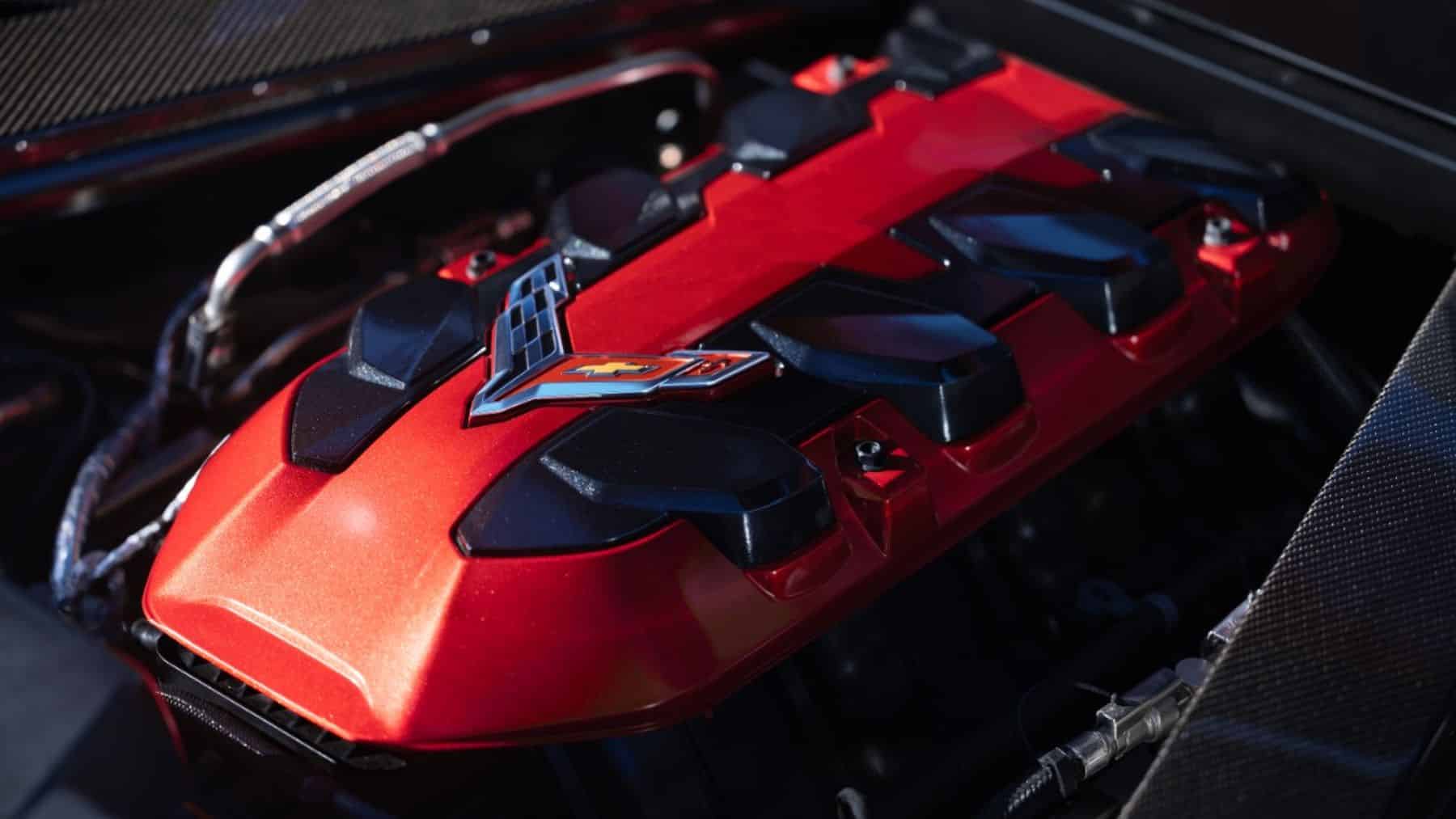
The latest V8-shaped U-turn comes from GM, which has announced it will be building its small block engine in Flint, Michigan again. The sixth-generation engine the company has in mind seems like an absolute beauty, too. GM intends to drop it under the hood of the 2027 Chevrolet Corvette, which means the noise and specs will have to be on point.
In an announcement posted on its website, GM confirmed the new LS6 6.7L V8 will offer 535 horsepower, 520 lb-ft of torque, and a 13.0:1 compression ratio. GM claims it’s both the most powerful base engine ever offered in a Corvette, while adding that it’s also got the highest production torque of any naturally aspirated V8 ever created.
Other boasts GM has made about the upcoming LS6 include improved emissions and better thermal efficiency. So less of the fuel is wasted as heat, and more is being used to drive the vehicle forward. The new engine packs the same bore diameter as its predecessor, too. The extra 0.5 liters of displacement it has over the current LS6 comes from extending the piston stroke.
GM’s V8 statement shows it’s not all about “progress”
Oddly enough, for a statement announcing a new engine, GM spent little time outlining the LS6’s specs. Instead, it leaned heavily into the history of the engine itself (again, skipping the part where the French invented it and instead focusing on Buick engineer Eugene C. Richard’s overhead-valve internal-combustion engine patent). The press release also leans into what engine manufacturing means to Flint, highlighting that over 40 million small blocks have been built in the city since 1954.
This is good news overall. I mean, the statement itself is just a corporation trying to seem relatable, while hoping you forget it binned a bunch of staff last year. Some of whom had worked at the company’s plant for three generations or more.
But it’s a clear signal that the mood is shifting amongst manufacturers. They’ve spent years telling people what they’re going to buy. “You’re going to be driving an EV in a few years, your trucks and ‘muscle cars’ will be battery powered. And we’re going to make it all abroad because it’s cheaper.” Now, it seems large portions of the American market have simply said no, leading to many manufacturers, like GM and Stellantis, backtracking.
The fact that it’s getting harder to compete against Chinese companies in Asia and Europe has also made EVs less appealing to US-based manufacturers. Changes in government have tanked EV subsidies and incentives, too, which undoubtedly makes the decision to pivot back to ICE a lot easier.
While EVs have their place, GM makes some exceptional EVs, but they aren’t for everyone. Some of us just like a big, loud, expensive ICE engine under the hood.