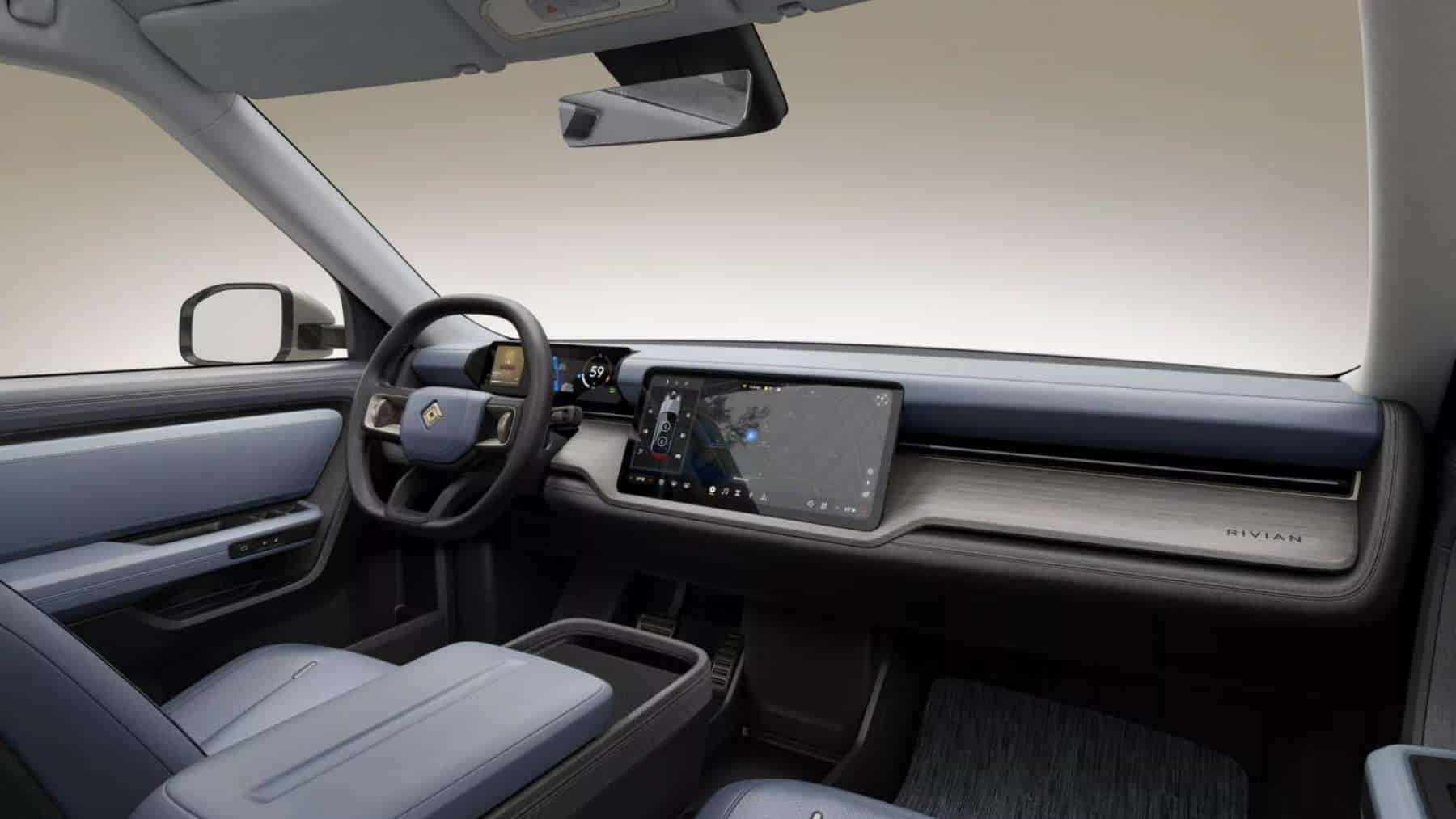

Ten thousand fully autonomous Rivian R2 robotaxis will be descending the United States thanks to a partnership between the electric automaker and Uber. The first phase will have R2 robotaxis in San Francisco and Miami by 2028 and then 25 total cities by 2031.
Uber is investing $1.25 billion into Rivian over the next five years, starting with a $300 million initial investment. In return, Rivian must meet certain milestones by specific dates with the goal of building a fully autonomous fleet. These R2 robotaxis will be exclusively available through the Uber app.
Rivian has been working on an autonomy platform for a while, introducing the third-generation platform back in December 2025. This includes 11 cameras, five radars, and one LiDAR. Rivian CEO RJ Scaringe stated that Rivian’s robotaxis will be the “safest and most convenient in the world.”
“We’re big believers in Rivian’s approach — designing the vehicle, compute platform, and software stack together, while maintaining end-to-end control of scaled manufacturing and supply in the U.S,” Uber CEO Dara Khosrowshahi said. “That vertical integration, combined with data from their growing consumer vehicle base and experience managing the complexities of commercial fleets, gives us conviction to set these ambitious but achievable targets.
Rivian R2 robotaxis met with criticism, but is it any worse than other planned robotaxis?
It’s safe to say Tesla fans were not pleased with the news. Tesla has been attempting its own robotaxi service for a while, with vehicles currently available in Austin and San Francisco. There have been many empty promises from Elon Musk regarding Tesla’s robotaxi service. He promised a lot more vehicles than exist right now — and these rides are pretty scarce, despite the app only being currently available to invited fans. Most of Tesla’s robotaxi rides are accompanied by human monitors, often following behind. And the autonomous technology is nowhere near ready for a widespread fleet. That hasn’t stopped prices from rising.
Tesla’s robotaxis have improved recently, and the carmaker’s new lithium iron phosphate (LFP) prismatic battery cell manufacturing facility in the United States is the first step towards the brand’s decision to step away from production vehicles and focus more on its robots and robotaxis. In theory, Tesla’s cybercabs should not just be improving, but spreading. For now, however, it feels like I’m being sort of duped by Tesla fans whenever they hype up the very limited, underperforming robotaxis.
However, the argument against the R2 robotaxi seems to be that Tesla’s robotaxis were created specifically to be robotaxis, while they think the R2 robotaxi will just be a “$58K camping SUV” turned into a robotaxi. Said one X user: “Tesla’s cybercab is purpose-built at $25,000 with no steering wheel. The cost-per-mile isn’t even close. The Uber deal is to deploy 50,000 robotaxis by 2031. Slight problem: The car doesn’t exist yet. The factory doesn’t exist yet. The autonomy software doesn’t exist. Manufacturing is hard. Good luck, have fun.”
A reply: “The cybercab doesn’t exist either?”
I mean… It exists if you ask Elon. But the numbers won’t match up.
Anyway, I quickly looked up the Tesla robotaxi service, and Tesla itself states that it’s “starting with the Model Y.” The official Cybercab is Tesla’s designated robotaxi that is still under development. It was revealed as a two-seater with no pedals or steering wheel, meant specifically for taxi services. But this still doesn’t exist. It’s not released. However, the Cybercab has its own designated assembly facility in Texas. So, 1-1, I guess.
The other argument appears to be that Rivian is not a lucrative business that keeps looking for handouts from investors. I think it’s safe to say that the startup didn’t do so hot with its R1S and R1T EVs as American buyers look for cheaper alternatives. But Rivian has deals with Amazon, Volkswagen Group, and now Uber. Looking at different angles doesn’t seem like a bad thing. And I am not sure what’s so bad about getting a ride in a “camping SUV,” assuming Rivian makes no changes to the robotaxi version of the R2 at all. Seems spacious to me. Maybe Rivian’s in-house autonomous tech is a bit questionable, given it’s a startup that’s often bleeding money. But there are pros and cons to this strategy.
I also couldn’t find much about Rivian’s autonomous technology, but I didn’t see anything suggesting it’s bad. At least nothing worse than Tesla’s autonomous technology, which has also been highly questioned. Even Tesla’s Fully Self-Driving (FSD) mode had to change its name in California, since it’s nowhere near self-driving. I think Tesla is still offering some pretty neat features, but if we’re nitpicking stuff apart, I’d say Tesla has had more time in the game and should be a bit further ahead than it is. At this rate, I think Rivian can catch up. Rivian has been accelerating its tech fast, with Autonomy+ rolling out with Universal Hands-Free in February 2026. By 2030, Rivian is expected to offer personal Level 4 autonomy.
Speaking of catching up, Lucid has also announced an upcoming partnership with Uber to create its own fleet of robotaxis. Lucid’s robotaxis will be similar to Tesla’s Cybercab (which doesn’t exist yet), offering just two seats for more storage in the back, 200-plus miles per 15 minutes of charge, and an entertainment system with potential monetization opportunities. Like Rivian’s R2 robotaxi, Lucid’s robotaxis will be based on its upcoming mid-size SUVs, with specific taxi modifications. I really don’t think Rivian’s idea is all that crazy in that regard, and I think many automakers feel it’s viable since Tesla isn’t really proving its own plans are successful either.
I’m not sold on Rivian’s robotaxi thing. But I’m not sold on Tesla’s either.