
It’s not just Tesla that’s seeing its stocks dip in April 2026. Another American EV automaker, Rivian Automotive, is seeing a similar trend. Near the beginning of April, Rivian’s shares fell 5%, from $15.29 to $14.50. Mind, Rivian’s stock was already down 22.43% year-to-date before that.
However, this isn’t due to any real fault of Rivian’s own. It’s not like Rivian ditched its electric vehicles to make a $30,000 robot or anything. Vehicle sales declined sharply at the start of 2026 — a 26.5% year-over-year decline, to be exact — and investors are rightfully alarmed. Americans have less money for increasingly expensive new cars. And there is no longer an incentive to get an EV, which are usually pricier by default.
Rivan has a plan.
EVs are in trouble, but Rivian has a plan
Rivian had a pretty cruddy start to 2026. It sold only 8,141 vehicles in the first quarter, and it’s easy to see why investors started to wonder whether they should keep supporting electric vehicles. Some automakers are even wondering this themselves, pivoting away from their original EV plans to go hybrid — even diesel.
But Rivian is not shying away.
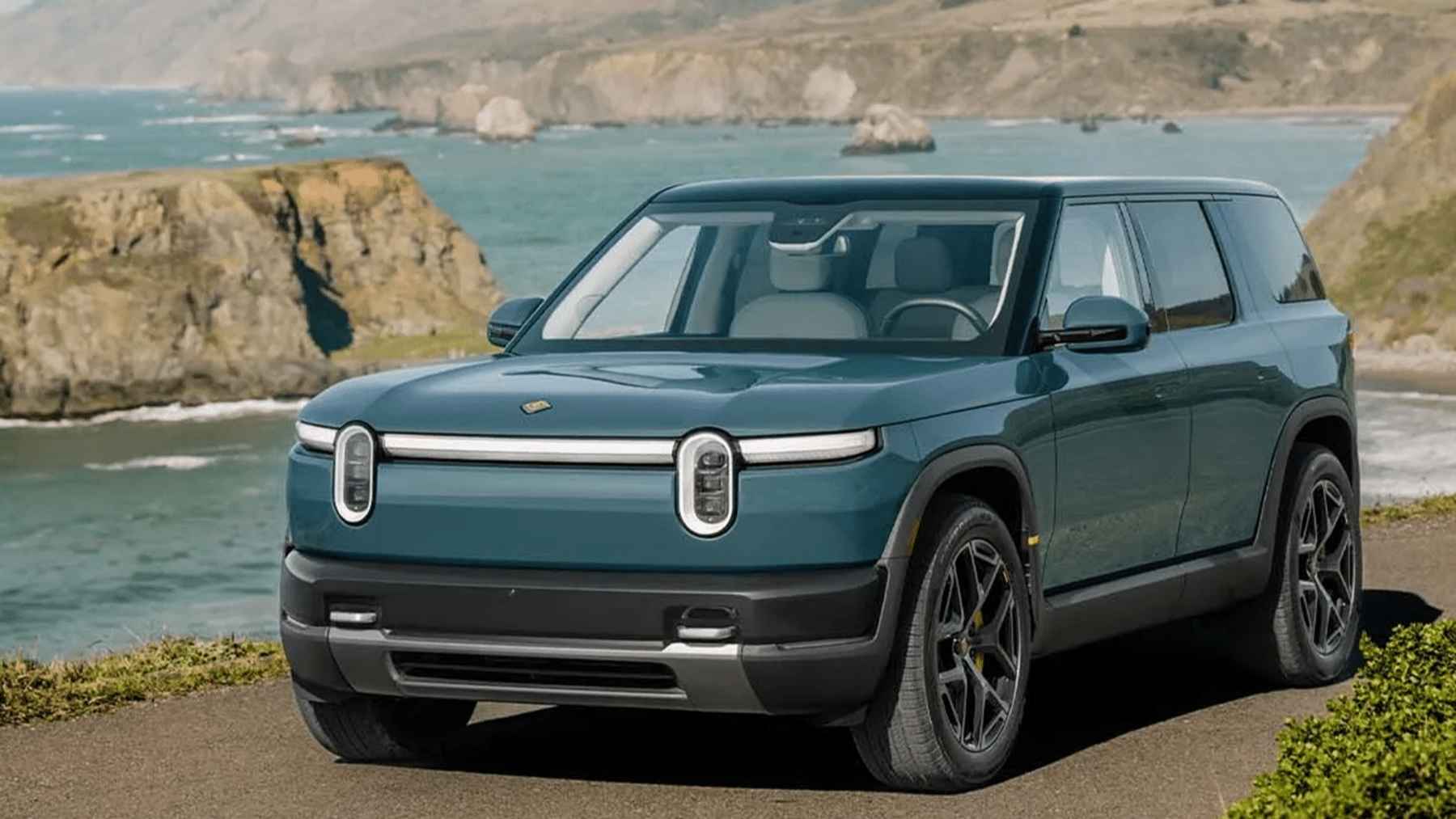
Rivian has a plan to deliver 62,000 to 67,000 vehicles in 2026. It believes it can reach these numbers (despite not even hitting 10,000 yet), due to the launch of the upcoming R2. And it needs the R2 to work.
According to 24/7 Wall Street, there is a 33.5% probability that Rivian will file for bankruptcy before 2027. Investors just don’t have high hopes for electric vehicles anymore. Automakers have revealed billions in losses from switching to EVs, only to see jarringly low interest in their new models. With China’s cheap EVs continuing to dominate in Europe and Asia, carmakers are struggling to keep up (or keep prices down). And in the United States, where Americans are left with only pricey non-Chinese options, many have shown little interest in EVs. A study by AAA found that only 16% of Americans want an EV now, the lowest number since 2019. Without the tax credit, Americans are just looking at expensive vehicles that will give them range anxiety.
Despite the growing uncertainty over electric vehicles, some are holding out hope that Rivian has what it takes to break through. Like Tesla did. But hopefully without the lawsuits. Some investors believe that Rivian’s latest dip is a good opportunity, claiming that there may be one more dip before everyone rallies together to buy stocks ahead of the R2’s launch.
Is the R2 truly the savior of the EV industry?
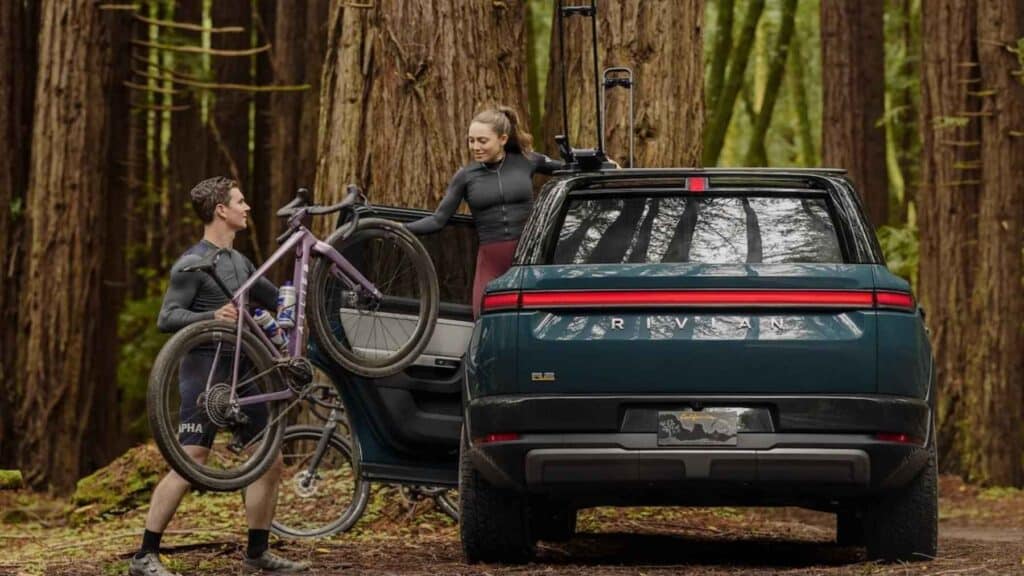
There is a lot of hype surrounding the R2. It’s priced at $45,000 (although the launch version is nearly $57,000) and is a lot more approachable than other EVs on the market. It’s not packed with self-driving tech or meant to comfortably fit a family of 17. Instead, Rivian has aimed its marketing at young adventurers.
“R2 is designed to move through your day-to-day life with effortless agility,” Rivian wrote, “yet it’s always ready to leave the pavement behind. It balances a city-friendly footprint with rugged off-road capability.” The entire page seems to make it a point that the R2 is perfect for city living or weekend getaways with friends. It’s a more friendly approach than Tesla’s aggressive Full Self-Driving push or Lucid’s futuristic luxury SUV line. And it has more personalitiy than Polestar’s stoic grey, numbered fleet. It does seem like the right approach during this time when Americans are looking for cheap cars more than luxury SUVs.
Said one driver: “I’m excited for the R2 because it’s a cheaper price point, a great alternative to Tesla, and this will be great for Rivians longevity as a whole. With a larger fleet on the road we will have better mapping, advancements, etc. Net positive overall.”
Another predicted: “I am very high on the R2. My prediction is that a lot of people who want a Tesla style experience without the Musk stink will gravitate to the R2. There’s really no one else who offers that in the market, plus it’s shape factor and real off-road ability is going to attract a wider market.”
However, I think it’s still too expensive. Rivian wants the R2 to be an approachable EV that gets people interested in switching over from gas — or switching from their Tesla — but I don’t think it’s actually cheap enough to do that. The base model being $45,000 is still well beyond the below-$30,000 price point that Americans have been craving. It’s not an amount that makes the R2 a no-brainer purchase. You still have to think about it. And that hesitation may kill the momentum.
I think R2 will save Rivian from bankruptcy in 2026. But I don’t think it will save the American EV industry in the long run.