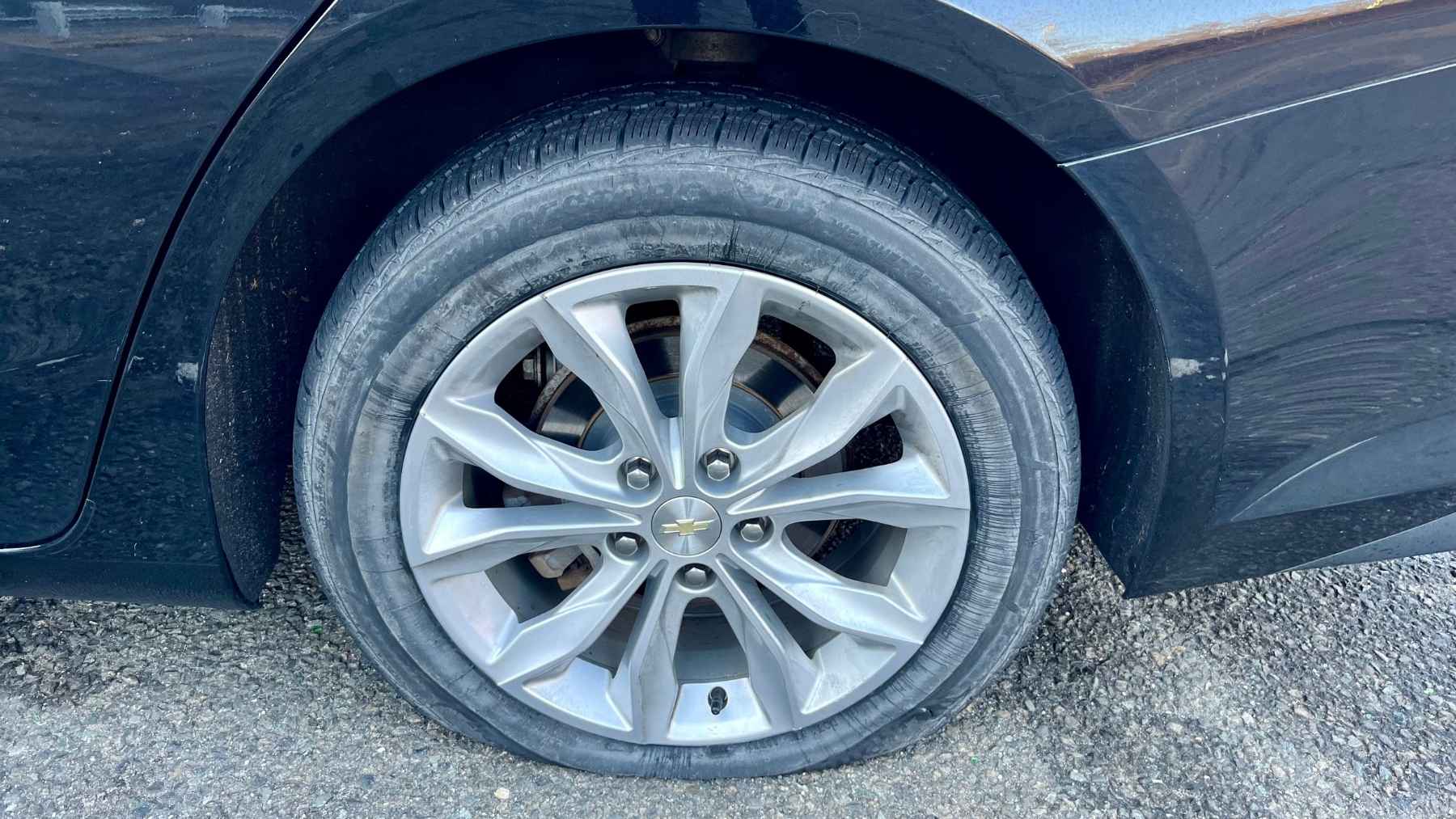

The weather is getting warmer, the snow tires are coming off, “construction season” is about to get underway, and that means millions of tires are going to get involuntarily studded by carelessly discarded nails. But if you do run over something sharp and pick up a puncture, all is not lost.
A good number of tire punctures are actually repairable. It all depends on what kind of damage has been done. To get a bit of expert advice on what can and can’t be fixed, Autonocion spoke to BFGoodrich’s On-Road Product Manager David Carpenter.
As for what is and isn’t repairable, Carpenter was pretty straightforward on that. He said:
“We always recommend following the US Tire Manufacturers Association recommendations on repairs, and they typically align with inside the outer, rain grooves.


The main Crown of the tire is repairable, but the shoulders aren’t and the side walls aren’t. There’s a lot of flex in those outer shoulders. And so whatever you put in there is going to open up and contract every cycle, and so that just invites it to fail faster, right? ”
So if the nail, spike, or other puncture is inside the two outside grooves of your tire, then you may be able to opt for a cheap fix instead of an expensive replacement. Damage to the “shoulder” of the tire (the corner part between the outside of the grooves and the sidewall) or the sidewall itself is not considered fixable. Carpenter explained why a puncture or a bulge in the sidewall means game over for that particular tire:
“The center tread is a lot stiffer due to the belts, but in the sidewalls, especially at the end of the belts, in the shoulder, you don’t have that support there. There’s a lot more flex, so the puncture repairs don’t last long.
Also, you’ve got to think of a radial tire in particular, as being like a bridge supported by columns. You take one column out, now, every other column beside it is supporting more load. Now if you take two columns out, all of a sudden, you know, you start to see failures of the columns that are supporting right next to it.
The cords in the tire are the same way, right? So you start if you puncture with if you hit a curb really hard and you get a bulge in the side wall, that means you’ve ruptured some of those cords. And so now all the cords around it are carrying more load, and it’s going to be a matter of time before they give. And then once they start to give, it just becomes kind of a zipper effect”
Basically, if you patch those parts the tire may hold air and even drive for a little while, but it becomes a ticking time bomb. Gashes, as opposed to simple round punctures, are also near impossible to fix.
As for the exact fix the tire needs, Carpenter outlined the most common option.
“If you get a puncture, you can repair that with a the preferred method is a plug patch. So it’s a plug through the tire with a patch on the inside.”
You can buy kits to patch tires for a few dollars and do the work yourself. However, a repair isn’t particularly expensive at a tire shop. A good shop can also assess the tire to make sure the damage is actually fixable, and will usually guarantee their work.
Not fixing a puncture can destroy a tire
Many of us have been in a situation where we’ve picked up a nail, but the puncture doesn’t seem too bad. The tire is losing pressure pretty slowly, so you feel like you can delay a trip to the tire shop by simply topping it up with a compressor every now and then.
While this can keep a car going for a while, according to Carpenter it’s a pretty bad idea. You’ll just be turning a quick and simple puncture fix into an expensive replacement.
“A lot of the damage from a puncture comes from moisture getting into the belts. If you have a slow leak there’s a couple of risks.
For instance, longer term if you stay on top of it every two or three days, you keep it topped up. Then you start to take in water from rainstorms and puddles and whatever else. That’s working its way through the inner liner, and through the carcass plies, and through the belt plies.
So you can imagine these steel cables in there. What happens when they get exposed to moisture, they just start to rust, and then when they start to rust, they start to decouple from the rubber, and that can lead to decapping its situation, among other things.”
For those of you unfamiliar with tire talk, “decapping” or a “decap” is pretty bad. The actual term for it is “tread separation” and when it happens the layers of a tire essentially delaminate. Which causes very quick degradation and will likely result in a huge blowout.
Moisture getting into the layers of a tire is a major issue. However, it’s not the only way a slow puncture can destroy your rubber. Carpenter says:
“You may be under inflated at any given time, and so your tire will run hotter, and then that can lead to damaging the belts, or the carcass, the internal structure of the tire. When you run under inflated, you can actually risk a decap.”
Finally, running a tire with lower pressure can lead to a situation where you’re running on a flat tire. This absolutely destroys the tire structure in no time at all, so at the very least you have again turned a puncture repair into a full replacement. However, driving on a flat can make things so much worse.
It’s pretty easy to cause significant and expensive damage to the wheel rim, up to the point of cracking or shattering it. The vehicle’s suspension components can also become damaged, leading to potentially thousands of dollars in repair bills. You can also gouge the road up pretty bad, which is frowned upon in polite society.
So check your tire pressures and visually inspect the treads regularly. You can drive a vehicle with a slow puncture to a tire shop, though you should get it repaired as soon as possible. If there’s any sidewall damage or bulging, you should pop the spare on. Remember, when in doubt, get the donut out.