
What’s the one thing holding you back from buying an electric vehicle?
No, not the soulless, silent drive. No, not the range anxiety and lack of charging stations in your area. Yes, that one — the eventual battery replacement, which will cost you $5,000 to over $20,000, depending on the model and battery.
The selling point of many EVs is the lack of maintenance costs. With no engine, there is often fewer visits to the mechanic. Automakers can boast about a lower cost of ownership. However, you’ll need to replace its battery at some point, which would possibly use all that money you had saved in your piggy bank.
Now, the Generational 2025 Battery Performance Index, a UK study, has found that batteries may last longer than previously expected.
EV batteries are lasting longer than the warranty (a lot longer)
The Generational 2025 Battery Performance Index studied over 8,000 electric vehicles from 36 manufacturers to see how long it takes for EV batteries to need replacement in the real world. The general findings? Batteries last longer than was previously believed.
The focus was on the battery’s State of Health (SoH), which measures the remaining capacity compared to when the battery is new (similar to iPhone batteries, except those go down to 81% battery capacity in, like, five days). The study found that the So remained at 95.15% after years of driving. The median battery health went down to 93.5% after four to five years, and then 85% capacity after 10 years. Most EVs with over 100,000 miles had between 88% and 95% battery capacity.
This is a lot more promising than even automakers’ own warranties: most say that EV batteries will maintain at least 70% capacity over eight years or after reaching 100,000 miles. It seems their electric vehicles are far surpassing this.
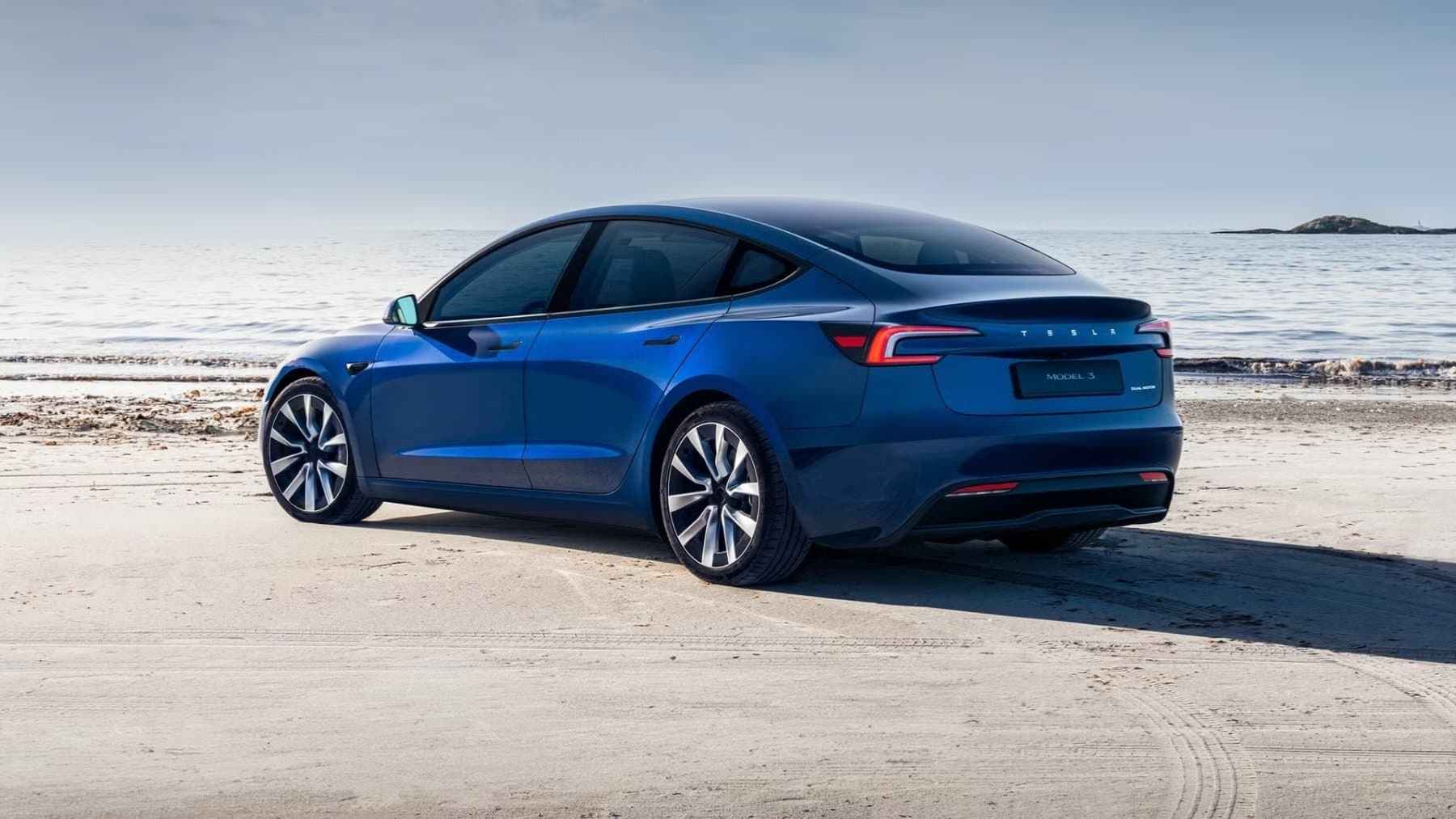
Of course, this study really got the electric vehicle crowd going. It’s okay, I do CrossFit so I know how it feels to want to mention it every chance you get. See? I even did it right there. With so much criticism aimed at EVs, however, it was definitely a win for electric vehicle drivers. One pointed out some real-world examples that prove this, including a 2019 Tesla Model 3 wit hover 378,000 miles on it with the original battery and motors.
As if they needed another reason to boast about their EVs.
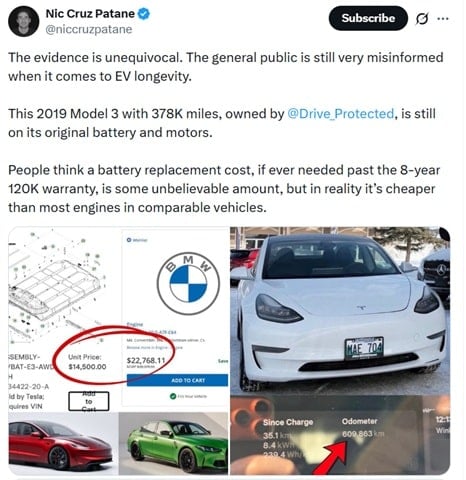
The study pointed out that not every electric vehicle will maintain the same battery health for the same duration of time. An owner’s driving and charging habits, as well as the battery technology itself, will determine how well it holds up. Either way, there’s a very high chance that you can get your EV battery to last a lot longer than expected.
I think this is overall a huge win for the EV people — and the industry as a whole. The idea of replacing a battery is definitely one of the fears that internal combustion engine owners have. However, I don’t think this as big of a show of superiority as EV owners think. Instead of just celebrating the accomplishment of battery technology, it quickly turned into a debate: EV versus ICE.
A lot of EV owners felt that this was even further proof of EV superiority, since replacing a battery was not going to happen very often — maybe not even ever, depending how often you drive a car or how long you plan to own it. Meanwhile, they claimed ICE owners are spending $100,000 on vehicle maintenance over the years.
However, most people are not driving a Porsche 911 or BMW M3 Competition. Most people are driving commuter cars, like a Toyota Corolla or Honda Civic. These vehicles don’t cost a lot to own at all. A Toyota Corolla will cost $5,000 at most in the first 10 years, then another $4,000 in the next 10 years. This is under the cost of most battery replacements. Meanwhile, the Corolla was a lot cheaper to buy.
But hey, it’s not a competition.
I think we should stop comparing the two as often. They are just completely different vehicles and all these factors don’t really play into people’s purchases at the end of the day. If people want a gas-powered car, an EV battery lasting a few years longer won’t convince them to make the switch. They’d already have to be pondering an EV for that to finally convince them. EVs are continuing to break all kinds of charging records and 0-60 records, and I just don’t think it matters too much to those that don’t want one. EVs are a completely different experience than ICE cars, both with their own positives and negatives.
Still, I’ll give this W to the EV community for sure.