
Over the last few months winter storms have absolutely hammered the United States. This has brought snow and ice to areas that rarely get it, and left millions of drivers struggling with winter conditions for the first time.
I’ve driven through a lot of snow. I’ve lived in Upstate New York for seven years, and it sort of comes with the territory around here. I also briefly lived in Maine while at college. Beyond that, I’ve visited various other places in the winter months including Massachusetts, Michigan, and Wyoming where I had the pleasure of driving a Rolls-Royce Cullinan through a white out (and nearly putting the close to half-million dollar SUV into a ditch). It was on all-seasons.
So here’s some advice you should follow if you want to stay on the road when the white stuff starts falling.
Make sure your vehicle is prepared for the winter storm
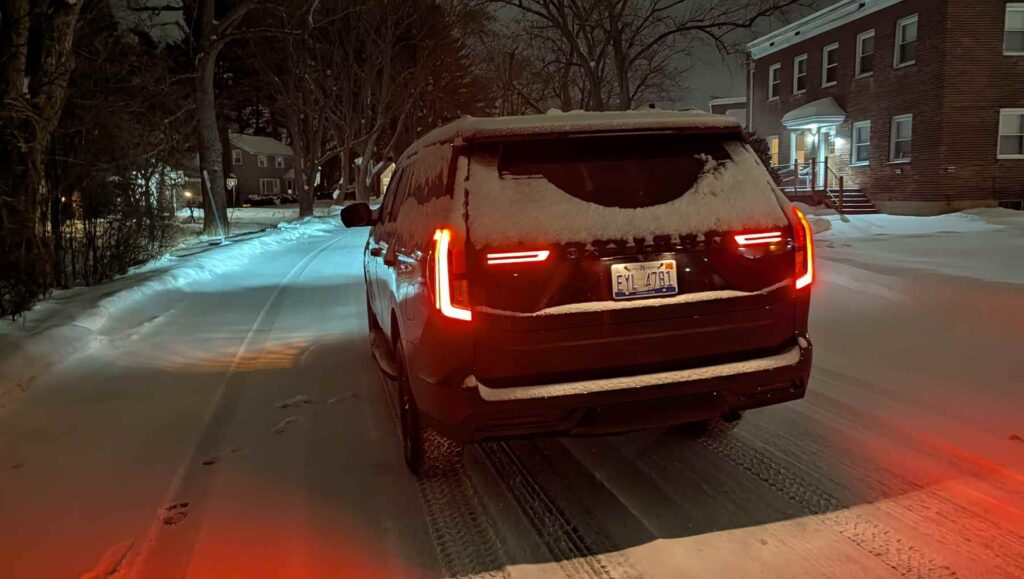
This may sound obvious, but you should make sure your vehicle is ready for winter conditions. This includes making sure ice and snow are cleared from all of the windows, the hood, and the roof of the vehicle. This is for other drivers’ benefit as well as your own, as snow flying off your vehicle could cause an accident. You should also keep the gas tank at least half full to prevent the lines from freezing.
A few items should be kept in the vehicle during winter. This includes a first aid kit, some emergency food, and a few spare blankets. The logic here is, there’s a chance you’ll get stranded so you may as well keep some things that will make you more comfortable until help arrives.
If your vehicle is struggling to start in the cold, your battery may be to blame. Older, deader batteries will struggle anyway, but if you live somewhere cold and are shopping for a new juicebox, consider something with higher cold cranking amps (CCA). It will have an easier time powering your starter when temperatures plunge.
Here are the basic cold weather driving techniques
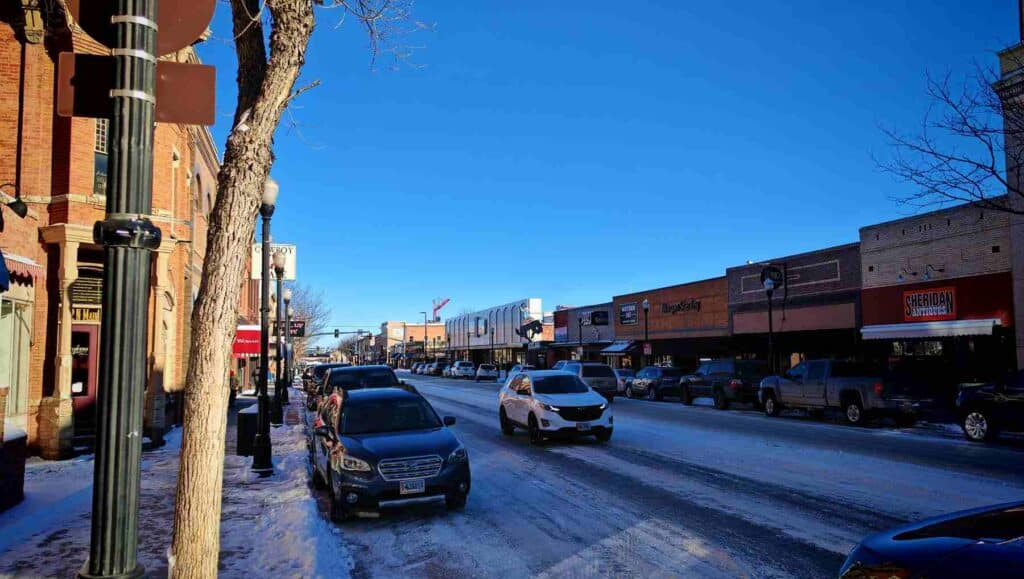
If you’re going to skid out, it’s more than likely because you hit the throttle or brakes too hard. Ice and snow have this odd way of making public roads feel like you’re struggling for grip on a race track. That ice and snow doesn’t really care if you have all wheel drive or traction control, if you punch it too hard you’re going to lose grip.
In an emergency, the official advice is to jam your foot down, use the steering to keep the vehicle steady, and let the ABS do the work. However, ABS can increase stopping distances in certain circumstances, so it might be worth pumping the brakes if you’re trying to stop in deep snow. This can override the ABS, lock the wheels, and cause you to stop faster due to the “wedge effect” which is snow building up in front of the locked wheels.
When you do feel the car start to slide, it’s important to ease off whatever you were doing while looking in the direction you want the vehicle to travel. So smoothly pull back on the gas and coast for a little while, while keeping an eye on where you want to go. What you shouldn’t do is go straight from the gas to the brakes, or look anywhere but down the road.
You should also keep your headlights on, even during the day. You’re easier to spot this way.
Don’t be overly reliant on your vehicle’s features
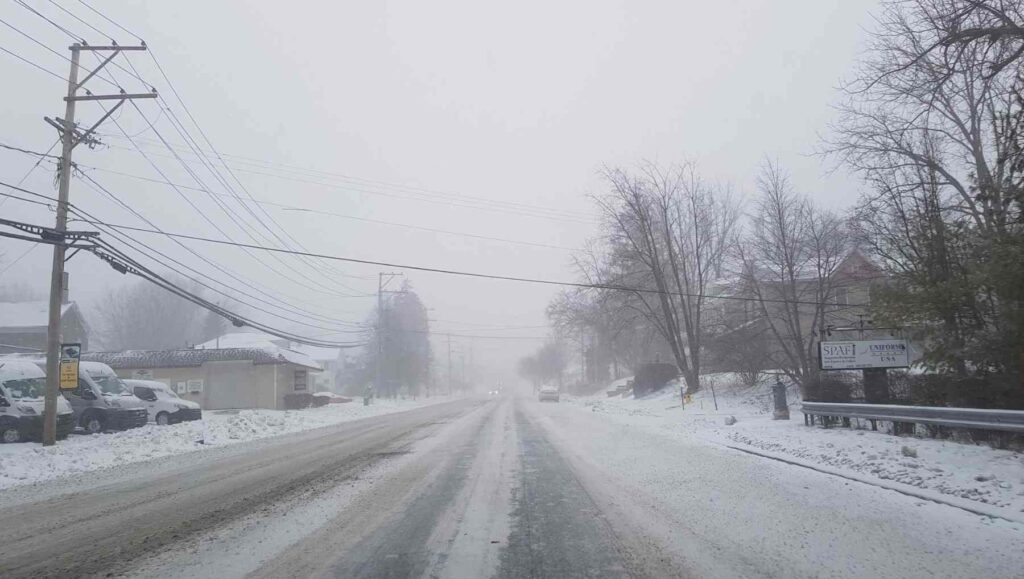
Modern vehicles are filled with features that make driving pretty easy. Two of the most effective systems are all wheel drive, traction control, and anti-lock brakes. But all three could actually be detrimental in the snow.
Then there’s traction control. It regulates how much power is being sent to the wheels, and stops you from spinning your back tires. It’s designed to help out in low grip conditions, which is why you’ve probably never spun out in a sudden downpour. But it will struggle in extreme winter weather. If you push it in bad conditions, the traction control probably won’t save you. All Wheel Drive means you’re less likely to get stuck and should have an easier time getting going in the first place. It isn’t going to do a lot to stop you spinning out if you’re driving poorly. Definitely keep your traction control on; it will help to a degree, but it won’t make you immune to skidding.
The biggest issue is the overconfidence that driving aids can cause. People get used to them, making driving very simple in standard conditions, and get a shock when these systems let them down in the snow.
Don’t be one of those people.
Cruise control should also be avoided in winter weather. If the vehicle hits a patch of ice, you may spin out. Not having your feet on the pedals (and potentially not having your hands on the wheel) costs you valuable reaction time, making matters worse.
Winter tires are the biggest factor
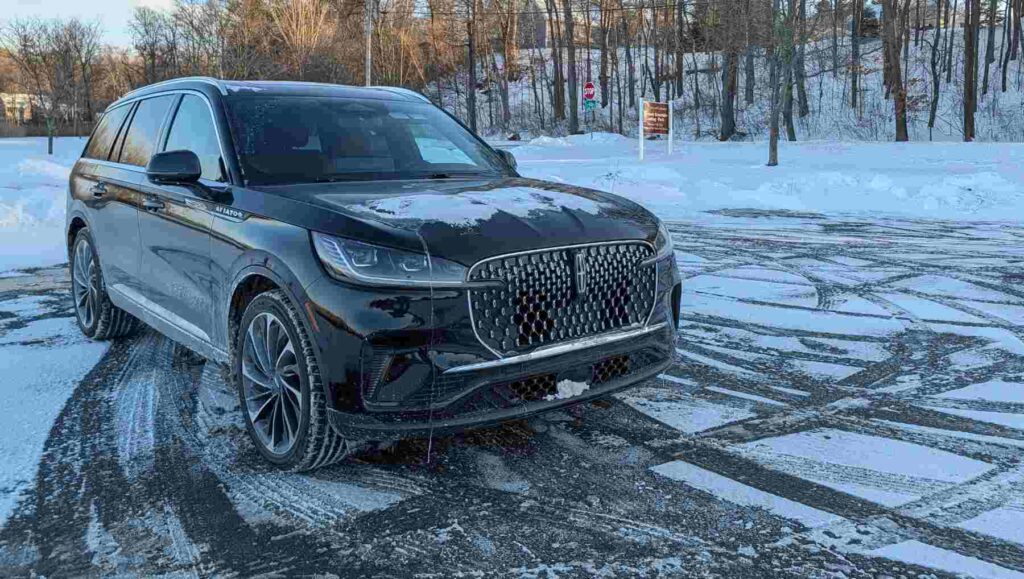
No matter what you’re driving, winter tires are arguably the biggest upgrade you can make to your vehicle in the colder months. The good ones aren’t cheap, and switching your all seasons out for winter wheels is both an expense in itself and a chore. But the benefits more than make up for it. Winter tires are also required by law in some areas.
AAA recommends winter tires when temperatures start to regularly dip below 45°F. But the truth is, you’re likely to get some benefit from winter tires if you live anywhere that encounters all four seasons.
Winter tires are made from a softer compound than all seasons. This means that, while an all season tire will be rock hard and struggling for grip in cold weather, a winter tire is likely to find traction. Even if it’s too cold for the winter tire to get as soft as it would like to be, it’s more likely to get “up to temperature” in colder conditions, and will reach its optimal operating window faster.
Just remember it works both ways. Winter tires are far too soft for warmer climates and the summer months. If you leave them on a little too long, they will wear out very quickly, so save them for a cold spell.
You may be wondering about tire chains, too? They’re designed for deep snow or sheet ice, and your vehicle should be driving at a pretty slow pace when they’re attached. Tire chains are generally prohibited on plowed pavement, as they’ll give you less grip on that surface and will also damage the road. Travelling over 20mph while using tire chains is also prohibited in certain jurisdictions. Most drivers don’t need tire chains, but if you think you do, look into the local laws first.
Practice is important
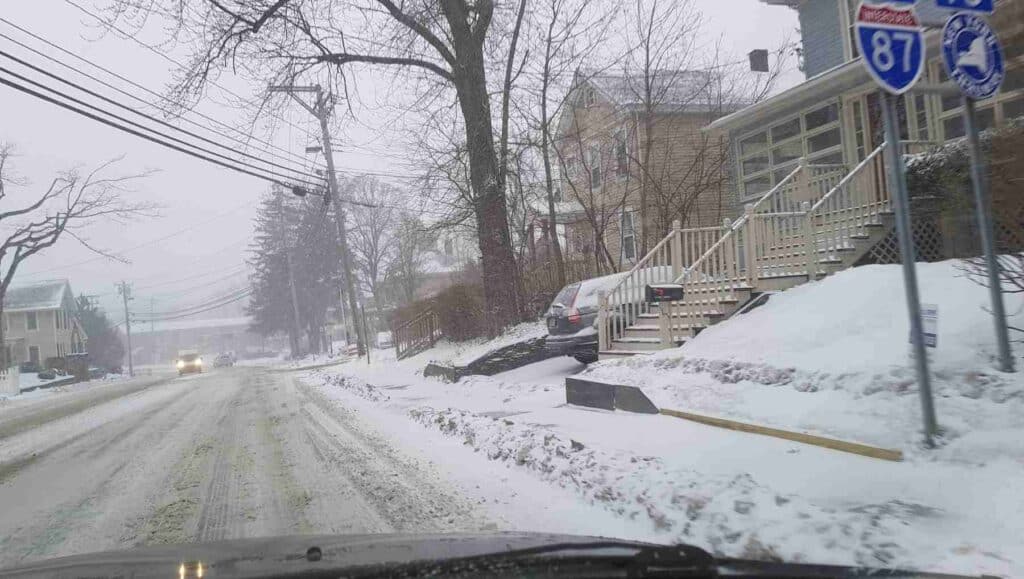
You can read about the best ways to catch a skid all day long. But it won’t make you any good at it. It’s the kind of thing you need to experience and get a feel for before you can actually do it. It’s all muscle memory. And ideally, it’s something you should be able to feel happening and catch by reflex before your passengers even notice your rear was slipping. In Finland, a notoriously icy country of which a good portion is firmly within the arctic circle, learner drivers have to clock a certain amount of time on a skidpad before they get their license for this exact reason.
If you have a safe and legal environment, you can practice controlling a skid; you should definitely do so. It could save your vehicle, or even your life, further down the road. If there are no wide open, snow-covered, privately owned areas you have permission to slide around in, there are a few alternatives.
Some driving schools offer winter driving courses that may include time on a skid pad. Some performance driving schools have similar experiences. I took one of BMW’s performance-driving classes once, which included some time drifting around a skid pad with an instructor beside you. It also featured a segment called the “rat race,” where you’re looping around an oval against another driver. The oval in question is soaking wet, and traction control is not allowed, so your back end tries to slip away every time you even think about touching the throttle. If you can make it through a few rounds of that, you’ll be okay on winter roads.
A “save and practical” option for many people could be a racing simulator. It’s not an exact 1:1 simulation; you won’t “feel” the car shift as you do in real life, but you will mentally make the link between the throttle and the vehicle sliding. It will also help you develop the reflexes and muscle memory required to countersteer and catch the skid. There are people who have learned to drift, which is an extreme example of this skillset, purely through racing simulators, and found that those skills have carried over in a real car. The real thing is the best option, but if that option isn’t available, consider practicing on a good racing rig.