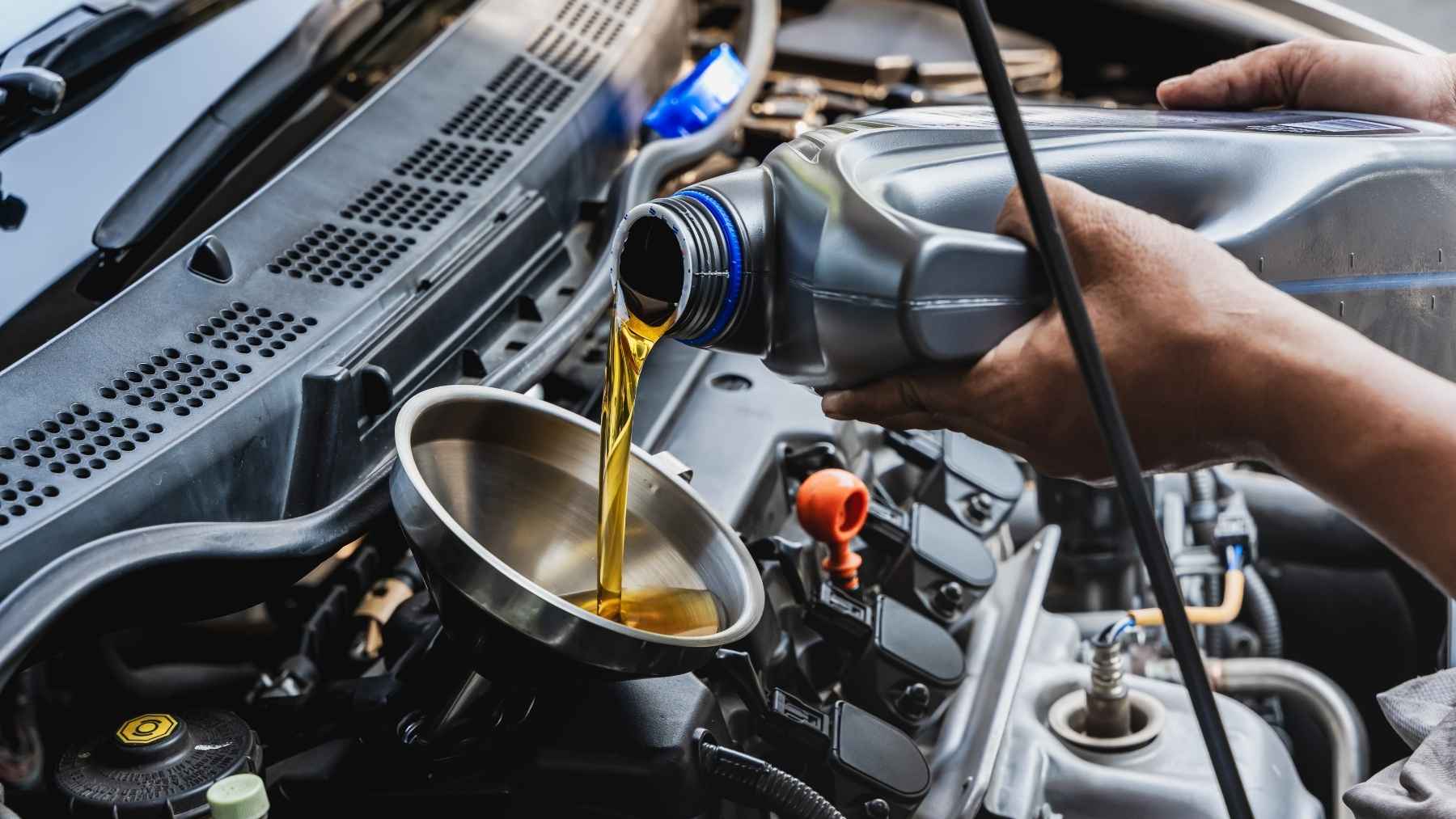

A regular engine oil change is one of the most basic parts of vehicle maintenance. The exact timing varies depending on vehicles but it’s something that should be changed at regular intervals. But do you actually need to shell out for the expensive stuff a few times a year? Or is the shop just trying to upsell you?
I recently chatted with Dr. Michael Warholic, the Senior Global Technology Director at Valvoline, and apparently, the cheaper stuff is just fine. As the chemical engineer explains, there are minimum standards that have to be met before an engine oil can hit the market. And choosing the right oil for your vehicle is an important thing.
He said: “From a qualification perspective, the first thing you want to look for on any container of oil. Whether it’s one quart, five quart, whatever, is the specifications that are indicated on that container.
“Look at what’s in the vehicle’s owner’s manual. It’ll tell you in there exactly what type of oil to use. Is it an API ILSAC G07 oil? Just API SQ, these are oil specifications or templates that go through rigorous protocols for approvals.”



Spotting an approved engine oil shouldn’t be too difficult either. There are small badges and logos that indicate that oil meets certain specifications or standards. The sheer number of these may make things confusing, but if you know what your specific vehicle needs it all gets a lot clearer. For instance, vintage vehicles may need a certain oil, and vehicles from European OEMs may need something special too.
Dr. Warholic explained: “Approved products will have indicators on the packaging that they’re approved. There’s an API donut we call it if you look at the back of Valvoline oils. There’s a donut that tells you that this grade and also tells you that the oil is approved and meets minimum testing standards. The donut is actually trademarked by API, and it’s only there for approved registered oils.
“And on the front, you may see a starburst, we call it, which looks like a star that indicates that it meets ILSAC GF-7 specifications. You may see callouts to OEM performance like Dexos or say if it’s European it may be a BMW LL01 claim or it may be a VW 508, 509. Lots of numbers and letters but you want to look for that call out on the product for whatever performance level it meets that ties back to what the owner’s manual says.”
So, with all commercially available oils requiring testing and approval, you should be fine with a cheaper option. Provided you aren’t at a particularly shifty mechanic’s shop or using something you found in an alleyway. Just look for the correct approval marker, and your engine won’t suffer from using it. With that being said, if you do have a bit of a budget, then better options are out there.
While a cheaper oil is just fine, a more expensive one has its benefits
As anyone who’s been truly broke knows, you can save a fortune living off rice and beans. [Editor’s Note: I prefer instant ramen.] You’ll be miserable, and might be missing out on certain nutrients, but you won’t die. From the sounds of things, engine oil follows a similar logic. There’s stuff that will make your car work and not do it any harm, then there’s more expensive stuff that will make your engine’s life a lot easier.
“The specifications, like I mentioned GF-7 SQL, are all minimum performance requirements. That’s the floor that you’re starting from,” Dr. Warholic said.
“Because we want to do better and exceed those requirements. So, when you look at a full synthetic oil like Restore and Protect. Restore and protect has very unique parameters compared to any other oil out there. The ability to remove deposits, the ability to unstick piston rings, those are unique one of a kind performance parameters that you’re not going to see anywhere else.”
What Dr. Warholic says is true from what I can tell. I did get the opportunity to strip down and look at a couple of engines during a visit to one of Valvoline’s labs, and the engine that had been running Restore and Protect was noticeably cleaner than the “control” engine running on regular oil. Valvoline’s newer oil couldn’t stop carbon building up on the piston heads, but every other bit of the engine’s internals was pretty spotless. The control engine, on the other hand, had a thick coat of “varnish.”
Restore and protect aside, Dr. Warholic went on to outline what a regular premium oil will usually do for your engine. He said:“For a typical full synthetic oil in terms of performance, you’re going to see better thermal stability, so the oil doesn’t degrade, oxidize, and thicken as easily. You’re going to see better wear performance around valve train wear, piston wear, bearing wear.
“You’re also going to find better lubricity, which is the ability to make the engine be as efficient as possible and those metal parts to ride on each other smoothly and with better friction. Better oils have those capabilities within them based on additive changes, base oil changes, or viscosity modifier changes.”
So there we have it. Yes, you can get away with the cheaper option when going for an oil change. There are minimum standards it has to meet, and it won’t ruin your engine. However, you do get what you pay for to an extent and more expensive oils will do a better job. That ranges from lubricating the engine better and making it run more efficiently, to reducing overall wear, to cleaning off some of the buildup that will coat engine internals over time.