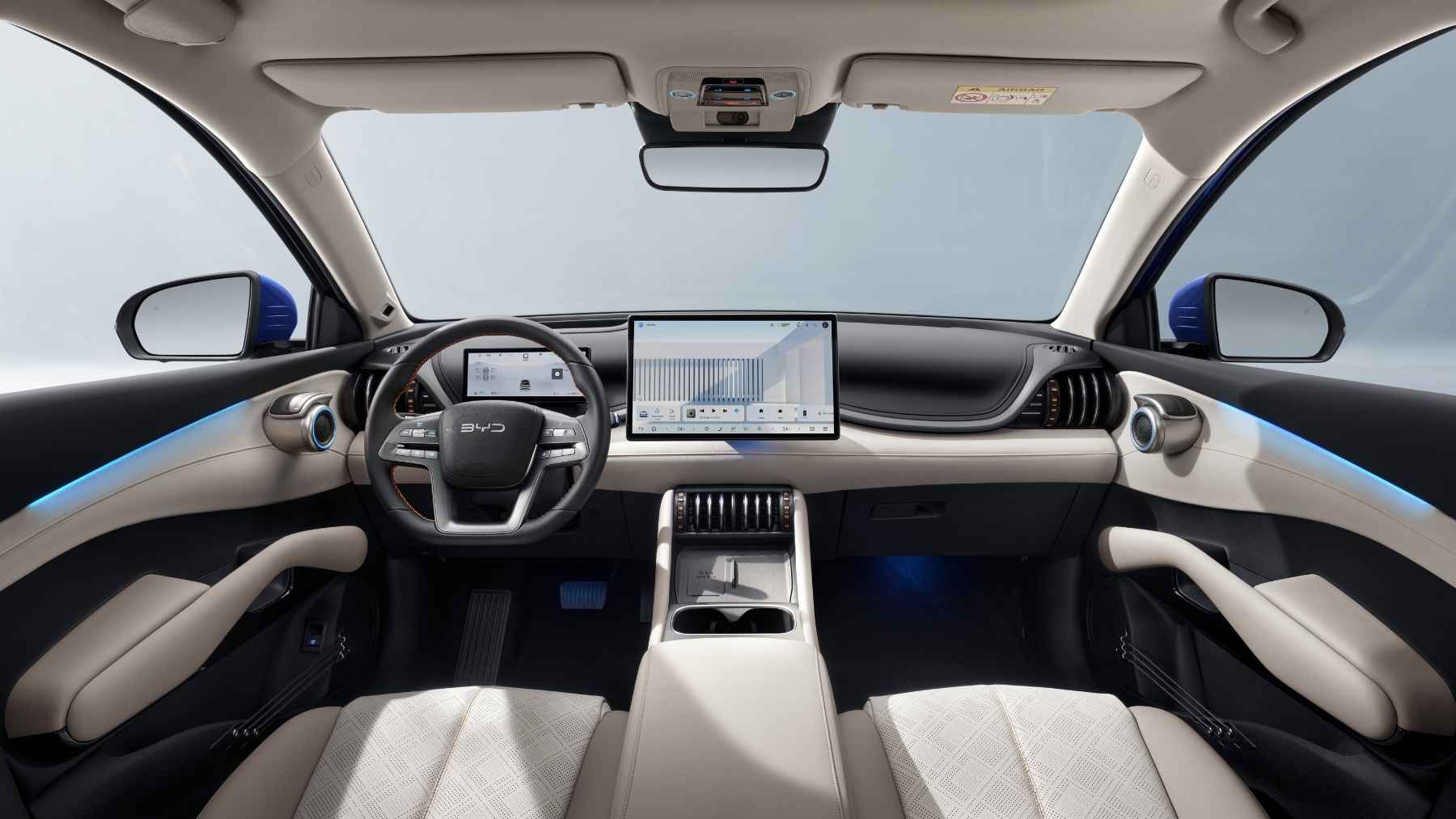

Chinese automaker BYD wants to sell its vehicles in America, and the new Supreme Court ruling could be getting the company one step closer to its goal. Although it’s looking unlikely.
On February 20th, the U.S. Supreme Court ruled that Trump’s ongoing tariffs, including a 15% tariff on imported vehicles, exceeded the president’s authority. Basically, they were illegal to impose. The Trump Administration had placed some of its most extreme tariffs on China and Canada, with a 100% tariff on Chinese vehicles and another 25% on gas-powered vehicles on top of that. It looked like the recent ruling was in BYD’s favor.
At the time, Adrienne Braumiller, founder of Braumiller Law Group PLLC, told Autonocion: “I would say China and Canada both benefit from this and the automotive industry from this specific ruling because a 10% tariff is a lot less than they’re both currently paying.”
This may come as no surprise to anyone, but the tariffs appear to still be in place. Once the Supreme Court ruled against the International Emergency Economic Powers Act (IEEPA) tariffs, the Trump Administration said it would impose similar tariffs under a different authority. The White House released a very vague fact sheet outlining President Donald Trump’s new tariff plan, which appeared to remove the 15% tariff on key vehicles and parts. It didn’t say “all” vehicles, however, leaving some people speculating what it truly entails. It also appears that Chinese vehicles have their own separate tariffs, in addition to the ones the Supreme Court found illegal. The 100% tariff is under “Section 301 Tariff,” and the 25% is filed under “Section 232, National Security.”
It seems like the recent ruling hasn’t really helped BYD’s case at all.
BYD has filed its own lawsuit against United States tariffs, but it’s not looking promising (yet)
BYD filed a lawsuit on January 26th, 2026, with the U.S. Court of International Trade, regarding the tariffs imposed by the Trump Administration in April 2025. It not only claimed that the tariffs were unlawful but is also seeking a refund of the tariffs paid. This isn’t special to BYD — various anti-tariff groups called on the government to issue refunds after the court ruling in February. More than 1,000 companies have decided to sue the government for just that, including Toyota subsidiaries, FedEx, and Costco. But with BYD’s tariffs being part of Section 301 and such, it could be difficult for the carmaker to get any refunds from the IEEPA tariffs ruling.
The plaintiffs in BYD’s lawsuit include BYD America LLC, BYD Coach & BUs LLC, BYD Energy LLC, and BYD Motors LLC — all of which operate in North America. BYD’s operations in the United States focus on commercial vehicles, such as electric buses. It has been operating from Lancaster, California since 2013. The pretty impressive buses have been spotted around California and beyond, logging 13 million emission-free miles back in 2020. However, their passenger vehicles have no launch timeline for the United States. Joked one Reddit user: “Oh, so they can buy a BYD, but I can’t. Weak.”
Right now, BYD’s case is on hold through a “stay order,” which is the current fate of thousands of lawsuits over the illegal tariffs. But if BYD can make any leeway, we could see the carmaker’s vehicles in the United States, predictably from its factory in Brazil. These would enter the United States with a tariff below 15% rather than 100%.
While the Trump Administration is scrambling to keep its massive tariffs in place, the American public has shown growing interest in Chinese EVs. Promising low prices, plenty of tech innovations, and an impressive range, Chinese automakers have seen massive growth around the globe despite the United States’ decision to bar them from entry. BYD’s Seal U has become the best-selling plug-in hybrid in Europe, and we predict it could also head to Canada now that it’s allowing limited imports per year. Meanwhile, Americans have been struggling to afford EVs as automakers continue to cast aside compact cars in favor of luxury offerings, which end up sitting in lots. With new car prices inching over $50,000, Americans are increasingly eyeing China’s cheap alternatives.
Noted one Reddit user: “BYD is outselling Tesla in Europe. If they gain access in America, then it’s over for Tesla.”
I’m sure that’s extra fuel to the Trump Administration’s fire when it comes to barring Chinese EVs. Already struggling with lawsuits, Full Self-Driving investigations, and a wonky robotaxi service, the arrival of heavy hitters like BYD would probably not give Americans much confidence in Tesla’s questionable practices, given how other countries have been living (and for less). We may be stuck with Ford’s upcoming EV line instead.