
When is a Ferrari not a Ferrari? When you slap a Fiat badge on the front of it, obviously. The Fiat Dino is one of the most interesting vehicles in automotive history and deserves a lot of respect, even if it won’t get it from the patriarch of the family.
The “Dino” smaller-displacement (non-V12) engine was named after the late son of Enzo Ferrari, which makes sense, as the vehicle it eventually sat in became a “son” of Ferrari’s main brand. It was originally a racing car, competing across many formats from the 1950s onwards. However, in the 1960s, Ferrari encountered a bit of a problem.
The rules for the 1967 Formula 2 racing season changed, and new homologation rules required competitors to produce 500 engines of the intended type within a 12-month period. Being very quality-focused rather than quantity-focused, Ferrari’s production capacity was even more limited back then than it is now. So the Prancing Horse decided to add a dash of Fix It Again, Tony, and reached out to their neighbors at Fiat.
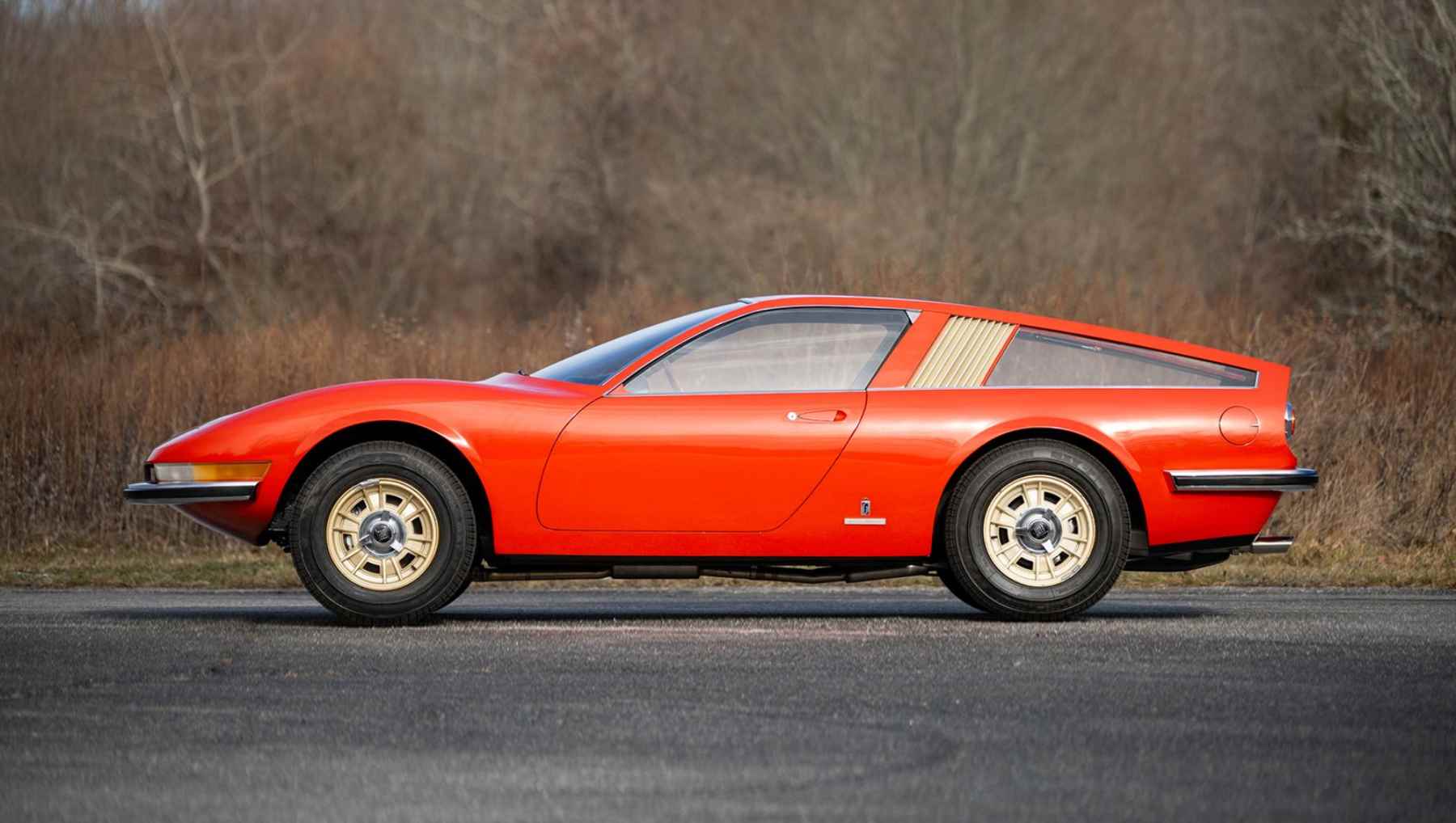
What came out of this was the Fiat Dino. Ferrari built the racing V6s it needed, while Fiat took Ferrari’s engine design and popped it into their front-engine Dino Spider and Coupe models that hit the road in the mid-1960s. The Ferrari-Fiat overlap arguably peaked with the 1968 Fiat Dino Berlinetta Speciale. A concept car coachbuilt by Pininfarina (who did the majority of Ferrari’s styling between 1951 and 2017). The design for the Dino Berlinetta Speciale would go on to inspire the 1970 Ferrari Modulo concept.
Ferrari would also back the “Dino” quite a bit, building over 3,700 V6 Dinos (both 2.0 and 2.4 liter variants) itself (which was exceptionally high volume for a boutique manufacturer in this era) with Fiat shifting its production to Maranello and working alongside its partner. Ferrari saw the Dino as a perfect rival for the popular Porsche 911, and went on to produce a V8 variant in the 1970s, though they couldn’t wrestle production of the V6s back from Fiat.
Despite its success, its DNA, and how closely it resembled its “father” externally, the Dino is not seen as a proper Ferrari. Not by collectors, and certainly not by the company itself.
Ferrari didn’t actually badge its own Dinos either
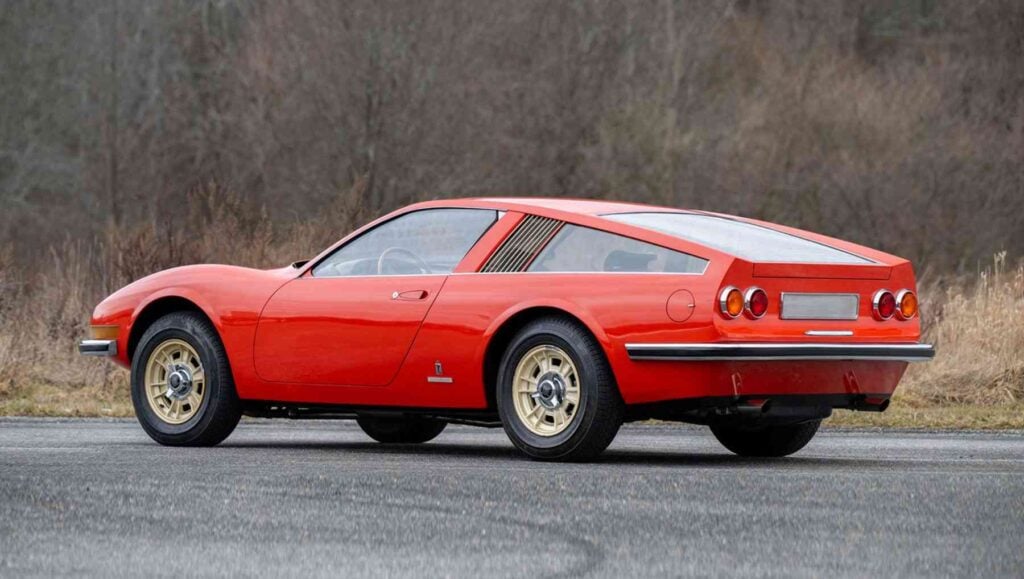
Although you can search for, find, and actually buy a Ferrari Dino, built by Ferrari, in Ferrari’s Maranello factory, it isn’t officially a Ferrari either. The “Dino” marque was devised to stop people confusing the V6-powered car with the full fat V12 vehicles the brand is actually known for. Old Enzo and co. didn’t want to tarnish the Ferrari marque with a piddly V6. Ironically enough, while that V6 was Ferrari-designed, every Dino engine was built by Fiat. So rather than the Dino being a Fiat with a Ferrari engine, popping a prancing horse on a Ferrari-built Dino would have led to a situation where there is a Ferrari driving around with a Fiat engine in it.
So that’s why you won’t see the Ferrari name, or a prancing horse, authentically placed on the 206GT or the 246GT. Nor will you spot one on the nose, wheels, steering wheel, or anywhere else on the vehicle. You’ll just see the word “Dino” in fancy lettering.
If you do spot a Dino with a Ferrari badge, a previous owner has slapped it on there to inflate the value. You’re then free to call him out, as gleefully as a watch collector would call out someone trying to pass a Tudor off as a Rolex.
Yes, it’s a Ferrari when you think about it, you get a Ferrari-designed engine, a Pinanfarina coachbuilt body, and a name from the Ferrari family on it. But proper Ferrari collectors (and the company itself) will see you as a massive fraud. And broke. Even though the highly collectable vehicle is worth over half a million dollars and has gained a lot of value over its lifetime. Unlike plenty of other supercars, including a few Ferraris that did get their badge.