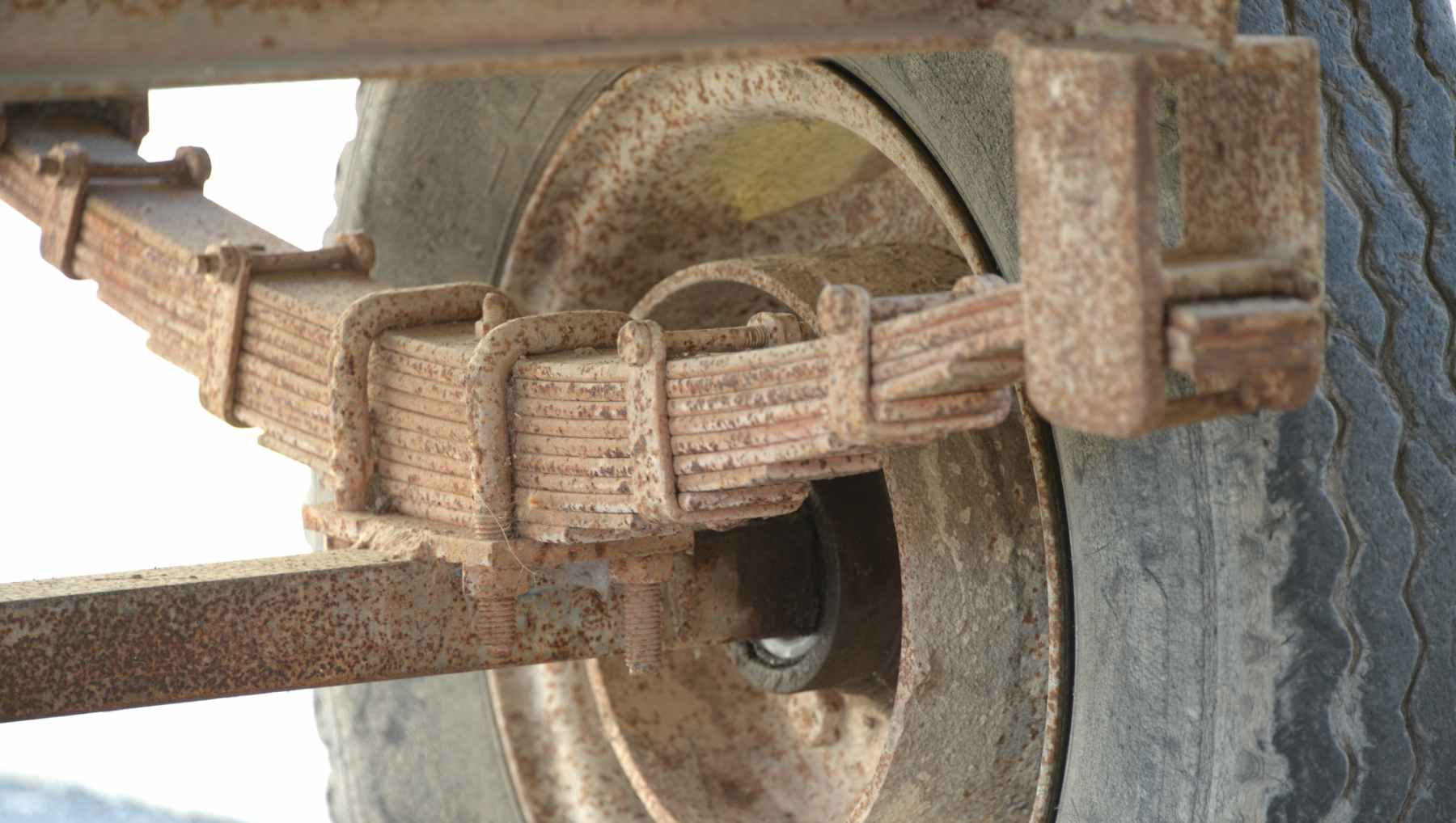

Leaf spring suspension has been around for a very long time, and was used on everything from little wooden carts Roman merchants were delivering jugs of wine with to the Ford F-150s that were delivered last week. But there’s a reason this ancient suspension system has been ditched on any vehicle where performance matters.
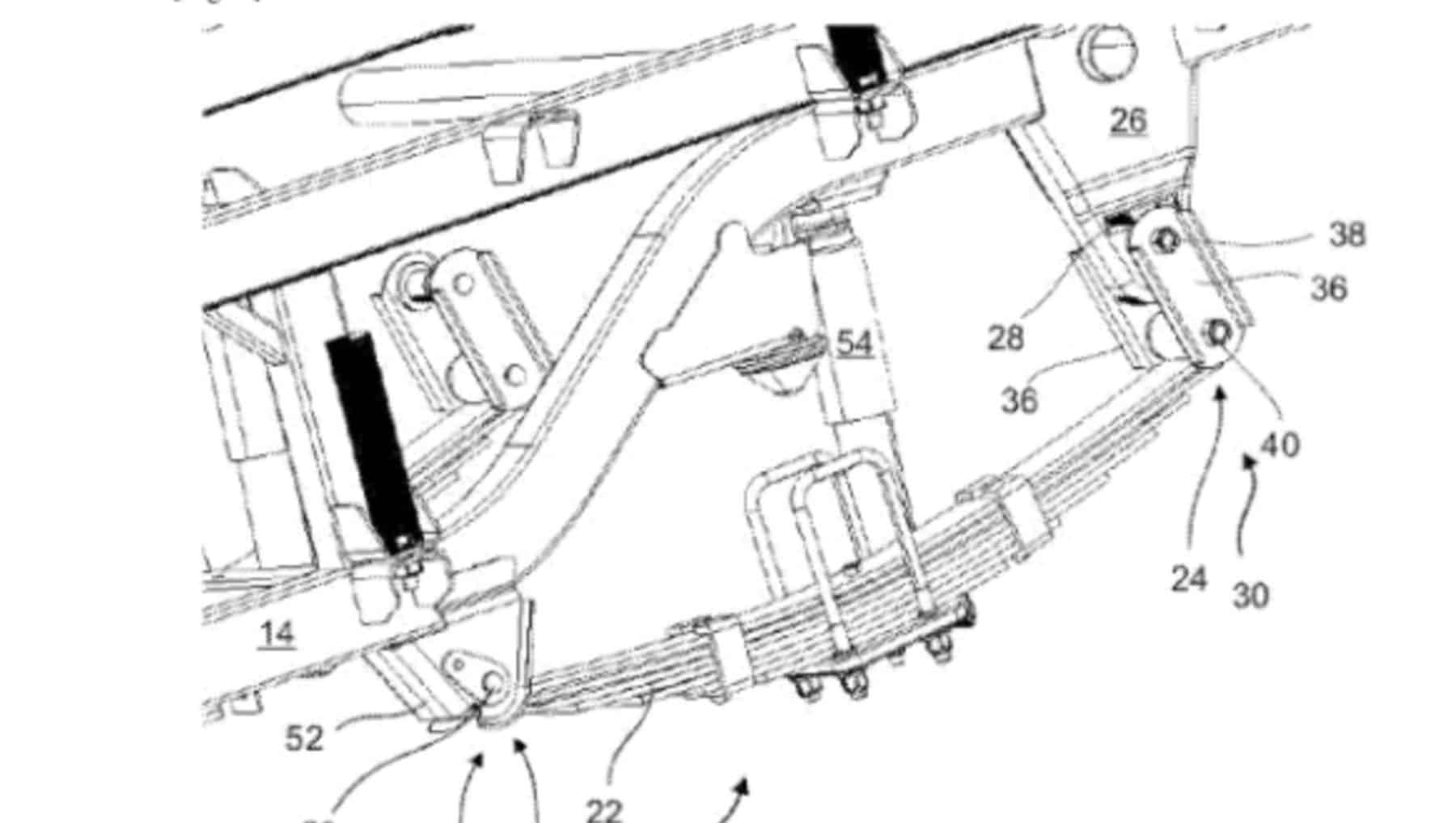
According to CarBuzz, Stellantis’ European branch has just patented a new take on the millennia-old tech, which aims to smooth out a few of the traditional flaws. It achieves this via the use of a “variable travel shackle,” which gives the spring-pivot bolt some playroom, and the addition of smaller, additional leaf springs at the top of the shackle. This all adds an amount of additional travel, between 2 and 30 millimeters (5/64 of an inch to 1 3/16 of an inch), according to Stellantis’ patent.
The reworked two-stage system is fixed for the most part, but is designed to kick in under heavy load. This should make vehicles fitted with the springs less “stiff” than traditionally leaf sprung vehicles. So you hopefully won’t rearrange your spine every time your back wheel hits a pothole.
Stellantis hopes that the design may revive the leaf spring as a concept, and reintroduce it into smaller passenger vehicles. Freeing up room taken up modern suspension systems might mean sedans and crossovers have more cargo space, or provide a spot for a bit of extra battery in some smaller EVs.



While this does, on paper, mitigate one of the leaf springs’ biggest issues, others do remain. It is just a patent at the moment, and there’s no suggestion that this will appear in any of Stellantis’ upcoming vehicles. It may also be limited to things like pickup trucks and vans, as leaf springs tend to be in the modern era.
But slapping leaf springs on a modern vehicle might still be an absolutely awful idea, as anyone who has driven a classic muscle car will attest to.
Why leaf springs are terrible, and Stellantis is unlikely to fix that
Former Top Gear presenter Jeremy Clarkson once described leaf springs as being “good for prams, but not much else.” That may be a bit of an extreme take, as mentioned they’re also perfectly fine in the back end of a pickup truck, or in an ancient plonk cart.
While the extra travel does solve a few of the bigger aforementioned problems, it doesn’t do anything for the biggest issue with leaf springs. It’s a bunch of metal slabs, which is always going to be pretty heavy. That creates an issue with “unsprung weight,” which is something good vehicles always try to minimize.
In vehicle terms, “sprung weight” refers to everything that is supported by the vehicle’s suspension while “unsprung weight” refers to everything below the suspension system. The suspension itself, your springs and shock absorbers, is “semi-sprung” or partially sprung” meaning some of it counts as sprung weight and keeping it light too is generally a good idea.
A good suspension system is designed to maximize the “sprung to unsprung mass ratio.” A poor sprung to unsprung mass ratio will also reduce the effectiveness of the whole suspension system.
The big problem with unsprung weight is centered on inertia. When a vehicle hits a bump, the suspension system has to take that impact, and force the wheel hitting the bump back down. If the wheel, suspension components, and everything else weigh more, then the suspension has more weight to fight. Heavier wheels and suspension systems cause a delay in that wheel being forced back down. Which means tire contact and grip are greatly reduced in heavy leaf-spring suspension systems.
Ride comfort also suffers greatly for a similar reason. That heavy mass being forced upwards might be more than the springs, and other suspension components like shock absorbers, can handle. The result of that excess kinetic energy is a jarring, jittery, ride.
This might be something the extra travel time built into Stellantis’ patented suspension works against, but again the extra weight is likely to overpower that. Conversely, a low unsprung weight has the opposite effect, allowing a vehicle’s chassis to almost be completely isolated from the road surface.
Stellantis may have ruined the best thing about leaf springs
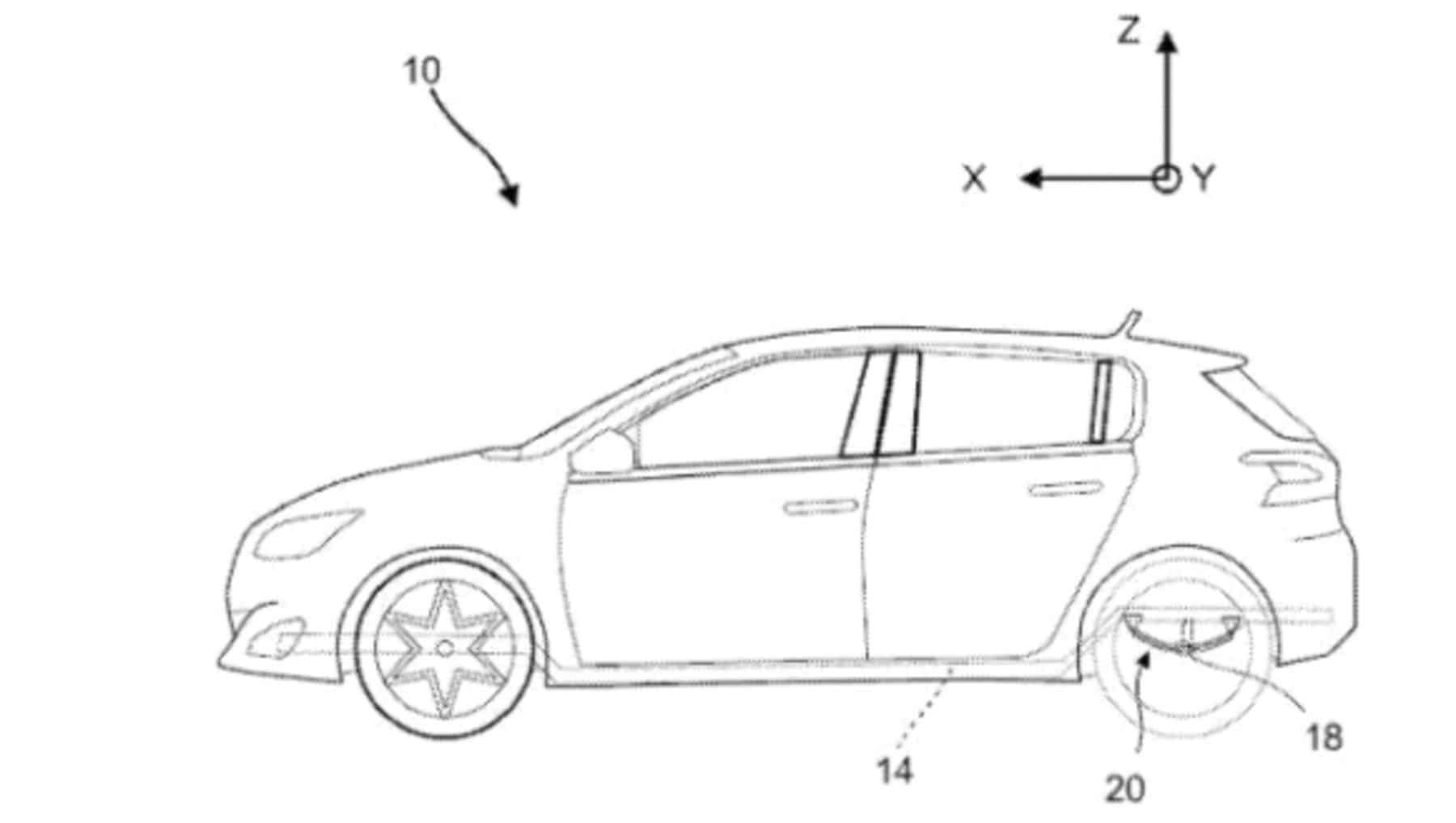
The battle against friction is where the built in travel on Stellantis’ spring design may come in handy. With a traditional leaf spring, you aren’t just fighting against inertia. A leaf spring is essentially a load of thin steel bars strapped together, and each of those bars has a lot of surface area. The surface area of those bars rubs together every time the spring is compressed, which makes them a little more rigid than you would like.
Suspension is supposed to give, that’s the whole point. Stellantis’ extra travel room might just spread the impact enough to mitigate and overcome that friction, leading to a smoother ride.
Oddly enough, Stellantis’ design may also wipe out the one major plus point about leaf springs. The suspension system is incredibly durable, as it’s basically a bunch of metal bars loosely held together by some bands and/or rivets. There’s very little to “go wrong” there. Stellantis’ system includes various pivoting joints that can degrade, gum up, or break. That added complexity will undoubtedly jack up the price too.
So there we have it. Stellantis’s improved suspension is still likely to have less control and comfort than the systems you’ll find in modern vehicles, while also being less durable and more expensive than regular leaf springs. It’s the worst of all possible worlds. But it is a patent, and Stellantis loves a u-turn (which leaf springs are also awful for), so hopefully this one stays in the filing cabinet.