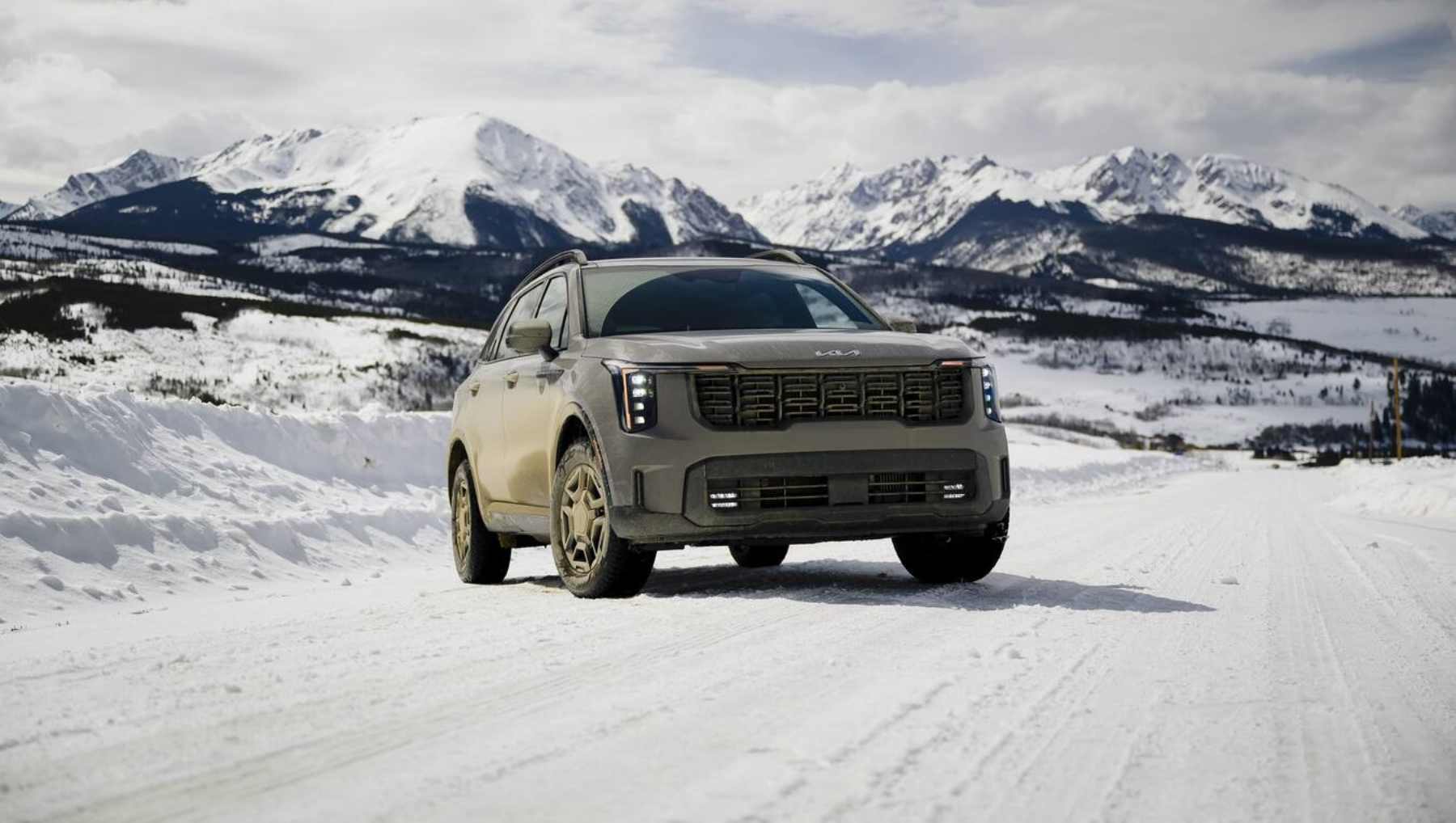

If you’re talking about a Kia these days, the chances are you’re looking at the Telluride. The three-row SUV has undergone a renaissance over the past few years, offering astonishing value for money. However, the Telluride’s upcoming 2027 model has thrown a few things up in the air.
Despite two new powertrains, Kia’s largest SUV isn’t really offering anything different to its predecessor in terms of fuel economy, and has dropped around 17 horsepower. The price has also increased, with the base model starting at over $40,000 now when destination is factored in. That’s more expensive than the mid-sized Kia Sorento’s EX trim, and makes the smaller vehicle increasingly look like the best pick of the whole Kia range.
The new hybrid Telluride does offer better economy, but takes a hit on towing capacity and is somehow more expensive than a Hyundai Palisade now.
The Sorento’s EX trim nets you the more powerful 281-hp 2.5L turbocharged engine, an 8-speed wet dual-clutch transmission, and all-wheel drive. You also get Kia’s smart power liftgate, level 2 self driving system, and second-row captain’s chairs along with a whole bunch of cosmetic and comfort features.




It’s not the top trim, but it’s a notable step up from the base model and second-tier S trim. Trims on the Telluride basically work the same way, as it’s the same company.
A Kia Sorento EX has an MSRP of $39,985, and you may even snag one cheaper than that with the 2027 due to be announced in the next few months. A far better trim on a similarly specced vehicle made by the same company seems like a bit of a no brainer right? Well, there is one pretty obvious trade off. But it isn’t as big a deal as it looks on paper.
Does size really matter when it comes to Kia?
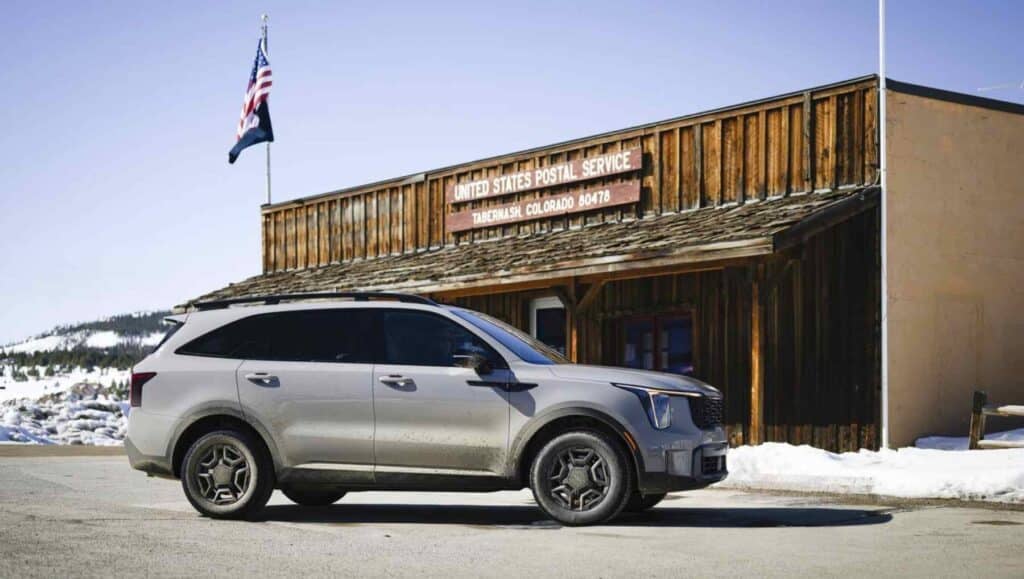
The biggest trade off you’re making by opting for a Sorento over its big brother the Telluride comes in the form of interior space. They’re both three-row SUVs, but the Telluride is the larger option.
Kia’s Telluride is just under 10 inches longer, which translates to 22.3 cubic feet behind the third row, compared to the Sorento’s paltry 12.6. With the third row down, things do get a little tighter. The Telluride’s 48.7 cubic feet of space pulling just ahead of the 45 offered by the Sorento. However, with all seats down the gap widens again, with the Telluride offering 89.3 cubic feet of space and the Sorento only managing 75.5.
When it comes to legroom, only the third row really suffers. But suffering seems pretty common in third rows anyway. Front room legroom is identical on both models, with the Telluride offering slightly more in the second row (43 inches vs 41.7). The third tow sees a bigger gap, with the Telluride offering 2.5 inches of extra leg room vs the Sorento.
But think about things logically. How often do you use the third row? Because I don’t know many people who have all three rows packed out regularly, and the ones that do usually have children who don’t need that leg room anyway in the back. With those back seats down, the size difference between the few vehicles becomes pretty negligible. As for the difference in cargo space with everything behind the driver’s seat down, ask yourself this. How many times a year do you actually need to drop the second row?
Personally, I think I’d get more use out of the extra level of comfort the EX trim offers compared to the need for a third row or either vehicle’s maximized cargo space. Which means I’d save myself a little money, and opt for a Sorento with an EX trim.