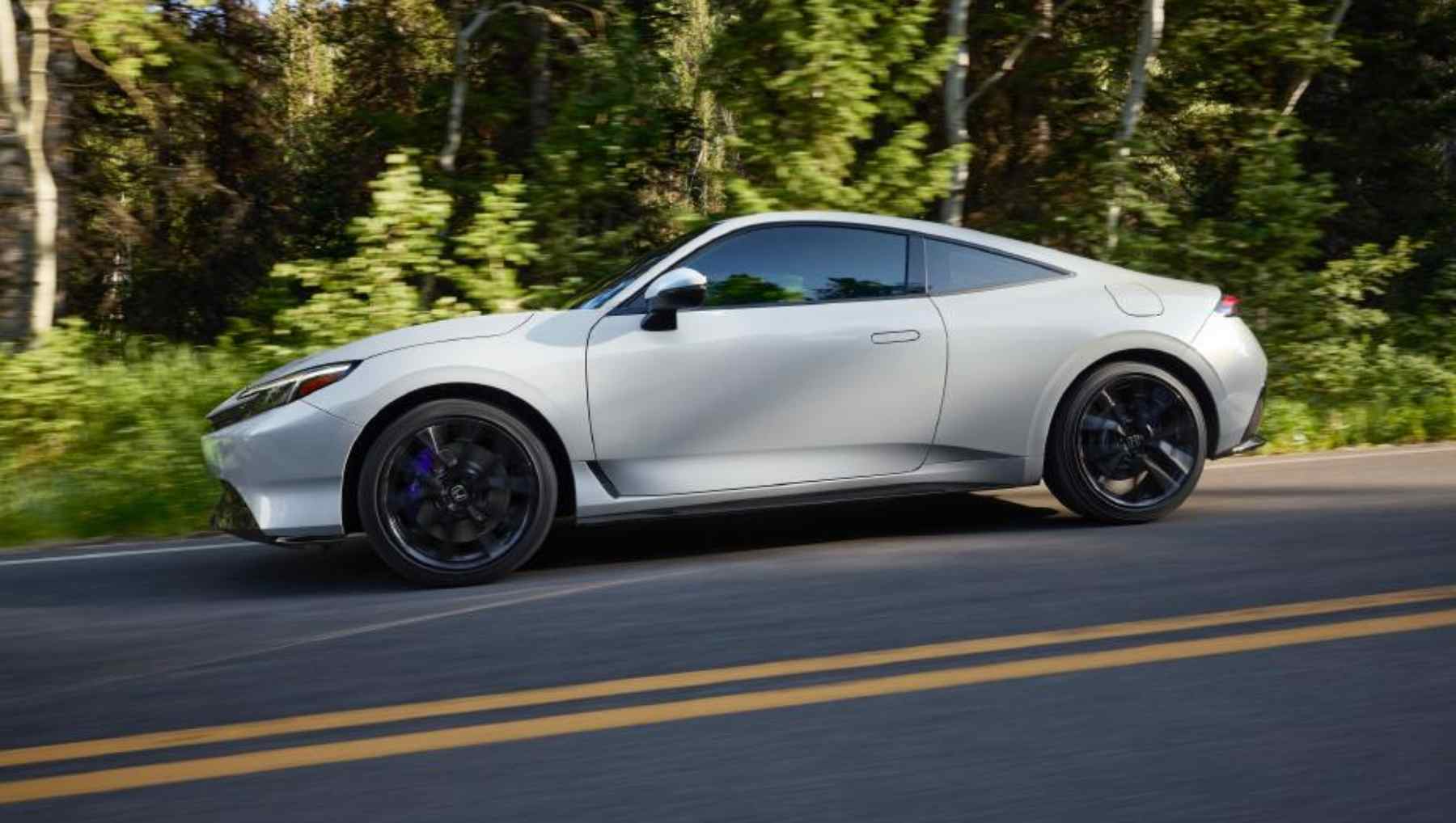

Honda has brought back the Prelude after discontinuing it in the United States around 25 years ago. The vehicle had previously served as a launchpad for Honda’s tech, and offered a smaller, sportier, more premium option to those who didn’t want a Civic or Accord. Much of that ethos was revived with the new Prelude, but the 2026 model may have a few specs that put some people off.
The new Prelude is a modern-looking vehicle, with a high-quality interior and a surprising amount of cargo space for a vehicle of its size. The little hatchback can hold over 15 cubic feet of stuff if you fold the borderline useless rear seats down.
On the downside, the Prelude’s four cylinder engine only provides 200 horsepower and 232 lb-ft of torque. It isn’t 2002 anymore; 200 horsepower is pretty paltry by modern standards. This is reflected in the Prelude’s straight line speed, which goes from 0-60 in around 7.2 seconds.
Then there are things like the lack of all-wheel drive and the 2+2 layout, making those back seats essentially useless for transporting anything beyond a small child, a backpack, or a man with no legs. So has Honda made a big mistake? Or is there a silver lining with the Prelude?
At $43,195, the vehicle is far from cheap. It’s also in a rough price band. But it is around $2,000 cheaper than another Honda that it otherwise has has a lot in common with.
The Honda Prelude is a cheaper alternative to the Type R
The Honda Civic Type R is a superb vehicle. It’s a visceral, pacey, hatchback with very aggressive styling that normal people can sort of afford. It’s essentially a cheaper, almost identical, version of the Acura Integra Type S. But with worse damping and a greater sense of existential dread when you get your foot down.
However, if the Acura is slightly out of your price range, then the Prelude is a possibility. Just as the cheaper Porsche Boxster snatched a bunch of parts from the Porsche 996, the Prelude helps itself to an array of Honda Civic Type R components.
Pretty much the entire front suspension system is shared between the two vehicles. So you’ll get the dual-axis front strut found in the Type R, which should help in the struggle against torque steer. You also get those adaptive dampers that aren’t quite as good as the ones in the Integra Type S. You also get the same Brembo four-piston fixed front brake calipers, 13.8-inch front rotors, and 12-inch rotors tasked with stopping the top tier civic.
Beyond that, both vehicles have a similar stance and heavy steering rack designed for on-track handling. So the steering response and vehicle feel should be oddly identical when you’re pushing it.
Of course, there are also notable differences. You don’t get the same 315 horsepower and 310 lb-ft of torque in the Prelude that you’ll find in the civic. The manual shifter is gone too, replacing the traditional gearbox with a direct-drive hybrid system that simulates shifts in certain circumstances. The Prelude is also over 80 pounds heavier.
This reflects in the performance side of things. The Honda Prelude’s 0-60 time of 7.2 seconds is 1.7 seconds slower than the Civic Type R’s. Though the newly revived label is far more efficient, offering 20 more MPG than its performance-focused cousin. And the slightly tamer performance will mitigate that “I’m about to die” feeling you tend to get when you’re absolutely ripping it in a Civic Type R.
So is it an easy buy? Not exactly… If you’re the performance-focused type, you’re paying the extra and getting a Type-R. But if you want something a little more practical as a daily driver, while still getting that occasional burst of adrenaline, the Prelude is worth a look. And who cares about 0-60 times anyway?