With particularly harsh winter storms battering the United States, EV enthusiasts may be wondering if they’ve picked the right vehicle for the situation. Well, the good news is that electric vehicles can perform well in extreme winter conditions. But some perform better than others.
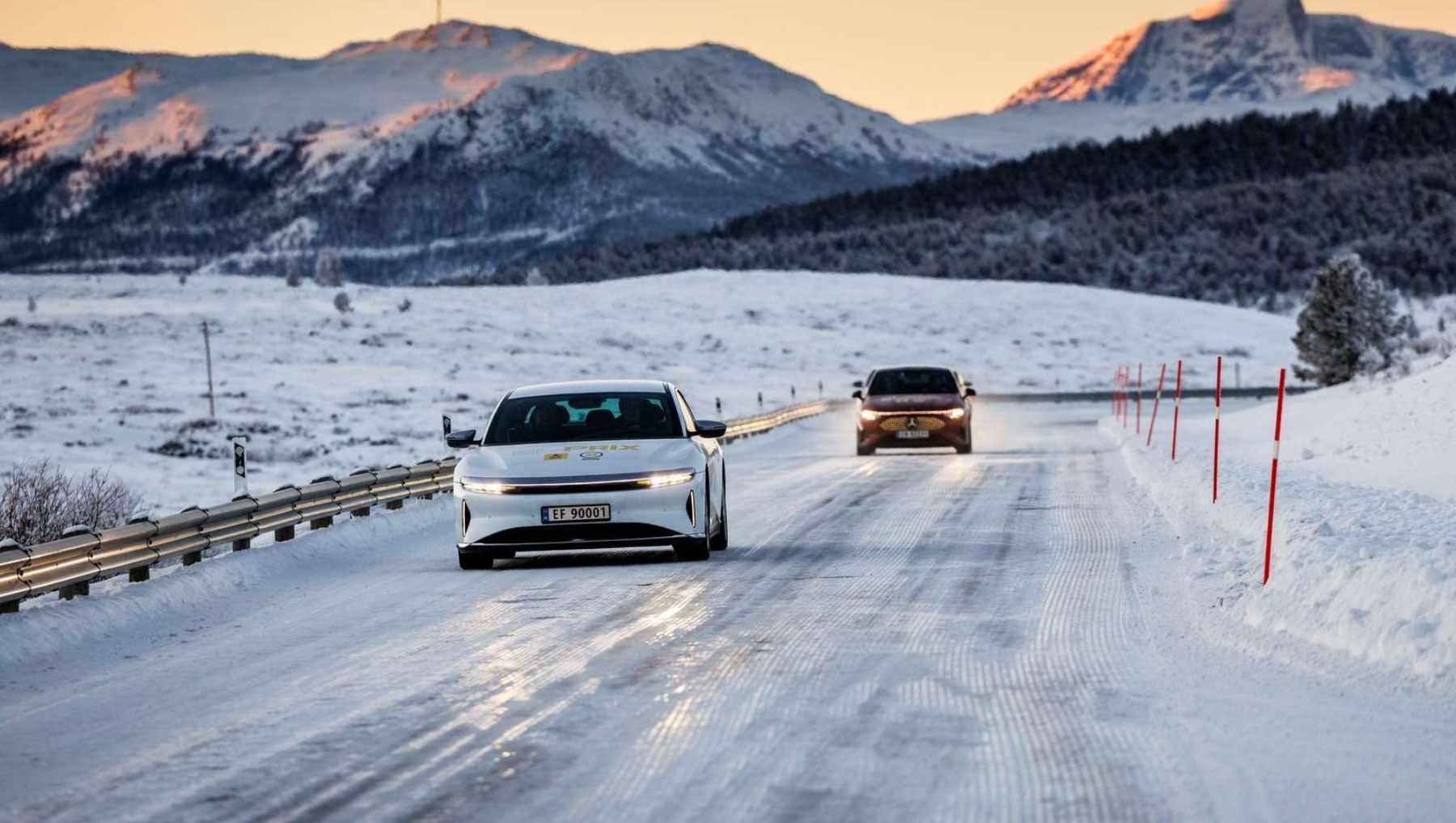
The “Norges Automobile-Forbund,” an FiA-affiliated Norwegian car club, has performed its annual winter “El Prix” testing session, with a huge range of EVs driven through temperatures as low as -31°C (-24°F). Apparently, it’s the largest electric car test on earth.
While the test was conducted in Norway, vast swathes of the United States experience similar temperatures. So what can you expect from an EV once a bad cold snap hits?
You may worry that comfort and reliability will be the first things to suffer. But the vehicles performed pretty well on both metrics, with few technical issues reported. I know from personal experience that BEVs tend to be better than ICE vehicles on the winter-comfort side of things, too. You don’t have to wait for the engine to reach temperature before the heat starts working, which is a major plus when the mercury plummets. Of all the vehicles tested, the Hyundai Ioniq 9 received special mention for ride comfort.
The two main things the test focused on are range and charging speed. The results of those tests varied significantly.
Winter conditions affect range, but some BEVs handle it better than others
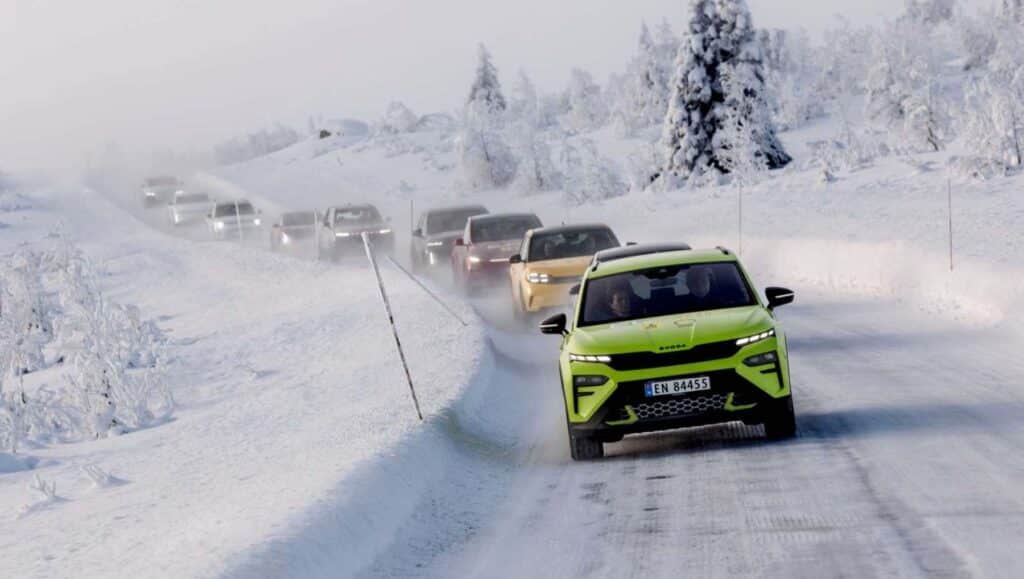
The biggest impact of the frigid temperatures was on the vehicles’ range. This isn’t a surprise; the battery needs to use a good amount of power to keep itself above a certain temperature to avoid damage. Keeping the cabin’s occupants comfortable will also use up power that would have otherwise added range to the vehicles. In addition to all of that, colder batteries don’t work as well. So even if it isn’t heating itself, or if it doesn’t heat itself to an optimal point with performance in mind, the battery’s range will still suffer.
As for how much each vehicle’s batteries were impacted by the cold, that varied. The Hyundai Inster and MG S6 EV were the clear winners here, with both losing less than 30% of their total advertised range. At the other end of the scale, with the worst range in the extreme weather, were two of the most premium EVs currently on the market. The Lucid Air lost 54% of its stated maximum range due to the cold, and the Volvo EX90 fared even worse. Despite being built in a traditionally cold country, the Swedish SUV lost 55% of its stated maximum range.
There was a bit of a twist when it came to the total range the vehicles had available in extreme winter conditions. The Lucid, despite ranking second-worst in terms of percentage of charge lost, still had the most range. It can still travel 273 miles in extreme cold, which is better than many EVs manage in ideal conditions. The Hyundai Inster, while retaining more of its stated range than anyone, had the lowest total range in the test with just 159 miles available. The Tesla Model Y was also tested in the El Prix, placing in the middle of the pack. It had around 57% of its total stated range, or around 223 miles, available.
So what does this tell us? The fact that the budget models with smaller batteries lost a lower percentage of their total range suggests that larger battery packs suffer more in winter conditions. However, as Lucid proves, you can simply brute force your way through this one. Forty-six percent of a huge battery pack will still massively outperform 71% of a tiny one.
American EV enthusiasts may also be pleased by this news. While the US misses out on both the Hyundai Inster and MG S6 EV, the overall “winner” in terms of total distance remaining is available for purchase in the states. Hyundai may also be tempted to bring a variant of the Ioniq over to the US, particularly if demand for cheaper EVs on the American market keeps up.
In terms of charging, all the EVs performed well during charging from 10% to 80%. While colder batteries will charge more slowly, pre-conditioning the vehicle’s battery mitigated any charging performance losses in most cases. The Changan Deepal S05 stood out here, with a charging time of 23 minutes.
How were the vehicles tested?

The purpose of these tests is to see how vehicles perform in real-world conditions. With the logic being, you can do what you want in a lab, but you’ll never be able to mimic what vehicles actually go through in everyday life (or in the Arctic Circle, I suppose). The route was designed to mimic a “typical Norwegian cabin trip” and featured multiple elevation changes.
All of the vehicles were stored in a garage overnight, with the garage heated at 37°F to 39°F. Drivers were instructed to keep the cabin temperatures at around 70°F for the duration of the test. Winter tires were used (though the particular brands were selected by manufacturers), and the vehicles were driven “until acceleration is noticeably limited” due to battery charge depletion.
In the charging test, 350 kW and 400 kW chargers were used, along with any available battery preconditioning features on the vehicles. Vehicles were parked outdoors overnight at -13°F prior to the charging test.