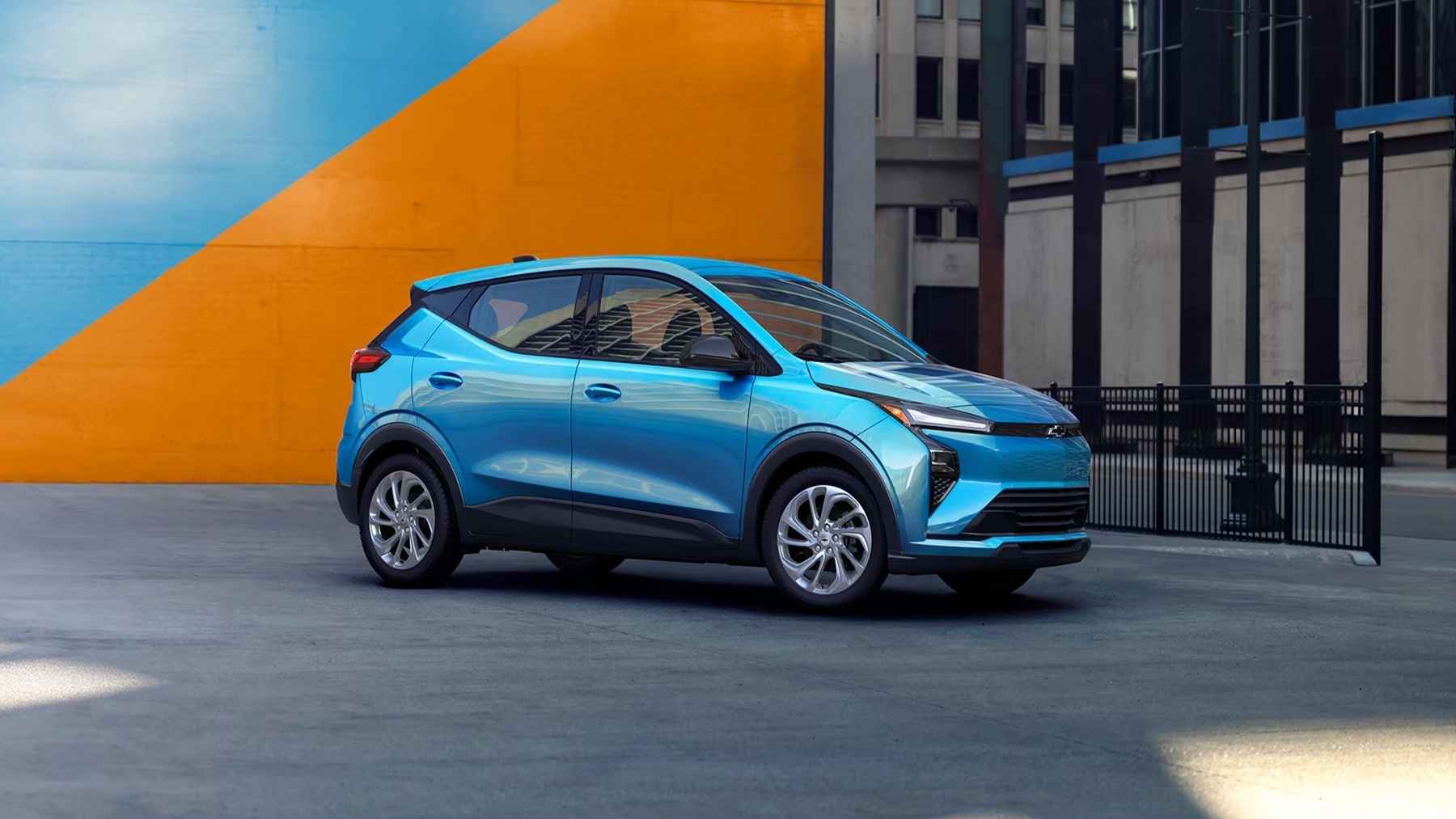

Nobody is talking about the Chevy Bolt enough for my liking.
If you’ve ever read my stuff, you’d know I love championing models that get overlooked. That could be due to my history as an emo kid who always valued indie bands over mainstream ones. But it’s also because I truly believe in these vehicles — and I won’t gatekeep them as I did back in the day when you could hide music on your MySpace page. Back then, you wouldn’t dare ask me what that song playing on my profile was.
Anyhoo, the Chevy Bolt is back and I feel nobody is excited enough. This affordable, small EV originally came out in 2017 and everyone loved it. Its small size made it perfect for city living, it had great range for commuting, and it was cheap. Even though it was winning all kinds of awards and having great sales, General Motors discontinued the Bolt in 2023 due to its aging EV platform.
The Chevy Bolt has returned when America needed it most — yet I am not hearing people talk about it, especially as Americans keep talking about the Chevy Equinox discounts (which often still leave it more expensive than the Bolt).



Chevy Bolt’s small price doesn’t mean you’re missing out on anything
The 2027 Chevy Bolt arrived in January 2026 as the cheapest EV available in 2026. As vehicles become more and more expensive, I have no clue why this didn’t get more attention. America has been yapping about Ford’s upcoming $40,000 EV lineup as “American innovation,” but the Bolt is way closer to competing with Chinese EVs than Ford will ever be.
Right now, the entry level LT trim is $28,995, which is right in the $30,000 sweet spot that automakers keep attempting to reach to compete with cheap EVs from China. This is even cheaper than the 2026 Nissan Leaf, which is $31,539. Another “cheap” EV is the Toyota bZ at $36,350 (and more for the quasi-off-roading Woodland variant), but you can see that the prices are just getting further and further away from the Bolt.
Despite its relatively cheap price point, the Chevy Bolt doesn’t make drivers looking for a small EV sacrifice a whole lot. Its range is 262 miles, which is right up there with other EVs that are under $40,000 thanks to its compact size. The base 2025 Hyundai Kona Electric gets 200 miles, the base Toyota bZ gets 236 miles, and the base Nissan Leaf gets 252 miles — the Bolt beats them while costing far less.
In the past, the Chevy Bolt fell short when it came to charging. However, the 2027 model has gone rom 55 KW to 150 kW, meaning you can go from 10% to 80% in 30 minutes. This is basically on par with the majority of EVs. The Lucid Air Sapphire, at $72,400, is one of the fastest charging EVs ever, which reaches 80% in 15 to 27 minutes. Even better, the Chevy Bolt can now charge at Tesla Supercharger locations without an adapter, meaning it’s even more convenient.
For under $30,000, the Chevy Bolt is the perfect little EV for city driving and commuting. It has an 11.3-inch infotainment touchscreen, an 11-inch digital driver cluster, safety and AI features, pretty good cargo space, and even a sunroof if you pay a bit more for the RS trims. As oversized, bloated EV SUVs continue to dominate the roads, it’s refreshing to have a fun, capable EV that fills the void that America hasn’t really filled since the subcompact cars left us, although we wish it was as small as the original Bolt.
Still, it’s worthy of more attention than it’s getting.
Technical Specs
| Engine Displacement | 65-kWh Lithium Iron Phosphate (LFP) battery |
|---|---|
| Power (hp) | 210 |
| Torque (lb-ft) | 169 |
| 0–62 mph | 7 seconds |
| Top Speed | 93 mph |
| Curb Weight | 3,776 pounds |
|---|---|
| Cargo Capacity (cu ft) | 16.2 |
| EV Range (miles) | 262 miles |
|---|
| Starting MSRP | $28,995 |
|---|