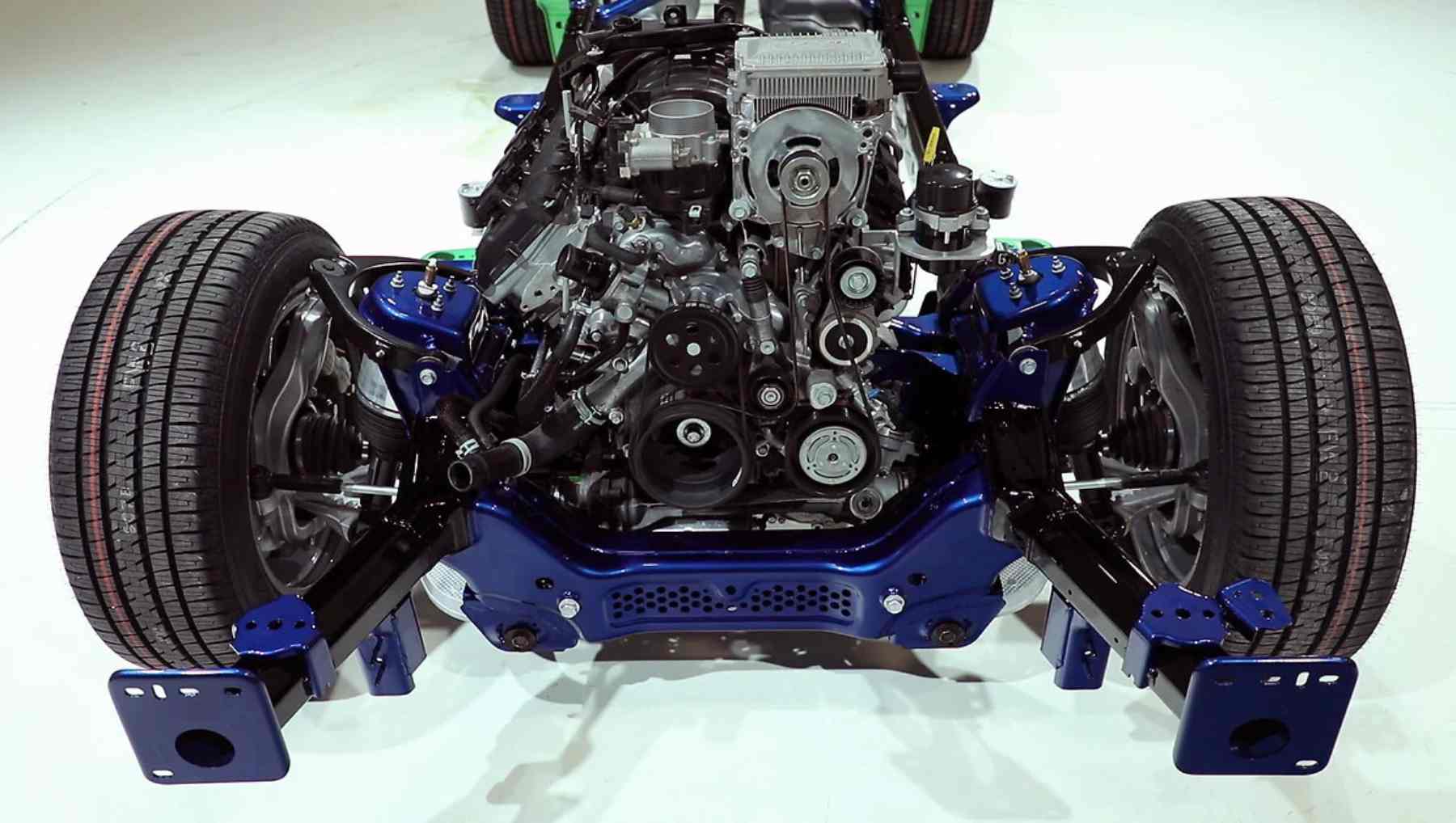

A few months ago, Stellantis pulled a pretty major U-turn in an attempt to drive growth in a somewhat difficult automotive market. The manufacturer is bringing back the Hemi V8 it controversially phased out with its 2024 model trucks.
The big 5.7 liter Hemi V8 will initially find its way back into the RAM 1500, with the idea that said big thirsty pickup will sell 100,000 units and reverse the automotive conglomerate’s fortunes. The move comes after seven years of steady sales declines for Stellantis in the United States. According to The Drive, there’s a chance we could see the big V8 make its way back into the Jeep Grand Cherokee, another vehicle that lost the engine back in 2024, too.
RAM and Stellantis largely ditched the Hemi V8 while pivoting heavily towards electric vehicles. The Dodge Charger lost its Hemi V8 first, and indeed all of its combustion engines when Stellantis “discontinued” the ICE Charger and Challenger back in 2023. The RAM followed shortly afterwards, with the 2024 “Final Edition” model billed as the last to feature a Hemi V8.
It was a bold move, as muscle car owners and pickup truck enthusiasts tend to have an almost spiritual connection to the most American of engine configurations (even though it was actually invented by the French). The gamble did not pay off.
The V8-powered muscle car was replaced by the pretty terrible Dodge Charger Daytona, and the RAM 1500 REV filled the electric pickup spot. Both failed, horrendously. Stellantis pulled back on the electric Charger last year and now offers an inline-six ICE muscle car again. The Dodge Charger Sixpack was praised pretty highly, and forms a large part of Stellantis’ strategy going forward, alongside the upcoming V8 RAM and a redesigned hybrid Jeep Cherokee. There are no official plans for the return of the Hemi V8-powered Charger as of yet (nor for the return of the much better-looking Challenger), but we’re still fairly early on with this entire re-pivot.
Current CEO Antonio Filosa seems to be the man behind these recent moves, reversing many of the controversial decisions made by his predecessor, Carlos Tavares, and shifting the focus back to what customers are actually demanding.
There was also a blip of positive news for Stellantis at the end of 2025, according to Automotive News. Despite it being a bad quarter for the US automotive market overall, in North America, Stellantis saw a 150% increase in its order book compared to Q4 2024 and a 39% increase in shipments during the back half of 2025 compared to the last six months of the previous year. Stellantis also saw its US market share grow from 7.6% in 2024 to 8.2% in December 2025.
U.S. automakers are trying everything to navigate the current market
While Stellantis’ U-turn is good news for traditionalists and enthusiasts (and hopefully opens the door to the return of the V8 Charger), it’s not the only strategy automakers are using to navigate the current stagnant market.
The threat of cheap Chinese EVs is lingering on the sidelines, with Canada recently shifting to ease the importation of Chinese vehicles. Ford’s approach to the Chinese EV situation seems to go along the lines of “if you can’t beat ‘em, join ‘em.” The legacy automaker recently announced its intention to partner with Chinese firms. Which is also somewhat of a U-turn when you consider Ford has traditionally been the strongest opposition to Chinese car companies developing a foothold in the US. Ford is also heading down the “affordable vehicle” route, with plans for several new affordable electric vehicles being announced.
GM is attempting to restructure somewhat after its EV unit posted large losses in 2025. The Michigan-based manufacturer is relying on its large SUVs and pickups to be its main revenue driver (as they have been for many years). Unlike with Stellantis, this isn’t going to take much adjustment. GM never ditched its V8s. Beyond that, the company is looking towards making “software as a service” a major revenue driver. There could be something to this with SuperCruise; the system is, frankly, excellent, and Tesla has seen the kind of successes GM is aiming for with its Autopilot subscription. On the other hand, the whole concept has shades of OnStar about it. Although it’s still around, OnStar was never particularly brilliant, and has always been overpriced for what you actually get.
So the US “Big Three” are all taking pretty different approaches to the current automotive landscape. Stellantis seems to be going back to what used to work, at least for its truck and muscle-car divisions. Ford is simultaneously accepting that a Chinese incursion into the American automotive market is somewhat inevitable, and pivoting hard towards the “affordable” vehicle market themselves. And GM is using the profitable parts of its business to prop up the rest while it adjusts and future-proofs its economic model.
As for who’s right, only time will tell. These are turbulent times, the market and wider economy are all over the place, and if anyone 100% knew the answer, then they’d end up richer than Elon Musk. But history shows, keeping your core customer base happy is generally a smart move. And the core customer bases of Dodge, RAM, and Jeep (if they’re happy to forgive and forget) don’t half love a hefty Hemi V8.