Part of me misses the good old days when you’d meet up in a bar or cafe for an interview. You could use the atmosphere, and your interviewees mannerisms, to set the scene and draw the reader in. But now it’s 2026, and everything happens over Zoom or Google Meet.
The latter is what I used for my chat with Mark Tapscott, the Co-Founder of electric sports car company Longbow. I was sitting in my dingy Upstate New York kitchen, and his camera wasn’t working, so I couldn’t even criticize his home decor.
What wasn’t impacted was the quality of the conversation. With companies like Tesla, Lucid, and BYD on his resume, he certainly knows his stuff when it comes to EVs. And that really tells with his approach to Longbow.
“When we did this, we said, ‘How would you build a car company today? What is the best way given all the opportunities that exist?’ And, and you wouldn’t, I don’t think, even do it the way Tesla did sort of 20 years ago now or so,” Tapscott tells me, over the phone with his laptop presumably dying somewhere in the distance.
“The best way to do it is to choose components that other OEMs have spent, you know, hundreds of millions of dollars developing and putting miles on so that, you know, you have a really robust product. And I think that that’s how you end up being able to build a really good car today.”
That approach, the foundations that Longbow’s Speedster and Roadster are literally built upon, isn’t just the brainchild of Tapscott and his business partner Daniel Davey (another former Tesla executive). It is also something Tesla founder Mark Tarpenning also attempted in the early 2000s:
“He told us what we are doing is exactly what they tried to do with Tesla in the beginning. The challenge being the supply chain didn’t exist in the way it does today. So being able to take battery cells off the shelf, being able to take a motor off the shelf, we can get a hugely, hugely power dense motor off the shelf that’s been tested and we can stick that in our car.
It may cost us 15, 20% more than it would if we would have to build our own Gigafactory to build motors, which is of course what Tesla had to do.”
Admittedly, it isn’t an original idea, for the most part. High-end sports car companies have been acquiring parts “off the shelf” for years. It’s why you’ll find a Ferrari engine in older Maseratis, or the rear lights from a tractor in the back end of the McLaren F1. According to Tapscott, it also allows Longbow’s engineers to get their heads around everything and gel a lot quicker.
Which is probably handy considering the other targets the company is trying to hit.
A bad financial decision leads to a sensible British sports car company
“I left university. I had no money, but on the drive home from university, I, um, on finance bought a Lotus Elise and transferred all of my bags literally from university on the way home into that car.
And I knew I had to basically live in that car for the next five or so years whilst I paid it off. So, that little sports car did everything for me,” Tapscott said, adding a bit more color to his origins beyond the admittedly impressive corporate resume. But this little factoid might have more impact on how Longbow functions as a company than the years of boardroom experience.
Longbow is far from a traditional British sports car manufacturer. The stereotype of two blokes in a shed putting together beautiful and passionate — but slightly underwhelming — masterpieces is also paired with the fact those companies generally went bust after a few years.
My response to Tapscott, after hearing about his Lotus, was: “It’s like an objectively horrendous financial decision leads to somebody starting a sports car company that’s actually doing things sensibly.”
As for what makes the business model so sensible? Well, Longbow seems to have a multi-phased plan that starts with two vehicles.
“We’re only going to make 150 of the Speedster. But that really is just trying to create something that’s very investable for those first 150 people that hear about us. Really, we want to get to the Roadster very quickly because that’s our volume when we’re looking at several thousand a year,” Tapscott told me.
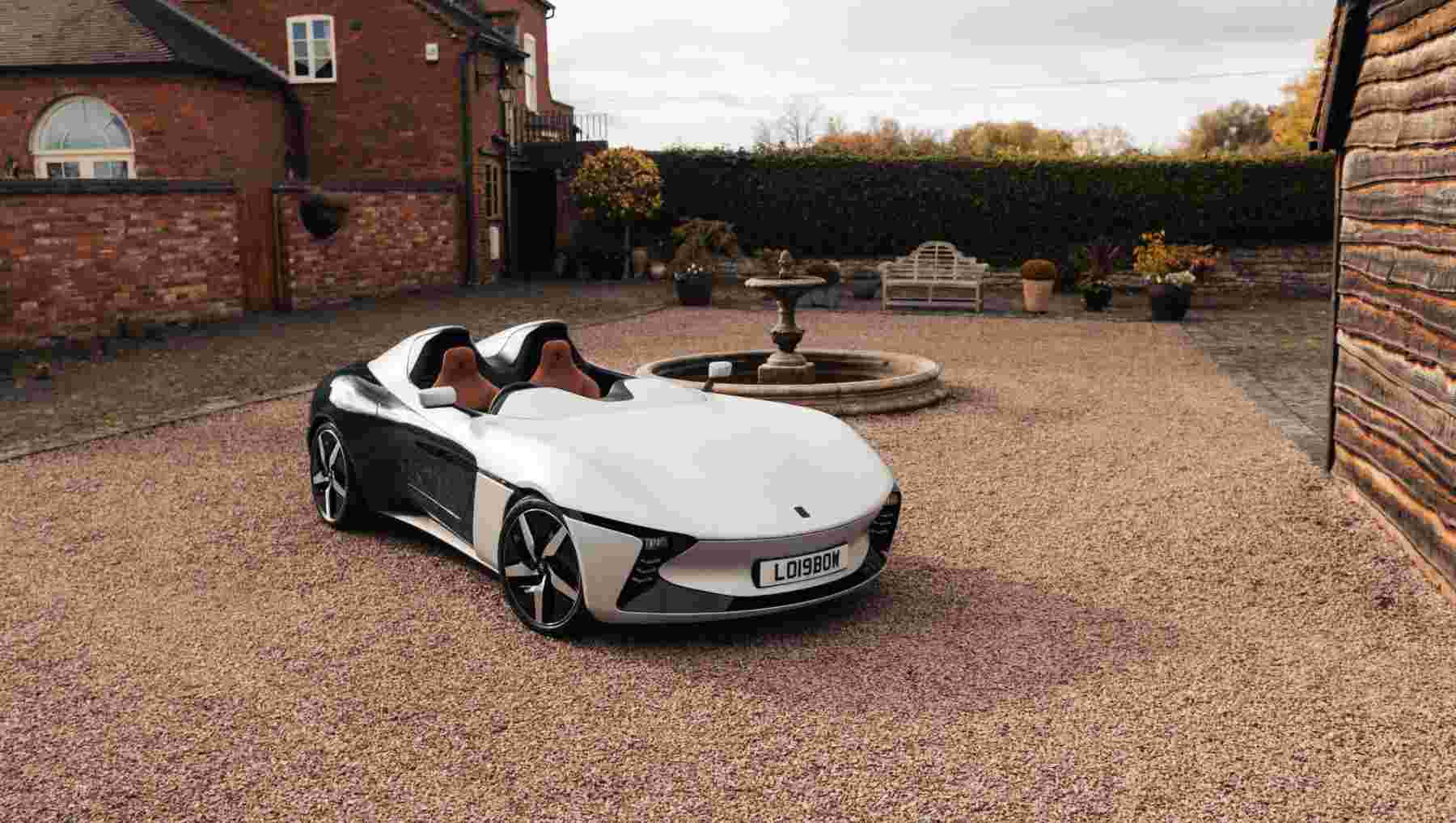
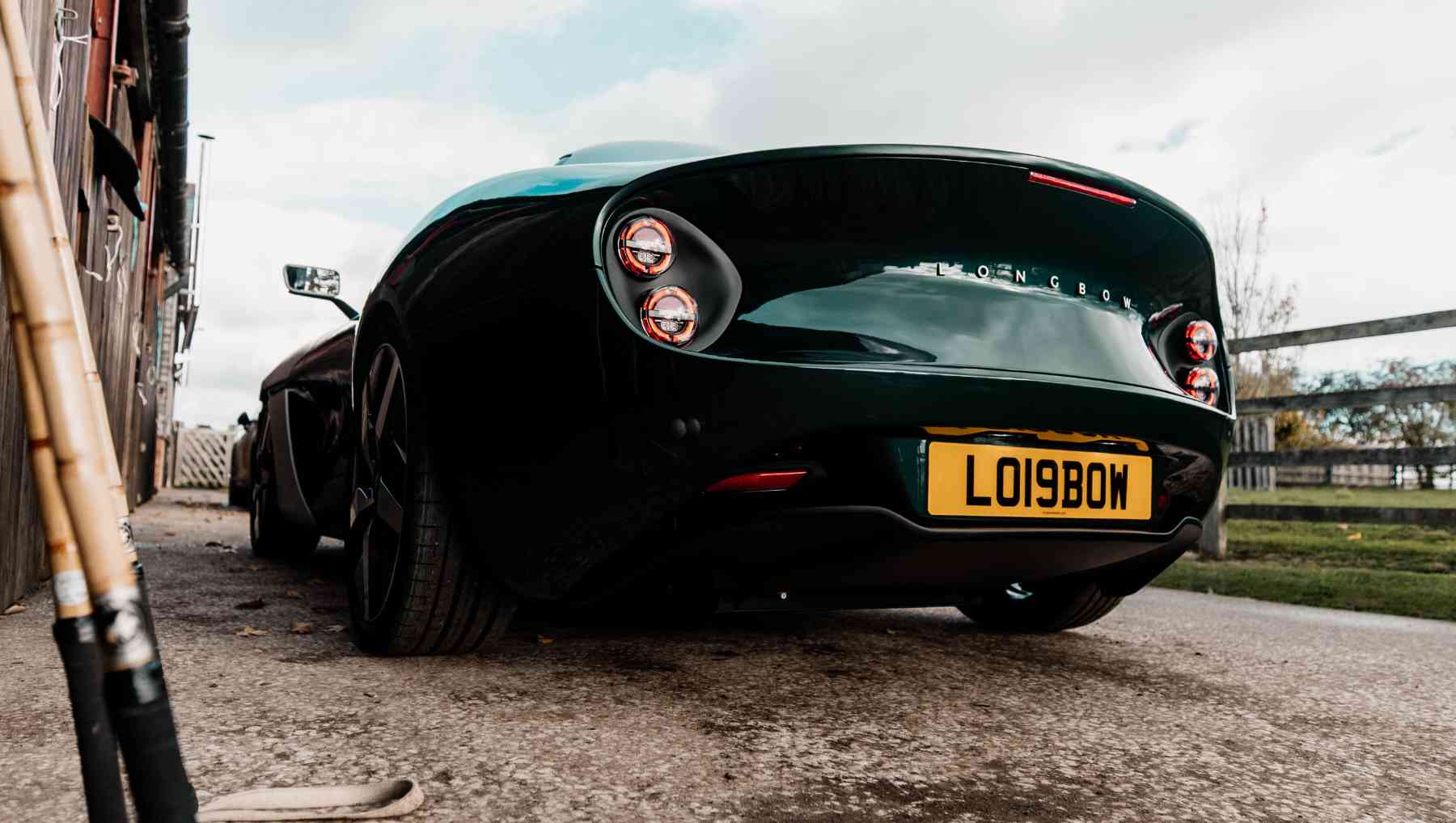
The limited Speedster is a sub-2000 pound, open-top, two-seat electric sports car. It uses a bonded aluminum chassis, similar to the kind of thing Lotus does, and has a single 321-horsepower rear motor. It can go from 0-60 in 3.5 seconds, and travel up to 275 miles on a single charge. Conversely, the Roadster will feature a closed cockpit, with the windshield, roof, and other components adding around 220 pounds of weight).
Both of these vehicles are part of what could be seen as Longbow’s first stage. The way Tapscott explained it, the company is going to metamorphose like some kind of winged insect.
“The way we should do this is build the company for what you need today. Not doing a Lucid, for example, taking $6 billion and building a car company for what it will be in another 10 years time.
We are going to be sort of making and breaking Longbow at least three times along that journey. But it means we size it right. So, we have the right people, the right team, the right capital expenditure today to build the cars that we need to build. Then we break the company and we build it into the bigger thing that it will need to be for our next step.”
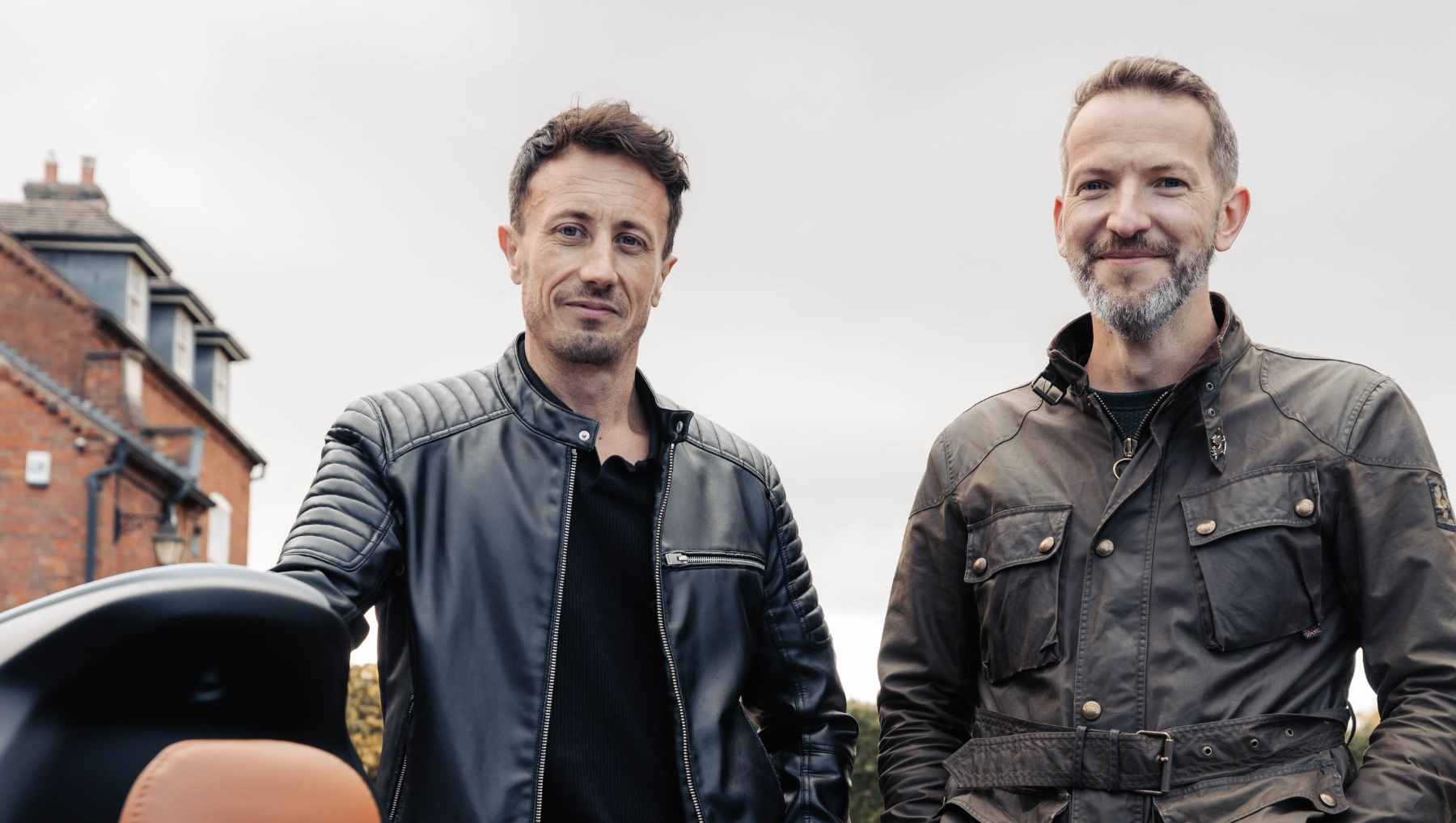
See, sensible planning from sensible people. After establishing he and his partner were actually British and not German or something, I discovered that Tapscott’s Elise is also, in a way, the main inspiration for the Longbow.
Having looked at plenty of photos of the vehicle, and spending some time looking at a Speedster up close, I can honestly say it’s one of those cars where it’s hard to place the vehicles that inspired it. You can see bits of other iconic British sports cars in there, the long hood is a little E-Type. Overall, its minimalism and open cab gives Caterham vibes.
It’s the sort of thing you can debate for hours, but Tapscott explains how his Elise is a major inspiration for the Longbow’s unique selling point.
“I was like, ‘What else is out there today that does the same sort of thing?’ It was also really cheap to run because it was lightweight. You know, didn’t use up any brakes, tires. All the benefits. There are so many benefits to light-weighting.
So, yeah, it’s about creating something that people really want, and we’re just going to get on and do it.”
The Longbow Roadster and Speedster, which were built with that same lightness in mind, should also benefit from the same longevity and lack of maintenance. EVs traditionally chew through tires faster because of their extra weight, the Longbows (weighing 2,194 pounds and 1,973 pounds respectively) should use up rubber at a similar rate to a regular sports car. Then there are the bonuses you get with EVs in general. Regen systems spare your brakes, oil changes are not a thing, and there are fewer components to go wrong.
“We want this car to be on the road for a hundred years”
When they do go wrong, Longbow is hoping to have you covered there too. According to Tapscott, customers are going to have a lot of choice when it comes to maintaining their vehicle:
“In terms of servicing, um, we’ve got a lot of experience in in setting up those networks, and we’ve got a slightly different approach. Which is we think again along with the enthusiast way of owning a vehicle. The ability to work on your own vehicle or to use your preferred or favorite, garage or workshop locally will be our approach.
“We want to make servicing open source and parts readily available. We don’t think making money off the back of people’s misery in service is the right thing to do for Longbow.”
I pushed to find out just how repairable Longbow’s vehicles would be, considering how much of a contentious issue “Right to Repair” is. With the contention usually centering around consumers who want to be able to fix the product they’ve purchased, and companies who would prefer their customers have few rights related to that product at all.
The way Tapscott responded honestly harks back to an era of vehicle ownership many are nostalgic for. It’s more retro than that long hood. He said:
“Look, apart from where there’s some thick orange cables and and around the batteries and the motor at the back, the rest of the vehicle, is something that anyone that’s played with cars will be very familiar with.
“You know, we’re looking at double wishbone suspension and all these other things that can be adjusted and you can enjoy as an enthusiast. Obviously, there’s no recommendation of going anywhere near that high voltage. That will certainly be something you need to take to a specialist.
“We’ve talked about the Centurion Accords. We want this car to be on the road for a hundred years. And there is no reason why vehicles shouldn’t be able to stay on the road for that long. When you kind of take out any inbuilt inherent obsolescence that sits within cars. And if you make things like switchgear not age and if you make sure that parts can be replaceable, or anything that gets updated over the next 20, 30, 80, 90 years. If you make something beautiful enough, it can’t stay on the road for that long.
“So, circularity is one thing in the economy, but actually trying to make a car last for a hundred years removes a bit of that circularity altogether. And part of that is, of course, being able to keep those vehicles on the road and repaired in a way that the owner sees best fit.”
The repairability, and to be honest the price, makes me think of the likes of the Mazda Miata. It’s sporty, affordable, and highly customizable. And an entire car culture has spawned around that. When I put this to Tapscott, he seemed keen on giving a similar community the opportunity to develop around the vehicles his company makes.
“Listen, would I be really happy to see people doing some really interesting and crazy things with these cars in the future? Absolutely. I think any manufacturer, and there are a few that don’t like you touching their cars doesn’t really understand the importance of that community.
“And perhaps there’s a certain price point above which the community isn’t about modifying, adjusting, or personalizing their vehicles. But I think where we’re aiming in the markets, it’s going to be really enthusiastic. Maybe this will be the only car for somebody, and they want to really make a statement and make it their own. So, yeah, we’d absolutely love for people to get involved in that. A dying art, perhaps.”
That sense of community might see its origins in “The Guild,” Longbow’s exclusive owner’s club. It’s currently limited to reservation holders, and with reservations closing soon it may be a club of just 150 for some time.
Tapscott lays down the gauntlet
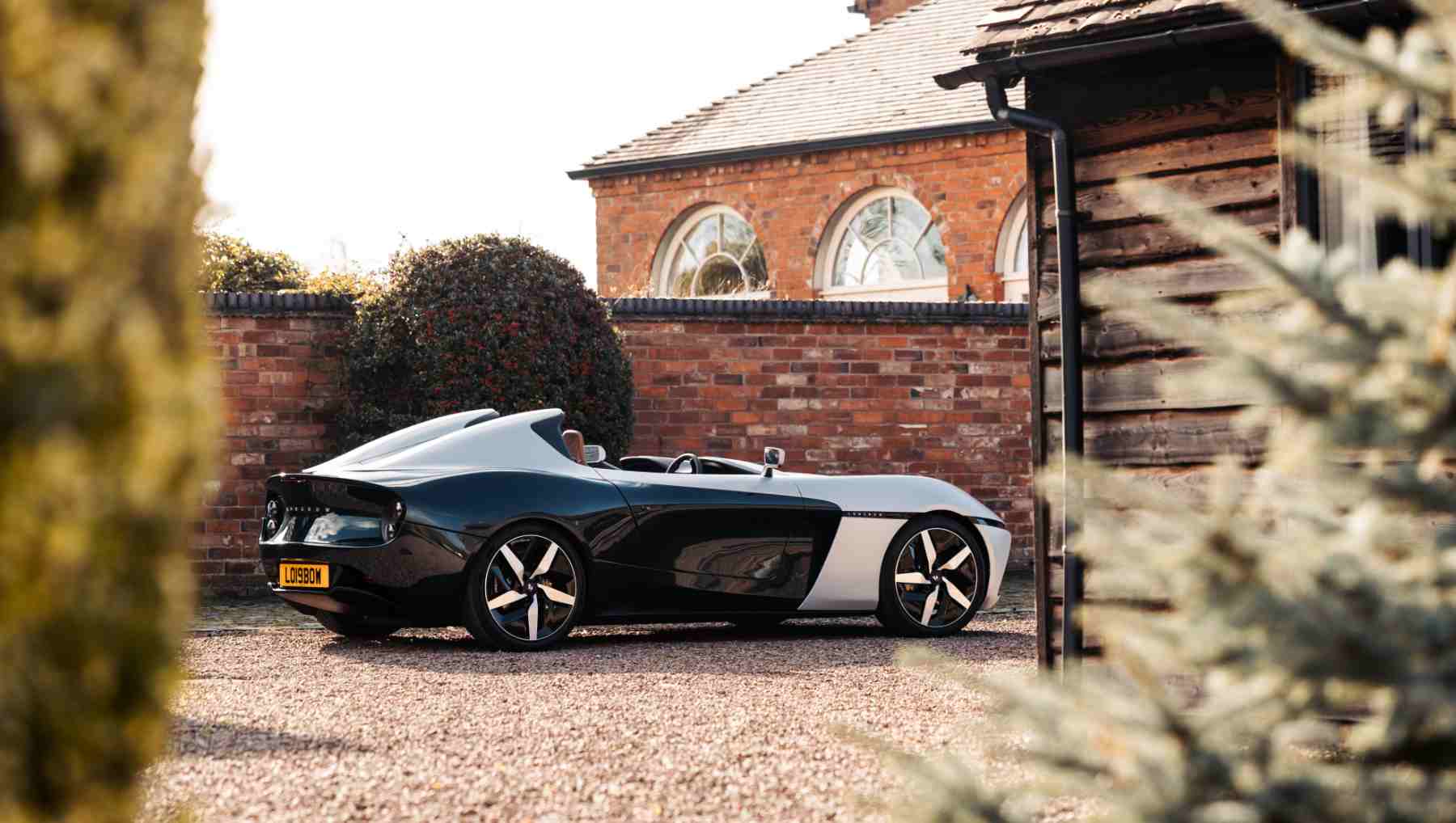
On the subject of price, Longbow’s current MSRP for both the Speedster and the upcoming Roadster are pretty shocking from an American standpoint. The Speedster, which is capped at 150 vehicles and has “potential collectors piece” written all over it, is priced at £84,995 ($110,000). Then the Roadster, the “mass production” model, is just £64,995 ($84,000). It’s pretty much Corvette money, but becomes a bit of a bargain when you factor in the extra costs that come with EV production.
These are the days the “affordable” sports car is all but dead. The Toyota Supra, Fiat 124 Spider, Kia Stinger, Audi TT, and Chevy Camaro are all gone. Every time I look at the BMW M2 I get a little worried. Even the Miata costs over $30,000 now. So seeing a company come in with something fast, a bit sexy, and reasonably accessible gives me a glimmer of hope in a bleak world. Anyway, I live in New York so a Speedster is out of the question.
But what about the Roadster?
“So, FMVSS, the homologation for cars in the US, is super tough. It’s a little bit easier for us because we haven’t got to worry about emissions, of course. But no full FMVSS homologation is all on our roadmap,” Tapscott confirmed.
So the US is getting the Roadster, at some point, Longbow is aiming for a 2027 launch in the UK, with other markets rolling out one at a time after that.
Anyway, what’s an interview without a cheeky question. Unfortunately, Tapscott dodged mine pretty expertly. I asked if The Speedster’s name was a bit of a jab at his former employer, Elon Musk. Obviously a suitably venomous jab here would give me the hook this piece needs. I didn’t get that, Tapscott was almost irritatingly diplomatic. He did, however, lay out a clear challenge to the world’s richest man.
“What do I say to that? Uh, it’s carefully chosen, Dave. We would love to see more Roadsters that are electrified on the road. And if that pricks up anybody’s ears at Tesla, then so be it. We would love perhaps to set up a competition with Elon. Who can build a Roadster first? He’s had a little bit of a head start on us.”
Having listened to Tapscott’s roadmap, and checked Mars for colonies, I know who my money’s on.