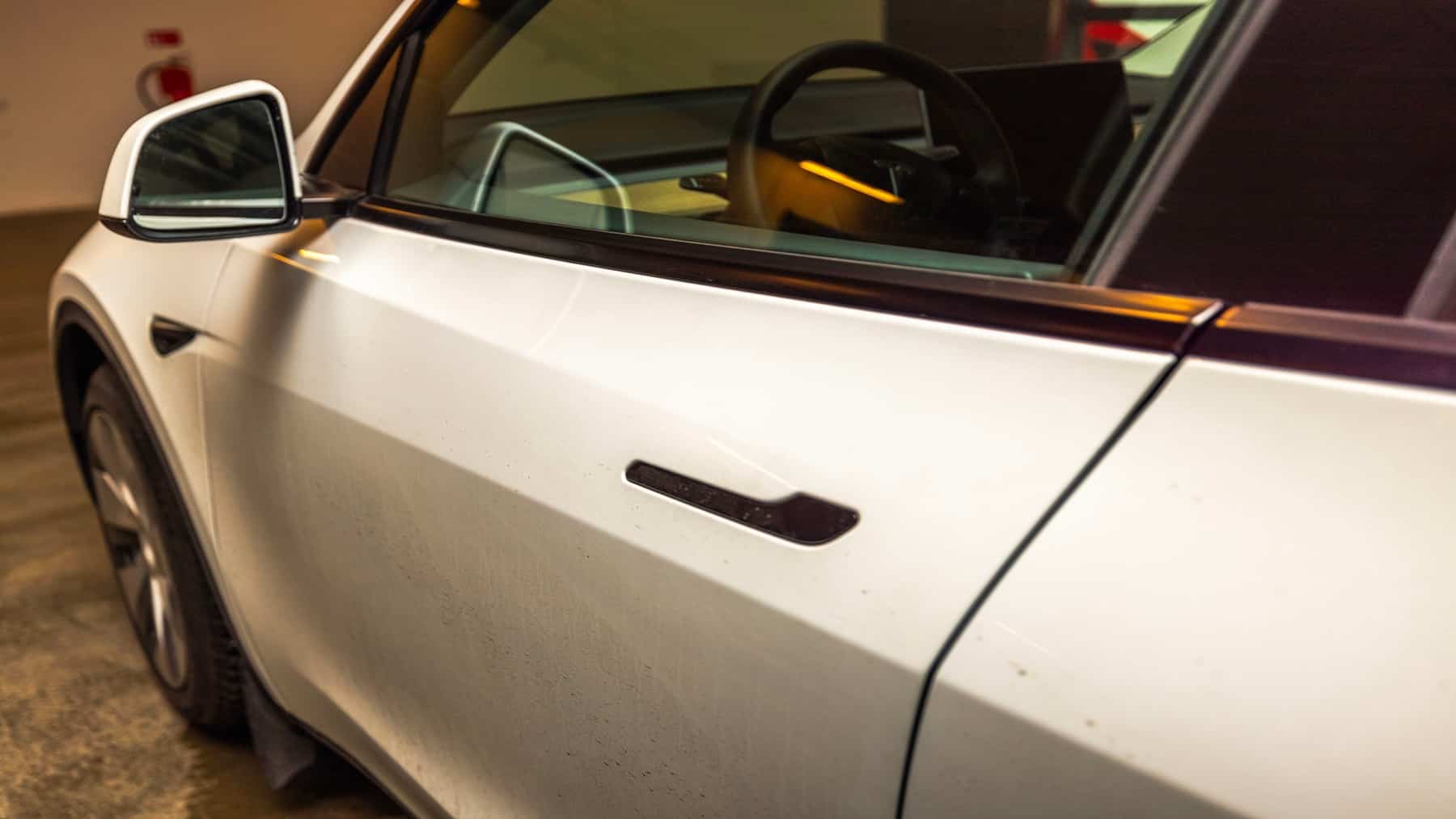

In a move that is totally not an attempt to kick Tesla out of China as a form of retaliation, the country has announced a ban on hidden door handles. Still, it’s a low blow to Tesla after the company reported declining sales amid stiff competition in the region, its second-largest market after the United States.
To be fair, China did not vocally single out Tesla in its latest ban, although Tesla vehicles popularized this feature. Other electric vehicle manufacturers, including Chinese ones, have adopted the feature since then. The ban, which Bloomberg reports will take effect on January 1st, 2027, is focused on safety. Yes, hidden door handles have actually caused plenty of accidents, including deaths.
China began investigating hidden door handles in 2024 after drivers were left trapped inside of crashed vehicles since the handles wouldn’t operate. Then, one horrific incident occurred in October 2025 that accelerated the push. A Xiaomi Corp. SU7 EV was involved in a fiery crash, made more horrific when bystanders were unable to open the doors and rescue the driver before the vehicle burst into flames. Back in October, China Automobile Dealers Association advisor Li Yanwei said: “The Xiaomi EV accidents have sped up the arrival of the new car door handle national standards.”
See? It’s not about Tesla.
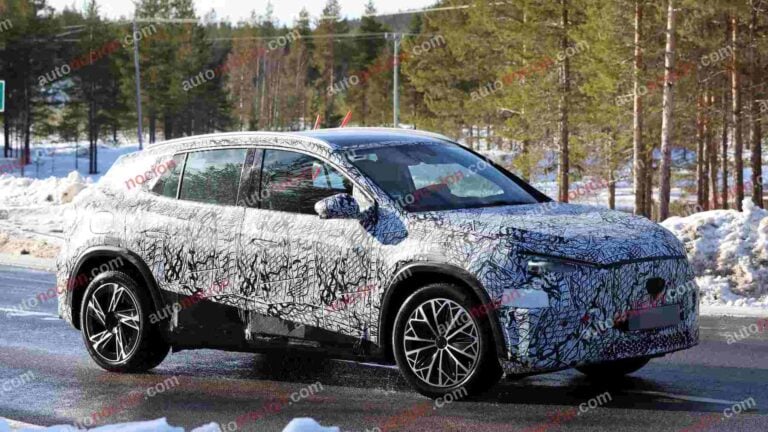
Can China actually ban hidden door handles?
According to Bloomberg, this could actually be a very expensive problem to solve in China. More than half of the best-selling electric vehicles in China have hidden door handles. This feature is seen as sleek, futuristic, and aerodynamic, so a lot of luxury EVs have them: the Tesla Model Y, BMW iX3, the Xpeng Inc. P7, etc. It could ultimately cost car manufacturers more than $14.4 million per model.
Would it really cost millions to change a door handle design? Well, the new rules are extremely specific: On the exterior of the door, there must be a recessed space at least 2.4 x 0.8 inches, allowing drivers to grasp the handle. Inside, there must be signage showing how to open the door. This means that manufacturers not only need to reimagine the entire door handle to meet this standard, but also remove existing safety features from its production process that already cost money to previously implement. This means a waste of invested money on items like mechanical pull cables, backup door batteries, and more.
Tesla has already agreed to make the changes, likely because it fears losing its Chinese customers. BYD is also confident it can make the change.
And can the United States ban hidden door handles, too?
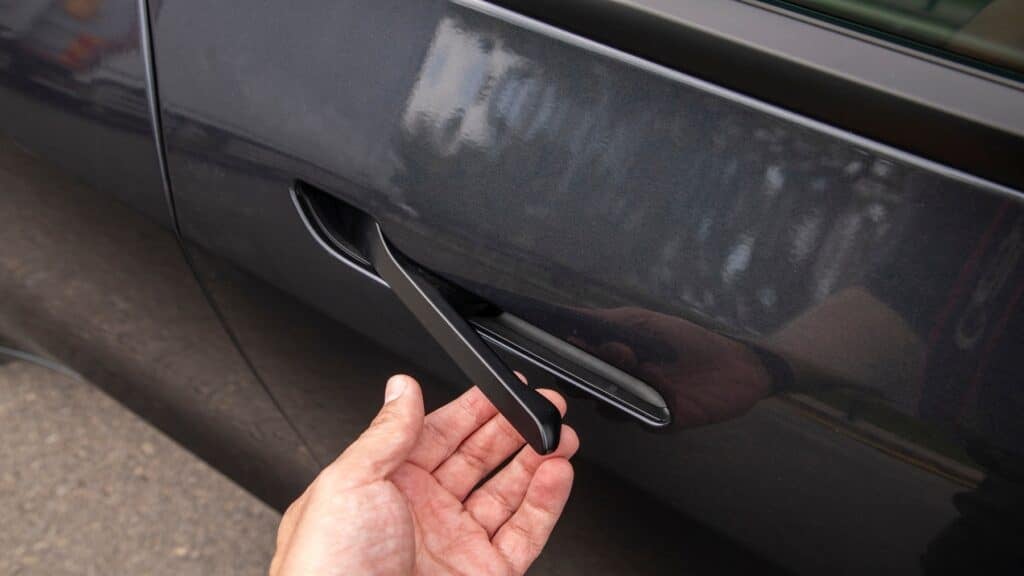
China isn’t alone in its safety concerns over hidden door handles. Tesla’s design has been investigated by the National Highway Traffic Safety Administration due to the inability to open these special handles when its vehicles lose power.
“It’s the most horrible thing, to see a human burning,” Max Walsh told Bloomberg after witnessing a horrifying Tesla Model Y crash in 2023. “If I were able to open the doors, I could have gotten them both out before the fire department even got there.”
This accident allegedly prompted Tesla to review its door handle design, although not much has changed. In 2025, multiple similar incidents were reported, including a college basketball player kicking through his Cybertruck’s windows to escape a crash in Los Angeles, California, unable to open the door. It’s a design that’s been criticized since 2012 when the Model S came out, but the ongoing fatalities have made it more than an inconvenient design flaw.
“China is shifting from being just the largest EV market to being a rule-setter for how new vehicle technologies are regulated,” Bill Russo, founder of Shanghai-based consultancy Automobility, told Bloomberg. “By moving first, Beijing can use its huge domestic market to lock in safety standards that both Chinese and foreign automakers must follow at home – and that may ultimately travel with Chinese EV exports and influence global norms.”
This means the United States and Europe could follow suit. It’d be tricky for the entire country to ban an existing door design, but manufacturers may be told to change the design moving forward if they want to continue selling cars in states that become harsher on the ruling. If California banned hidden door handles, for example, Tesla would basically be forced to make the change, or it’d lose the majority of its US-based customers. I currently can’t even leave my house without seeing a Cybertruck, which doesn’t seem to be the case in other states. Think of the hidden door handle ban like the country’s ban on pop-up headlights, except nowhere near as cool.
“China’s far ahead in the commercialization of some of these advanced technologies. It’s far ahead in electrification and, I would argue, will be further ahead in self-driving technology,” Russo said. “China’s going to play an outsized role in stepping ahead of the rest of the world in setting the regulatory standards.”