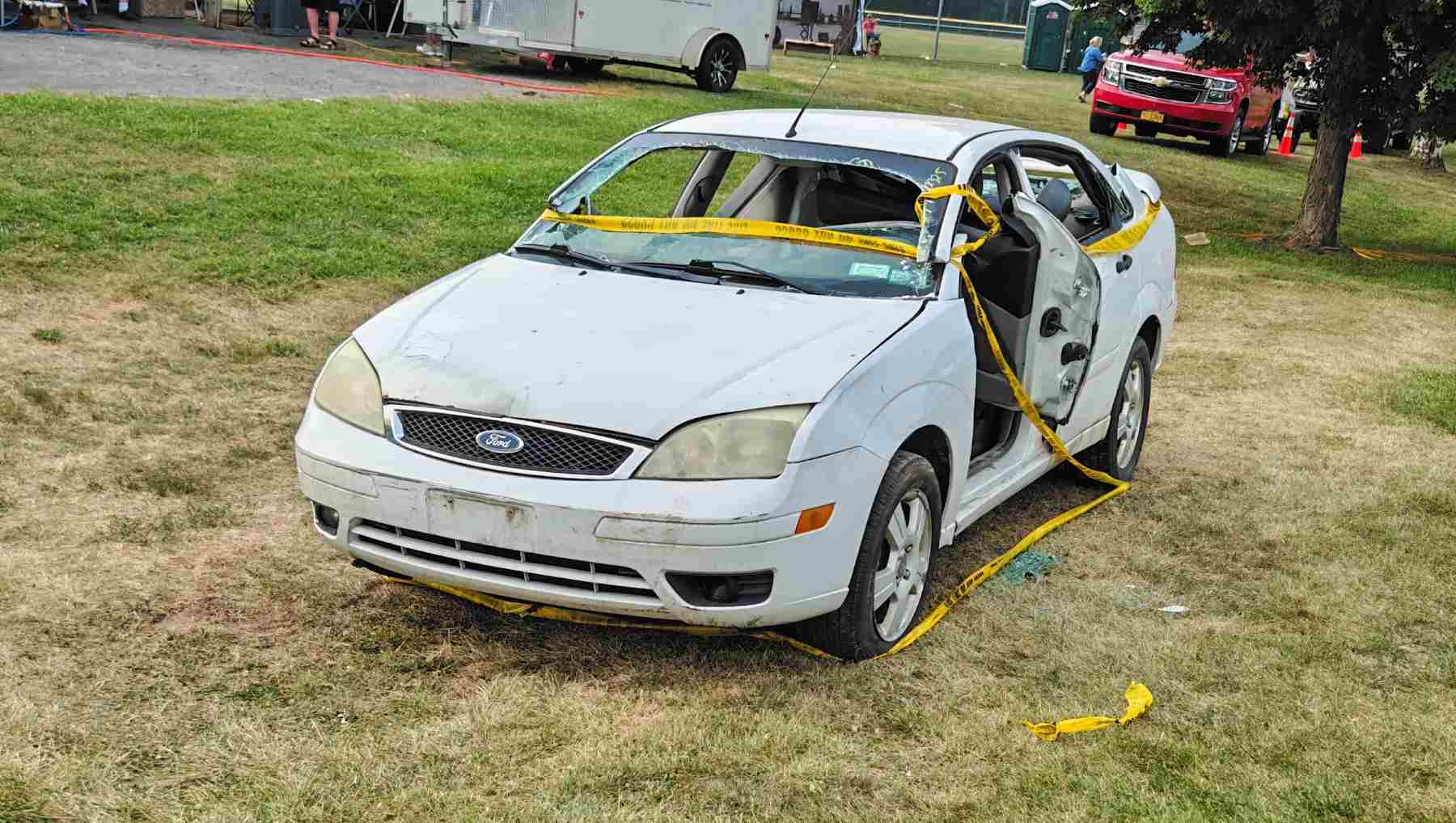
New and used vehicle prices are pretty high these days, so when you see a staggeringly cheap car listed with a “salvage title,” it might look like a bit of a bargain. While many salvage vehicles are just bought for parts, as the name suggests, there are thousands still driving around on American roads.
But what’s the catch? Are salvage title vehicles always a complete write-off? And what will you have to do to get your bargain ride back on the highway?
Well, like almost every other automotive regulation in America, it varies by state. So you should always double-check the specifics before pulling the trigger on a major purchase. But the basic rules are pretty much the same across most locales, though the terminology can vary from area to area. So here’s a rough guide to salvage titles, and a few hints at what you should look out for.
What is a salvage title?
A salvage title is something that is issued to a vehicle once an insurer has decided it is a total write off. Most salvage titles are issued after a collision of some kind, and those collisions can range from minor fender benders to heavy impacts. Salvage titles can also be issued after things like vandalism, vehicle fires, hail damage, water damage, or rodents deciding to nibble on all of the delicious cables you’ve stashed in your engine bay.
There is also a “restored salvage” title. This is a previously written off vehicle that was issued a salvage title and then repaired to the point where it was deemed safe enough to drive on public roads. They can still have damage and other issues, but they have passed a significant legal hurdle.
What are the downsides?
While the price is a major upside, there are a whole bunch of downsides to consider. The first involves actually getting the thing back on the road. In the majority of states, a car with a salvage title can’t be driven on public roads. That means it needs an inspection to check it’s safe, a whole bunch of paperwork, and a new “restored salvage” or similarly named title to be issued. There’s a bit of a catch-22 situation here, how can you have it inspected if you can’t drive it to a shop? So you’ll need to factor the costs of a flatbed or tow truck (depending on your local rules and the condition of the vehicle) into your overall costs.
Then there’s insurance, which is pretty important. Some insurers won’t touch salvaged vehicles, so your options when it comes to coverage are going to shrink. Of the ones that will insure you, most add 20% to 40% or more to a premium if a car with a salvage title is involved.
Financing is also an issue. While some salvage vehicles are so cheap you can usually pay cash, the one you have your eye on may be beyond your immediate price range – especially if it’s a newer model. There are very few lenders that will finance a salvage vehicle. Between the potential issues the vehicle has, the increased difficulty in selling one, and the significant dent in resale value, they just aren’t worth the risk to these institutions.
This may be obvious, but a salvage title also voids any manufacturer’s warranty that would otherwise be active at the time. Dealerships tend to be on the list of organizations that don’t want the risk or the trouble that can come with a salvage title too. Not many will accept a previously written off vehicle as a trade in.
Finally, the elephant in the room. The damage itself. Despite the “salvage” designation, some salvage vehicles might not technically need any work doing at all. It depends on why they were written off, what you want to use the vehicle for, and what you’re prepared to live with. Others may have absolutely catastrophic problems that will make your life a misery and hit your bank account so hard you’ll wish you’d bought something that wasn’t broken. Which brings me to our next point.
A full inspection is an important step
In most states, a car with a salvage title can not legally drive on a public road. It needs an inspection so the state knows it’s not going to split in half like the Titanic and cause a 20-car pileup.
You also need to get it inspected so you know exactly what’s wrong with it. This includes vehicles with “restored salvage” titles that have passed through the previous step. While many people involved in vehicle inspections are legit, there are some folks in the automotive industry who are a touch shifty. So for your own peace of mind, it’s a good idea to get it all checked out at a place you trust.
Where can you find vehicles with salvage titles?
If you’ve read all of that and still want to buy a salvage title vehicle, you may be wondering where to find one. The answer is, pretty much anywhere you’d usually find cars for sale. Used car lots, eBay, Craigslist, Facebook Marketplace, some guy’s front lawn. Car auctions and junkyards also tend to have a lot of salvage cars.
Legally, if you are selling a vehicle with a salvage title or someone is selling you a vehicle that has been issued a salvage title, that has to be disclosed. Failure to do so can result in heavy fines and lawsuits. On that note, if you buy a non-salvage vehicle and your mechanic indicates that it was involved in a heavy crash, then it’s time to talk to the police and a lawyer.
There are actually some bargains
Despite the scary name, a vehicle can end up with a “salvage title” due to some frankly minor damage. If the estimated cost of repairing that damage was more than 75-ish percent of the vehicle’s value (though this can be as low as 60% or as high as 100% in some areas), the insurance company is going to go for the cheaper option and simply pay out for the entire car. As it’s technically a “write off,” the mechanically sound vehicle now has a “salvage” title.
The cosmetic damage might not even be that expensive in itself. It may just be a case of the car’s value being so low that the repair quote goes over the insurer’s threshold. Similarly, if an obscure or hard-to-source panel or fitting is damaged, then the insurance company may see a write-off as the best option.
And while it’s impossible to get rid of the “rebuilt salvage” designation, it’s not always a problem. Yes, for a standard car, it will severely impact any resale value and bump the cost of insurance up. But if you somehow spot a real gem, it doesn’t matter as much. A Porsche 930 or a Ferrari 512 that took a bit of heavy damage and ended up sitting on a lawn is always going to have value. However, finding gems of that caliber is a different story entirely.
If you already own the car, you may get first dibs
While there are bargains to be found when shopping for salvage-titled vehicles, you may just have one land on your driveway. Sort of. If your own vehicle is in an accident and your insurance provider decides to classify it as a total wreck, you’ve usually got an option to “buy it back” instead of surrendering it. The exact amount you buy it back for will be less than the insurance payout, though the exact amount depends on the insurance company’s valuation of the “wrecked” vehicle.
You do still have to go through all of the formalities, like getting the vehicle inspected. And the downsides, including the impacted resale value and higher insurance premiums still apply. But if you’re driving what could politely be termed “a bit of a banger” and a parking lot fender bender puts a hefty dent into it, this is a pretty win-win scenario. There’s every chance you can live with the cosmetic damage, and it’s something that would likely end up on the scrap heap in a few years anyway. So even after factoring in the cost of buying it back, inspection, and an insurance premium bump – you’ve essentially had a random monetary windfall.
On the other side of the coin, if it’s a vehicle you love and have put a lot of effort into, then a buyback is an obvious choice. Even if it turns out to be a poor financial decision, your meticulously restored 1990s station wagon absolutely needs to survive. Buying it back from the insurance company ensures it will.